


Popular
What role does the character of DJ Spooky play in the documentary?
How does the film depict the concept of remix culture?
What examples of copyright infringement are discussed in the film?
How does the film address the differences between 'good copy' and 'bad copy'?
What impact does the film suggest digital technology has on creativity?
Should I watch it?
Ask Your Own Question

What is the plot?
Sorry, we aren't able to watch and write up a full detailed plot yet. Check back in a few days.








What is the ending?
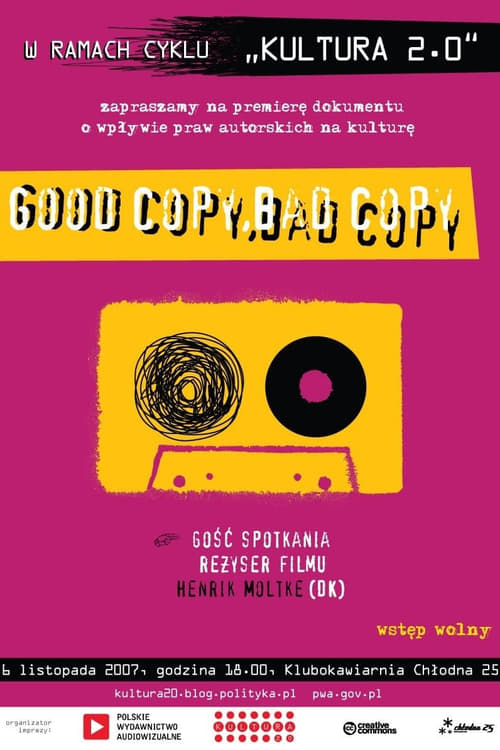
In the ending of "Good Copy Bad Copy," the film culminates in a discussion about the implications of copyright and creativity in the digital age. The documentary highlights the ongoing conflict between traditional copyright laws and the emerging culture of remixing and sharing. The film concludes with a sense of uncertainty about the future of creativity, leaving viewers to ponder the balance between protecting intellectual property and fostering innovation.
As the film approaches its conclusion, the narrative shifts to a series of interviews and discussions that encapsulate the central themes. The filmmakers, including director Andreas Johnsen, present a montage of various artists, musicians, and creators who have been influenced by the digital landscape. They express their thoughts on the evolving nature of copyright and the impact of technology on their work.
In one poignant scene, a musician reflects on the joy of remixing and how it allows for new forms of expression. This moment is juxtaposed with a contrasting viewpoint from a traditional copyright advocate who emphasizes the need for protection of original works. The tension between these perspectives is palpable, showcasing the emotional stakes involved for artists on both sides of the debate.
As the film draws to a close, it features a series of clips that illustrate the diverse ways in which people are engaging with creative content. Some are seen celebrating the freedom of sharing and remixing, while others are depicted grappling with the legal ramifications of their work. The final moments of the film leave viewers with a sense of ambiguity, as the future of creativity remains uncertain amidst the ongoing battle over copyright laws.
The fates of the main characters, including the various artists and advocates featured throughout the film, are left open-ended. Each individual represents a different facet of the ongoing conversation about copyright, creativity, and the digital age. The film concludes without providing definitive answers, instead inviting the audience to reflect on the complexities of these issues and the potential paths forward for artists in a rapidly changing landscape.
Is there a post-credit scene?
The movie "Good Copy Bad Copy," produced in 2007, does not have a post-credit scene. The film concludes its exploration of copyright, remix culture, and the implications of digital media without any additional scenes or content after the credits roll. The focus remains on the main narrative and the insights shared throughout the documentary, leaving viewers to reflect on the themes presented without any further visual or narrative additions.
What role does the character of DJ Spooky play in the documentary?
DJ Spooky, also known as Paul D. Miller, serves as a central figure in 'Good Copy Bad Copy.' He is portrayed as a cultural commentator and artist who explores the implications of copyright in the digital age. His journey takes him through various global perspectives on remix culture, highlighting the tension between creativity and ownership.
How does the film depict the concept of remix culture?
The film illustrates remix culture through various examples, showcasing artists who blend existing works to create new art. It features interviews with musicians, filmmakers, and visual artists who discuss their creative processes and the legal challenges they face, emphasizing the fluidity of inspiration and the collaborative nature of art in the digital era.
What examples of copyright infringement are discussed in the film?
The documentary discusses several notable cases of copyright infringement, including the legal battles faced by artists like Girl Talk, who uses samples from various songs to create new music. The film also touches on the controversy surrounding the use of visual art and film clips without permission, illustrating the complexities of copyright law.
How does the film address the differences between 'good copy' and 'bad copy'?
The film contrasts 'good copy' as a form of homage and creative reinterpretation with 'bad copy,' which is often seen as mere theft or plagiarism. Through interviews and examples, it explores how artists navigate these distinctions, emphasizing the importance of context and intent in the creative process.
What impact does the film suggest digital technology has on creativity?
The film suggests that digital technology has democratized creativity, allowing more people to access tools for creation and distribution. It highlights how this accessibility fosters innovation and collaboration, while also raising questions about the sustainability of artistic practices in a landscape dominated by copyright concerns.
Is this family friendly?
"Good Copy Bad Copy" is a documentary that explores the themes of copyright, creativity, and the impact of digital technology on culture. While it is primarily an informative film, there are several aspects that may be considered objectionable or upsetting for children or sensitive viewers.
-
Discussion of Copyright Issues: The film delves into complex legal discussions surrounding copyright, which may be difficult for younger audiences to understand. The implications of these discussions can be heavy and may provoke anxiety about intellectual property.
-
Visuals of Piracy: There are scenes that depict the act of piracy and the sharing of copyrighted material, which may raise ethical questions that could be confusing or troubling for children.
-
Interviews with Artists: Some artists express frustration and anger regarding copyright infringement, which may convey strong emotions that could be unsettling for sensitive viewers.
-
Cultural Commentary: The film includes commentary on the music industry and the impact of digital technology, which may touch on themes of exploitation and the struggles of artists, potentially leading to feelings of discomfort.
-
Mature Language: There are instances of strong language used by some interviewees, which may not be suitable for younger audiences.
Overall, while "Good Copy Bad Copy" is not explicitly graphic or violent, its themes and discussions may not be entirely appropriate for children or those who are sensitive to complex social issues.