








Popular
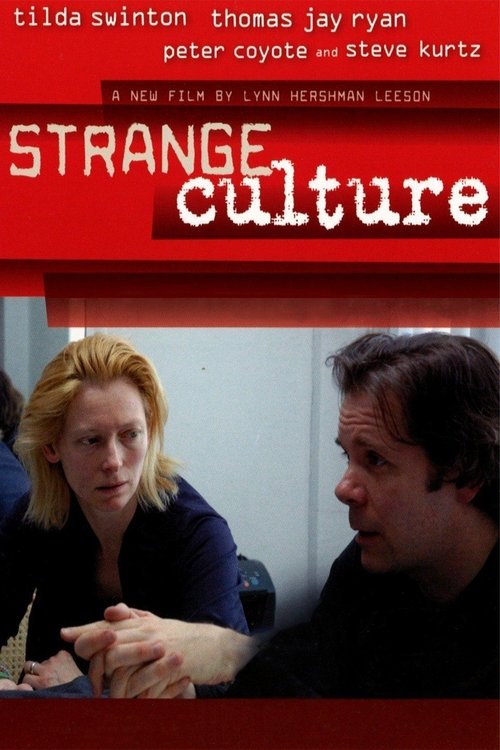
What events lead to the main character's arrest in Strange Culture?
How does Steve Kurtz's relationship with his wife influence the story?
What role do the authorities play in the plot of Strange Culture?
How does the film depict the impact of the legal system on Steve Kurtz's life?
What artistic elements are used in Strange Culture to convey Steve's emotional state?
Should I watch it?
Ask Your Own Question

What is the plot?
Sorry, we aren't able to watch and write up a full detailed plot yet. Check back in a few days.








What is the ending?
In the ending of "Strange Culture," the film culminates in a poignant and unsettling resolution. The main character, Steve Kurtz, faces the consequences of his actions and the absurdity of the situation surrounding him. The film concludes with a sense of unresolved tension, highlighting the impact of the events on Steve's life and the broader implications of the conflict he has endured.
As the film approaches its conclusion, we find Steve Kurtz grappling with the aftermath of his legal troubles. He is depicted in a state of emotional turmoil, reflecting on the absurdity of being accused of bioterrorism due to his art and research. The narrative unfolds with a series of scenes that illustrate his isolation and the weight of the accusations against him.
In one scene, Steve is shown in a stark, sterile environment, perhaps a courtroom or a sterile interrogation room, where he faces the legal system that has turned against him. The tension in the air is palpable as he navigates the complexities of his case, feeling the pressure of the authorities who misunderstand his intentions. His internal struggle is evident; he is a man caught between his passion for art and science and the harsh reality of being labeled a criminal.
The film then shifts to scenes of Steve's interactions with his friends and supporters, who rally around him but are also affected by the situation. Their conversations are filled with a mix of hope and despair, as they discuss the implications of the charges against him. The emotional stakes are high, and the audience can sense the fear and frustration of those who care for Steve, as they witness the toll the ordeal takes on him.
As the narrative progresses, we see Steve's resolve begin to waver. He reflects on the nature of his work and the societal perceptions of art and science. The film captures his moments of vulnerability, showcasing his fear of losing everything he has worked for. The audience is drawn into his internal conflict, feeling the weight of the accusations and the absurdity of the situation.
In the final scenes, the film leaves viewers with a sense of ambiguity. Steve's fate remains uncertain as he continues to fight against the charges, but the emotional impact of the experience is clear. The film closes with a lingering sense of injustice, emphasizing the broader themes of misunderstanding and the consequences of societal fears. Steve's journey is one of resilience, but it is also a stark reminder of the fragility of artistic expression in the face of authority.
Ultimately, the ending of "Strange Culture" encapsulates the struggles of its main character, Steve Kurtz, who is left to navigate a world that has turned hostile due to a misunderstanding of his intentions. The film concludes without a clear resolution, leaving the audience to ponder the implications of the conflict and the fate of those involved.
Is there a post-credit scene?
The movie "Strange Culture," produced in 2007, does not contain a post-credit scene. The film concludes its narrative without any additional scenes or content after the credits roll. The focus remains on the story of artist Steve Kurtz, who faces legal troubles and personal turmoil following the death of his wife and the subsequent investigation into his work and life. The film emphasizes the emotional and psychological impact of these events rather than providing any further narrative developments in a post-credit sequence.
What events lead to the main character's arrest in Strange Culture?
The main character, Steve Kurtz, is arrested after the sudden death of his wife, Hope. When paramedics arrive at their home, they discover a collection of biological materials and scientific equipment that Steve had been using for his art projects. This leads to a misunderstanding, and he is accused of being involved in bioterrorism, which sets off a series of legal and personal struggles.
How does Steve Kurtz's relationship with his wife influence the story?
Steve's relationship with Hope is central to the narrative. Their bond is depicted through flashbacks and memories, showcasing their shared passion for art and science. Hope's unexpected death deeply affects Steve, driving him into a state of grief and confusion, which complicates his legal troubles and highlights the emotional stakes of his fight against the accusations.
What role do the authorities play in the plot of Strange Culture?
The authorities, particularly the FBI, play a significant role in the plot as they investigate Steve Kurtz. Their aggressive tactics and the portrayal of bureaucratic indifference create a sense of paranoia and helplessness for Steve. The film illustrates the tension between individual creativity and government oversight, as Steve's artistic endeavors are misconstrued as potential threats.
How does the film depict the impact of the legal system on Steve Kurtz's life?
The film portrays the legal system as a labyrinthine and often dehumanizing experience for Steve. As he navigates through court hearings and interrogations, the emotional toll becomes evident. He feels increasingly isolated and misunderstood, as the legal proceedings strip away his identity and reduce him to a suspect rather than an artist, showcasing the profound impact of the system on his life.
What artistic elements are used in Strange Culture to convey Steve's emotional state?
The film employs various artistic elements, including visual metaphors and surreal imagery, to reflect Steve's emotional turmoil. For instance, scenes of his art projects juxtaposed with the stark reality of his legal battles create a contrast that emphasizes his internal struggle. The use of color, lighting, and sound design further enhances the emotional weight of his experiences, illustrating his sense of loss and confusion.
Is this family friendly?
"Strange Culture," produced in 2007, is a film that delves into complex themes surrounding government surveillance, personal trauma, and the impact of societal pressures on individuals. While it is a thought-provoking narrative, it may not be considered family-friendly due to several potentially objectionable or upsetting aspects:
-
Themes of Trauma: The film explores deep emotional and psychological trauma, which may be distressing for younger viewers or sensitive individuals.
-
Government Surveillance: The portrayal of invasive government actions and the implications of surveillance can be unsettling, particularly for those sensitive to issues of privacy and personal freedom.
-
Emotional Distress: Characters experience significant emotional turmoil, including fear, anxiety, and despair, which may resonate negatively with some viewers.
-
Violence and Threats: There are scenes that depict threats and a sense of danger, which could be frightening for children.
-
Adult Language and Situations: The film contains mature language and situations that may not be suitable for younger audiences.
Overall, the film's heavy themes and emotional weight may not be appropriate for children or those who are particularly sensitive to such content.