




Popular
What visual elements are prominent in the concert film?
What songs are performed by the John Mayer Trio during the concert?
How does John Mayer interact with the audience during the performance?
What is the significance of the venue, Bowery Ballroom, in the concert?
How does the band’s chemistry contribute to the performance?
Should I watch it?
Ask Your Own Question

What is the plot?
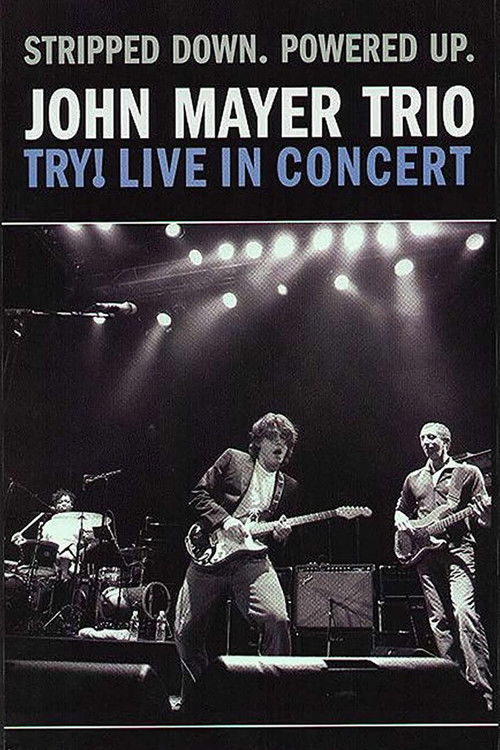
What follows is not a movie plot at all, but a live concert recording: John Mayer Trio performing at Bowery Ballroom in New York on November 23, 2005, with John Mayer on guitar and vocals, Steve Jordan on drums, and Pino Palladino on bass. Since there are no scripted characters, deaths, twists, or narrative villains, the "story" is the unfolding of a blues-heavy set that builds from a raw opening into a loose, improvisatory finale.
The night begins in the tight, intimate heat of Bowery Ballroom, where the trio steps into the room and opens with "Every Day I Have the Blues," immediately setting the tone with a stripped-down, smoky pulse rather than any kind of cinematic exposition. The crowd is there for music, not dialogue, yet the performance itself speaks like a plot: John Mayer's guitar lines answer the rhythm section, Steve Jordan's drumming keeps the whole room snapping forward, and Pino Palladino's bass sits underneath everything with a cool, unshakable foundation. The energy is small-room electric, the kind that makes every bend of a note feel like a confession and every drum hit feel like a warning.
As the trio moves into "Who Did You Think I Was," the set starts to reveal its real shape: this is a blues-rock transformation story, not a drama with spoken secrets. Mayer stretches out on guitar, showing a more aggressive, more technically rich side of his playing, and the band sounds less like a solo artist with backing musicians than a true three-way machine. "Wait Until Tomorrow" follows, and the performance leans into Hendrix-era swagger, with Steve Jordan's groove becoming so distinct that one review points out how the beat eventually blooms into "Cissy Strut" later in the night. The room feels increasingly charged, as if each song is a new test the trio passes by listening to one another more closely than before.
"Good Love Is on the Way" and "Gravity" deepen the emotional center of the concert, turning the show from a display of chops into something more searching and vulnerable. "Gravity" in particular lands with extra weight, because the trio's blues framework gives the song a darker, more muscular shape than a studio version might have. There is no spoken confession, but the music itself acts like one: Mayer's voice sounds plaintive and worn-in, the guitar tones glow and sting at once, and the rhythm section leaves him room to breathe and ache. The audience is pulled into the slow-burn intensity, and the set starts to feel less like a sequence of songs and more like a single, rising current.
The performance then pushes outward again with "I Don't Need No Doctor," where the trio snaps back into harder, earthier swagger. This is one of the moments where the show's living, breathing quality becomes clearest: nothing feels locked down, and every passage seems open to surprise. "Vultures" and "Out of My Mind" extend that sense of motion, with Mayer singing and playing as if he is trying to outrun the limits of the song form itself. Review coverage describes the trio as having "flew their indigo for well over an hour," and that phrasing fits the feeling of the set perfectly: the music does not just proceed, it keeps lifting and rolling forward, one groove handing off to the next.
Then the concert starts to lean into its most playful and exploratory stretches. "Chicken Grease" becomes one of the night's loose, funkier pivots, a jam-like passage that shows the trio's willingness to bend time and style without losing control. The show's momentum depends on this tension between precision and freedom: Steve Jordan holds the pocket with authority, Pino Palladino shadows and counterpoints with understated brilliance, and Mayer circles above them, shifting from blues phrasing to sharper rock textures to more spacious, exploratory lines. The room is no longer just listening; it is riding along with the trio as they take shape in real time.
The climax of the performance arrives in the back half, when the set grows even more expansive and the band's chemistry becomes the main event. "Cissy Strut" functions like a release valve and a declaration at once, turning the earlier groove work into a full-band payoff. The Meters cover lands as a nod to the trio's broader musical vocabulary, and it feels like the point where the concert stops being about proving anything and becomes pure joy in motion. The musicians sound locked in, relaxed, and fully aware of how well they are listening to one another. There is no conflict to resolve, but there is a kind of resolution in the way the trio keeps finding the pocket and then expanding it.
If the recording has an ending in the dramatic sense, it is the closing stretch of the set and the crowd-facing energy that follows, not a final revelation or a last-minute turn. The Bowery Ballroom performance concludes as a live concert concludes: with applause, lingering resonance, and the sense that the room has just witnessed a band becoming more than the sum of its parts. No one dies, no one betrays anyone, and no hidden identity is exposed, because this is not a narrative film at all; the full "plot" is the arrival, ascent, and release of a trio at the peak of its live interplay. What remains at the end is the memory of John Mayer, Steve Jordan, and Pino Palladino turning a New York club into a furnace of blues, funk, and precision, then leaving the audience with the afterglow of a show that never needed a story to feel complete.








What is the ending?
The ending of "John Mayer Trio - Live at Bowery Ballroom, New York" features a powerful performance that culminates in a heartfelt rendition of "Gravity." The concert concludes with the trio leaving the stage to thunderous applause, leaving the audience energized and fulfilled.
As the concert progresses towards its conclusion, the atmosphere in the Bowery Ballroom becomes electric. The lights dim slightly, and the audience, a mix of devoted fans and curious newcomers, is captivated by the energy radiating from the stage. John Mayer, alongside bassist Pino Palladino and drummer Steve Jordan, showcases their musical chemistry, each member contributing to the overall sound with precision and passion.
The trio transitions into "Gravity," a song that resonates deeply with the audience. Mayer's voice, filled with emotion, conveys a sense of vulnerability and introspection. The lyrics speak to the struggles of maintaining balance in life, a theme that resonates with many in the crowd. As Mayer plays his guitar, the notes soar, and the audience sways in unison, lost in the moment.
The camera captures close-ups of Mayer's face, revealing his deep connection to the music. His eyes reflect a mix of determination and reflection, as if he is sharing a piece of his soul with each strum of the guitar. The rhythm section, with Palladino's steady bass lines and Jordan's dynamic drumming, provides a solid foundation that allows Mayer to explore the song's emotional depths.
As the song builds to its climax, the energy in the room intensifies. The audience's cheers grow louder, and the band feeds off this energy, pushing their performance to new heights. Mayer's guitar solo is a highlight, showcasing his technical skill and emotional expression. The notes seem to dance in the air, each one resonating with the audience's collective heartbeat.
As "Gravity" comes to a close, Mayer steps back from the microphone, allowing the music to linger in the air for a moment. The audience erupts into applause, a wave of appreciation washing over the venue. The trio exchanges glances, a silent acknowledgment of their shared experience on stage. They take a moment to soak in the atmosphere, the connection they have forged with the audience palpable.
With a final bow, Mayer, Palladino, and Jordan leave the stage, their silhouettes illuminated by the stage lights. The applause continues, a testament to the impact of their performance. The camera captures the audience's faces, a mix of joy and satisfaction, as they realize they have witnessed something special.
In the end, the fate of the main characters--John Mayer, Pino Palladino, and Steve Jordan--remains intertwined with the music they created together. They leave the stage not just as musicians but as storytellers who have shared a moment of vulnerability and connection with their audience. The concert concludes, but the echoes of their performance linger, a reminder of the power of music to unite and inspire.
Is there a post-credit scene?
The film "John Mayer Trio - Live at Bowery Ballroom, New York," produced in 2009, does not contain a post-credit scene. The concert film focuses on the live performance of the John Mayer Trio, showcasing their musical talent and chemistry on stage. The film captures the energy of the live audience and the intimate setting of the Bowery Ballroom, emphasizing the raw and authentic experience of the concert without any additional scenes or content after the credits. The emphasis remains on the music and the connection between the band and their fans throughout the performance.
What visual elements are prominent in the concert film?
The concert film features dynamic camera angles, close-ups of the musicians, and vibrant lighting that enhances the mood of each song, immersing viewers in the live experience.
What songs are performed by the John Mayer Trio during the concert?
The John Mayer Trio performs a selection of songs that includes 'Who Did You Think I Was', 'Gravity', 'Vultures', and 'Waiting on the World to Change', showcasing their musical prowess and Mayer's guitar skills.
How does John Mayer interact with the audience during the performance?
John Mayer engages with the audience through banter, sharing personal anecdotes and expressing gratitude for their support, creating an intimate atmosphere despite the large venue.
What is the significance of the venue, Bowery Ballroom, in the concert?
The Bowery Ballroom is known for its rich musical history and intimate setting, which enhances the emotional connection between the performers and the audience, making the concert feel personal and special.
How does the band’s chemistry contribute to the performance?
The chemistry between John Mayer, bassist Pino Palladino, and drummer Steve Jordan is palpable, as they seamlessly blend their musical styles, creating a dynamic and energetic performance that captivates the audience.
Is this family friendly?
"John Mayer Trio - Live at Bowery Ballroom, New York" is primarily a concert film showcasing the musical performance of John Mayer and his band. While the film focuses on the music and the live experience, there are a few aspects that may be considered potentially objectionable or upsetting for children or sensitive viewers:
-
Language: There may be instances of mild profanity in the lyrics of some songs or in the banter between the band members and the audience.
-
Themes: The songs performed often explore complex emotional themes such as heartbreak, love, and personal struggles, which may not resonate with younger audiences.
-
Audience Behavior: The concert setting may include audience members who are drinking or behaving in ways that some parents might find inappropriate for children.
-
Visuals: The film features a vibrant concert atmosphere, which includes bright lights and close-up shots of the band, which could be overwhelming for sensitive viewers.
Overall, while the film is centered around music and performance, parents may want to consider these elements when deciding if it is suitable for younger viewers.