


























































Popular
What challenges does Ben face with his film's reception?
How does Ben's personal life affect his professional decisions?
What role does the character of the director play in Ben's struggles?
How does Ben's relationship with his daughter influence his character development?
What is the significance of the film-within-a-film concept in the story?
Should I watch it?
Ask Your Own Question

What is the plot?
Sorry, we aren't able to watch and write up a full detailed plot yet. Check back in a few days.







What is the ending?
In the ending of "What Just Happened," Ben, the main character, faces the fallout of his chaotic life in Hollywood. After a series of personal and professional challenges, he ultimately decides to move forward, accepting the changes in his life and career. The film concludes with a sense of ambiguity about his future, but he appears to be ready to embrace whatever comes next.
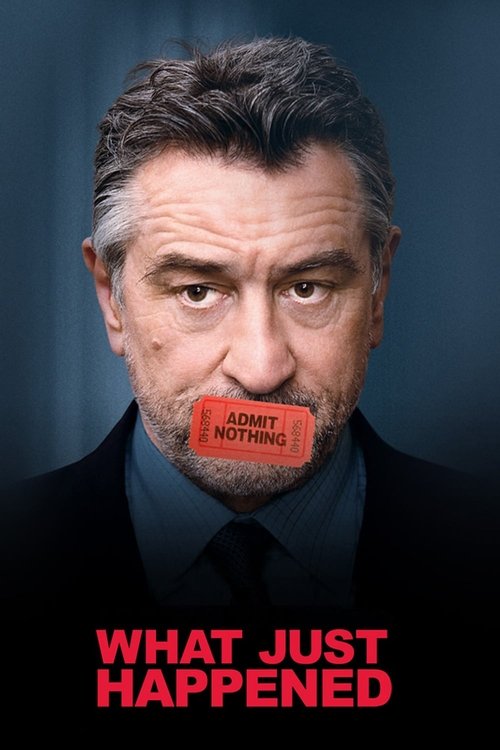
As the film approaches its conclusion, we find Ben, played by Robert De Niro, grappling with the aftermath of a tumultuous few weeks. The narrative unfolds with Ben attending a screening of his film, which has undergone significant changes due to studio pressures. The tension is palpable as he sits in the audience, anxiously awaiting the reactions of the viewers. The film he has worked so hard on has been altered, and he feels a mix of pride and frustration.
In the next scene, Ben is confronted by the studio executives who have made decisions that he disagrees with. They discuss the film's marketing and the need to appeal to a broader audience, which further complicates Ben's vision. He feels increasingly alienated from the very industry he has dedicated his life to, highlighting the disconnect between artistic integrity and commercial viability.
As the story progresses, Ben's personal life also unravels. His relationship with his estranged wife, Kelly, is strained, and they have a tense conversation about their family and the impact of his career on their lives. Ben's emotional state is fragile; he is torn between his responsibilities as a father and his ambitions as a filmmaker. This internal conflict is mirrored in his interactions with his children, who are caught in the crossfire of his chaotic life.
In a pivotal moment, Ben attends a meeting with a potential new project, where he is met with skepticism from the studio executives. They question his ability to deliver a successful film, and Ben's frustration boils over. He realizes that the industry is fickle, and his past successes do not guarantee future opportunities. This moment serves as a turning point for Ben, as he begins to reassess his priorities and what he truly wants from his career.
The climax of the film occurs when Ben finally confronts the reality of his situation. He has a heartfelt conversation with his friend and fellow filmmaker, who encourages him to stay true to himself and his vision. This exchange is crucial, as it reinforces Ben's desire to create meaningful work rather than simply chasing commercial success.
In the final scenes, Ben makes a decision to move forward, both in his career and personal life. He acknowledges the changes that have occurred and seems ready to embrace the uncertainty of the future. The film ends on a note of ambiguity, leaving viewers to ponder Ben's fate. He walks away from the chaos of Hollywood, symbolizing a potential new beginning, but the outcome remains uncertain.
Throughout the ending, the fates of the main characters are intertwined with Ben's journey. Kelly, his ex-wife, remains distant but is shown to be supportive in her own way, indicating that while their relationship is strained, there is still a connection. Ben's children are left in a state of confusion, reflecting the impact of their father's choices on their lives. The film closes with a sense of hope and uncertainty, encapsulating the complexities of life in the film industry and the personal struggles that accompany it.
Is there a post-credit scene?
The movie "What Just Happened," released in 2008, does not have a post-credit scene. The film concludes without any additional scenes or content after the credits roll. The story wraps up with the main character, Ben, reflecting on the chaotic nature of Hollywood and the challenges he faces in his career, leaving the audience with a sense of closure regarding his journey throughout the film.
What challenges does Ben face with his film's reception?
Ben, a Hollywood producer, grapples with the backlash from a screening of his latest film, which is met with harsh criticism. He faces the challenge of appeasing the director, who is furious about the negative feedback, and the studio executives who are anxious about the film's potential failure.
How does Ben's personal life affect his professional decisions?
Ben's personal life is tumultuous, particularly his strained relationship with his ex-wife, who is seeking more financial support. This personal turmoil seeps into his professional life, causing him to make impulsive decisions, such as trying to win back his ex while simultaneously managing the chaos of his film's production.
What role does the character of the director play in Ben's struggles?
The director, played by Robert De Niro, is a volatile and passionate figure who becomes increasingly agitated by the studio's demands and the negative reception of his film. His erratic behavior and insistence on creative control create additional pressure for Ben, who must navigate the director's artistic vision while trying to salvage the project.
How does Ben's relationship with his daughter influence his character development?
Ben's relationship with his daughter is strained, as she is caught in the middle of his chaotic life. Their interactions reveal his vulnerabilities and desire for connection, highlighting his struggle to balance his demanding career with being a present father. This relationship serves as a catalyst for Ben's self-reflection and growth throughout the film.
What is the significance of the film-within-a-film concept in the story?
The film-within-a-film concept serves as a satirical commentary on the Hollywood system, showcasing the absurdities and pressures of the film industry. It allows the audience to see Ben's struggles from a meta perspective, as he navigates the challenges of production, creative differences, and the impact of public perception on his work.
Is this family friendly?
"What Just Happened," produced in 2008, is a satirical comedy-drama that explores the chaotic world of Hollywood filmmaking. While it features humor and industry insights, it may not be considered family-friendly due to several potentially objectionable elements.
-
Language: The film contains strong language, including profanity, which may not be suitable for younger audiences.
-
Adult Themes: There are discussions and depictions of adult relationships, including infidelity and the complexities of marriage, which may be uncomfortable for children.
-
Drug Use: Scenes depict characters using drugs, which could be upsetting or inappropriate for sensitive viewers.
-
Violence: There are moments of implied violence and tension, particularly related to the pressures of the film industry, which may be distressing.
-
Emotional Turmoil: The protagonist experiences significant stress and emotional conflict, which could resonate negatively with sensitive viewers.
Overall, the film's mature themes and content make it more suitable for adult audiences rather than children.