




























Popular
What is the significance of Dan's drug addiction in the story?
How does Drey's relationship with Dan evolve throughout the film?
What role does Drey's mother play in the story?
What is the impact of the school environment on Dan and Drey's lives?
How does the film portray the theme of mentorship through Dan and Drey's interactions?
Should I watch it?
Ask Your Own Question

What is the plot?
Sorry, we aren't able to watch and write up a full detailed plot yet. Check back in a few days.







What is the ending?
In the ending of "Half Nelson," Dan Dunne, a high school teacher struggling with addiction, faces a pivotal moment when he is confronted by one of his students, Drey. After a series of events that reveal the depth of his struggles, Dan's relationship with Drey becomes a focal point. The film concludes with a poignant scene where Drey finds Dan in a vulnerable state, and they share a moment of understanding. The film ends ambiguously, leaving the audience to ponder the future of both characters.
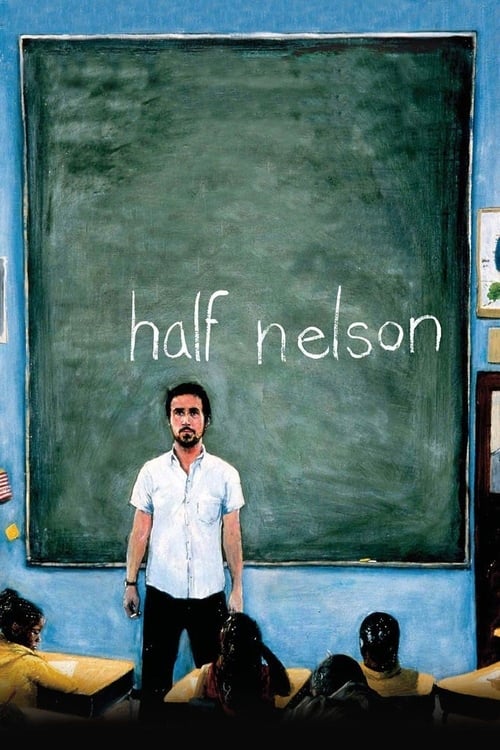
As the film approaches its conclusion, we find Dan Dunne, portrayed by Ryan Gosling, in a state of emotional turmoil. He is a dedicated history teacher at a Brooklyn high school, but his life is marred by a severe drug addiction. The narrative builds tension as Dan's struggles become increasingly visible to his students, particularly to Drey, played by Shareeka Epps, who is both intrigued and concerned by her teacher's erratic behavior.
In the penultimate scenes, Dan's addiction spirals out of control. He is seen in a series of disheveled states, teaching his students with a passion that contrasts sharply with his personal life. Drey, who has been navigating her own challenges, including her involvement with a local drug dealer, begins to see Dan not just as a teacher but as a person in need of help. Their relationship deepens, marked by moments of vulnerability and connection.
The climax occurs when Drey discovers Dan in a compromising position, having overdosed in a bathroom stall. This moment is pivotal; it encapsulates Dan's struggle and the impact of his choices on those around him. Drey's reaction is a mix of shock and empathy, as she grapples with the reality of Dan's addiction. She is faced with the decision of whether to help him or distance herself from his destructive behavior.
In the final scenes, Drey confronts Dan after he has been released from the hospital. They meet in a park, where the atmosphere is heavy with unspoken words. Drey expresses her disappointment and concern, revealing her own struggles with the drug culture that surrounds her. Dan, in a moment of raw honesty, acknowledges his failures and the pain he has caused. He is aware that he is not the role model she deserves, yet he still longs for a connection with her.
The film closes with a powerful image: Drey walks away from Dan, leaving him sitting alone on a park bench. The camera lingers on Dan's face, capturing a mix of regret, sadness, and a flicker of hope. The ending is deliberately ambiguous, suggesting that while Dan's journey is fraught with challenges, there is still a possibility for redemption. Drey, on the other hand, is left to navigate her own path, having witnessed the complexities of adulthood and the harsh realities of life.
In summary, the fates of the main characters are intertwined in this poignant conclusion. Dan remains trapped in his addiction, facing the consequences of his choices, while Drey is left to confront her own future, shaped by the lessons learned from her relationship with Dan. The film ends on a note of uncertainty, reflecting the ongoing struggles of both characters as they seek to find their way in a world filled with challenges.
Is there a post-credit scene?
The movie "Half Nelson," produced in 2006, does not have a post-credit scene. The film concludes with a poignant moment that encapsulates the emotional journey of the characters, particularly focusing on the relationship between Dan Dunne, a high school teacher struggling with addiction, and his student, Drey. The ending leaves viewers with a sense of unresolved tension and hope, but there are no additional scenes after the credits. The film's focus remains on the complexities of personal struggles and the impact of mentorship, rather than extending the narrative further in a post-credit sequence.
What is the significance of Dan's drug addiction in the story?
Dan Dunne, played by Ryan Gosling, is a high school history teacher who struggles with a crack cocaine addiction. His addiction serves as a central conflict in the narrative, illustrating his internal battle and the impact it has on his life and relationships. It creates a stark contrast between his passionate teaching style and his personal struggles, highlighting the duality of his character. Dan's addiction is not just a personal failing; it affects his students, particularly Drey, who becomes both a confidante and a witness to his downward spiral.
How does Drey's relationship with Dan evolve throughout the film?
Drey, portrayed by Shareeka Epps, initially views Dan as an inspiring teacher who challenges her to think critically about history and her own life. As she discovers his drug addiction, her perception shifts from admiration to concern. Their relationship deepens as they share personal struggles; Drey grapples with her own challenges in her neighborhood and family life. This bond becomes a pivotal point in the film, as Drey's loyalty and desire to help Dan clash with her need for stability and guidance.
What role does Drey's mother play in the story?
Drey's mother, played by actress Karen B. Johnson, is a protective figure who is concerned about her daughter's well-being. She represents the challenges faced by single parents in tough neighborhoods. Her interactions with Drey reveal the pressures of their environment and the importance of parental guidance. When she learns about Drey's relationship with Dan, her protective instincts heighten, showcasing the tension between Drey's desire for independence and her mother's need to shield her from potential harm.
What is the impact of the school environment on Dan and Drey's lives?
The school environment serves as a microcosm of the larger societal issues affecting both Dan and Drey. For Dan, the school is a place where he can express his passion for teaching, yet it also highlights his failures as he struggles with addiction. For Drey, the school is a refuge from her chaotic home life, but it also exposes her to the harsh realities of her community. The interactions with other teachers and students reflect the systemic challenges they face, emphasizing the importance of education as both a tool for empowerment and a source of frustration.
How does the film portray the theme of mentorship through Dan and Drey's interactions?
The mentorship theme is intricately woven into Dan and Drey's relationship. Dan initially serves as a mentor, inspiring Drey to think critically and pursue her dreams. However, as his addiction worsens, the dynamic shifts; Drey begins to take on a caretaker role, trying to help Dan confront his demons. This reversal of roles complicates their relationship, as Drey grapples with the realization that her mentor is flawed and in need of support. The film explores the complexities of mentorship, highlighting that it can be both empowering and burdensome.
Is this family friendly?
"Half Nelson," produced in 2006, is not considered family-friendly due to its mature themes and content. Here are some potentially objectionable or upsetting aspects that may affect children or sensitive viewers:
-
Drug Use: The film prominently features scenes of drug use, including the main character's struggles with addiction, which are depicted in a raw and realistic manner.
-
Strong Language: There is frequent use of profanity throughout the film, which may be inappropriate for younger audiences.
-
Violence: While not excessively graphic, there are moments of violence and confrontations that may be unsettling.
-
Emotional Turmoil: The film explores heavy emotional themes, including despair, failure, and the complexities of personal relationships, which may be difficult for younger viewers to process.
-
Difficult Family Dynamics: The portrayal of troubled family relationships and the impact of addiction on loved ones can be distressing.
These elements contribute to the film's overall tone and may not be suitable for children or those sensitive to such topics.