
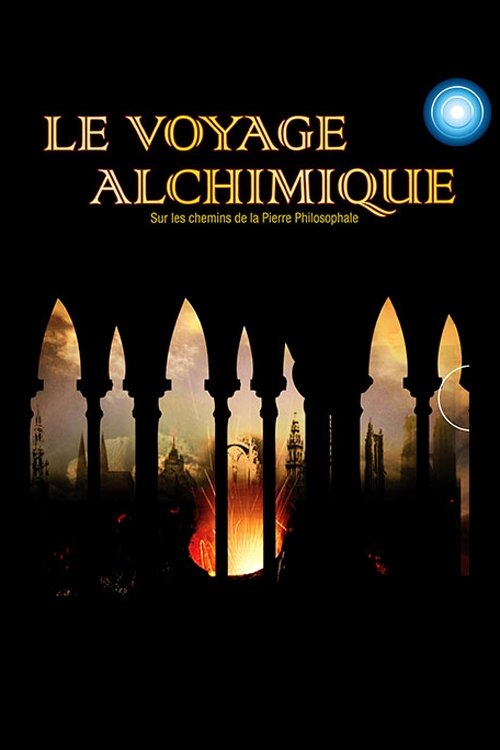


Popular
What is the significance of the Philosopher's Stone in the story?
How does the character of Lucien evolve throughout the series?
What role does the character of Elodie play in Lucien's journey?
What are the consequences of the alchemical experiments conducted by the main characters?
How does the relationship between Lucien and his mentor, Master Alaric, influence the plot?
Should I watch it?
Ask Your Own Question

What is the plot?
In the opening scene of "Le voyage alchimique," we are introduced to the protagonist, a young alchemist named Émile, who is deeply fascinated by the ancient texts of alchemy. He lives in a small, dimly lit workshop filled with various potions, herbs, and alchemical symbols. Émile is portrayed as a passionate and somewhat obsessive character, driven by the desire to uncover the secrets of transmutation and the Philosopher's Stone. His mentor, an elderly alchemist named Master Lucien, warns him about the dangers of pursuing forbidden knowledge, but Émile is undeterred.
As the story progresses, Émile discovers a hidden manuscript that details a legendary alchemical journey. This manuscript speaks of a mythical land where the elements can be manipulated freely, and the secrets of life and death can be unraveled. Fueled by ambition, Émile decides to embark on this journey, believing it will lead him to the ultimate truth of alchemy. He prepares for his departure, gathering essential tools and potions, and bids farewell to Master Lucien, who expresses concern for Émile's safety.
Émile sets off on his journey, traveling through dense forests and treacherous mountains. Along the way, he encounters various challenges, including a fierce storm that nearly derails his quest. During this storm, Émile's resolve is tested as he struggles to find shelter. He eventually stumbles upon a hidden cave, where he meets a mysterious woman named Alia, who claims to be a guardian of the alchemical secrets. Alia is enigmatic and possesses knowledge of Émile's quest, which intrigues him.
As Émile and Alia converse, she reveals that the journey is not just about physical travel but also about self-discovery. She challenges Émile to confront his inner fears and doubts. This moment serves as a turning point for Émile, who begins to reflect on his motivations and the potential consequences of his quest. Alia offers to guide him through the next stages of his journey, and Émile reluctantly agrees, realizing he cannot achieve his goals alone.
The duo travels deeper into the mystical land, encountering various elemental beings that represent earth, water, fire, and air. Each encounter is a test of Émile's knowledge and character. In the realm of earth, he faces a giant golem that challenges him to prove his understanding of stability and strength. Émile uses his alchemical skills to create a potion that calms the golem, allowing him to pass. This victory boosts his confidence, but he remains aware of the challenges ahead.
Next, they enter the realm of water, where Émile must navigate a labyrinthine underwater city inhabited by merfolk. Here, he learns the importance of adaptability and fluidity. He is tasked with solving a riddle posed by the merfolk queen, which requires him to think creatively. After much contemplation, Émile answers correctly, earning the respect of the merfolk and gaining access to their ancient knowledge of alchemy.
As they continue their journey, Émile and Alia reach the realm of fire, where they encounter a fierce dragon guarding a treasure trove of alchemical artifacts. The dragon represents Émile's inner fears and desires. In a climactic confrontation, Émile must confront the dragon not with violence but with understanding. He uses a potion of empathy, allowing the dragon to see his true intentions. This act of compassion leads to a truce, and the dragon grants Émile a powerful artifact that enhances his alchemical abilities.
The final realm they visit is the realm of air, where Émile faces the challenge of letting go of his past attachments. Here, he meets a wise old sage who teaches him about the balance between ambition and humility. Émile is forced to confront his obsession with the Philosopher's Stone and the potential consequences of his pursuit. This moment of introspection leads him to a critical decision: to seek knowledge not for power but for the betterment of humanity.
With newfound wisdom, Émile and Alia return to the physical world, where they must confront the consequences of their journey. Émile realizes that the true Philosopher's Stone lies not in material wealth but in the understanding and connections he has forged along the way. He returns to Master Lucien, who is both proud and relieved to see him safe. Émile shares his experiences and newfound knowledge, emphasizing the importance of balance in alchemy.
In the closing scenes, Émile begins to teach others about the lessons he learned, fostering a new generation of alchemists who prioritize wisdom over ambition. The series ends with Émile standing in his workshop, surrounded by students, as he reflects on his journey and the transformative power of alchemy, both in the physical and spiritual realms.









What is the ending?
In the ending of "Le voyage alchimique," the main characters reach a climactic confrontation with their inner demons and the external forces that have been manipulating their journey. The protagonist, seeking redemption and understanding, ultimately sacrifices a part of themselves to restore balance. The story concludes with a sense of resolution, as the characters find peace in their choices, but not without the weight of their experiences.
As the final scenes unfold, the atmosphere is thick with tension. The protagonist, Luc, stands at the edge of a vast, shimmering lake, the moonlight reflecting off the water's surface like scattered diamonds. He is haunted by the memories of his journey, the faces of those he has lost, and the burdens he carries. The air is still, and the silence is punctuated only by the gentle lapping of the water against the shore.
In a flashback, we see Luc's earlier encounters with his companions: the wise yet enigmatic Alchemist, who guided him through the trials of self-discovery; the fierce warrior, Clara, who fought valiantly but struggled with her own vulnerabilities; and the gentle healer, Elias, who provided solace but was often overshadowed by the chaos around him. Each character's journey has been intertwined with Luc's, and their fates are now converging.
As Luc gazes into the lake, he is confronted by a vision of his past mistakes. The Alchemist appears beside him, urging him to confront the darkness within. "You must let go of what weighs you down," the Alchemist advises, his voice echoing with wisdom. Luc's internal struggle is palpable; he knows that to move forward, he must face the pain he has been avoiding.
The scene shifts to Clara, who is battling a fierce storm in the forest, representing her internal conflict. She fights against the elements, her sword clashing against the wind, symbolizing her struggle for control. In a moment of clarity, she realizes that true strength lies not in fighting alone but in accepting help from others. She lowers her weapon, allowing the storm to pass, signifying her acceptance of vulnerability.
Meanwhile, Elias is in a serene meadow, tending to wounded animals. He embodies compassion and healing, but he too is faced with a choice. He must decide whether to remain in his comfort zone or step into the unknown to support his friends. The moment he chooses to leave the meadow, he is filled with determination, ready to reunite with Luc and Clara.
Back at the lake, Luc takes a deep breath, feeling the weight of his choices. He steps into the water, the coolness enveloping him as he submerges himself. In this moment of surrender, he lets go of his guilt and fears, emerging transformed. The Alchemist watches with a knowing smile, recognizing that Luc has finally embraced his true self.
The final scene brings the three characters together at the edge of the lake. Clara and Elias join Luc, their expressions a mix of relief and understanding. They share a moment of silence, acknowledging the journey they have taken together. Each character has faced their demons and emerged stronger, united by their shared experiences.
As dawn breaks, the first rays of sunlight illuminate the landscape, symbolizing hope and new beginnings. The characters stand together, ready to face whatever comes next, their bonds forged in the fires of their trials. The screen fades to black, leaving the audience with a sense of closure and the understanding that while their journey has ended, their story continues in the choices they will make moving forward.
Is there a post-credit scene?
In "Le voyage alchimique," there is indeed a post-credit scene that adds an intriguing layer to the narrative. As the credits roll, the screen fades to black before transitioning to a dimly lit laboratory filled with alchemical symbols and bubbling potions. The camera pans slowly across the cluttered workbench, revealing various artifacts from the characters' journeys, including a small, intricately designed vial that glows faintly.
Suddenly, a figure emerges from the shadows--it's the enigmatic alchemist, who had been a guiding force throughout the series. He stands over the workbench, a contemplative expression on his face. As he picks up the glowing vial, he murmurs an incantation, and the vial begins to pulse with light, illuminating his features. The alchemist's eyes reflect a mix of hope and trepidation, suggesting that he is on the brink of a significant discovery.
The scene shifts to a close-up of the vial, and the camera zooms in on the swirling liquid inside, which begins to take on the shape of a familiar character from the series. This moment hints at the possibility of resurrection or transformation, leaving viewers with a sense of wonder and anticipation about what lies ahead.
As the scene fades out, the alchemist's voice echoes, "The journey is never truly over," reinforcing the themes of exploration and the cyclical nature of life and knowledge that permeate the series. This post-credit scene serves as a tantalizing tease for potential future adventures, inviting viewers to ponder the implications of alchemy and the characters' fates.
What is the significance of the Philosopher's Stone in the story?
The Philosopher's Stone serves as a central symbol in 'Le voyage alchimique,' representing the ultimate goal of alchemy: the transformation of base materials into gold and the quest for immortality. Throughout the series, various characters seek the stone, each driven by personal motivations--some for power, others for redemption. The stone's elusive nature creates tension and drives the narrative forward, as characters confront their desires and the moral implications of their pursuits.
How does the character of Lucien evolve throughout the series?
Lucien begins as a naive apprentice, eager to learn the secrets of alchemy. As the series progresses, he faces numerous challenges that test his beliefs and resolve. His encounters with betrayal and loss force him to confront the darker aspects of human nature and the consequences of his ambitions. By the end, Lucien emerges as a more complex character, grappling with the moral dilemmas of his journey and the sacrifices he must make for knowledge.
What role does the character of Elodie play in Lucien's journey?
Elodie serves as both a mentor and a love interest for Lucien, guiding him through the intricacies of alchemical practices while also embodying the emotional stakes of his quest. Her own struggles with the past and her connection to the Philosopher's Stone add depth to her character. As Lucien's feelings for her deepen, he is torn between his ambitions and his desire to protect her, leading to pivotal moments that shape his decisions and ultimately his fate.
What are the consequences of the alchemical experiments conducted by the main characters?
The alchemical experiments conducted by the characters often lead to unforeseen consequences, highlighting the dangers of their pursuits. For instance, a failed experiment results in a catastrophic explosion that not only injures several characters but also destroys a significant part of their laboratory. This incident serves as a turning point, forcing the characters to reevaluate their methods and the ethical implications of their work, ultimately leading to a deeper understanding of the balance between knowledge and responsibility.
How does the relationship between Lucien and his mentor, Master Alaric, influence the plot?
The relationship between Lucien and Master Alaric is fraught with tension and complexity. Alaric, a brilliant but morally ambiguous figure, embodies the duality of knowledge as both a gift and a curse. His mentorship pushes Lucien to explore the depths of alchemy, but it also exposes him to dangerous ideologies. As Lucien begins to question Alaric's methods and motivations, their dynamic shifts from one of admiration to conflict, ultimately propelling Lucien towards his own path of discovery and self-identity.
Is this family friendly?
"Le voyage alchimique," produced in 2008, is a visually rich and thematically complex series that explores deep philosophical and emotional themes through the lens of alchemy and personal transformation. While it is not overtly graphic or violent, there are several aspects that may be considered potentially objectionable or upsetting for children or sensitive viewers.
-
Existential Themes: The show delves into heavy philosophical questions about life, death, and the nature of existence, which may be confusing or distressing for younger audiences.
-
Emotional Turmoil: Characters experience significant emotional struggles, including loss, betrayal, and identity crises. These intense emotional scenes may resonate deeply and could be upsetting for sensitive viewers.
-
Symbolic Imagery: The series employs a variety of symbolic and sometimes dark imagery related to alchemical processes, which may be unsettling for some.
-
Conflict and Tension: There are moments of interpersonal conflict that can lead to heightened tension, including arguments and confrontations that may be intense.
-
Mystical Elements: The presence of mystical and supernatural elements may be frightening for younger viewers, particularly scenes that involve transformation or the unknown.
Overall, while "Le voyage alchimique" is not explicitly inappropriate, its thematic depth and emotional weight may require parental guidance for younger audiences.