
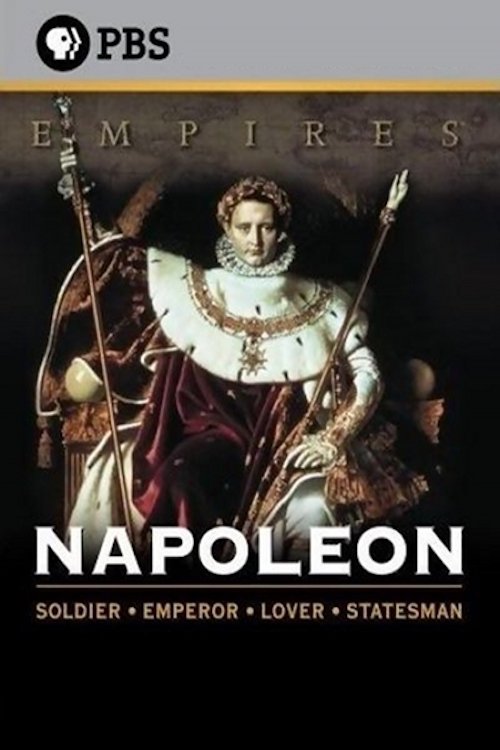



Popular
What role does the character of Talleyrand play in Napoleon's political maneuvers?
What motivates Napoleon Bonaparte in his rise to power throughout the series?
How does the relationship between Napoleon and Josephine evolve in the series?
How does the series portray the impact of the Napoleonic Wars on the common people?
What are the key moments that lead to Napoleon's downfall in the series?
Should I watch it?
Ask Your Own Question

What is the plot?
The miniseries "Napoleon" begins in Corsica in 1769, where a young Napoleon Bonaparte is born into a modest family. His father, Carlo Bonaparte, is a lawyer and a supporter of the French Revolution. The family struggles with their identity as Corsicans under French rule. Young Napoleon shows early signs of ambition and intelligence, which his mother, Letizia, encourages. As tensions rise in Corsica, the Bonaparte family faces challenges, including the death of Carlo, which leaves them in a precarious financial situation.
In 1779, Napoleon is sent to mainland France for his education at a military academy in Brienne-le-Château. He feels isolated and alienated due to his Corsican accent and background. Despite this, he excels in his studies, particularly in mathematics and military strategy. His determination to rise above his circumstances becomes evident as he navigates the social hierarchy of the academy. He befriends fellow students but often feels like an outsider.
By 1785, Napoleon graduates and is commissioned as a second lieutenant in the artillery. He is stationed in Valence, where he begins to develop his military skills. During this time, he becomes increasingly involved in revolutionary politics, aligning himself with the Jacobins. His passion for the revolutionary cause grows, and he begins to see the potential for military power to change the political landscape of France.
In 1793, during the French Revolution, Napoleon is promoted to brigadier general after successfully leading artillery against royalist forces in the Siege of Toulon. His strategic brilliance catches the attention of the revolutionary government, and he is appointed to command the Army of Italy. This marks a turning point in his career, as he begins to gain fame and recognition for his military prowess.
As he leads the Army of Italy in 1796, Napoleon employs innovative tactics, achieving a series of stunning victories against the Austrians and their allies. His campaigns are marked by rapid maneuvers and decisive battles, such as the Battle of Lodi, where he personally leads a charge across a bridge. His charisma and leadership inspire his troops, and he becomes a national hero. However, he also faces challenges, including supply shortages and the need to maintain morale among his soldiers.
In 1797, after a series of victories, Napoleon negotiates the Treaty of Campo Formio, which significantly expands French territory. He returns to France as a celebrated hero, but the political landscape is unstable. He navigates the complexities of post-revolutionary France, where various factions vie for power. During this time, he meets Joséphine de Beauharnais, a widow with whom he falls deeply in love. Their passionate relationship becomes a central aspect of his life, despite the challenges posed by her past and his ambitions.
In 1799, disillusioned with the political turmoil in France, Napoleon stages a coup d'état, overthrowing the Directory and establishing himself as First Consul. This bold move consolidates his power, and he begins to implement reforms aimed at stabilizing the country. He introduces the Napoleonic Code, which modernizes the legal system and reflects his vision of a meritocratic society. However, his authoritarian tendencies begin to emerge as he curtails political dissent and centralizes power.
In 1804, Napoleon crowns himself Emperor of the French in a lavish ceremony at Notre-Dame Cathedral. This act symbolizes his complete transformation from revolutionary leader to monarch. He seeks to legitimize his rule through a series of military campaigns across Europe, aiming to expand French influence. His ambition leads to the establishment of a vast empire, but it also breeds resentment among other European powers.
The series depicts key battles, including the Battle of Austerlitz in 1805, where Napoleon achieves a decisive victory against the combined forces of Austria and Russia. His tactical genius is on full display as he lures the enemy into a vulnerable position, leading to a rout. This victory solidifies his reputation as one of history's greatest military commanders.
However, as Napoleon's empire grows, so do the challenges he faces. In 1812, he launches a disastrous invasion of Russia, which becomes a turning point in his reign. The harsh winter and scorched earth tactics employed by the Russians decimate his Grand Army. The retreat from Moscow is marked by chaos and suffering, leading to a significant loss of life and morale.
In 1814, following a series of defeats, Napoleon is forced to abdicate and is exiled to the island of Elba. His fall from power is marked by a sense of betrayal and loss, as he reflects on his ambitions and the sacrifices made along the way. However, he escapes from Elba in 1815 and returns to France, where he regains support and briefly reestablishes his rule during the Hundred Days.
The series culminates in the Battle of Waterloo, where Napoleon faces a coalition of European forces led by the Duke of Wellington. The battle is intense, with shifting tides as both sides struggle for dominance. Ultimately, Napoleon's forces are defeated, leading to his final abdication. He is exiled to the remote island of Saint Helena, where he spends the remaining years of his life in isolation, reflecting on his legacy and the choices that led to his downfall. The miniseries concludes with his death in 1821, leaving behind a complex legacy that continues to shape history.









What is the ending?
In the ending of the 2000 miniseries "Napoleon," Napoleon Bonaparte faces his final defeat at the Battle of Waterloo, leading to his exile to Saint Helena. The series concludes with his reflections on his life, his legacy, and the impact of his ambitions, as he grapples with the consequences of his actions.
As the final act unfolds, we find ourselves in the year 1815, with Napoleon returning from exile on the island of Elba. He rallies his supporters and reclaims power in France, but this resurgence is short-lived. The scene shifts to the tense atmosphere of the Battle of Waterloo, where Napoleon's forces face the combined armies of the Duke of Wellington and the Prussian General Blücher.
The battlefield is chaotic, filled with the sounds of cannon fire and the cries of soldiers. Napoleon, portrayed with a mix of determination and desperation, commands his troops with fervor, believing that victory is within reach. However, as the battle progresses, it becomes clear that his strategies are faltering. The camera captures the grim expressions of his soldiers, reflecting their fear and uncertainty as they witness the tide turning against them.
In a pivotal moment, Napoleon's hopes are dashed when the Prussian forces arrive, tipping the balance in favor of his enemies. The scene is filled with tension as Napoleon realizes that his dream of a renewed empire is slipping away. The emotional weight of this moment is palpable; he is a man who has risen to great heights only to face the crushing reality of defeat.
As the battle concludes, the aftermath is devastating. The French army is in disarray, and Napoleon is forced to retreat. The scene shifts to his eventual surrender, where he is met with the somber acknowledgment of his fate. The once-mighty emperor is now a fallen leader, stripped of his power and glory.
The final scenes depict Napoleon's exile to the remote island of Saint Helena. The landscape is stark and isolated, mirroring his internal desolation. He is shown in solitude, reflecting on his life, surrounded by the remnants of his past. The emotional weight of his reflections is heavy; he contemplates the choices he made, the wars he waged, and the lives he impacted.
In the closing moments, we see Napoleon as an old man, frail and contemplative, haunted by memories of his ambition and the empire he lost. His fate is sealed as he comes to terms with the legacy he leaves behind--a complex tapestry of glory and tragedy.
The series concludes with a poignant reminder of the cost of ambition and the fleeting nature of power, leaving viewers with a sense of the profound impact of Napoleon's life on history and the human experience.
Is there a post-credit scene?
The TV miniseries "Napoleon," produced in 2000, does not feature a post-credit scene. The narrative concludes with the final episode, which wraps up the story of Napoleon Bonaparte's rise and fall, focusing on his exile to Saint Helena and his reflections on his life and legacy. The ending emphasizes the themes of ambition, power, and the consequences of his actions, leaving viewers with a poignant sense of closure rather than an additional scene after the credits.
What role does the character of Talleyrand play in Napoleon's political maneuvers?
Talleyrand serves as a cunning and pragmatic advisor to Napoleon, often acting as a political puppet master. His motivations are rooted in self-preservation and ambition, as he navigates the shifting tides of power. Throughout the series, Talleyrand's manipulative nature is revealed, as he provides strategic counsel while simultaneously plotting his own rise, showcasing the intricate dance of loyalty and betrayal in the political landscape.
What motivates Napoleon Bonaparte in his rise to power throughout the series?
Napoleon's ambition is a driving force in the series, depicted through his relentless pursuit of military success and political influence. His desire for glory and recognition fuels his decisions, often leading him to make bold and risky moves on the battlefield. The emotional weight of his humble beginnings as a Corsican outsider also shapes his motivations, as he seeks to prove himself and secure his legacy.
How does the relationship between Napoleon and Josephine evolve in the series?
The relationship between Napoleon and Josephine is complex and tumultuous. Initially, their romance is passionate, filled with deep affection and desire. However, as Napoleon's ambitions grow, the strain of his political responsibilities and Josephine's inability to provide an heir creates tension. The series captures their emotional highs and lows, showcasing moments of tenderness juxtaposed with jealousy and betrayal, ultimately leading to their separation.
How does the series portray the impact of the Napoleonic Wars on the common people?
The series vividly illustrates the devastating effects of the Napoleonic Wars on civilians, showcasing scenes of destruction, famine, and suffering. Through the eyes of various characters, including soldiers and their families, the emotional toll of war is depicted. The struggles of the common people serve as a stark contrast to Napoleon's grand ambitions, highlighting the human cost of his quest for power and the widespread disillusionment that follows.
What are the key moments that lead to Napoleon's downfall in the series?
Key moments leading to Napoleon's downfall include his disastrous invasion of Russia, where harsh winter conditions and logistical failures decimate his army. The series captures his initial overconfidence and subsequent despair as he realizes the extent of his losses. Additionally, the growing discontent among his allies and the rise of coalitions against him are portrayed, culminating in his eventual exile, which is depicted as a tragic consequence of his hubris and relentless ambition.
Is this family friendly?
The 2000 miniseries "Napoleon" is a historical drama that explores the life of the French military leader Napoleon Bonaparte. While it is a significant portrayal of historical events, there are several aspects that may be considered objectionable or upsetting for children or sensitive viewers:
-
Violence and Warfare: The series depicts numerous battle scenes, showcasing the brutality of war. There are graphic representations of injuries, death, and the chaos of combat, which may be distressing.
-
Death and Loss: Characters experience significant loss, including the deaths of loved ones. The emotional weight of these moments can be heavy and may evoke sadness or discomfort.
-
Political Intrigue and Betrayal: The narrative includes themes of betrayal, ambition, and the darker sides of political maneuvering, which may be complex and unsettling for younger audiences.
-
Romantic Relationships: There are depictions of romantic relationships that include tension, infidelity, and emotional turmoil, which may not be suitable for all viewers.
-
Historical Context: The series addresses the harsh realities of the Napoleonic era, including class struggles and the impact of war on society, which may be difficult for some to process.
Overall, while "Napoleon" is a rich historical narrative, its mature themes and intense scenes may not be appropriate for all children or sensitive viewers.