






Popular
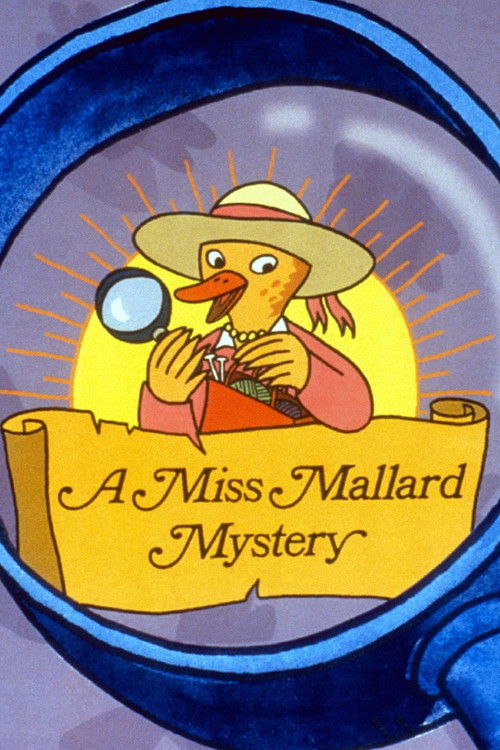
Who is Miss Mallard and what motivates her to solve mysteries?
What role does Captain Fowl play in Miss Mallard's investigations?
How does Miss Mallard's investigative style differ from other detectives in the series?
What is the significance of the various settings in which Miss Mallard solves her mysteries?
What challenges does Miss Mallard face in her investigations, and how does she overcome them?
Should I watch it?
Ask Your Own Question

What is the plot?
In the first episode of "A Miss Mallard Mystery," we are introduced to Miss Mallard, a clever and resourceful duck who works as a detective. The story begins in a quaint town where Miss Mallard receives a letter from her friend, a fellow detective named Inspector T. Duck. He invites her to visit and help solve a peculiar case involving a missing artifact from the local museum.
Upon arriving in the town, Miss Mallard is greeted warmly by Inspector Duck, who explains that the artifact, a rare golden egg, has vanished just days before a major exhibition. The museum curator, Mr. Quackley, is frantic, fearing the scandal that could ensue if the egg is not recovered. Miss Mallard, intrigued by the mystery, agrees to assist in the investigation.
Miss Mallard begins her inquiry by interviewing the museum staff. She first speaks with Mr. Quackley, who reveals that the egg was last seen in a secure display case. He mentions that there were several visitors in the museum the day it disappeared, including a suspicious-looking raven named Ravenwood. Miss Mallard takes note of this and decides to investigate further.
Next, Miss Mallard interviews the museum's security guard, a nervous little sparrow named Squeaky. He admits that he was distracted during his shift and did not see anyone suspicious. However, he mentions that he heard strange noises coming from the back room shortly before the egg went missing. This piques Miss Mallard's interest, and she requests to see the back room.
In the back room, Miss Mallard discovers a series of footprints leading to a window that has been slightly ajar. She examines the area and finds a feather that does not belong to any of the museum staff. Realizing that the feather could belong to Ravenwood, she decides to pay him a visit to gather more information.
Miss Mallard tracks down Ravenwood at a nearby café. He is charming but evasive when questioned about his whereabouts during the theft. He claims he was simply enjoying a cup of coffee and has no interest in the museum's artifacts. However, Miss Mallard notices a glint of gold on his wing, which raises her suspicions. She decides to keep an eye on him.
Returning to the museum, Miss Mallard continues her investigation by examining the security footage from the day of the theft. She notices a shadowy figure lurking near the display case just before the egg went missing. The figure appears to be wearing a dark cloak, making it difficult to identify them. Miss Mallard makes a mental note to find out who was wearing a cloak that day.
As the investigation progresses, Miss Mallard receives an anonymous tip suggesting that the egg may have been hidden in an old abandoned warehouse on the outskirts of town. She shares this information with Inspector Duck, and they decide to investigate the warehouse together.
Upon arriving at the warehouse, Miss Mallard and Inspector Duck find it dark and eerie. They cautiously enter, using flashlights to illuminate their path. As they explore the dusty interior, they hear a noise coming from a nearby room. They approach the sound and discover a group of thieves, including Ravenwood, gathered around a table, examining the stolen golden egg.
A tense confrontation ensues. Miss Mallard and Inspector Duck step forward, demanding the return of the egg. The thieves, caught off guard, attempt to flee. A chase breaks out through the warehouse, with Miss Mallard using her agility to navigate the obstacles. She cleverly sets up a trap by knocking over a stack of crates, blocking the thieves' escape route.
In the chaos, Ravenwood tries to make a run for it, but Miss Mallard is quick on her feet. She tackles him, and they struggle briefly before she manages to pin him down. Inspector Duck apprehends the other thieves, and together they secure the stolen golden egg.
With the case solved, Miss Mallard and Inspector Duck return to the museum, where they are greeted with cheers from the staff and townsfolk. Mr. Quackley expresses his gratitude, and the exhibition goes on as planned, featuring the recovered golden egg. Miss Mallard feels a sense of accomplishment, knowing she has once again used her detective skills to bring justice to the town.








What is the ending?
In the ending of "A Miss Mallard Mystery," Miss Mallard and her friends successfully solve the mystery of the stolen jewels. They confront the culprit, who is revealed to be a character they had initially trusted. The story concludes with the jewels being returned, and Miss Mallard receiving recognition for her detective work.
As the final act unfolds, the scene opens in a dimly lit room where Miss Mallard, the astute and determined detective, gathers her friends--Captain Quack and the ever-enthusiastic young duck, who has been her sidekick throughout the investigation. The atmosphere is tense, filled with anticipation as they piece together the clues that have led them to this moment.
Miss Mallard, with her keen eye for detail, recalls the events that transpired, her mind racing through the various suspects they had encountered. The camera pans to her face, revealing a mix of determination and concern. She knows that the culprit is among them, and the stakes are high.
In a dramatic turn, they confront the character who had been a trusted ally, revealing the hidden motives that had driven them to commit the theft. The room is charged with emotion as the truth comes to light. The once-friendly demeanor of the suspect shifts to one of desperation, and the tension escalates. Miss Mallard stands firm, her resolve unwavering as she articulates the evidence that led her to this conclusion.
As the confrontation reaches its peak, the suspect attempts to flee, but Captain Quack, with his quick reflexes, manages to block the exit. The scene is filled with a sense of urgency and the thrill of the chase, underscoring the stakes of their investigation.
With the culprit apprehended, the scene transitions to a brighter setting where the stolen jewels are returned to their rightful owner. Miss Mallard, now a figure of admiration, receives accolades for her detective work. The camera captures the joy and relief on her face, a testament to her perseverance and intelligence.
In the final moments, the characters share a light-hearted celebration, their camaraderie evident as they reflect on the adventure they've just experienced. Miss Mallard, Captain Quack, and the young duck share laughter, their bond strengthened by the trials they faced together.
As the credits roll, viewers are left with a sense of closure, knowing that justice has been served and that Miss Mallard's reputation as a detective is firmly established. Each character finds their place in the resolution: Miss Mallard as the celebrated detective, Captain Quack as the loyal companion, and the young duck as an eager apprentice, ready for future adventures. The story concludes on a hopeful note, emphasizing the themes of friendship, trust, and the triumph of good over evil.
Is there a post-credit scene?
In "A Miss Mallard Mystery," there are no post-credit scenes. The episodes conclude without additional content after the credits roll. The focus remains on the main narrative and the resolution of the mystery within each episode, leaving no room for extra scenes or teasers. The stories wrap up neatly, emphasizing Miss Mallard's cleverness and the satisfaction of solving the case at hand.
Who is Miss Mallard and what motivates her to solve mysteries?
Miss Mallard is a sharp-witted, anthropomorphic duck who serves as the main character and detective in the series. Her motivation to solve mysteries stems from her keen sense of justice and her desire to help others. She is often driven by a personal connection to the cases she takes on, whether it be for friends or the community, showcasing her empathetic nature.
What role does Captain Fowl play in Miss Mallard's investigations?
Captain Fowl is Miss Mallard's loyal companion and often serves as her sidekick during investigations. He provides comic relief with his bumbling nature but also offers support and assistance in solving the mysteries. His character often reflects a mix of admiration for Miss Mallard's intelligence and a desire to prove himself, leading to humorous yet heartfelt moments.
How does Miss Mallard's investigative style differ from other detectives in the series?
Miss Mallard's investigative style is characterized by her intuition and attention to detail. Unlike other detectives who may rely heavily on technology or brute force, she uses her observational skills and deductive reasoning to piece together clues. Her ability to empathize with suspects and witnesses allows her to uncover truths that others might overlook, making her approach unique and effective.
What is the significance of the various settings in which Miss Mallard solves her mysteries?
The settings in 'A Miss Mallard Mystery' are integral to the plot, often reflecting the mood and themes of the story. From quaint towns to bustling city streets, each location presents its own set of challenges and clues. The environments also serve to enhance the character dynamics, as Miss Mallard interacts with a diverse cast of characters, each influenced by their surroundings, which adds depth to the narrative.
What challenges does Miss Mallard face in her investigations, and how does she overcome them?
Throughout her investigations, Miss Mallard faces various challenges, including skepticism from local authorities, the cunning of criminals, and her own moments of self-doubt. She often overcomes these obstacles through her resilience, clever thinking, and the support of her friends, particularly Captain Fowl. Her determination to seek justice and her ability to adapt to unexpected situations highlight her strength as a detective.
Is this family friendly?
"A Miss Mallard Mystery," produced in 2000, is generally considered family-friendly. The show features a light-hearted tone and revolves around the adventures of Miss Mallard, a detective duck, as she solves mysteries with her friends.
However, there are a few aspects that might be considered potentially objectionable or upsetting for very young children or sensitive viewers:
-
Mystery Themes: The show involves crime-solving, which may include discussions of theft or deception. While these are presented in a non-threatening manner, the concept of crime might be unsettling for some.
-
Mild Suspense: Certain episodes may contain suspenseful moments where characters are in danger or face challenges. This tension is typically resolved positively, but it could be intense for younger viewers.
-
Character Conflicts: There are instances of misunderstandings or conflicts between characters that may lead to emotional moments. While these are resolved amicably, they could evoke feelings of sadness or anxiety.
-
Visuals of Mystery: The show may include visual representations of mystery elements, such as dark alleys or shadowy figures, which could be slightly frightening for very young children.
Overall, while the show is designed for a family audience and maintains a whimsical and humorous approach, parents may want to preview episodes to gauge their suitability for their children.