




























Popular
Who is the main character in A Senhora Ministra and what are her primary challenges?
What role does the character of the Prime Minister play in the series?
How does Maria de Lurdes' relationship with her family affect her role as Minister?
What specific health reforms does Maria de Lurdes attempt to implement throughout the series?
How does the character of the opposition leader challenge Maria de Lurdes?
Should I watch it?
Ask Your Own Question

What is the plot?
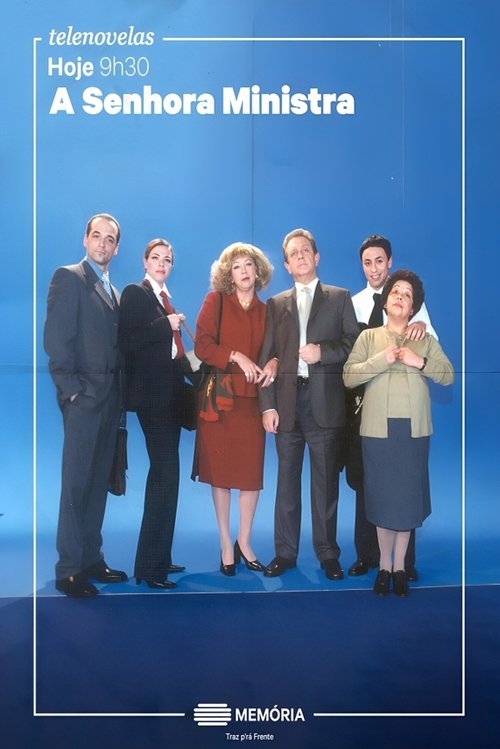
"A Senhora Ministra" follows the life of a fictional Portuguese Minister of Health, Maria de Lurdes, as she navigates the complexities of her political career and personal life.
The story begins with Maria de Lurdes, a dedicated and ambitious politician, being appointed as the Minister of Health. She is determined to implement significant reforms in the healthcare system, aiming to improve public health services. The opening scenes depict her first day in office, where she is met with skepticism from her colleagues and the media. Maria is portrayed as a strong-willed woman, passionate about her work but also facing the pressures of being a female leader in a male-dominated environment.
As she settles into her role, Maria faces immediate challenges, including budget constraints and opposition from various political factions. She holds a meeting with her advisors, where they discuss the urgent need for healthcare reforms. Maria is frustrated by the slow pace of change and the bureaucratic obstacles that hinder her plans. Her determination to push through reforms is evident as she passionately argues for the need to prioritize public health over political interests.
In a pivotal scene, Maria attends a public health conference where she meets Dr. Miguel, a charismatic and idealistic doctor who shares her vision for healthcare reform. Their chemistry is palpable, and they engage in deep discussions about the future of healthcare in Portugal. This meeting sparks a personal connection that complicates Maria's professional life, as she begins to develop feelings for Miguel.
As the story progresses, Maria faces increasing pressure from her political party to align her policies with their interests. She is torn between her commitment to her ideals and the demands of her party. In a tense meeting with party leaders, Maria stands her ground, insisting that her reforms are necessary for the greater good. This confrontation highlights her internal struggle as she grapples with the realities of political compromise.
The plot thickens when a scandal involving a major pharmaceutical company comes to light. Maria discovers that the company has been involved in unethical practices, including price-fixing and bribery. This revelation puts her in a difficult position, as the company has strong ties to her party. Maria must decide whether to expose the scandal, risking her political career, or to remain silent and protect her position. Her moral compass drives her to take action, and she chooses to investigate the matter further.
In a dramatic turn of events, Maria gathers evidence against the pharmaceutical company and presents it to the media. The fallout is immediate, leading to public outrage and calls for accountability. However, this bold move alienates some of her political allies, and she faces backlash from within her party. Maria's resolve is tested as she navigates the consequences of her actions, feeling both empowered and isolated.
As the investigation unfolds, Maria's relationship with Miguel deepens. They share intimate moments, discussing their hopes and fears about the future. However, the pressure of the scandal and her political responsibilities create tension between them. Maria struggles to balance her personal life with her commitment to her work, leading to moments of doubt and vulnerability.
In a climactic scene, Maria is confronted by a powerful party member who threatens to undermine her position if she does not retract her statements about the pharmaceutical company. This confrontation forces Maria to make a critical decision: to stand firm in her beliefs or to capitulate for the sake of her career. With a heavy heart, she chooses to remain true to her principles, fully aware of the potential consequences.
The story reaches its peak as the investigation leads to a public trial against the pharmaceutical company. Maria testifies, revealing the extent of the corruption and the impact on public health. Her testimony is passionate and heartfelt, resonating with the public and garnering support for her cause. This moment is a turning point, as Maria emerges as a symbol of integrity and courage in the face of adversity.
In the aftermath of the trial, Maria's political career is at a crossroads. While she gains public admiration, her party is divided, and she faces the possibility of being ousted from her position. The emotional toll of her journey weighs heavily on her, and she reflects on the sacrifices she has made for her ideals.
The series concludes with Maria making a bold decision to run for a higher political office, determined to continue her fight for healthcare reform. She stands before a crowd of supporters, delivering an inspiring speech about the importance of integrity and the need for change. The final scene captures her unwavering spirit as she embraces the challenges ahead, ready to face whatever comes next in her political journey.








What is the ending?
In the ending of "A Senhora Ministra," the political tensions culminate in a dramatic confrontation. The main character, Minister Maria de Lurdes, faces a critical decision that tests her integrity and commitment to her ideals. As the political landscape shifts, she must navigate personal and professional challenges, ultimately leading to a resolution that reflects her growth and the complexities of her role in government.
As the final episodes unfold, we see Minister Maria de Lurdes grappling with the fallout from a controversial policy decision. The atmosphere in her office is tense; papers are strewn across her desk, and the weight of her responsibilities hangs heavily on her shoulders. She is portrayed with a mix of determination and vulnerability, her brow furrowed as she contemplates the implications of her actions.
Scene by scene, the narrative progresses:
The first scene opens in the Minister's office, where Maria is engaged in a heated discussion with her advisors. They are divided over the recent backlash from the public regarding a proposed law that many view as unjust. Maria, embodying a sense of duty, listens intently, her expression shifting from frustration to resolve. She knows that her next steps could define her career and impact countless lives.
In the following scene, Maria meets with a group of activists who oppose the law. The room is filled with palpable tension as they express their concerns. Maria, initially defensive, begins to empathize with their plight. Her internal conflict is evident; she is torn between her political obligations and her moral compass. The activists' passionate pleas resonate with her, and she starts to question the righteousness of her path.
The narrative then shifts to a pivotal meeting with the Prime Minister. The atmosphere is charged as Maria presents her revised stance on the law. The Prime Minister, a formidable figure, challenges her resolve, insisting on the necessity of the policy for political stability. Maria stands her ground, her voice steady but her hands trembling slightly, revealing her inner turmoil. This confrontation highlights her growth as a character; she is no longer just a puppet in the political machine but a leader willing to fight for her beliefs.
As the climax approaches, Maria decides to hold a press conference to address the public directly. The scene is set in a large hall filled with reporters and cameras. The bright lights illuminate her face, and she takes a deep breath, her heart racing. In her speech, she acknowledges the mistakes made and proposes a new approach that prioritizes the welfare of the citizens. The crowd's reaction is mixed, but Maria feels a sense of liberation as she speaks her truth.
The final scenes depict the aftermath of the press conference. Maria receives both praise and criticism, but she remains steadfast in her convictions. Her advisors express concern about the potential political fallout, but Maria is resolute, her eyes shining with determination. She understands that true leadership requires sacrifice and courage.
In the closing moments, we see Maria walking through the halls of government, her posture more confident than before. She has faced the storm and emerged with a clearer sense of purpose. The camera lingers on her face, capturing a blend of relief and determination as she prepares for the challenges ahead.
The fate of the main characters is intertwined with Maria's journey. Her advisors, who initially doubted her, begin to rally behind her vision, recognizing her strength. The activists, while still skeptical, see a glimmer of hope in her willingness to listen and adapt. The Prime Minister, though still a powerful figure, acknowledges Maria's growth, hinting at a potential shift in their dynamic.
In the end, "A Senhora Ministra" concludes with a message about the complexities of leadership, the importance of integrity, and the power of standing up for one's beliefs, even in the face of adversity. Maria de Lurdes emerges not just as a politician but as a symbol of resilience and moral courage in a challenging political landscape.
Is there a post-credit scene?
The TV show "A Senhora Ministra," produced in 2000, does not feature a post-credit scene. The series concludes its episodes without any additional scenes after the credits roll. Each episode wraps up its narrative within the main storyline, focusing on the political and personal challenges faced by the characters, particularly the titular character, the Minister. The show emphasizes the complexities of governance and the emotional turmoil of its characters, leaving viewers with a sense of closure at the end of each episode.
Who is the main character in A Senhora Ministra and what are her primary challenges?
The main character in A Senhora Ministra is Maria de Lurdes, the Minister of Health. Her primary challenges include navigating the complexities of political bureaucracy, dealing with the pressures of public opinion, and managing her personal life while striving to implement health reforms. Throughout the series, she faces opposition from various political factions and must balance her ideals with the realities of governance.
What role does the character of the Prime Minister play in the series?
The Prime Minister in A Senhora Ministra serves as both a mentor and a source of pressure for Maria de Lurdes. He often pushes her to make decisions that align with the government's agenda, which creates tension as she tries to maintain her integrity and pursue her vision for health care. His character embodies the political machinations that Maria must navigate, often leading to moments of conflict and moral dilemmas.
How does Maria de Lurdes' relationship with her family affect her role as Minister?
Maria de Lurdes' relationship with her family is strained due to her demanding job as Minister. Her dedication to her work often leads to neglect of her personal life, causing friction with her husband and children. This internal conflict highlights her emotional struggles as she tries to balance her responsibilities at home with her commitment to public service, showcasing her vulnerability and the sacrifices she makes.
What specific health reforms does Maria de Lurdes attempt to implement throughout the series?
Throughout A Senhora Ministra, Maria de Lurdes attempts to implement several key health reforms, including improving access to healthcare for underprivileged communities, increasing funding for public health initiatives, and addressing the inefficiencies within the healthcare system. These reforms often face significant opposition from various stakeholders, including political rivals and lobbyists, which adds to the tension and drama of the series.
How does the character of the opposition leader challenge Maria de Lurdes?
The opposition leader in A Senhora Ministra poses a significant challenge to Maria de Lurdes by constantly questioning her policies and decisions. He uses media and public forums to undermine her credibility, often framing her initiatives as failures. This antagonistic relationship forces Maria to defend her actions and adapt her strategies, highlighting her resilience and determination to succeed despite the obstacles she faces.
Is this family friendly?
"A Senhora Ministra," produced in 2000, is a Portuguese political comedy that revolves around the life of a female minister navigating the complexities of government and personal relationships. While the show is primarily comedic and satirical, there are elements that may not be entirely family-friendly.
-
Political Satire: The show often includes sharp political commentary that may be difficult for younger viewers to fully understand, potentially leading to confusion or misinterpretation of political themes.
-
Adult Themes: There are instances of romantic relationships and flirtations that may not be suitable for children, as they can involve mature discussions about love, betrayal, and personal ambition.
-
Emotional Conflict: Characters experience significant emotional turmoil, including stress, anxiety, and conflict, which may be upsetting for sensitive viewers. The pressures of political life can lead to moments of despair or frustration.
-
Social Issues: The series touches on various social issues, including corruption and ethical dilemmas, which may be heavy topics for younger audiences.
-
Mild Language: There may be occasional use of language or expressions that some parents might find inappropriate for children.
Overall, while "A Senhora Ministra" is comedic in nature, its themes and content may not be suitable for all children or sensitive viewers.