







Popular
How is Soriya connected to the apartment building in Tenement?
Who is Daichi, and what role does he play in Soriya’s trip to Cambodia?
Who is Soriya’s aunt, and how does she fit into the story?
What is the significance of the ghostly little girl in Soriya’s dreams?
What is the ritual involving Soriya and the residents of the building?
Should I watch it?
Ask Your Own Question

What is the plot?
After her mother's death, Soriya leaves Japan for Cambodia with her boyfriend Daichi, carrying grief, creative frustration, and a single old photograph that suggests her mother lied about the past. The trip is supposed to answer one question at a time: who Soriya's family really is, what her mother was hiding, and whether Phnom Penh can give her the inspiration she has been chasing as a manga artist. Instead, every answer pulls her deeper into the Metta building, a crumbling Khmer Rouge-era apartment complex that feels less like a home than a sealed wound in the middle of the city.
The story opens in Japan, where Soriya and Daichi live while she struggles in a professional lull. Soriya is a Cambodian-Khmer manga artist, and Daichi is her photographer boyfriend; together they are emotionally close but not equally connected to the country Soriya's mother fled. After the mother dies, the pair discover an old photograph with an inscription pointing to Phnom Penh, directly contradicting the belief Soriya has been given all her life: that no family survived the Khmer Rouge genocide. That image becomes the film's first real hinge, because it turns private mourning into a search for buried history. Soriya is no longer just grieving her mother; she is also being summoned by the possibility that her mother's silence was deliberate.
Driven by that possibility, Soriya and Daichi travel to Cambodia. The move is framed as a homecoming, but it immediately feels like a descent. The city is alive around them, yet their destination is an aging apartment complex called Metta, a place that seems to have been left behind by time and rebuilt by memory alone. Metta is introduced as the apartment building in the photograph, still standing despite its derelict, worn-down state, and the film makes the building itself feel like the central character before any resident does. Its corridors, landings, and cramped rooms carry the texture of neglect and old suffering; the structure seems to hold its breath.
When Soriya and Daichi arrive, Metta's residents greet them with an excessive warmth that initially reads as generosity. They are helped by a resident who acts like a useful local contact, making the apartment search easier and smoothing their entry into the building's social life. The most important of the residents is Aunt Mao, Soriya's long-lost aunt, who is thrilled to finally meet her niece and insists on taking care of both Soriya and Daichi. This early hospitality is crucial, because it gives the building a false face of community. The gestures are affectionate enough to disarm Soriya, but they also feel too eager, too practiced, as if everyone has been waiting for her arrival for reasons she does not yet understand.
Soriya and Daichi settle into the apartment Soriya's mother once occupied, and the film begins folding her present-tense experience into the residue of family history. What she expected to be a temporary visit becomes a daily confrontation with absence: her mother's absence, her family's absence, and the missing parts of her own identity. Soriya starts to sense that her mother did not simply leave Cambodia, but actively erased pieces of it. The old photograph becomes less like a clue and more like evidence in an unsolved crime.
As Soriya tries to adjust, the film shifts from melancholic family drama into horror through the first of her unnerving dreams. She begins seeing a ghostly little girl, first in sleep and then in the lingering fear that survives waking. That child is not just a random apparition; the visions carry the unmistakable feeling of a message from the past, or perhaps from the building itself. The supernatural pressure grows in the ordinary spaces of the apartment. The rooms seem to press in around her. The hallways feel watched. The over-friendly residents, who seemed merely nosy at first, start to look rehearsed, as if they are participating in a performance whose script Soriya never received.
The emotional tension sharpens because Soriya is not only frightened; she is also curious, ashamed of being frightened, and desperate to understand whether the fear is inherited. Her mother had claimed their family was gone, but the existence of Aunt Mao proves otherwise. That revelation changes the moral meaning of the trip. What looked like a search for roots becomes an investigation into a betrayal. Soriya has inherited not just her mother's face or bloodline, but her mother's omissions.
The film's central revelation arrives as the building's friendliness gives way to structure. The residents of Metta are not merely eccentric neighbors or suspiciously attentive caretakers. They are part of a cult-like system organized around a ritual, and that ritual is tied to an evil spirit connected to the building itself. Their behavior toward Soriya and Daichi is revealed as grooming, not hospitality. They are preparing for a new host. Soriya has not stumbled into a haunted building by accident; she has been brought back to it by blood, history, and an inscription that may have been intended to lead her here all along.
At this point, the horror widens from the personal to the collective. The film connects Metta's rituals to the lingering trauma of Cambodia's past, especially the Khmer Rouge era, making the building feel like a container for violence that never stopped resonating. The apartment block is not just old; it is historically poisoned. Its decay is visual proof of a political wound that has never healed. Soriya's visions of the ghostly little girl and the escalating disturbances around her suggest that the past is not dead in this place--it is active, hungry, and looking for another body.
The available plot descriptions do not provide a fully verified, scene-by-scene accounting of every confrontation, death, and kill, so the exact order and identity of all victims cannot be stated with complete certainty from the sources alone. What is clear is that once the ritual state is fully exposed, a series of deaths and murders begins, and the building becomes a slaughterhouse governed by belief, secrecy, and the need to preserve whatever force the residents think they serve. Those deaths are not random side effects. They are part of the system that Metta has become. The spirits, the residents, and the building's history all converge so that bloodshed functions as maintenance.
As the truth emerges, Soriya's relationship with Daichi is tested by the escalating terror. Daichi is present as a witness from outside the family line, but he is also trapped with her inside the same building, trying to interpret a world he does not fully understand. His role becomes that of a frightened companion whose practical instincts cannot compete with the deeper logic of inheritance and possession that rules Metta. He can see that something is wrong, but he cannot stop the fact that Soriya has been singled out.
The more Soriya learns, the more the film implies that the nightmare does not begin with her arrival. It begins much earlier, in the hidden history of her mother and the building, and perhaps even in the original moment when the apartment complex became a site where trauma was stored, repeated, and ritualized. The line between family secret and supernatural curse dissolves. The dead are not just haunting Soriya; they are using her. The building's residents are not just worshiping the spirit; they are managing succession.
Aunt Mao's presence becomes especially painful under this light. She is no longer just the delighted aunt who welcomes Soriya home. She is part of the structure that keeps the secret alive, whether out of devotion, fear, or survival. Her kindness reads differently once the ritual is known. Every invitation, every gesture of care, every reassurance now carries the possibility of manipulation. Soriya's family reunion is revealed to be another mechanism of entrapment.
The ghostly little girl returns in Soriya's dreams and visions with growing force, and the film uses those moments to blur the boundary between inherited memory and direct supernatural contact. The child functions like an emissary from the buried history of the building: a figure who may represent a victim, a witness, or the spirit of what has been denied. The emotional effect is devastating because Soriya is seeing not only a haunting, but a family wound given a face.
The ritual's purpose is eventually made explicit: the residents have identified Soriya as the next vessel for the building's dark spirit. This is the story's most important twist, because it reclassifies her entire journey. Her return to Cambodia was not simply an act of self-discovery. It was a selection process. The old photograph, the apartment, the family connection, even her grief over her mother's death--all of it feeds into a design larger than her. The horror is not that she found a haunted place; it is that the haunted place was waiting for her.
At this stage, the confrontations become more direct and more desperate. Soriya can no longer remain a curious outsider or a grieving daughter. She has to fight the community that had welcomed her and the unseen force that the community believes must continue through her. The conflict turns from suspicion into survival. Every social interaction now carries menace. The residents' collective calm becomes more frightening than any single outburst, because it suggests conviction. They believe in what they are doing. They believe Soriya belongs to them.
The violence escalates into open chaos. The available sources confirm that deaths and murders occur, but they do not provide a fully reliable list of every victim or precisely who kills whom in each scene. What can be said with confidence is that the cult's ritual activity does not successfully contain the evil spirit for long. Instead, the spirit begins killing again, just as the residents fear, and the deaths seem to confirm that the system they built is both cruel and unstable. The building becomes a place where belief and carnage feed each other.
Soriya's emotional arc reaches its sharpest point when she understands that her mother's silence was not merely shame or forgetfulness. It was a survival strategy built around a horror she could not--or would not--explain. That realization makes the film's family drama tragic rather than merely mysterious. Soriya has inherited the consequences of a decision she never knew was made. Her mother's death has not opened a clean path to the truth; it has exposed a buried compartment of terror that still governs the family line.
The climax centers on Soriya being forced into direct confrontation with the ritual and the spirit attached to Metta. At this point the horror is no longer about whether the building is haunted. It is about whether Soriya can resist being absorbed into the structure that has already claimed so many lives and memories. The final struggle is framed as a contest over possession, but it is also a contest over history. If the spirit takes her, the past wins by continuing through her body. If she resists, she challenges not only the residents but the logic that has kept the building's trauma alive.
The climax appears to unfold amid the same cramped architectural spaces that have defined the film from the beginning: apartment interiors, shared passages, and the dim, oppressive geometry of Metta itself. That setting matters because the building is never just a backdrop. It is the engine of the horror. The past is embedded in the walls, and the residents have turned that embedding into a ritual practice. Soriya's fight is therefore not against one monster in one room, but against an entire inherited environment.
The ending is described by the available sources only in broad terms, so the precise final image cannot be stated with certainty from the provided material. What is clear is that the film resolves without separating the supernatural from the historical. Cambodia's trauma remains present in the living world, and the horror of the Khmer Rouge era is not treated as over and done with, but as something still stretching into the present through family, architecture, and belief. The story closes with Soriya still bound to the terrible truth that her mother hid, and the building's atmosphere of death and memory does not disappear simply because the night has ended.
What survives the final stretch is not peace, but knowledge. Soriya now understands that Metta is not just the place her mother left behind; it is the place where her family history was preserved, distorted, and weaponized. Daichi's journey ends not as a tourist's discovery but as a witness to a catastrophe he can barely comprehend. Aunt Mao's welcoming embrace is recontextualized as part of a far more sinister inheritance. And the residents of Metta, who first appear like neighbors and then like caretakers, are finally seen as participants in a cycle designed to keep the spirit fed and the past active.
The film's final emotional force comes from the fact that Soriya has been searching for identity through art, memory, and return, and instead finds that identity may be inseparable from violation. The manga artist who wanted inspiration arrives at a place where stories have been turned into ritual and family has been turned into a trap. By the time the horror reaches its end, the question is no longer whether Soriya belongs in Cambodia. It is whether she can remain herself in a place that has spent the entire film trying to make her into something else.


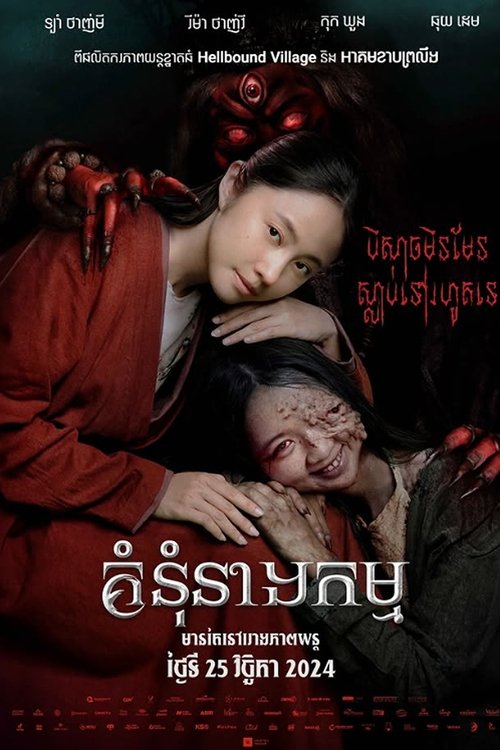
What is the ending?
The ending of Tenement shows Soriya and Daichi getting out of the apartment building and returning to Japan, but the horror does not stay behind. In the final beat, Soriya is revealed to be possessed by the spirit that has taken hold of the building, and the film ends with a chilling sign that the curse has followed them home.
Soriya and Daichi are inside the apartment complex as the ritual reaches its end. The residents have been preparing a new host for the building's evil spirit, and the final conflict centers on that plan becoming active. The danger is tied to the dark ceremony inside the building, which the film presents as the true source of the violence and deaths.
As the building turns fully hostile, Soriya pushes through the chaos and escapes with Daichi. They make their way out of Metta and leave with a taxi waiting outside. At that moment, Daichi believes they have survived and that the danger is behind them.
The film then reveals the cost of the escape. Soriya has already been taken over by the spirit, even though she has left the building in her own body. Daichi is not shown being killed in the escape, but the ending strongly suggests he is now caught in the same danger because the possession has crossed over with them. A final domestic image shows Daichi bringing Soriya a glass of milk, echoing the earlier milk associated with the spirit, and this confirms that the ending is not a clean escape.
The last scene shifts fully into the aftermath. Soriya's manga is finished and published, but the calm of that achievement is undercut by the possession that remains inside her. Daichi is then shown trapped in the same punishment room seen earlier, while Soriya appears completely overtaken by the demon. The film ends there, with Soriya's fate sealed as possessed and Daichi left imprisoned in the curse's aftermath.
In sequence, the ending's main character fates are these: Soriya survives the escape but is possessed. Daichi survives the immediate flight but is left trapped in the curse's final aftermath. Aunt Mao is left grieving after her daughter Alice's death, with the final rescue coming too late for her family loss. The building's spirit is not destroyed; it is carried beyond the apartment and remains active at the end.
Is there a post-credit scene?
I couldn't verify a post-credit scene for Tenement (2024) from the available results. The search results do not include a reliable after-credits report for this film, so I can't confirm whether one exists or describe it accurately.
What the results do show is a review of Tenement (2024) and some unrelated pages about post-credit scenes in other films, but nothing that specifically documents Tenement's end credits or any extra scene after them.
If you want, I can try to infer likely sources to check next, but with the evidence here, the safest answer is: no confirmed post-credit scene information is available.
How is Soriya connected to the apartment building in Tenement?
Soriya is connected to the building through her mother's past: after her mother dies, she travels to Cambodia, follows clues tied to her family history, and moves into the apartment where her mother used to live. The story frames the building as both a family home and a place filled with buried secrets, which is why Soriya's presence there quickly becomes central to the supernatural events.
Who is Daichi, and what role does he play in Soriya’s trip to Cambodia?
Daichi is Soriya's boyfriend, and he travels with her from Japan to Cambodia. He is part of the couple's attempt to reconnect with Soriya's family history and to find creative inspiration, but once they arrive, he becomes entangled in the building's unsettling atmosphere and the mysterious events surrounding Soriya's past.
Who is Soriya’s aunt, and how does she fit into the story?
Soriya's aunt is Mao, who lives in the Metta apartment complex and is reunited with Soriya after her arrival in Phnom Penh. Mao is portrayed as welcoming and protective at first, taking care of the newcomers, but her presence also deepens the sense that Soriya has entered a family network tied to the building's hidden history.
What is the significance of the ghostly little girl in Soriya’s dreams?
The ghostly little girl appears first in Soriya's dreams and becomes a major sign that something is deeply wrong in the building. Her appearance is tied to the apartment complex's supernatural history, and later revelations connect the child figure to the building's dark past, making her a crucial link between Soriya's personal history and the haunting around her.
What is the ritual involving Soriya and the residents of the building?
The residents' unusually warm behavior toward Soriya is eventually revealed to be part of a ritual. They are preparing her as a new host for the building's evil spirit, and the story shows that the apparent hospitality is actually a form of manipulation meant to complete that possession.
Is this family friendly?
No, Tenement (2024) is not family friendly; it is a Cambodian folk horror film with supernatural terror, disturbing imagery, and themes tied to grief and past trauma.
Potentially objectionable or upsetting elements include:
- Bloody or violent imagery and "terrifying, bloody visions."
- Supernatural horror involving ghosts, an evil spirit, and ritual-like behavior from residents.
- Disturbing dreams and nightmare imagery that build a persistent sense of dread.
- Death-related themes, including bereavement and a story shaped by the mother's death.
- Psychological unease and unsettling atmosphere in a rundown apartment building with mysterious, coercive-seeming neighbors.
- References to historical trauma connected to the Khmer Rouge era and genocide, which may be upsetting for sensitive viewers.
If you want, I can also give a very short "safe for kids?" verdict by age range.






