
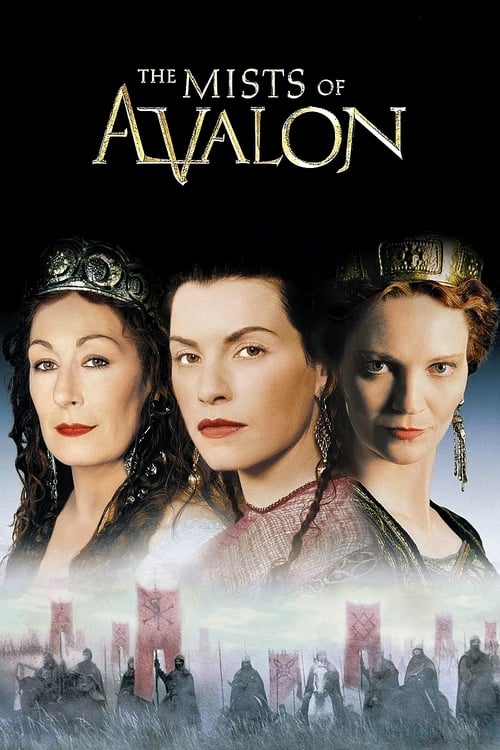






















Popular
What is the significance of Morgaine's relationship with her mother, Igraine?
How does Arthur's relationship with Morgaine evolve throughout the series?
What role does the character of Viviane play in Morgaine's journey?
What are the consequences of Uther Pendragon's actions on the characters in the story?
How does the conflict between paganism and Christianity manifest in the characters' interactions?
Should I watch it?
Ask Your Own Question

What is the plot?
The story begins in the mystical land of Avalon, where the young priestess Morgaine (also known as Morgan) is introduced. She is raised in Avalon, a place steeped in magic and the worship of the old gods. Morgaine's mother, Igraine, is a powerful figure, and her father is Uther Pendragon, the King of Britain, though Morgaine is unaware of this at the start. The narrative unfolds with the arrival of Uther, who seeks Igraine, and through a series of events, he seduces her, leading to the conception of Arthur, Morgaine's half-brother.
As Morgaine grows, she is torn between her loyalty to Avalon and her connection to her family. She is sent to the court of Camelot, where she meets her brother Arthur, who is unaware of their blood relation. Morgaine is captivated by Arthur's noble spirit and the promise of a united Britain under his rule. However, she also feels the weight of her responsibilities to Avalon and the old ways, which are threatened by the rise of Christianity.
The plot thickens when Morgaine's aunt, the Lady of the Lake, reveals to her the importance of the sword Excalibur, which is destined for Arthur. Morgaine is tasked with ensuring that Arthur becomes king, but she struggles with the implications of this duty. Meanwhile, Arthur is crowned king after pulling Excalibur from the stone, a feat that solidifies his claim to the throne. Morgaine feels a mix of pride and foreboding as she witnesses his ascension.
As Arthur's reign begins, tensions rise between the pagan beliefs of Avalon and the encroaching Christian faith. Morgaine's cousin, the ambitious and manipulative Morgause, seeks to undermine Arthur's rule. Morgaine is caught in the middle, trying to protect her brother while also honoring her commitment to Avalon. She becomes a confidante to Arthur, but their relationship is complicated by the political machinations surrounding them.
Morgaine's internal conflict deepens when she falls in love with Arthur's best friend, Lancelot. Their affair is passionate but fraught with danger, as it threatens the stability of Arthur's kingdom. Morgaine grapples with her feelings, torn between her love for Lancelot and her loyalty to her brother. The affair ultimately leads to betrayal, as Arthur discovers their relationship, causing a rift between the three of them.
As the story progresses, Morgaine's relationship with her mother, Igraine, becomes strained. Igraine is devoted to the Christian faith, which puts her at odds with Morgaine's beliefs. Morgaine feels abandoned by her mother, who cannot understand the importance of the old ways. This familial conflict adds to Morgaine's sense of isolation as she navigates her dual identity.
The tension escalates when Morgause manipulates events to pit Arthur against Lancelot. A battle ensues, and Lancelot is forced to flee Camelot, leaving Morgaine heartbroken. Arthur, feeling betrayed by both Morgaine and Lancelot, becomes increasingly consumed by his quest for power and the establishment of a Christian kingdom. Morgaine's loyalty to Avalon is tested as she witnesses the destruction of the old ways.
In a desperate attempt to save Avalon, Morgaine seeks the help of the Lady of the Lake. She learns that the only way to preserve the old ways is to reclaim the sacred land of Avalon from the encroaching Christian influence. Morgaine's determination leads her to make a series of sacrifices, including severing ties with her family and her love for Lancelot.
The climax of the story occurs when Arthur's kingdom faces a significant threat from the Saxons. Morgaine, now fully embracing her role as a priestess, rallies the forces of Avalon to aid Arthur in battle. However, the conflict reveals the deep divisions within the kingdom, as Arthur's knights are torn between loyalty to their king and the old ways represented by Morgaine.
In the aftermath of the battle, Arthur is gravely wounded, and Morgaine is faced with the reality of her choices. She realizes that the world is changing, and the old ways are fading. In a poignant moment, she returns to Avalon, where she is welcomed by the spirits of her ancestors. Morgaine understands that her destiny is intertwined with the fate of Avalon, and she must embrace her role as a guardian of the old ways.
The story concludes with Morgaine's acceptance of her identity as a priestess of Avalon. She watches as Arthur's kingdom falls into disarray, realizing that the age of magic is coming to an end. Morgaine's journey is one of sacrifice, love, and the struggle to preserve a way of life that is slowly being erased. The final scenes depict Morgaine standing on the shores of Avalon, a symbol of the enduring spirit of the old ways, even as the world around her changes irrevocably.
🔥 Trending TV Shows Now
Browse All TV Shows →








What is the ending?
In the ending of "The Mists of Avalon," Morgaine, having faced numerous betrayals and losses, ultimately finds herself in a world where the old ways are fading. She witnesses the rise of Christianity and the decline of the pagan beliefs she has fought to protect. The story concludes with her leaving Camelot, symbolizing the end of an era, as she embraces her destiny and the mystical elements of Avalon.
As the final scenes unfold, Morgaine stands on the shores of Avalon, reflecting on her life and the choices that have led her here. She is joined by her son, Mordred, who has been caught in the conflict between the old ways and the new. The tension between the characters reaches a climax as Morgaine realizes that the future she envisioned for her people is slipping away.
In a poignant moment, Morgaine confronts her half-brother Arthur, who has become a symbol of the new order. Their relationship, once filled with love and loyalty, is now marred by betrayal and misunderstanding. Arthur, having been influenced by the Christian faith, is determined to establish a new kingdom that does not include the pagan traditions Morgaine holds dear.
Morgaine's internal struggle is palpable as she grapples with her feelings of loss and the weight of her responsibilities. She understands that her role as a priestess of Avalon is to guide the old ways into the mists of time, even as she mourns the passing of her heritage.
In the final moments, Morgaine makes the heart-wrenching decision to leave Camelot behind. She walks away from the castle, her heart heavy with the knowledge that she must let go of the past to embrace the future. As she steps into the mists, she is joined by the spirits of her ancestors, symbolizing her acceptance of her fate and the continuation of the old ways in a new form.
Mordred, caught in the conflict between his mother and his uncle, faces a tragic fate as he becomes a pawn in the power struggles of Camelot. His destiny is intertwined with the downfall of Arthur, leading to a tragic confrontation that seals the fate of both men.
The ending of "The Mists of Avalon" encapsulates the struggle between the old and the new, the personal sacrifices made for the greater good, and the bittersweet acceptance of change. Each character's journey culminates in a poignant reflection on legacy, love, and the inevitable passage of time.
Is there a post-credit scene?
The Mists of Avalon, produced in 2001, does not have a post-credit scene. The film concludes with the resolution of its central themes and character arcs, focusing on the legacy of the women in Arthurian legend, particularly Morgaine and her struggles with her identity, family, and the shifting tides of power between paganism and Christianity. The ending emphasizes the enduring impact of these characters on the mythos of Camelot, leaving viewers with a sense of closure rather than an additional scene after the credits.
What is the significance of Morgaine's relationship with her mother, Igraine?
Morgaine's relationship with her mother, Igraine, is complex and fraught with emotional tension. Igraine, who is initially portrayed as a loving mother, becomes increasingly distant as Morgaine grows older. This distance is exacerbated by Igraine's loyalty to her husband, Uther Pendragon, and her role in the political machinations of Camelot. Morgaine feels a deep sense of betrayal when she learns that her mother has kept the truth about her lineage and the nature of her father's identity hidden from her. This revelation fuels Morgaine's internal conflict and her desire to reclaim her heritage as a priestess of Avalon, ultimately shaping her motivations throughout the story.
How does Arthur's relationship with Morgaine evolve throughout the series?
Arthur's relationship with Morgaine evolves from a close sibling bond to one marked by betrayal and conflict. Initially, they share a deep connection, with Morgaine serving as a confidante and supporter of Arthur's claim to the throne. However, as Arthur becomes more entrenched in his role as king, he increasingly aligns himself with the Christian faith, which puts him at odds with Morgaine's pagan beliefs and her loyalty to Avalon. The turning point comes when Morgaine feels betrayed by Arthur's decisions, particularly regarding the fate of their mother and the future of Avalon. This shift creates a rift between them, leading to a tragic confrontation that encapsulates the broader conflict between the old ways and the new.
What role does the character of Viviane play in Morgaine's journey?
Viviane, the Lady of the Lake, serves as a mentor and guiding force in Morgaine's journey. She introduces Morgaine to the ways of Avalon and the ancient pagan traditions, instilling in her a sense of purpose and identity as a priestess. Viviane's wisdom and strength provide Morgaine with the tools she needs to navigate the treacherous political landscape of Camelot. However, Viviane's unwavering commitment to the old ways also places Morgaine in a position of conflict, as she must choose between her loyalty to Avalon and her love for her family, particularly Arthur. Viviane's influence is pivotal in shaping Morgaine's understanding of power, sacrifice, and the complexities of her destiny.
What are the consequences of Uther Pendragon's actions on the characters in the story?
Uther Pendragon's actions have far-reaching consequences for the characters in 'The Mists of Avalon.' His decision to pursue Igraine, despite her marriage to Gorlois, sets off a chain of events that leads to the birth of Arthur and the eventual downfall of Camelot. Uther's ruthless ambition and disregard for the emotional fallout of his actions create a legacy of betrayal and conflict. Morgaine, as Uther's daughter, grapples with the implications of her father's choices, feeling the weight of his legacy on her own identity. Additionally, Uther's actions alienate many characters, including Gorlois, whose death leads to Morgaine's feelings of loss and anger. The consequences of Uther's ambition ripple through the lives of all the characters, shaping their motivations and relationships.
How does the conflict between paganism and Christianity manifest in the characters' interactions?
The conflict between paganism and Christianity is a central theme in 'The Mists of Avalon,' manifesting vividly in the interactions between characters. Morgaine, a devoted priestess of Avalon, embodies the old ways and struggles to maintain her beliefs in a world increasingly dominated by Christian ideals. Her interactions with characters like Arthur, who embraces Christianity as king, highlight the tension between their differing worldviews. For instance, when Arthur seeks to unify Britain under Christian rule, Morgaine feels her identity and heritage are under threat. This ideological clash leads to heated confrontations, particularly with characters like Bishop Bedwin, who represents the encroaching Christian influence. The emotional stakes are high, as characters grapple with loyalty, faith, and the loss of their cultural identity, ultimately leading to tragic outcomes.
Is this family friendly?
"The Mists of Avalon," produced in 2001, is a retelling of the Arthurian legends from the perspective of the women involved, particularly focusing on Morgaine (Morgan le Fay) and her relationships with her family and the political dynamics of Camelot. While the series is rich in storytelling and character development, it contains several elements that may not be suitable for children or sensitive viewers.
-
Themes of Betrayal and Power Struggles: The series delves into complex themes of betrayal, ambition, and the struggle for power, which may be difficult for younger viewers to fully understand or process.
-
Violence and War: There are scenes depicting battles and violence, including the consequences of war, which may be distressing for some viewers.
-
Sexual Content: The show includes adult themes and scenes of a sexual nature, including infidelity and romantic entanglements that are integral to the plot but may be inappropriate for younger audiences.
-
Death and Loss: Characters experience significant loss and grief throughout the series, which can be emotionally heavy and may resonate deeply with sensitive viewers.
-
Magic and Dark Themes: The portrayal of magic, including dark rituals and the supernatural, may be unsettling for some, particularly those who are sensitive to themes of witchcraft or the occult.
-
Complex Family Dynamics: The relationships between characters, including manipulation and rivalry, can be intense and may be challenging for younger viewers to navigate emotionally.
Overall, while "The Mists of Avalon" offers a rich narrative and strong character arcs, its mature themes and content may not be suitable for all audiences, particularly children.