
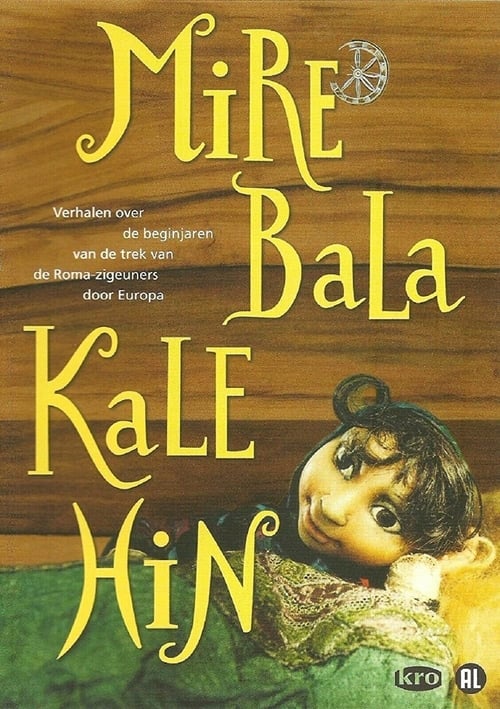


Popular
What is the significance of the character Elara's journey in the series?
How does the character of Kael influence the events of the story?
What role do the mythical creatures play in the plot?
What is the relationship between Elara and her estranged brother, Jorin?
How does the setting of the Endless Roads impact the characters' journeys?
Should I watch it?
Ask Your Own Question

What is the plot?
In the opening scene of "Tales from the Endless Roads," we are introduced to the protagonist, a weary traveler named Eli, who is seen walking along a desolate highway under a vast, cloud-strewn sky. He carries a weathered backpack and wears a tattered coat, suggesting a long journey. As he walks, he reflects on his past, revealing through voiceover that he is searching for redemption after a tragic event that haunts him.
Eli encounters a small, rundown diner at the side of the road. Inside, he meets a waitress named Clara, who is struggling to keep the diner afloat. Their initial conversation is filled with tension; Clara is wary of Eli, sensing his troubled past. Eli orders coffee and a slice of pie, and as they talk, he learns that Clara is also running from her own demons, having lost her family in a car accident. This shared pain creates a bond between them, and Eli begins to open up about his own loss.
As the day progresses, a group of rough-looking bikers enters the diner, disrupting the fragile peace. They are loud and aggressive, and their leader, a man named Rex, takes an immediate interest in Clara. Eli feels a surge of protectiveness and tension rises in the diner. Rex makes crude jokes and attempts to flirt with Clara, who is visibly uncomfortable. Eli stands up to Rex, leading to a confrontation where Eli asserts that Clara deserves respect. The bikers laugh off Eli's warning, but Rex's interest in Clara intensifies.
The situation escalates when Rex and his gang decide to stay longer, drinking and causing chaos in the diner. Eli, feeling cornered, makes a decision to leave, but Clara pleads with him to stay, fearing for her safety. Eli reluctantly agrees to remain, but the atmosphere is thick with impending violence. As the bikers continue to harass Clara, Eli's internal conflict grows; he wants to protect her but is also terrified of the consequences.
Later that night, after the bikers have left, Clara confides in Eli about her past and the guilt she carries. She reveals that she was driving the car that caused the accident that killed her family. Eli shares his own story of loss, revealing that he was unable to save his younger sister from a fire. This moment of vulnerability deepens their connection, and they share a brief, tender moment before Eli decides he must leave the diner to continue his journey.
The next day, Eli prepares to leave, but Clara begs him to stay and help her with the diner. She expresses her fear of the bikers returning and her desire to escape her past. Eli, torn between his instinct to protect her and his need to move on, ultimately decides to stay and help her. They work together to clean the diner and repair its broken-down exterior, and during this time, they grow closer, sharing laughter and stories.
However, their peace is shattered when the bikers return, more aggressive than before. Rex confronts Eli, demanding that he leave Clara alone. Eli stands his ground, and a physical altercation ensues. The fight is brutal; Eli uses his surroundings to his advantage, throwing dishes and using furniture as shields. Despite his efforts, he is outnumbered, and Rex lands a heavy blow, knocking Eli to the ground.
Clara, witnessing the fight, grabs a frying pan and strikes Rex from behind, giving Eli a chance to recover. Together, they manage to fend off the bikers, but not without sustaining injuries. The bikers retreat, vowing to return, leaving Eli and Clara shaken but relieved. They realize that they must take action to protect themselves.
In the aftermath, Eli and Clara devise a plan to fortify the diner and prepare for the bikers' return. They gather supplies and create makeshift defenses. During this time, Clara reveals her desire to leave the town and start anew, but Eli is hesitant, still feeling the weight of his past. Clara encourages him to let go of his guilt, and they share a passionate kiss, solidifying their bond.
As night falls, the bikers return, this time with a larger group. Eli and Clara are ready, having set traps around the diner. The confrontation is intense; they use their surroundings to their advantage, throwing objects and using improvised weapons. Eli fights fiercely, driven by his desire to protect Clara, while Clara shows surprising strength and resourcefulness.
The battle reaches a climax when Rex confronts Eli one-on-one. They exchange blows, and Eli, fueled by adrenaline and the need to protect Clara, gains the upper hand. In a moment of desperation, Rex pulls a knife, but Clara intervenes, tackling Rex to the ground. Eli seizes the opportunity to disarm Rex, and in a final act of defiance, he throws Rex out of the diner, declaring that they will not be intimidated.
With the bikers finally defeated, Eli and Clara stand together, bruised but victorious. They realize that they have both found a sense of purpose in each other. Clara decides to leave the diner behind and travel with Eli, seeking a new beginning together. As they walk down the endless road, hand in hand, the sun rises on the horizon, symbolizing hope and the promise of a fresh start.






What is the ending?
In the ending of "Tales from the Endless Roads," the main characters reach a pivotal moment of self-discovery and resolution. After a series of trials and tribulations, they confront their pasts and the choices that have led them to this point. The journey culminates in a heartfelt reunion, where they reconcile their differences and embrace their shared experiences. Each character finds a sense of closure, leading to a bittersweet but hopeful conclusion as they part ways, forever changed by their journey.
As the final episode unfolds, the sun begins to set over the endless roads, casting a warm golden hue across the landscape. The camera pans over the weary travelers, each reflecting on the journey they have undertaken.
Scene 1: The group gathers at a familiar roadside diner, a place that has served as a backdrop for many of their adventures. The atmosphere is heavy with unspoken words and unresolved tensions. The main characters--Jack, a rugged loner with a troubled past; Sarah, a free-spirited artist seeking purpose; and Tom, a pragmatic thinker burdened by responsibility--sit around a table, their faces illuminated by the flickering neon lights. Jack stares out the window, lost in thought, while Sarah sketches absentmindedly on a napkin, and Tom fiddles with his coffee cup, anxiety etched on his brow.
Scene 2: As they share stories of their travels, the conversation turns to their individual struggles. Jack reveals his fear of commitment, stemming from a childhood marked by abandonment. Sarah opens up about her insecurities as an artist, feeling unworthy of her dreams. Tom, feeling the weight of his role as the caretaker, admits his fear of failure. The emotional weight of their confessions hangs in the air, creating a palpable tension that threatens to fracture their bond.
Scene 3: Suddenly, a storm brews outside, mirroring the turmoil within. The diner's lights flicker, and the sound of thunder rumbles ominously. In this moment of chaos, the characters confront their fears head-on. Jack stands up, his voice rising above the storm, declaring that they cannot continue to run from their pasts. This moment of vulnerability ignites a spark of courage in Sarah and Tom, prompting them to share their own truths.
Scene 4: The storm outside intensifies, but inside the diner, a sense of unity begins to form. They each take turns expressing their hopes and dreams, realizing that their journeys are intertwined. As they speak, the storm begins to subside, symbolizing the release of their pent-up emotions. The diner, once a place of uncertainty, transforms into a sanctuary of understanding and acceptance.
Scene 5: With the storm behind them, the trio decides to take one last road trip together, a symbolic journey towards healing. They pile into Jack's old truck, laughter and camaraderie filling the air as they drive down the endless roads. The camera captures their faces, illuminated by the soft glow of the setting sun, each character reflecting a newfound sense of purpose.
Scene 6: As they reach a scenic overlook, they step out of the truck, taking in the breathtaking view. The horizon stretches endlessly before them, a metaphor for the possibilities that lie ahead. They share a moment of silence, each character contemplating their next steps. Jack, now more open to connection, expresses his desire to build meaningful relationships. Sarah, inspired by her friends, vows to pursue her art with renewed passion. Tom, feeling lighter, resolves to embrace uncertainty rather than fear it.
Scene 7: The episode concludes with the characters parting ways at a crossroads, each taking a different path. Jack drives off into the sunset, a hint of a smile on his face, ready to face his future. Sarah heads towards a nearby art studio, her heart full of hope. Tom, with a newfound sense of freedom, walks towards a small town, ready to explore new opportunities. The camera lingers on the empty road, symbolizing the endless possibilities that await them.
In the end, "Tales from the Endless Roads" leaves viewers with a sense of closure and optimism, highlighting the importance of facing one's fears, embracing change, and cherishing the bonds formed along the journey. Each character's fate reflects their growth, illustrating that while the roads may be endless, the journey of self-discovery is what truly matters.
Is there a post-credit scene?
Tales from the Endless Roads does not feature a post-credit scene. The series concludes each episode with a definitive ending, wrapping up the storylines presented without additional scenes after the credits. Each episode is designed to stand alone, focusing on the characters' journeys and the lessons learned along the way, leaving viewers with a sense of closure as the credits roll. The emphasis is on the narrative and emotional arcs within the episodes themselves, rather than extending the story beyond the final moments.
What is the significance of the character Elara's journey in the series?
Elara's journey is central to the narrative of 'Tales from the Endless Roads.' As a young woman seeking her lost family, her quest symbolizes the search for identity and belonging. Throughout the series, Elara encounters various characters who reflect her internal struggles, and her emotional state fluctuates between hope and despair. Each road she travels reveals more about her past and her motivations, ultimately leading her to confront her fears and embrace her true self.
How does the character of Kael influence the events of the story?
Kael serves as both a mentor and a catalyst for change in the series. His mysterious past and deep knowledge of the Endless Roads provide guidance to Elara and other characters. Kael's internal conflict, stemming from his own lost loved ones, drives him to help others while grappling with his own guilt. His interactions with Elara are particularly poignant, as he sees reflections of his younger self in her determination and vulnerability.
What role do the mythical creatures play in the plot?
The mythical creatures encountered throughout 'Tales from the Endless Roads' serve as both obstacles and allies for the characters. Each creature embodies different aspects of the characters' fears and desires. For instance, the Shadow Wraith represents Elara's fear of losing herself in her quest, while the Guardian Beast symbolizes protection and the strength found in companionship. These encounters are rich in visual detail, showcasing the fantastical elements of the world while deepening the emotional stakes for the characters.
What is the relationship between Elara and her estranged brother, Jorin?
Elara's relationship with her estranged brother Jorin is fraught with tension and unresolved emotions. Initially, Elara believes Jorin abandoned her, fueling her anger and resentment. As the series progresses, flashbacks reveal their shared childhood and the circumstances that led to their separation. Their eventual reunion is charged with a mix of hope and fear, as both characters must confront their past and the pain of their lost connection. This emotional climax is pivotal, showcasing themes of forgiveness and the complexity of familial bonds.
How does the setting of the Endless Roads impact the characters' journeys?
The setting of the Endless Roads is a character in itself, shaping the journeys of Elara, Kael, and others. Each road presents unique challenges and landscapes, from treacherous mountains to serene valleys, reflecting the characters' internal struggles. The ever-changing environment symbolizes the unpredictability of their quests and the emotional turmoil they face. The vivid descriptions of the landscapes evoke a sense of wonder and danger, enhancing the characters' experiences and growth as they navigate both the physical and emotional terrains.
Is this family friendly?
"Tales from the Endless Roads," produced in 2001, is a series that explores various human experiences and emotions through its episodic storytelling. While it contains rich narratives and character development, there are elements that may not be suitable for all audiences, particularly children or sensitive viewers.
-
Themes of Loss and Grief: Several episodes delve into the emotional turmoil of losing loved ones, which may be distressing for younger viewers or those sensitive to such topics.
-
Conflict and Violence: Some storylines include conflicts that escalate to physical confrontations or emotional confrontations, which could be unsettling.
-
Mature Relationships: The series occasionally touches on complex adult relationships, including themes of betrayal and heartbreak, which may not be appropriate for younger audiences.
-
Existential Themes: The show often explores deep philosophical questions about life, purpose, and mortality, which might be confusing or heavy for children.
-
Intense Emotional Moments: Characters experience significant emotional struggles, including depression and anxiety, which could resonate deeply and potentially upset sensitive viewers.
Overall, while "Tales from the Endless Roads" offers profound storytelling, its exploration of darker themes and emotional depth may require parental discretion for younger audiences.