
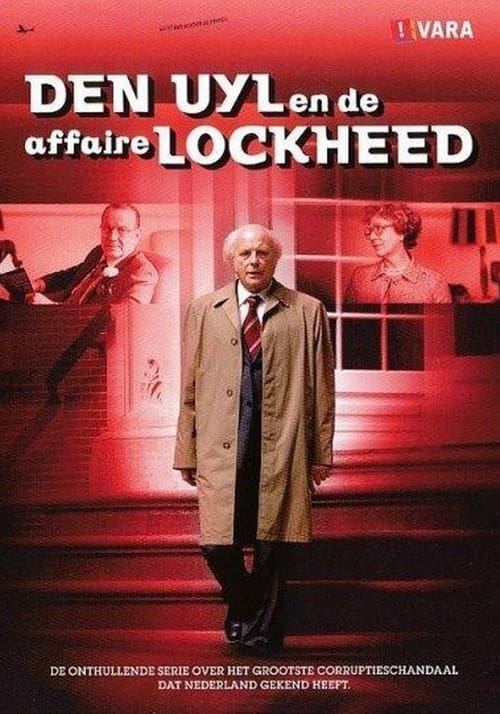

























Popular
What role does Joop den Uyl play in the Lockheed affair?
How does the Lockheed affair impact the relationship between Joop den Uyl and his political opponents?
What is the significance of the character of Hans Wiegel in the series?
How does the media portrayal of the Lockheed affair affect public perception of Joop den Uyl?
What internal conflicts does Joop den Uyl face throughout the season regarding the Lockheed affair?
Should I watch it?
Ask Your Own Question

What is the plot?
In the opening scenes of "Den Uyl en de affaire Lockheed," the story is set in the 1970s, focusing on the political landscape of the Netherlands. The protagonist, Prime Minister Joop den Uyl, is portrayed as a determined and principled leader. The narrative begins with Den Uyl addressing his cabinet about the need for military modernization, specifically the acquisition of new fighter jets. Tensions rise as the government faces pressure from both the military and the public regarding defense spending.
As the plot unfolds, Den Uyl's government is approached by Lockheed, an American aerospace company, which offers a deal for the purchase of F-16 fighter jets. The deal is presented as a significant opportunity for the Dutch military, promising advanced technology and enhanced defense capabilities. However, Den Uyl is wary of the implications of such a deal, particularly concerning the ethical considerations and potential corruption involved in arms deals.
The narrative takes a turn when it is revealed that Lockheed has been involved in questionable practices, including bribery to secure contracts in various countries. Den Uyl grapples with the moral dilemma of whether to proceed with the deal, knowing the potential fallout if the truth comes to light. His internal conflict is palpable as he weighs national security against integrity.
As the story progresses, Den Uyl's cabinet members express differing opinions on the Lockheed deal. Some are enthusiastic about the military benefits, while others, including his close advisor, caution against the risks of scandal. This division creates tension within the government, leading to heated debates and discussions. Den Uyl's leadership is tested as he tries to maintain unity while navigating the complexities of the situation.
In a pivotal scene, Den Uyl meets with Lockheed representatives to negotiate the terms of the deal. The atmosphere is tense, with Den Uyl remaining firm on his principles while the representatives attempt to persuade him with promises of economic benefits and job creation. Den Uyl's resolve is evident as he pushes back against their tactics, insisting on transparency and accountability.
As the negotiations continue, investigative journalists begin to uncover information about Lockheed's practices, raising alarms about potential corruption. Den Uyl becomes increasingly aware of the media scrutiny and the potential for a scandal that could jeopardize his government. He holds a press conference to address the growing concerns, attempting to reassure the public while maintaining a façade of confidence.
The situation escalates when a whistleblower from within the government leaks information about the bribery allegations. This revelation sends shockwaves through the political landscape, leading to public outrage and calls for accountability. Den Uyl faces mounting pressure from opposition parties and the media, forcing him to confront the reality of the situation.
In a dramatic turn of events, Den Uyl decides to halt the Lockheed deal, prioritizing ethical governance over military procurement. This decision is met with mixed reactions from his cabinet and the public. Some praise his integrity, while others criticize him for potentially compromising national security. Den Uyl's emotional state is one of determination mixed with anxiety, as he realizes the implications of his choice.
As the fallout from the decision unfolds, Den Uyl's government faces a crisis. The opposition capitalizes on the scandal, leading to a loss of public support. Den Uyl must navigate the political landscape carefully, seeking to regain trust while dealing with the consequences of the Lockheed affair. The tension within his cabinet grows, with some members questioning his leadership and others rallying behind him.
In the final scenes of the season, Den Uyl reflects on the challenges he has faced and the sacrifices made for the sake of integrity. The emotional weight of his decisions is evident as he contemplates the future of his government and the impact of the Lockheed affair on his legacy. The season ends on a cliffhanger, leaving viewers eager to see how Den Uyl will navigate the turbulent waters of politics in the episodes to come.









What is the ending?
In the ending of "Den Uyl en de affaire Lockheed," the political scandal surrounding the Lockheed bribery case reaches a climax. Prime Minister Joop den Uyl faces intense scrutiny and pressure as the investigation unfolds. Ultimately, the scandal leads to a significant political fallout, resulting in the resignation of key figures and a shift in public trust. Den Uyl himself grapples with the implications of the affair on his leadership and legacy.
As the dust settles, the characters are left to confront the consequences of their actions. Den Uyl's political career is deeply affected, and he must navigate the complexities of public perception and accountability. The episode closes with a sense of uncertainty about the future of Dutch politics and the personal toll the scandal has taken on those involved.
The final scenes of "Den Uyl en de affaire Lockheed" unfold with a palpable tension that has been building throughout the series. The camera pans over the bustling streets of The Hague, where the atmosphere is thick with anticipation and anxiety. News reports flash across screens, detailing the latest developments in the Lockheed bribery scandal. The public is restless, and the media frenzy is relentless.
Scene 1: Inside the Prime Minister's office, Joop den Uyl sits at his desk, his brow furrowed in deep thought. The weight of the investigation bears down on him, and he reflects on the trust he once held with the Dutch people. His internal conflict is evident; he is a leader who has always prided himself on integrity, yet now he finds himself at the center of a scandal that threatens to unravel his career. The camera captures the flickering light of a nearby lamp, casting shadows that mirror his uncertainty.
Scene 2: In a press conference room, reporters jostle for position, their voices overlapping in a cacophony of questions. Den Uyl steps up to the podium, his demeanor a mix of defiance and vulnerability. He addresses the nation, asserting his commitment to transparency and accountability. As he speaks, the camera zooms in on his face, revealing the strain of the moment. He acknowledges the mistakes made by his administration but insists that he will not resign. The audience is divided; some cheer his resolve, while others express their discontent.
Scene 3: Back in the office, Den Uyl's advisors gather around him, their expressions a blend of concern and determination. They discuss the implications of the scandal, weighing the potential fallout. One advisor suggests that a resignation might be the only way to restore public trust, but Den Uyl vehemently disagrees. He believes in facing the crisis head-on, even if it means risking everything he has built. The tension in the room is palpable, and the stakes have never been higher.
Scene 4: The investigation continues to unfold, and the media reveals more details about the bribery allegations. The public's outrage grows, and protests erupt outside the government buildings. Den Uyl watches the news coverage, his heart heavy with the realization that his leadership is being questioned. He feels a deep sense of betrayal, not just from those who have turned against him, but also from the system he has dedicated his life to serving.
Scene 5: In a pivotal moment, Den Uyl receives a call from a key political ally who has decided to step down in light of the scandal. The news hits him hard, and he realizes that the fallout is not just political; it is personal. The camera captures his reaction, a mix of anger and sorrow, as he grapples with the loss of support from those he considered friends. This moment crystallizes the isolation he feels as the walls close in around him.
Scene 6: The climax of the episode arrives as Den Uyl is faced with a choice: to continue fighting for his position or to step aside for the greater good. In a moment of introspection, he walks through the empty halls of the government building, reflecting on his journey and the ideals he once stood for. The echoes of his footsteps resonate, symbolizing the weight of his decisions.
Scene 7: Ultimately, Den Uyl decides to resign, acknowledging that the trust of the people has been irrevocably damaged. He addresses the nation one last time, his voice steady but filled with emotion. He expresses his gratitude for the opportunity to serve and his hope for a brighter future for the Netherlands. As he steps down, the camera captures the mixed reactions of the public--some in tears, others in anger.
Scene 8: The series concludes with a montage of the aftermath. Key figures involved in the scandal face their own consequences, some retreating from public life while others attempt to rebuild their reputations. Den Uyl, now a former Prime Minister, walks through the streets of Amsterdam, a man marked by the experience but still holding onto his principles. The final shot lingers on his face, a blend of resolve and uncertainty about what lies ahead.
In the end, the characters are left to navigate the complex landscape of accountability and redemption, with Den Uyl's legacy forever altered by the events of the Lockheed affair. The story closes on a note of reflection, leaving viewers to ponder the fragility of trust in leadership and the enduring impact of political scandals.
Is there a post-credit scene?
In "Den Uyl en de affaire Lockheed," there is no post-credit scene following the episodes of Season 1. The series focuses on the political drama surrounding the Lockheed bribery scandal in the Netherlands during the 1970s, centering on the character of Prime Minister Joop den Uyl and the implications of the scandal on his government. The episodes conclude without additional scenes or content after the credits, maintaining a focus on the narrative and character development throughout the main storyline.
What role does Joop den Uyl play in the Lockheed affair?
Joop den Uyl, as the Prime Minister of the Netherlands, is central to the Lockheed affair. His character is portrayed as a determined leader who grapples with the political implications of the scandal. Throughout the season, he is depicted as being torn between national interests and the ethical dilemmas posed by the allegations of bribery involving the Lockheed aircraft deal.
How does the Lockheed affair impact the relationship between Joop den Uyl and his political opponents?
The Lockheed affair creates significant tension between Joop den Uyl and his political opponents, particularly as accusations of corruption surface. The season showcases heated debates in parliament, where den Uyl's integrity is challenged, leading to a fierce political battle that tests his resolve and leadership.
What is the significance of the character of Hans Wiegel in the series?
Hans Wiegel, a prominent political figure and den Uyl's rival, serves as a key antagonist in the series. His character embodies the opposition's critique of den Uyl's handling of the Lockheed affair, and he is portrayed as shrewd and opportunistic, using the scandal to undermine den Uyl's government and gain political leverage.
How does the media portrayal of the Lockheed affair affect public perception of Joop den Uyl?
The media plays a crucial role in shaping public perception of Joop den Uyl during the Lockheed affair. The series illustrates how sensationalist reporting and investigative journalism amplify the scandal, leading to a decline in public trust and support for den Uyl, which adds to his internal conflict and sense of isolation.
What internal conflicts does Joop den Uyl face throughout the season regarding the Lockheed affair?
Throughout the season, Joop den Uyl faces profound internal conflicts as he navigates the political fallout of the Lockheed affair. He struggles with feelings of betrayal, the weight of leadership, and the moral implications of the allegations against his government. This emotional turmoil is depicted through his interactions with advisors and family, revealing his vulnerability and determination to uphold his principles.
Is this family friendly?
"Den Uyl en de affaire Lockheed" is a historical drama that delves into political intrigue and corruption surrounding the Lockheed bribery scandal in the Netherlands during the 1970s. While the show is primarily focused on political themes, there are several aspects that may be considered objectionable or upsetting for children or sensitive viewers.
-
Political Corruption: The series explores themes of bribery and corruption, which may be complex and unsettling for younger audiences to understand.
-
Conflict and Tension: There are scenes depicting intense political debates and confrontations that may evoke feelings of anxiety or discomfort.
-
Moral Ambiguity: Characters often face ethical dilemmas, which can lead to discussions about right and wrong that might be challenging for children.
-
Emotional Strain: The characters experience significant stress and emotional turmoil due to the political scandal, which may be distressing for sensitive viewers.
-
Historical Context: The show addresses real historical events that involve betrayal and deceit, which could be upsetting for those who are sensitive to themes of dishonesty and betrayal.
Overall, while the series is not overtly graphic or violent, its mature themes and complex emotional landscapes may not be suitable for younger audiences or those who prefer lighter content.