











Popular
What is Fitz's relationship with his father like throughout the season?
How does Fitz's alter ego, the voice in his head, influence his decisions?
What role does the character of Larry play in Fitz's life?
How does Fitz's romantic life evolve during the season?
What are the key conflicts Fitz faces with his business partner, and how do they impact the storyline?
Should I watch it?
Ask Your Own Question

What is the plot?
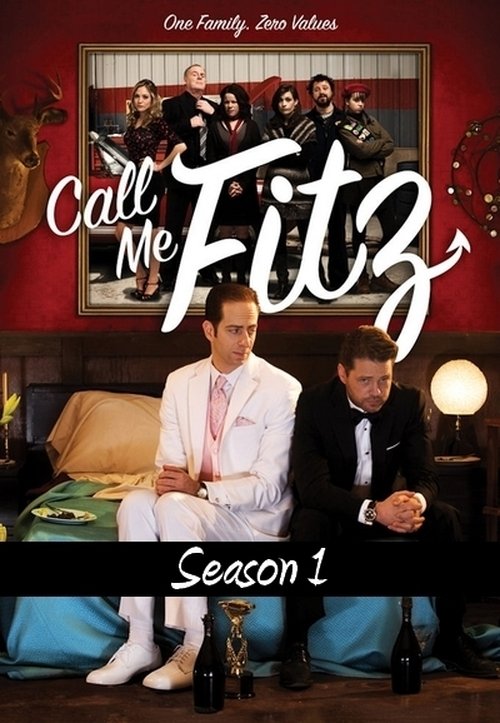
In the pilot episode of "Call Me Fitz," we are introduced to Richard "Fitz" Fitzpatrick, a morally ambiguous used car salesman who runs a dealership called Fitzpatrick Motors. Fitz is portrayed as a charming yet self-serving character, often engaging in unethical practices to make a sale. The episode opens with Fitz in the midst of a sales pitch, showcasing his manipulative tactics to close deals. He is confident and brash, reveling in his ability to deceive customers.
As the story unfolds, Fitz's life takes a turn when he is confronted by his conscience, personified by a manifestation of his better self, a character named "Fitz's Conscience." This character appears as a physical embodiment of Fitz's guilt and moral dilemmas, challenging him on his choices and behavior. Fitz is initially dismissive of this conscience, viewing it as an annoyance rather than a serious threat to his lifestyle.
The plot thickens when Fitz's father, who is the owner of the dealership, announces his retirement and plans to hand over the business to Fitz. However, Fitz's father also reveals that he has been diagnosed with a terminal illness, which adds a layer of urgency to Fitz's decisions. Fitz is torn between the desire to prove himself as a capable businessman and the fear of losing his father.
In a pivotal scene, Fitz's Conscience pushes him to confront his unethical practices. This confrontation leads to a series of comedic yet revealing moments where Fitz attempts to justify his actions, but ultimately, he is left feeling conflicted. The internal struggle between Fitz and his Conscience becomes a recurring theme throughout the episode, highlighting Fitz's inability to fully embrace responsibility.
As the episode progresses, Fitz's relationship with his employees is explored, particularly with his assistant, a woman named "Jenna." Jenna is portrayed as the voice of reason, often trying to steer Fitz in a more ethical direction. However, Fitz's self-interest often overrides her advice, leading to tension between them. Fitz's interactions with Jenna reveal his deeper insecurities and the fear of being seen as inadequate.
The climax of the episode occurs when Fitz is faced with a major decision regarding a sale that could either make or break his reputation. He is presented with an opportunity to sell a car to a single mother who is in desperate need of a vehicle. Fitz initially considers taking advantage of her situation, but the presence of his Conscience forces him to reevaluate his choices. In a moment of clarity, Fitz decides to offer her a fair deal, surprising both himself and his Conscience.
The episode concludes with Fitz experiencing a mix of triumph and confusion. He successfully makes the sale, but the victory is bittersweet as he grapples with the realization that he may not be able to fully escape his unethical tendencies. The final scene shows Fitz reflecting on his actions, hinting at the ongoing struggle between his selfish desires and the moral compass represented by his Conscience. This sets the stage for the character development and conflicts that will unfold in subsequent episodes.









What is the ending?
At the end of "Call Me Fitz" Season 1, Fitz finds himself in a precarious situation as he confronts the consequences of his actions. He faces a moral reckoning that forces him to reevaluate his life choices. The season concludes with Fitz making a significant decision that impacts his relationships and future, while his alter ego, the voice of his conscience, continues to challenge him.
As the final episode of Season 1 unfolds, the atmosphere is thick with tension. Fitz, played by Jason Priestley, is grappling with the fallout from his reckless behavior. The episode opens with Fitz in his office, surrounded by the remnants of his chaotic lifestyle. The walls are adorned with reminders of his past decisions, and the clutter reflects his internal turmoil. He is visibly agitated, pacing back and forth, as he contemplates the mess he has created in both his personal and professional life.
In a pivotal scene, Fitz receives a visit from his estranged father, who has come to confront him about his irresponsible actions. The confrontation is charged with emotion, as Fitz's father expresses disappointment and concern for his son's future. Fitz, defensive and angry, struggles to accept his father's words, feeling cornered and judged. The dialogue is sharp, filled with tension, as both characters reveal their vulnerabilities. Fitz's internal conflict is palpable; he wants to be seen as successful and in control, yet he knows deep down that he is spiraling out of control.
As the episode progresses, Fitz's alter ego, the voice of his conscience, appears more frequently, taunting him with reminders of his failures. This character serves as a constant reminder of the man Fitz could be if he chose to change his ways. The alter ego's presence is both comedic and haunting, providing a stark contrast to Fitz's increasingly desperate situation. Fitz's emotional state shifts from anger to despair as he realizes that he cannot escape the consequences of his actions.
In a climactic moment, Fitz attends a party that symbolizes the culmination of his reckless lifestyle. The atmosphere is vibrant, filled with laughter and music, but for Fitz, it feels suffocating. He watches as his friends indulge in the same destructive behaviors he has embraced, and for the first time, he feels a sense of isolation. The camera captures his expression of longing and regret, highlighting his internal struggle. He is surrounded by people yet feels utterly alone, a poignant reflection of his character's journey throughout the season.
As the night unfolds, Fitz makes a choice that signifies a turning point. He steps outside for some fresh air, where he encounters a moment of clarity. The moonlight casts a soft glow, illuminating his face as he contemplates his future. In this quiet moment, Fitz decides to confront his demons rather than run from them. He realizes that he must take responsibility for his actions and the impact they have had on those around him.
The season concludes with Fitz returning to the party, but this time, he approaches his friends with a newfound determination. He acknowledges his mistakes and expresses a desire to change. The reactions from his friends are mixed; some are supportive, while others are skeptical. This moment encapsulates the central theme of the season: the struggle between self-destruction and the desire for redemption.
As the credits roll, the fate of each main character is left somewhat open-ended. Fitz is on a path toward self-improvement, but the road ahead is uncertain. His father, having expressed his disappointment, leaves with a glimmer of hope that Fitz might finally take the right path. The alter ego remains a constant presence, suggesting that Fitz's journey of self-discovery is far from over. The season ends with a sense of possibility, leaving viewers to ponder the complexities of Fitz's character and the choices he must continue to face.
Is there a post-credit scene?
In the first season of "Call Me Fitz," there is no post-credit scene following the episodes. The show typically concludes without any additional scenes after the credits roll. Each episode wraps up its storyline, leaving viewers to anticipate the next installment without any extra content or teasers. The focus remains on the main narrative and character development throughout the season.
What is Fitz's relationship with his father like throughout the season?
Fitz's relationship with his father, who is a successful car dealership owner, is strained and complicated. Fitz feels overshadowed by his father's success and often struggles with feelings of inadequacy. This tension is evident in their interactions, where Fitz's desire for approval clashes with his father's high expectations. Fitz's internal conflict is heightened by his father's traditional values, which Fitz often rebels against.
How does Fitz's alter ego, the voice in his head, influence his decisions?
Fitz's alter ego, who represents his darker impulses and desires, plays a significant role in shaping his actions throughout the season. This voice often encourages Fitz to indulge in reckless behavior, leading him into morally questionable situations. The internal dialogue between Fitz and his alter ego reveals his struggles with self-control and the consequences of his choices, creating a constant battle between his better judgment and his baser instincts.
What role does the character of Larry play in Fitz's life?
Larry serves as Fitz's loyal but often misguided friend and confidant. Throughout the season, Larry's unwavering support contrasts with Fitz's chaotic lifestyle. He often tries to steer Fitz in the right direction, but his own naivety sometimes leads to further complications. Larry's character highlights the theme of friendship amidst dysfunction, as he remains by Fitz's side despite the turmoil that Fitz's decisions create.
How does Fitz's romantic life evolve during the season?
Fitz's romantic life is tumultuous and reflects his overall instability. He engages in a series of flings and relationships that often end in disaster, showcasing his fear of commitment and emotional vulnerability. His interactions with women reveal his charm but also his deep-seated issues, as he struggles to connect meaningfully. The season explores his attempts to find love while grappling with his self-destructive tendencies.
What are the key conflicts Fitz faces with his business partner, and how do they impact the storyline?
Fitz's relationship with his business partner is fraught with tension and conflict, primarily due to their differing visions for the car dealership. Fitz's reckless approach often clashes with his partner's more conservative strategies, leading to heated arguments and power struggles. These conflicts not only drive the plot forward but also force Fitz to confront his own shortcomings as a businessman and a person, ultimately impacting his growth throughout the season.
Is this family friendly?
"Call Me Fitz" is a dark comedy that features themes and content that may not be suitable for children or sensitive viewers. Here are some potentially objectionable aspects:
-
Adult Language: The show contains frequent use of strong language, which may not be appropriate for younger audiences.
-
Sexual Content: There are scenes that involve sexual innuendos, suggestive situations, and adult relationships that may be uncomfortable for children.
-
Substance Use: Characters are depicted engaging in drinking and drug use, which could be concerning for younger viewers.
-
Dark Humor: The show employs a style of humor that often revolves around morally ambiguous situations, which may not resonate well with all audiences.
-
Conflict and Aggression: There are instances of physical confrontations and emotional conflicts that could be distressing for sensitive viewers.
Overall, the show's themes and humor are geared towards an adult audience, making it less suitable for children.