









Popular
What motivates Vidocq to pursue justice despite the dangers he faces?
How does Vidocq's relationship with Inspector Lefebvre evolve throughout the series?
What role does the character of the mysterious femme fatale play in Vidocq's investigations?
How does Vidocq's past as a criminal influence his methods in solving crimes?
What are the key challenges Vidocq faces in his quest to clear his name?
Should I watch it?
Ask Your Own Question

What is the plot?
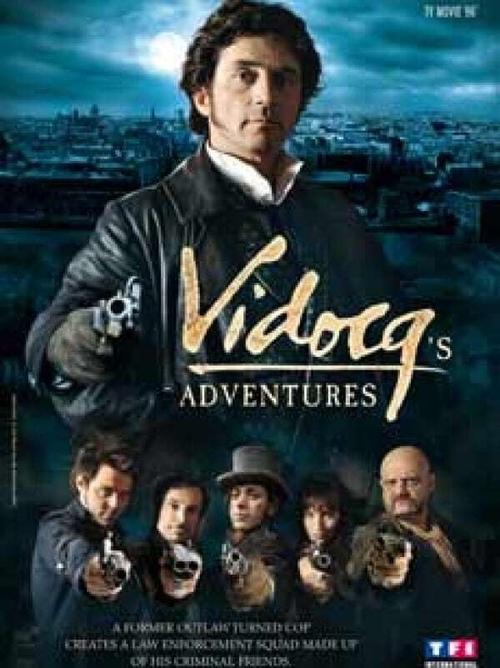
In the year 1830, the series opens with Eugène François Vidocq, a former criminal turned detective, being released from prison. He is determined to start anew and use his skills to solve crimes rather than commit them. Vidocq is portrayed as a charismatic and cunning individual, with a deep understanding of the criminal mind. He quickly finds himself drawn back into the world of crime when he learns about a series of mysterious murders plaguing Paris.
Vidocq begins his investigation by visiting the crime scenes, where he meticulously examines the surroundings. He interviews witnesses, gathering information about the victims and their last known whereabouts. During these interactions, he displays his charm and wit, often gaining the trust of those he speaks to. His keen observational skills allow him to notice details that others overlook, such as a peculiar mark on a victim's clothing that hints at a connection to a local gang.
As he delves deeper into the case, Vidocq encounters resistance from the police, particularly from Inspector Lefebvre, who is skeptical of Vidocq's methods and motives. Despite this, Vidocq persists, using his connections in the underworld to gather intelligence. He learns about a notorious gang led by a man named La Bête, who is rumored to be involved in the murders. Vidocq decides to infiltrate the gang, adopting a new identity to gain their trust.
In a tense sequence, Vidocq attends a secret meeting of the gang, where he witnesses their brutal methods and the fear they instill in the local populace. He manages to blend in, but his cover is nearly blown when one of the gang members becomes suspicious of him. Using his quick thinking, Vidocq deflects the suspicion by showcasing his knowledge of criminal activities, convincing the gang of his loyalty.
As Vidocq gathers more evidence, he discovers that the murders are part of a larger scheme orchestrated by La Bête, who is using the chaos to expand his criminal empire. Vidocq's internal conflict grows as he grapples with the moral implications of his actions. He is torn between his desire for justice and the methods he must employ to achieve it. This emotional turmoil is compounded by his growing bond with a woman named Anne, who becomes an unwitting ally in his quest for the truth.
In a pivotal moment, Vidocq confronts La Bête directly, leading to a dramatic showdown. The confrontation takes place in an abandoned warehouse, where La Bête reveals his plan to eliminate anyone who stands in his way. A fierce fight ensues, with Vidocq using his agility and street smarts to outmaneuver La Bête's brute strength. The battle is intense, with both men exchanging blows and utilizing their surroundings to gain the upper hand.
Ultimately, Vidocq manages to subdue La Bête, but not without sustaining injuries. As he stands over his defeated foe, he is faced with a choice: to kill La Bête in cold blood or to bring him to justice. In a moment of clarity, Vidocq chooses the latter, demonstrating his commitment to his new path. He hands La Bête over to the authorities, ensuring that the gang's reign of terror is brought to an end.
The series concludes with Vidocq reflecting on his journey. He has transformed from a criminal into a hero, but the scars of his past remain. He understands that the fight against crime is far from over, and he is prepared to continue his work as a detective. The final scene shows him walking through the streets of Paris, determined to uncover more mysteries and bring justice to those who need it.
🔥 Trending TV Shows Now
Browse All TV Shows →






What is the ending?
In the ending of the TV show "Vidocq," the main character, Eugène François Vidocq, confronts the antagonist, leading to a dramatic resolution that ties up the various plot threads. The series concludes with Vidocq reflecting on his journey and the impact of his choices, while the fates of the supporting characters are revealed, showcasing their growth and the consequences of their actions.
As the final episode unfolds, the tension escalates. Vidocq, portrayed as a determined and resourceful detective, finds himself in a precarious situation. He has been tracking a nefarious criminal mastermind who has eluded capture throughout the series. The confrontation takes place in a dimly lit warehouse, filled with shadows and the remnants of past crimes. The atmosphere is thick with suspense as Vidocq enters, his heart pounding with a mix of fear and resolve.
In this climactic scene, Vidocq faces off against the antagonist, who is revealed to be a figure from his past, someone he thought he had left behind. The emotional weight of their history hangs heavily in the air, as both men exchange heated words, revealing their motivations and regrets. Vidocq's determination to bring justice to the victims of the antagonist's crimes fuels his actions, while the antagonist's desperation and anger stem from a lifetime of choices that led him down a dark path.
As the confrontation escalates, a physical struggle ensues. Vidocq, using his agility and quick thinking, manages to outmaneuver his opponent. The fight is intense, with both men showcasing their skills and determination. The warehouse echoes with the sounds of their struggle, punctuated by the clattering of objects and the heavy breathing of the combatants. In a pivotal moment, Vidocq gains the upper hand, subduing the antagonist and finally bringing him to justice.
With the antagonist apprehended, Vidocq takes a moment to catch his breath, the weight of the confrontation settling on his shoulders. He reflects on the journey that brought him to this moment, the lives affected by the antagonist's actions, and the choices he made along the way. The emotional toll of his work as a detective is evident on his face, a mixture of relief and sorrow.
In the aftermath, the supporting characters are shown dealing with the consequences of the events that transpired. Some have found redemption, while others continue to grapple with their pasts. Vidocq's closest allies, who have stood by him throughout the series, share a moment of camaraderie, acknowledging the battles they fought together. Their fates are intertwined with Vidocq's, each character having grown and changed as a result of their experiences.
As the series concludes, Vidocq walks away from the warehouse, the weight of his past still lingering but tempered by the hope of a brighter future. He looks back one last time, a silent farewell to the struggles he faced and the lives he touched. The screen fades to black, leaving viewers with a sense of closure and the understanding that while the journey may be over, the impact of Vidocq's work will continue to resonate.
Is there a post-credit scene?
The TV show "Vidocq," produced in 2010, does not feature a post-credit scene. The series, which follows the adventures of Eugène François Vidocq, a real-life figure known for his work as a criminal and later as a detective, focuses on his investigations and the various cases he encounters. Each episode concludes with a resolution to the story presented, but there are no additional scenes or content after the credits roll. The narrative wraps up within the episode itself, emphasizing the character's cleverness and the historical context of his time.
What motivates Vidocq to pursue justice despite the dangers he faces?
Vidocq is driven by a deep sense of justice and a personal quest for redemption. His past as a criminal haunts him, and he seeks to atone for his previous life by solving crimes and helping the innocent. This internal conflict fuels his determination to confront danger head-on, often putting himself in perilous situations to protect others.
How does Vidocq's relationship with Inspector Lefebvre evolve throughout the series?
Initially, Vidocq and Inspector Lefebvre have a contentious relationship, with Lefebvre viewing Vidocq as a former criminal unworthy of trust. However, as they face various challenges together, their dynamic shifts. Lefebvre begins to recognize Vidocq's unique skills and insights, leading to a grudging respect and eventual partnership, highlighting themes of trust and redemption.
What role does the character of the mysterious femme fatale play in Vidocq's investigations?
The femme fatale serves as both an ally and a source of conflict for Vidocq. Her enigmatic nature draws him in, complicating his investigations as he grapples with his attraction to her and the potential danger she represents. Her motivations are often ambiguous, leading Vidocq to question her loyalty and the truth behind her involvement in the cases they tackle.
How does Vidocq's past as a criminal influence his methods in solving crimes?
Vidocq's background provides him with a unique perspective on criminal behavior, allowing him to anticipate the actions of suspects. He employs unconventional methods, often bending the rules to achieve justice, which reflects his understanding of the criminal mind. This duality creates tension as he navigates the fine line between law enforcement and his former life.
What are the key challenges Vidocq faces in his quest to clear his name?
Vidocq faces numerous obstacles, including betrayal from those he thought were allies, the relentless pursuit of law enforcement who view him as a criminal, and the constant threat of violence from the underworld. Each challenge tests his resolve and ingenuity, forcing him to rely on his wits and the few trusted allies he has left, all while battling the shadows of his past.
Is this family friendly?
"Vidocq," produced in 2010, is a historical drama that delves into the life of Eugène François Vidocq, a former criminal turned detective in 19th-century France. While the show is rich in storytelling and character development, it does contain elements that may not be suitable for all audiences, particularly children or sensitive viewers.
-
Violence and Crime: The series portrays various criminal activities, including theft, murder, and other violent acts. Scenes may depict confrontations that can be intense and graphic.
-
Dark Themes: The narrative often explores themes of betrayal, moral ambiguity, and the struggles of the underclass, which can be heavy and unsettling for younger viewers.
-
Emotional Turmoil: Characters experience significant emotional distress, including loss, betrayal, and the consequences of their past actions, which may be difficult for sensitive individuals to process.
-
Historical Context: The show reflects the harsh realities of 19th-century life, including poverty and societal injustice, which may be distressing for some viewers.
-
Mature Situations: There are instances of adult situations and implications of relationships that may not be appropriate for younger audiences.
Overall, while "Vidocq" offers a compelling narrative and rich character exploration, its darker elements and mature themes may warrant caution for family viewing.