
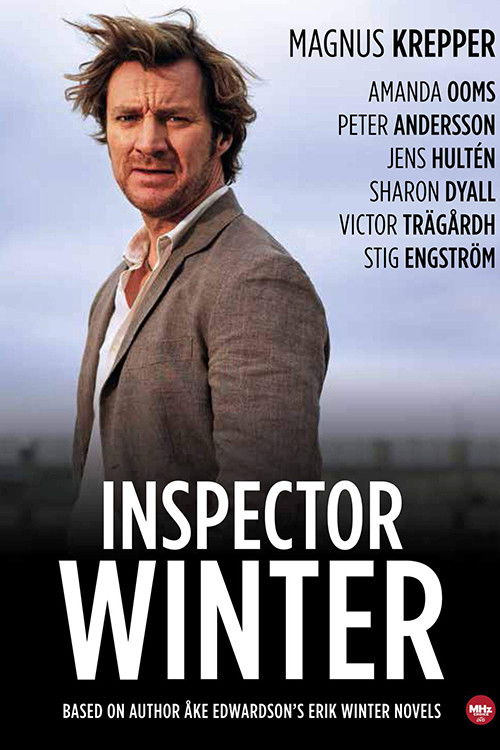









Popular
What motivates Inspector Winter in his investigations throughout the series?
How does Inspector Winter's relationship with his partner evolve over the course of the series?
What are some key cases that Inspector Winter investigates, and how do they impact him personally?
What role does the setting play in shaping the narrative of Inspector Winter?
How does Inspector Winter deal with the ethical dilemmas he faces during investigations?
Should I watch it?
Ask Your Own Question

What is the plot?
Inspector Winter begins with the titular character, Inspector Winter, a seasoned detective in the Swedish police force, who is called to investigate a murder case in a small town. The victim, a local businessman named Lars, is found dead in his home, and the scene is chaotic, with signs of a struggle. Winter arrives at the crime scene, taking in the details with a keen eye, noting the overturned furniture and the bloodstains on the floor.
As Winter interviews the victim's wife, Anna, she appears distraught but also evasive. Winter senses that she is hiding something. He questions her about Lars's business dealings, and she mentions that he had been involved in some shady transactions but insists that their marriage was strong. Winter's instincts tell him to dig deeper into Lars's life, and he begins to explore his connections with local businesses and potential enemies.
Winter's investigation leads him to a group of Lars's associates, including a rival businessman named Erik, who had a contentious relationship with Lars. Erik is defensive during questioning, claiming that he had nothing to do with the murder. Winter observes Erik's body language and becomes suspicious of his alibi. He decides to follow Erik, hoping to uncover more about his activities leading up to the murder.
As Winter continues to gather evidence, he discovers that Lars was involved in illegal activities, including smuggling. This revelation complicates the case, as it opens up a range of potential suspects. Winter interviews several people connected to Lars, including a former employee who reveals that Lars had been receiving threats. The tension builds as Winter realizes that the murder may be linked to a larger criminal network.
In a pivotal scene, Winter confronts Anna again, pressing her for more information. Under the pressure, she breaks down and reveals that she had been aware of Lars's illegal dealings and had even warned him about the dangers. This confession shifts Winter's focus back to Anna, and he begins to suspect that she may have had a motive for wanting Lars dead.
Winter's investigation takes a dramatic turn when he receives an anonymous tip about a meeting between Erik and a known criminal. He sets up surveillance and witnesses a heated exchange between the two men. The confrontation escalates, and Winter intervenes, leading to a tense standoff. Erik attempts to flee, but Winter apprehends him, and during the struggle, Erik reveals that he was being blackmailed by Lars, which adds another layer to the case.
As Winter pieces together the timeline of events, he discovers that Anna had been in contact with Erik prior to the murder. This revelation leads him to believe that Anna and Erik may have conspired together. Winter confronts Anna with this new evidence, and she admits to having met Erik but insists that she did not plan the murder. Her emotional turmoil is palpable as she grapples with her husband's criminal life and her own complicity.
The climax of the story occurs when Winter uncovers a hidden stash of evidence in Lars's office, including documents that implicate several local businessmen in illegal activities. This discovery not only solidifies the motive for Lars's murder but also reveals a web of corruption that extends beyond the immediate suspects. Winter realizes that the case is more complex than he initially thought, and he must navigate the dangerous waters of local politics and crime.
In the final act, Winter gathers all the suspects for a confrontation, laying out the evidence he has collected. The tension in the room is thick as he reveals Anna's involvement and Erik's desperation. In a dramatic twist, Anna confesses to having orchestrated the murder out of fear for her life, believing that Lars's criminal activities would eventually lead to their downfall. The emotional weight of her confession hangs heavy in the air as Winter processes the implications of her actions.
The story concludes with Winter reflecting on the case, the moral complexities of justice, and the personal toll it has taken on him. He walks away from the scene, burdened by the knowledge that the truth has been uncovered, but at a great cost to those involved. The final shot lingers on Winter's contemplative expression, hinting at the unresolved emotions that accompany his role as a detective in a world filled with shades of gray.









What is the ending?
In the ending of the TV show "Inspector Winter," the main character, Inspector Winter, confronts the truth behind the murder case he has been investigating. The resolution reveals the complexities of the relationships involved, leading to a tense climax. Ultimately, justice is served, but not without personal cost to Winter, who grapples with his own demons and the impact of the case on his life.
As the final episode unfolds, we find Inspector Winter in a dimly lit interrogation room, the air thick with tension. He sits across from a key suspect, his piercing gaze unwavering. The suspect, visibly shaken, begins to unravel, revealing crucial details about the murder that has haunted Winter throughout the series. The camera captures Winter's intense focus, his brow furrowed as he processes the information, the weight of the case pressing heavily on his shoulders.
Scene shifts to a flashback, where we see the victim's last moments, a haunting sequence that plays out in slow motion. The victim, a young woman, is seen in a vibrant café, laughter echoing around her. The contrast between her lively spirit and the grim reality of her fate is stark. Winter's internal struggle is palpable; he feels the burden of not only solving the case but also honoring the victim's memory.
Back in the present, Winter confronts the suspect with the evidence he has gathered. The suspect's facade begins to crack, revealing layers of guilt and fear. The dialogue is sharp, filled with tension as Winter pushes for the truth. The emotional stakes rise as the suspect finally breaks down, confessing to the crime. Winter's expression shifts from determination to a somber realization that justice comes at a price.
The scene transitions to the aftermath of the confession. Winter stands alone in his office, the weight of the case still heavy on his heart. He reflects on the lives affected by the murder, the families torn apart, and the darkness that lingers in the wake of violence. The camera lingers on his face, capturing the conflict within him--his commitment to justice clashing with the personal toll it has taken.
In the final moments, we see Winter walking through the streets of the city, the sun setting in the background. He pauses, looking out over the skyline, a mixture of resolve and sorrow etched on his features. The series closes with a sense of ambiguity; while the case is resolved, Winter's journey is far from over. He is left to navigate the complexities of his own life, the shadows of the past lingering as he moves forward.
As for the fates of the main characters, Inspector Winter continues his work, forever changed by the experiences he has endured. The suspect, now facing the consequences of their actions, is taken into custody, their life irrevocably altered. The victim's family is left to grapple with their loss, seeking closure in a world that feels forever altered by tragedy. Each character's journey reflects the intricate web of human emotion, loss, and the quest for justice that defines the series.
Is there a post-credit scene?
The TV show "Inspector Winter," produced in 2010, does not feature a post-credit scene. The series concludes its episodes without any additional scenes after the credits roll. Each episode wraps up the storyline, providing closure to the cases Inspector Winter investigates, leaving viewers with a sense of resolution. The focus remains on the intricate plots and character development throughout the episodes rather than extending the narrative beyond the credits.
What motivates Inspector Winter in his investigations throughout the series?
Inspector Winter is driven by a deep sense of justice and a personal commitment to uncovering the truth. His past experiences, including the loss of loved ones and his own struggles with authority, fuel his determination to solve cases that often seem insurmountable. He is portrayed as a complex character who grapples with his own demons while seeking to bring closure to victims' families.
How does Inspector Winter's relationship with his partner evolve over the course of the series?
Throughout the series, Inspector Winter's relationship with his partner, who often serves as a foil to his more brooding nature, evolves from one of professional distance to a deeper camaraderie. Initially, there is tension due to their differing approaches to police work, but as they face various challenges together, they develop mutual respect and understanding, leading to a strong bond that enhances their investigative teamwork.
What are some key cases that Inspector Winter investigates, and how do they impact him personally?
Inspector Winter investigates several key cases, including a high-profile murder that brings back memories of his own past traumas. Each case not only tests his professional skills but also forces him to confront his emotional vulnerabilities. For instance, a case involving a missing child resonates deeply with him, leading to moments of introspection about his own childhood and the choices he has made in his life.
What role does the setting play in shaping the narrative of Inspector Winter?
The setting of Inspector Winter is integral to the narrative, with its cold, often bleak landscapes reflecting the emotional states of the characters. The urban environment, filled with shadows and hidden corners, mirrors the complexity of the cases Winter tackles. The atmosphere of isolation and tension in the city serves to heighten the stakes of each investigation, making the resolution of each case feel even more significant.
How does Inspector Winter deal with the ethical dilemmas he faces during investigations?
Inspector Winter often finds himself at a crossroads when faced with ethical dilemmas, such as when the law conflicts with his moral compass. He struggles with the implications of his decisions, weighing the need for justice against the potential consequences for innocent parties. These moments of conflict reveal his internal struggle and highlight his commitment to doing what he believes is right, even when it puts him at odds with his superiors.
Is this family friendly?
"Inspector Winter," produced in 2010, is a crime drama that delves into the darker aspects of human nature and criminal activity. While it features a compelling narrative and strong character development, it may not be considered family-friendly for younger audiences or sensitive viewers.
Potentially objectionable or upsetting aspects include:
-
Violence: The show contains scenes of crime and violence, including depictions of murder and physical confrontations that may be intense or graphic.
-
Mature Themes: The series explores themes such as betrayal, revenge, and moral ambiguity, which may be difficult for younger viewers to understand.
-
Emotional Turmoil: Characters often experience significant emotional distress, including grief, anger, and despair, which can be heavy and unsettling.
-
Crime and Criminal Behavior: The portrayal of criminal activities and the psychological impact on victims and perpetrators may be disturbing.
-
Language: There may be instances of strong language or adult dialogue that could be inappropriate for children.
Overall, the show's tone and subject matter are more suited for an adult audience, and parental discretion is advised for younger viewers.