







Popular
What is the significance of Shion's relationship with Nezumi?
How does Shion's perspective on No. 6 change throughout the series?
What role does the character of Safu play in Shion's life?
What is the significance of the 'Rats' in the story?
How does the theme of identity manifest in Nezumi's character?
Should I watch it?
Ask Your Own Question

What is the plot?
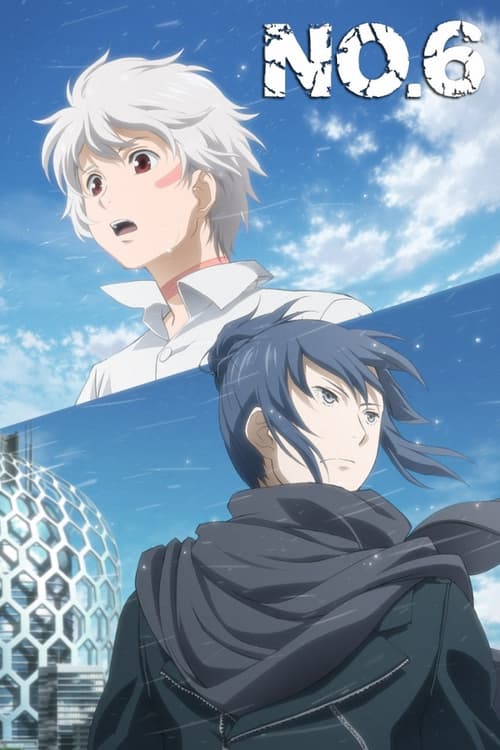
In the city of No. 6, a utopian society, we are introduced to Shion, a bright and promising young boy who lives a privileged life. One night, while walking home, he encounters a mysterious boy named Nezumi, who is a fugitive from the outside world. Shion, feeling a sense of empathy, decides to help Nezumi by providing him shelter in his home. They share a brief but intense connection, and Shion is captivated by Nezumi's rebellious spirit. However, their encounter is cut short when the authorities discover Nezumi's presence. Shion is forced to betray Nezumi to protect his own future, leading to Nezumi's capture.
The next day, Shion's life takes a drastic turn. He is ostracized by his peers and family for his association with Nezumi. The government, which prides itself on maintaining order, punishes Shion for his actions. He is sent to a rehabilitation facility, where he is subjected to a series of psychological tests and treatments designed to erase any rebellious thoughts. During this time, Shion's internal conflict grows; he grapples with guilt over his betrayal and the realization that the society he once admired is deeply flawed.
After his release, Shion returns to a changed No. 6. He feels increasingly alienated from his friends and family, who have all been indoctrinated into the system's ideology. Shion's curiosity about the outside world intensifies, and he begins to question the true nature of No. 6. He learns about the existence of the "West Block," a slum area outside the city's walls, where the government exiles those deemed undesirable. This knowledge ignites a desire in Shion to seek out Nezumi and understand the world beyond the confines of No. 6.
Shion's journey leads him to the West Block, where he reunites with Nezumi. Nezumi has become a hardened survivor, living in a world filled with danger and despair. Their reunion is fraught with tension, as Nezumi is initially wary of Shion's intentions. However, Shion's determination to understand Nezumi's perspective and the harsh realities of life outside No. 6 gradually earns Nezumi's trust. They begin to work together, navigating the treacherous environment of the West Block while uncovering the dark secrets of their society.
As they delve deeper into the mysteries of No. 6, Shion and Nezumi discover the existence of a deadly virus that the government has been using to control the population. The virus is a tool for culling the weak and maintaining the illusion of a perfect society. This revelation fuels their resolve to expose the truth and fight against the oppressive regime. They encounter various allies and enemies along the way, including a group of rebels who share their goal of dismantling the corrupt system.
The stakes rise when Shion learns that he is being targeted by the government due to his connection with Nezumi and his growing dissent. In a desperate attempt to protect Shion, Nezumi makes a bold decision to confront the authorities directly. He infiltrates the government facility, where he discovers the extent of the experiments being conducted on the citizens of No. 6. Nezumi's infiltration leads to a tense confrontation with the government officials, where he reveals the truth about the virus and the inhumane practices being carried out.
As the conflict escalates, Shion and Nezumi find themselves at the center of a rebellion against the government. They rally the citizens of No. 6, urging them to rise up against their oppressors. The rebellion culminates in a fierce battle, with Shion and Nezumi fighting side by side against the forces of the state. The emotional weight of their journey is palpable as they confront their fears and insecurities, ultimately finding strength in their bond.
In the final moments of the series, the rebellion reaches a climax, and the truth about No. 6 is laid bare for all to see. Shion and Nezumi's relationship deepens as they face the consequences of their actions together. The series concludes with a sense of uncertainty, leaving the future of No. 6 and its inhabitants hanging in the balance, but with a glimmer of hope for change and redemption.








What is the ending?
In the ending of No. 6, Shion and Nezumi confront the reality of their world and the oppressive system of No. 6. After a series of intense events, Shion realizes the importance of human connection and the value of life outside the confines of the city. The story culminates in a bittersweet resolution where Shion chooses to embrace his feelings for Nezumi, while Nezumi, burdened by his past, makes a sacrifice for Shion's future.
As the final episodes unfold, the tension in No. 6 reaches a critical point. Shion, having witnessed the brutal realities of the world outside the utopian facade of No. 6, is determined to change his fate and the fate of those around him. The city, once a symbol of safety and order, reveals its dark underbelly, where the lives of the citizens are manipulated and controlled.
In a pivotal scene, Shion and Nezumi find themselves in a confrontation with the authorities of No. 6. The atmosphere is thick with tension as they navigate through the remnants of the city, now a battleground of ideals and survival. Shion's heart races, torn between his loyalty to the city that raised him and the burgeoning love he feels for Nezumi, who represents freedom and rebellion.
As they delve deeper into the heart of No. 6, they encounter the Hive, a place where the true nature of the city's power is revealed. The Hive is a grotesque manifestation of the city's control, where the inhabitants are reduced to mere tools for the elite. Shion's horror grows as he witnesses the suffering inflicted upon the people, igniting a fierce resolve within him to fight against the system.
In a climactic moment, Shion and Nezumi are cornered by the authorities. Nezumi, ever the protector, pushes Shion to escape, urging him to live a life free from the shackles of No. 6. The emotional weight of this moment is palpable; Shion's eyes brim with tears as he realizes the depth of Nezumi's sacrifice. Nezumi, haunted by his past and the choices he has made, understands that his path is one of darkness, but he is willing to embrace it for Shion's sake.
As Shion flees, he carries with him the memories of their time together--the laughter, the pain, and the love that blossomed amidst chaos. The city crumbles behind him, a symbol of the oppressive regime that has held sway for too long. Shion's heart is heavy, but he knows he must forge a new path, one that honors Nezumi's sacrifice.
In the final scenes, Shion stands at the edge of the city, looking out into the vast unknown. The sun rises, casting a warm glow over the landscape, symbolizing hope and new beginnings. He clutches a small token from Nezumi, a reminder of their bond, and vows to create a world where love and freedom can flourish.
Nezumi's fate, however, is left shrouded in uncertainty. He remains behind, a solitary figure against the backdrop of a crumbling city, embodying the struggle against oppression. His sacrifice is a poignant reminder of the cost of freedom and the complexities of love.
The series concludes with a sense of bittersweet resolution. Shion's journey is one of growth and self-discovery, while Nezumi's path is marked by sacrifice and the weight of his choices. Together, they represent the duality of hope and despair, love and loss, in a world that is both beautiful and cruel.
Is there a post-credit scene?
In the anime series No. 6, there is no post-credit scene following the final episode. The series concludes with a poignant and emotional ending that wraps up the main narrative threads between the characters Shion and Nezumi. The final moments focus on their relationship and the choices they make in the face of a dystopian world, leaving viewers with a sense of resolution but also ambiguity regarding their future. The absence of a post-credit scene emphasizes the themes of hope and uncertainty that permeate the series.
What is the significance of Shion's relationship with Nezumi?
Shion's relationship with Nezumi is central to the narrative of No. 6. Initially, Shion is a privileged boy living in the utopian city of No. 6, while Nezumi is a fugitive from the outside world. Their bond evolves from one of curiosity and admiration to deep emotional reliance. Shion's growing feelings for Nezumi challenge his understanding of his own society and its values, leading him to question the morality of No. 6. Nezumi, on the other hand, represents the harsh realities of the world outside, and his protective instincts towards Shion reveal his own vulnerabilities and past traumas. Their relationship is marked by moments of tenderness, conflict, and ultimately, a shared desire for freedom.
How does Shion's perspective on No. 6 change throughout the series?
Shion begins as a loyal citizen of No. 6, believing in its ideals and the safety it provides. However, after meeting Nezumi and experiencing the harsh truths of the outside world, his perspective shifts dramatically. He witnesses the injustices and the dark secrets that underpin the city's facade of perfection. This transformation is marked by his internal struggle as he grapples with his upbringing and the reality of the suffering inflicted on others. Shion's emotional turmoil is palpable as he confronts the consequences of his society's actions, ultimately leading him to rebel against the system he once revered.
What role does the character of Safu play in Shion's life?
Safu is Shion's childhood friend and initially serves as a symbol of his past life within No. 6. She represents the normalcy and comfort of Shion's upbringing, embodying the ideals of the society they live in. However, as the story progresses, Safu's character becomes a catalyst for Shion's transformation. Her eventual fate, as she becomes entangled in the machinations of No. 6, forces Shion to confront the reality of his choices and the consequences of his relationship with Nezumi. Safu's unwavering feelings for Shion and her tragic circumstances highlight the emotional stakes of Shion's journey, deepening his internal conflict and sense of responsibility.
What is the significance of the 'Rats' in the story?
The 'Rats' are a group of rebels living outside the confines of No. 6, representing the oppressed and marginalized individuals who have been cast out by the society. They symbolize the resistance against the oppressive regime of No. 6 and serve as a stark contrast to the utopian ideals of the city. The Rats' existence challenges the notion of safety and perfection that No. 6 promotes, revealing the darker aspects of the city's governance. Nezumi's connection to the Rats and his role as a leader within this group highlight his commitment to fighting against the injustices of their world. The Rats' struggle for survival and freedom resonates with Shion, ultimately influencing his decision to stand against the oppressive system.
How does the theme of identity manifest in Nezumi's character?
Nezumi's character is deeply intertwined with themes of identity and self-perception. As a fugitive, he grapples with his past and the societal labels imposed upon him. His identity is shaped by his experiences of loss, betrayal, and survival in a world that has rejected him. Nezumi often oscillates between his role as a protector of Shion and his own desire for vengeance against No. 6. His complex emotions reveal a man who is both hardened by his experiences and vulnerable in his connections with others. Nezumi's struggle to reconcile his past with his present, especially in relation to Shion, underscores the broader theme of searching for one's place in a world that seeks to define individuals by their circumstances.
Is this family friendly?
"No. 6" is a dystopian anime that contains several themes and scenes that may not be suitable for children or sensitive viewers. Here are some potentially objectionable aspects:
-
Violence and Bloodshed: The series includes scenes of violence, including physical confrontations and bloodshed, which may be distressing for younger audiences.
-
Death and Suffering: Characters experience significant trauma, loss, and suffering, which can evoke strong emotional responses.
-
Themes of Oppression: The narrative explores themes of societal control, discrimination, and the consequences of a totalitarian regime, which may be heavy for younger viewers to process.
-
Mature Relationships: There are complex relationships between characters that include emotional intimacy and suggestive themes, which may not be appropriate for all audiences.
-
Psychological Distress: Characters face intense psychological challenges, including fear, isolation, and existential crises, which could be upsetting for sensitive viewers.
-
Dystopian Elements: The overall atmosphere of despair and hopelessness in the society depicted may be unsettling for children.
These elements contribute to a narrative that is more suited for older teens and adults rather than a family-friendly audience.