
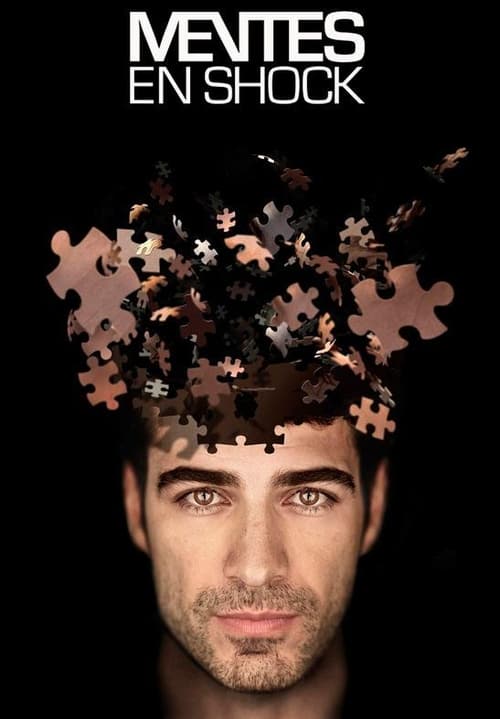













Popular
What are the main character's motivations throughout the series?
How does the relationship between Dr. Santiago and his mentor evolve?
What role does the character of Ana play in Dr. Santiago's journey?
How do the various patient cases reflect the main characters' internal conflicts?
What is the significance of the therapy sessions depicted in the show?
Should I watch it?
Ask Your Own Question

What is the plot?
In the opening scene of "Mentes en Shock," we are introduced to a group of individuals who are part of a psychological experiment. The setting is a sterile, clinical environment where they are being observed by a team of scientists. The participants, each with their own troubled pasts, are unaware of the true nature of the experiment, which is designed to push their mental limits. The atmosphere is tense, filled with uncertainty and anxiety as the characters begin to interact with one another.
As the experiment progresses, the participants are subjected to various psychological tests that challenge their fears and insecurities. One of the key characters, a woman named Valeria, struggles with her traumatic memories, which are brought to the surface during the tests. Her emotional turmoil is palpable, and she often finds herself in conflict with another participant, a man named Diego, who seems to thrive on the chaos of the situation. Their dynamic becomes increasingly volatile as the tests intensify.
In a pivotal moment, the scientists introduce a new element to the experiment: a series of group challenges that require the participants to confront their deepest fears. During one challenge, they are placed in a dark room and must navigate through their phobias. Valeria faces her fear of darkness, while Diego confronts his fear of failure. The tension escalates as the group begins to fracture under the pressure, leading to heated arguments and emotional breakdowns.
As the challenges continue, the participants start to form alliances. Valeria and Diego, despite their earlier conflicts, find themselves drawn to each other as they share their vulnerabilities. This connection leads to a moment of intimacy, but it is quickly shattered when another participant, a man named Marco, reveals a dark secret about Diego's past. This revelation causes a rift between Valeria and Diego, as she struggles to reconcile her feelings for him with the truth of his actions.
The experiment takes a darker turn when the scientists begin to manipulate the environment, introducing elements that heighten the participants' stress levels. They are subjected to loud noises, flashing lights, and disorienting visuals. The psychological strain leads to a breakdown in communication among the group, and paranoia sets in. Valeria becomes increasingly isolated, feeling as though she cannot trust anyone, including Diego.
In a climactic scene, the participants are forced to confront their worst fears in a final challenge. They are placed in a room filled with mirrors, where they must face distorted versions of themselves. This leads to a series of confrontations, as each character grapples with their identity and the choices they have made. Valeria confronts her past trauma head-on, while Diego must face the consequences of his actions. The emotional stakes are at their highest, and the characters are pushed to their limits.
As the experiment reaches its conclusion, the participants are given a choice: to leave the experiment and return to their lives or to stay and continue facing their fears. Valeria ultimately decides to leave, realizing that she needs to confront her past on her own terms. Diego, however, chooses to stay, believing that he can find redemption through the process. This decision creates a poignant separation between them, highlighting the different paths they must take in their healing journeys.
In the final scenes, Valeria steps out of the sterile environment into the outside world, a mix of relief and trepidation on her face. She takes a deep breath, symbolizing her commitment to facing her fears independently. Meanwhile, Diego remains in the experiment, surrounded by the chaos of his unresolved issues, hinting at the ongoing struggle he will face. The screen fades to black, leaving the audience with a sense of unresolved tension and the complexities of the human psyche.









What is the ending?
In the ending of "Mentes en Shock," the main characters confront their inner demons and the consequences of their actions. The series culminates in a tense showdown that forces each character to face their past and make critical decisions about their futures. Ultimately, they find a semblance of resolution, but not without significant sacrifices and emotional turmoil.
As the final episodes unfold, the tension escalates. The characters, each grappling with their psychological struggles, are drawn into a climactic confrontation. The setting is dark and claustrophobic, reflecting their internal chaos. The atmosphere is thick with suspense as they navigate their fears and regrets.
In a pivotal scene, the protagonist, who has been battling deep-seated trauma, stands at a crossroads. The weight of their past actions looms large, and they must choose between seeking redemption or succumbing to despair. The emotional stakes are high, and the character's internal conflict is palpable. As they make their choice, the camera lingers on their face, capturing the turmoil and determination in their eyes.
Simultaneously, another key character faces a moment of reckoning. They are confronted by the consequences of their manipulations and deceit. The emotional fallout is intense, and the character's vulnerability is laid bare. In a moment of clarity, they realize the impact of their actions on those around them, leading to a heartfelt apology that signifies a turning point in their journey.
As the climax reaches its peak, the characters are forced to confront each other. The dialogue is charged with emotion, revealing long-buried resentments and unspoken truths. The tension in the room is almost tangible, as each character grapples with their own guilt and the desire for forgiveness. The scene is a powerful exploration of human relationships, showcasing the complexity of love, betrayal, and the quest for understanding.
In the aftermath of the confrontation, the characters begin to find a path forward. Some choose to seek therapy and support, symbolizing a commitment to healing. Others, however, are left to grapple with the consequences of their choices, hinting at a more uncertain future. The final moments of the series are bittersweet, as the characters reflect on their journeys. The camera pans out, leaving viewers with a sense of hope intertwined with the reality of their struggles.
In conclusion, the fates of the main characters are varied. The protagonist finds a glimmer of hope and a willingness to confront their past, while another character begins the difficult journey of atonement. However, not all characters achieve closure, leaving their futures ambiguous and open to interpretation. The series ends on a note that emphasizes the complexity of the human psyche and the ongoing battle for self-acceptance and redemption.
Is there a post-credit scene?
"Mentes en Shock," produced in 2011, does not feature a post-credit scene. The series concludes its episodes without any additional content after the credits roll. Each episode wraps up its narrative arcs, focusing on the psychological and emotional journeys of the characters, particularly as they navigate the complexities of their mental health challenges and interpersonal relationships. The absence of post-credit scenes allows for a more straightforward conclusion to the stories presented in each episode, emphasizing the themes of mental health and personal growth without additional cliffhangers or extended narratives.
What are the main character's motivations throughout the series?
The main character, Dr. Santiago, is driven by a deep desire to understand the human mind and help those suffering from psychological issues. His personal struggles with his own past traumas fuel his dedication to his patients, often leading him to push boundaries in his practice.
How does the relationship between Dr. Santiago and his mentor evolve?
Initially, Dr. Santiago looks up to his mentor, Dr. Morales, as a guiding figure in his career. However, as the series progresses, their relationship becomes strained due to differing ethical views on treatment methods. Dr. Santiago's growing confidence leads him to challenge Dr. Morales, creating tension and conflict that ultimately tests their bond.
What role does the character of Ana play in Dr. Santiago's journey?
Ana serves as both a love interest and a catalyst for Dr. Santiago's emotional growth. Her own struggles with mental health issues mirror his, and their relationship forces him to confront his fears and vulnerabilities. Ana's presence in his life challenges him to balance his professional responsibilities with personal connections.
How do the various patient cases reflect the main characters' internal conflicts?
Each patient case presented in the series serves as a reflection of the main characters' internal struggles. For instance, a patient dealing with abandonment issues parallels Dr. Santiago's own fears of intimacy, prompting him to confront his past. These cases are intricately woven into the narrative, highlighting the characters' emotional states and growth.
What is the significance of the therapy sessions depicted in the show?
The therapy sessions are crucial to the narrative, as they reveal the complexities of the characters' psyches. Through these sessions, viewers gain insight into the characters' motivations, fears, and desires. The sessions often serve as turning points for both the patients and Dr. Santiago, showcasing the transformative power of therapy.
Is this family friendly?
"Mentes en Shock," produced in 2011, is a psychological thriller that delves into complex themes and intense situations. While it offers a gripping narrative, it may not be considered family-friendly due to several potentially objectionable or upsetting aspects.
-
Psychological Tension: The show frequently explores themes of mental illness and trauma, which may be distressing for younger viewers or those sensitive to such topics.
-
Violence: There are scenes that depict violence or threats, which can be unsettling. The portrayal of conflict often includes intense confrontations that may evoke fear or anxiety.
-
Emotional Distress: Characters experience significant emotional turmoil, including despair, anger, and fear. These intense emotional states can be heavy and may resonate negatively with sensitive viewers.
-
Dark Themes: The narrative often touches on darker aspects of human nature, including betrayal, manipulation, and moral ambiguity, which may not be suitable for children.
-
Mature Language: The dialogue may include strong language or adult themes that could be inappropriate for younger audiences.
Overall, while "Mentes en Shock" offers a compelling story, its psychological depth and mature content may not be suitable for children or those who are sensitive to intense emotional and psychological themes.