














Popular
What challenges does Lykke face in her personal relationships throughout the series?
How does Lykke's career aspirations affect her personal life?
What role does Lykke's family play in her development throughout the series?
How does Lykke cope with her feelings of loneliness and isolation?
What pivotal moments lead to Lykke's self-discovery in the series?
Should I watch it?
Ask Your Own Question

What is the plot?
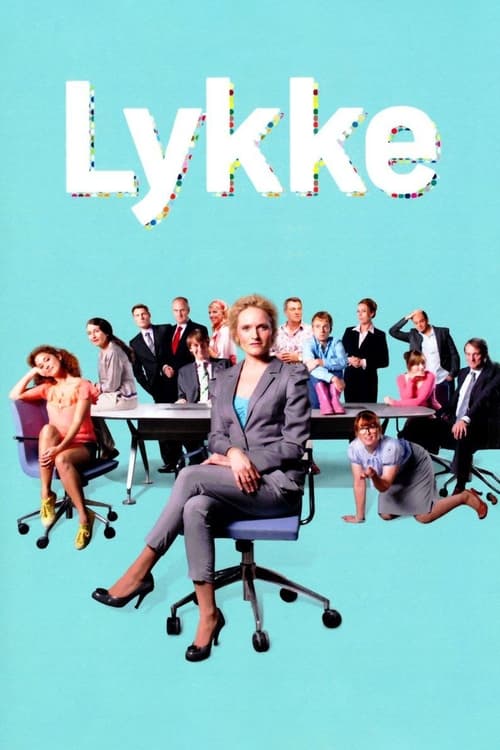
"Lykke" follows the intertwined lives of several characters in a small Danish town, exploring themes of love, loss, and the pursuit of happiness.
The story begins with Lykke, a young woman who is struggling to find her place in the world. She works at a local café, where she often daydreams about a more fulfilling life. Lykke's internal conflict is palpable as she grapples with her feelings of inadequacy and her desire for something greater. Her interactions with customers reveal her kind-hearted nature, but also her deep-seated insecurities.
One day, Lykke meets a charming man named Frederik, who is new in town. Their initial encounter is filled with flirtation and a sense of possibility. Lykke feels a spark of hope as she begins to imagine a future with him. However, Frederik is dealing with his own issues, including a troubled past that he is reluctant to share. This creates a tension between them, as Lykke longs for deeper connection while Frederik remains emotionally guarded.
As their relationship develops, Lykke learns that Frederik has a daughter, which complicates her feelings. She is excited yet apprehensive about the prospect of becoming a stepmother. The emotional weight of this revelation leads Lykke to question her readiness for such a commitment. Meanwhile, Frederik struggles with his responsibilities as a father and his desire to pursue a romantic relationship with Lykke.
In parallel, we are introduced to other characters in the town, including Lykke's best friend, who is navigating her own tumultuous relationship. This subplot provides a contrast to Lykke's journey, highlighting the different ways people cope with love and heartache. The friend's experiences serve as a cautionary tale for Lykke, who is determined to avoid similar pitfalls.
As the story progresses, Lykke faces a series of challenges that test her resolve. She experiences a setback at work, leading to a confrontation with her boss. This moment of conflict forces Lykke to stand up for herself, revealing her growth and newfound confidence. She begins to realize that she deserves happiness and is willing to fight for it.
Frederik's past catches up with him when an old acquaintance arrives in town, stirring up unresolved issues. This confrontation forces Frederik to confront his fears and insecurities, impacting his relationship with Lykke. He becomes distant, causing Lykke to feel rejected and confused. The emotional turmoil leads her to question whether their relationship can survive the weight of their individual struggles.
In a pivotal moment, Lykke decides to confront Frederik about his behavior. She expresses her feelings of hurt and confusion, demanding honesty. This confrontation is raw and emotional, showcasing Lykke's growth as she refuses to accept anything less than the truth. Frederik, moved by her courage, finally opens up about his past and his fears of commitment.
The climax of the story occurs during a town festival, where Lykke and Frederik must confront their feelings in front of their friends and family. The atmosphere is charged with excitement and tension as they navigate their relationship in a public setting. Lykke takes a leap of faith, declaring her love for Frederik in a heartfelt speech. This moment is both liberating and terrifying for her, as she risks vulnerability in front of everyone.
Frederik, touched by Lykke's declaration, reciprocates her feelings, but also acknowledges the challenges they will face together. They share a passionate kiss, symbolizing their commitment to each other despite the obstacles ahead. This moment marks a turning point in their relationship, as they both choose to embrace love and the uncertainties that come with it.
In the final scenes, Lykke reflects on her journey, realizing that happiness is not a destination but a continuous process. She embraces her imperfections and the complexities of her relationships. The story concludes with Lykke and Frederik walking hand in hand, ready to face the future together, embodying the idea that love is worth the struggle.









What is the ending?
In the ending of "Lykke," the main characters confront their personal struggles and relationships, leading to a resolution that emphasizes the importance of connection and acceptance. The series concludes with a sense of hope as the characters find their paths toward happiness, albeit with lingering complexities.
As the final episodes unfold, we see the characters grappling with their choices and the consequences of their actions. The narrative begins with Lykke, who has been on a journey of self-discovery throughout the series. She faces the reality of her relationships, particularly with her partner, who has been a source of both support and conflict. In a pivotal scene, Lykke has a heartfelt conversation with him, where they both express their fears and desires. This moment is charged with emotion, as they confront the possibility of separation but also the hope of reconciliation.
Meanwhile, Lykke's friends are also navigating their own challenges. One character, who has struggled with personal demons, finds a moment of clarity and decides to seek help, symbolizing a turning point in their life. This decision is portrayed with a sense of gravity, as the character acknowledges the need for change and the support of friends.
As the series progresses, the characters come together for a final gathering, a poignant scene filled with laughter and tears. They share stories, reflecting on their journeys and the bonds they have formed. This gathering serves as a cathartic release, allowing them to confront their pasts and embrace their futures. The atmosphere is bittersweet, as they recognize that while life is unpredictable, they have each other to lean on.
In the closing moments, Lykke stands alone, looking out at a beautiful landscape, symbolizing her newfound sense of freedom and hope. The camera lingers on her face, capturing a mix of determination and vulnerability. The series ends on a note of optimism, suggesting that while challenges remain, the characters are ready to face them together.
In summary, the ending of "Lykke" encapsulates the themes of connection, personal growth, and the complexities of relationships, leaving viewers with a sense of hope for the characters' futures.
Is there a post-credit scene?
The TV show "Lykke," produced in 2011, does not feature a post-credit scene. The series concludes its narrative without any additional scenes after the credits roll. The focus remains on the emotional arcs and resolutions of the characters throughout the episodes, culminating in a satisfying conclusion that ties up the main storylines. The absence of a post-credit scene allows viewers to reflect on the journey of the characters and the themes of love, loss, and personal growth that permeate the series.
What challenges does Lykke face in her personal relationships throughout the series?
Lykke, the protagonist, navigates a tumultuous landscape of personal relationships that are fraught with emotional complexity. She struggles with her romantic involvement with her boyfriend, who often seems distant and uncommitted. This creates a sense of insecurity in Lykke, leading her to question her self-worth and the stability of their relationship. Additionally, her interactions with her family reveal deep-seated issues, particularly with her mother, who has her own struggles that impact Lykke's emotional state. Lykke's journey is marked by her attempts to reconcile her desires for love and acceptance with the harsh realities of her relationships.
How does Lykke's career aspirations affect her personal life?
Lykke's ambition to succeed in her career as a writer is a central theme that significantly impacts her personal life. As she dedicates more time to her writing, she often finds herself torn between her professional aspirations and her relationships. This creates tension, particularly with her boyfriend, who feels neglected and frustrated by her commitment to her work. Lykke's internal conflict is palpable; she yearns for recognition and fulfillment in her career, yet this pursuit often leaves her feeling isolated and misunderstood by those she loves. Her struggle to balance these two aspects of her life is a recurring source of emotional turmoil.
What role does Lykke's family play in her development throughout the series?
Lykke's family plays a crucial role in shaping her character and emotional journey. Her relationship with her mother is particularly significant, as it is marked by a mix of love, resentment, and a longing for approval. Lykke often reflects on her mother's struggles, which influence her own views on success and happiness. The dynamics within her family, including her interactions with her siblings, add layers to her character, revealing her vulnerabilities and fears. These familial ties serve as both a source of support and conflict, driving Lykke to confront her past and ultimately seek her own identity.
How does Lykke cope with her feelings of loneliness and isolation?
Throughout the series, Lykke grapples with profound feelings of loneliness and isolation, which are exacerbated by her intense focus on her writing and her complicated relationships. She often seeks solace in her friendships, but even these connections can feel superficial at times. Lykke's coping mechanisms vary; she sometimes immerses herself in her work to escape her emotional pain, while at other moments, she reaches out to friends for support. Her internal monologues reveal her deep-seated fears of being alone, and her journey involves learning to embrace solitude as a part of her growth, ultimately leading her to a better understanding of herself.
What pivotal moments lead to Lykke's self-discovery in the series?
Lykke's journey of self-discovery is marked by several pivotal moments that challenge her perceptions of love, success, and identity. One significant moment occurs when she confronts her boyfriend about their relationship, leading to a painful but necessary realization about her own needs and desires. Another key event is her decision to take a break from her writing to reflect on her life, which forces her to confront her fears and insecurities. These moments of confrontation and reflection are crucial in her development, as they push her to reevaluate her priorities and ultimately embrace her individuality, setting the stage for her personal growth.
Is this family friendly?
"Lykke," produced in 2011, is a Danish television series that explores themes of love, family, and personal struggles. While it has a heartfelt narrative, there are several aspects that may be considered objectionable or upsetting for children or sensitive viewers:
-
Emotional Turmoil: The characters frequently experience deep emotional struggles, including heartbreak, loss, and existential crises, which may be intense for younger audiences.
-
Relationship Conflicts: There are scenes depicting complicated adult relationships, including infidelity and betrayal, which may not be suitable for children.
-
Mental Health Themes: The show touches on issues related to mental health, including depression and anxiety, which could be distressing for sensitive viewers.
-
Family Dynamics: There are moments of familial conflict and tension that may resonate with viewers who have experienced similar issues, potentially evoking strong emotional reactions.
-
Mature Language: The dialogue includes adult language and themes that may not be appropriate for younger viewers.
Overall, while "Lykke" offers a rich narrative, its exploration of complex adult themes may not be suitable for a family-friendly viewing experience.