





Popular
What specific astronomical events were featured during the live broadcasts of Stargazing Live?
Who were the main presenters of Stargazing Live and what roles did they play?
What interactive elements were included in Stargazing Live to engage the audience?
What specific telescopes or equipment were used during the Stargazing Live broadcasts?
How did the presenters react to the live observations of celestial events during the show?
Should I watch it?
Ask Your Own Question

What is the plot?
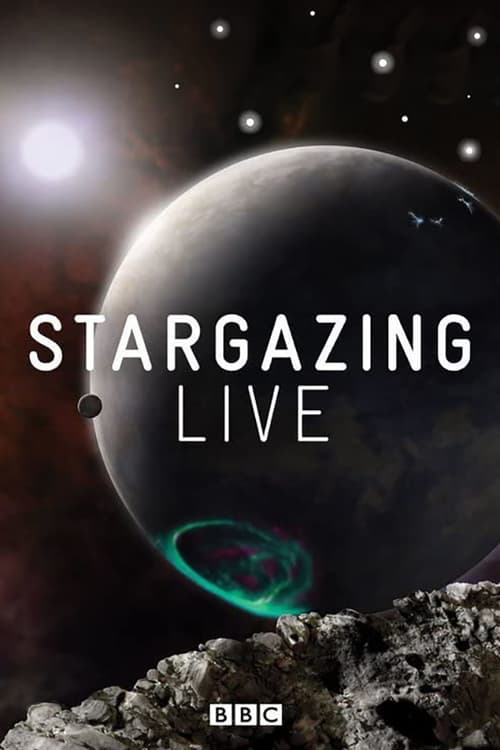
Stargazing Live is a live television event that aired in 2011, hosted by Brian Cox and Dara Ó Briain. The program is structured around a series of live broadcasts that aim to engage the audience in astronomy and the wonders of the night sky.
The event begins with Brian Cox introducing the concept of stargazing to the audience, emphasizing the importance of connecting with the universe. He explains the significance of the night sky and how viewers can participate in the event by observing celestial bodies from their own locations. The excitement builds as viewers are encouraged to share their observations via social media.
As the program progresses, Brian and Dara take the audience through various segments, showcasing different astronomical phenomena. They discuss the planets visible in the night sky, including Jupiter and its moons, and provide detailed descriptions of their features. The hosts share stunning visuals captured by telescopes, enhancing the viewers' understanding of these celestial objects.
Throughout the broadcast, the hosts interact with experts and astronomers who provide insights into ongoing astronomical research. They discuss the latest discoveries in the field, including the search for exoplanets and the significance of the Kepler mission. The emotional tone is one of wonder and curiosity, as the hosts express their passion for the cosmos and the mysteries it holds.
The program also features live observations from various locations, where amateur astronomers and enthusiasts share their experiences. Viewers are treated to live feeds of telescopes pointed at different celestial objects, allowing them to witness the beauty of the universe in real-time. The excitement is palpable as the hosts encourage viewers to look through their own telescopes and share their findings.
As the night progresses, the hosts delve into the mythology and history associated with the stars and constellations. They recount ancient stories and how different cultures have interpreted the night sky throughout history. This segment adds a rich layer of narrative to the scientific observations, connecting the audience emotionally to the stars above.
In a pivotal moment, the hosts invite viewers to participate in a live stargazing challenge, where they are tasked with locating specific stars and constellations. The challenge fosters a sense of community among viewers, as they share their successes and difficulties in real-time. The hosts celebrate the achievements of those who successfully identify the celestial objects, creating a joyful atmosphere.
As the event nears its conclusion, Brian and Dara reflect on the importance of stargazing as a way to inspire future generations of astronomers and scientists. They emphasize the need for curiosity and exploration, encouraging viewers to continue their journey of discovery beyond the broadcast. The emotional weight of this message resonates with the audience, leaving them with a sense of hope and wonder.
The program wraps up with a final call to action, urging viewers to keep looking up at the night sky and to engage with astronomy in their daily lives. The hosts express their gratitude for the audience's participation and enthusiasm, creating a warm and inclusive ending to the event. The screen fades to black, leaving viewers inspired to explore the universe further.
🔥 Trending TV Shows Now
Browse All TV Shows →








What is the ending?
Stargazing Live, produced in 2011, does not have a traditional narrative structure with characters and a plot that culminates in a definitive ending. Instead, it is a live television event that focuses on astronomy and the wonders of the night sky, featuring various segments that educate and engage viewers about celestial phenomena.
In a more detailed narrative format, the show unfolds over several nights, with each episode dedicated to different astronomical topics. The hosts, including Brian Cox and Dara Ó Briain, guide the audience through the experience of stargazing, sharing insights about stars, planets, and the universe.
As the show progresses, viewers are invited to participate by sending in their own observations and questions, creating a sense of community among stargazers. The hosts demonstrate how to use telescopes and share tips on identifying constellations, making the experience accessible to everyone, regardless of their prior knowledge of astronomy.
The final segment of the show emphasizes the beauty and vastness of the universe, encouraging viewers to continue exploring the night sky long after the broadcast ends. The hosts express their hope that the audience feels inspired to look up and appreciate the wonders of the cosmos.
In conclusion, Stargazing Live does not conclude with character arcs or conflicts typical of a scripted narrative. Instead, it leaves viewers with a sense of wonder and curiosity about the universe, urging them to engage with the night sky and continue their journey of discovery. The fate of the participants, in this case, is not about personal journeys but rather about fostering a collective appreciation for astronomy and the mysteries of the universe.
Is there a post-credit scene?
Stargazing Live, produced in 2011, does not feature a post-credit scene. The show is structured as a live event, focusing on engaging viewers with real-time astronomical observations and discussions rather than traditional narrative storytelling that would typically include post-credit scenes. Each episode is designed to immerse the audience in the wonders of the night sky, featuring live feeds from telescopes, expert commentary, and interactive segments that encourage viewer participation. The format emphasizes the immediacy of the experience, celebrating the beauty of the cosmos without the need for additional narrative elements after the main content concludes.
What specific astronomical events were featured during the live broadcasts of Stargazing Live?
Stargazing Live featured several significant astronomical events, including the observation of the lunar eclipse, the transit of Venus, and various meteor showers. Each event was highlighted with live commentary and expert analysis, allowing viewers to engage with the phenomena in real-time.
Who were the main presenters of Stargazing Live and what roles did they play?
The main presenters of Stargazing Live were Brian Cox, Dara Ó Briain, and Liz Bonnin. Brian Cox, as the lead presenter, provided scientific insights and explanations about the universe, while Dara Ó Briain brought humor and a sense of wonder to the discussions. Liz Bonnin contributed by engaging with the audience and conducting interviews with astronomers and experts.
What interactive elements were included in Stargazing Live to engage the audience?
Stargazing Live included several interactive elements, such as live polls where viewers could vote on which celestial objects to observe, and a social media component where audiences could submit their questions and observations in real-time. This engagement created a sense of community among viewers as they shared their experiences.
What specific telescopes or equipment were used during the Stargazing Live broadcasts?
During the broadcasts of Stargazing Live, various telescopes were utilized, including high-powered telescopes set up at different locations for optimal viewing. The show also featured portable telescopes that allowed presenters to demonstrate how to observe celestial objects, enhancing the educational aspect of the program.
How did the presenters react to the live observations of celestial events during the show?
The presenters exhibited a range of emotions during the live observations, from awe and excitement to moments of tension when weather conditions threatened visibility. Their genuine enthusiasm for astronomy was palpable, as they shared their personal experiences and reactions to the beauty of the night sky, creating an engaging atmosphere for viewers.
Is this family friendly?
"Stargazing Live," produced in 2011, is a family-friendly program that aims to engage viewers of all ages in the wonders of astronomy and the night sky. The show features live broadcasts of astronomical events, discussions about celestial phenomena, and educational segments designed to inspire curiosity about the universe.
While the show is generally suitable for children and sensitive viewers, there are a few aspects that might be considered potentially objectionable or upsetting:
-
Discussion of Cosmic Events: Some segments may include discussions about the vastness of space, black holes, and the potential for cosmic disasters, which could be overwhelming for younger viewers or those sensitive to existential themes.
-
Visuals of Space: The imagery of distant galaxies, supernovae, and other cosmic phenomena, while stunning, may evoke feelings of insignificance or fear of the unknown in some viewers.
-
Scientific Concepts: The show delves into complex scientific ideas that may be difficult for younger children to fully grasp, potentially leading to confusion or frustration.
Overall, "Stargazing Live" is designed to be an educational and awe-inspiring experience, with a focus on wonder rather than fear, making it largely appropriate for family viewing.