
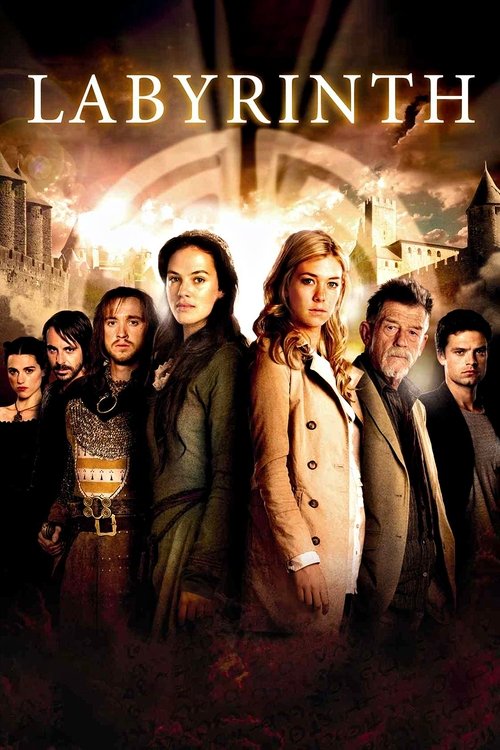

















Popular
What is the significance of the Templar treasure in Labyrinth?
How do the characters Alice and Will connect across time?
What role does the character of the Knight play in the story?
How does the labyrinth itself function as a character in the story?
What motivates the character of the antagonist in Labyrinth?
Should I watch it?
Ask Your Own Question

What is the plot?
The story begins in the present day with Alice, a young woman who is struggling with her life and her relationship with her mother. She is drawn to the historical mystery surrounding the Knights Templar and the Holy Grail. Alice discovers a hidden connection to her family's past, which leads her to a remote location in France where she believes she can uncover the truth about the Grail.
Simultaneously, the narrative shifts to the year 1200, where we meet a young woman named Marie. She is a servant in a castle and is caught in the political machinations of the time. Marie is tasked with helping a group of Knights Templar who are searching for the Holy Grail. The Templars believe that the Grail holds immense power and that it is their duty to protect it from falling into the wrong hands.
As the story unfolds, Alice finds herself in a labyrinthine cave system while searching for clues about the Grail. She encounters a mysterious figure named the Guardian, who warns her about the dangers of the quest. Despite the warning, Alice is determined to continue her search, driven by a desire to understand her family's legacy and the truth behind the Grail.
In the past, Marie becomes increasingly involved with the Templars, particularly with a knight named Godfrey. Their relationship deepens, and Marie learns about the Templars' mission to find the Grail. However, she also discovers that there are others who seek the Grail for nefarious purposes, including a rival faction led by a man named the Black Knight.
Back in the present, Alice's journey leads her to a series of challenges within the labyrinth. She faces physical obstacles and puzzles that test her resolve and intelligence. Each challenge reveals more about her character and her motivations, as she grapples with her fears and insecurities.
As the timelines converge, Marie and Alice's stories begin to intertwine. Alice uncovers a hidden truth about her ancestry that connects her directly to Marie. This revelation propels her forward, as she realizes that her quest is not just about the Grail but also about understanding her own identity.
In a pivotal moment, Alice confronts the Guardian again, who reveals that the Grail is not merely a physical object but a symbol of faith and sacrifice. This revelation forces Alice to reevaluate her motivations and the implications of her quest. She must decide whether to continue pursuing the Grail or to let go of her obsession.
Meanwhile, in the past, Marie faces a betrayal from within the Templar ranks. The Black Knight captures her and attempts to use her as leverage against the Templars. Godfrey, realizing the danger Marie is in, rallies his fellow knights to rescue her. This leads to a dramatic confrontation between the Templars and the Black Knight's forces.
The rescue mission is fraught with tension, as the knights engage in a fierce battle against the Black Knight's men. Godfrey fights valiantly, showcasing his skills as a warrior, while Marie uses her cunning to aid in her own escape. The battle culminates in a showdown between Godfrey and the Black Knight, where loyalty and honor are put to the test.
As the battle rages on, Alice, in the present, faces her own confrontation with the Guardian. She must confront her fears and the truth about her family's past. In a moment of clarity, she realizes that the Grail's true power lies in the connections between people and the sacrifices made for love and loyalty.
The climax of the story sees both Alice and Marie reaching a turning point. Alice decides to embrace her heritage and the lessons learned from her journey, while Marie chooses to stand by Godfrey and the Templars, solidifying her commitment to their cause.
In the final scenes, the labyrinth begins to collapse, symbolizing the end of the quest for the Grail. Alice and Marie, though separated by time, share a moment of understanding and connection. Alice emerges from the labyrinth transformed, ready to face her future with newfound strength and purpose.
The story concludes with a sense of resolution as both women find their place in the world, having faced their fears and embraced their identities. The legacy of the Grail continues, not as a physical object, but as a testament to the power of love, sacrifice, and the bonds that connect us across time.








What is the ending?
In the ending of the TV show "Labyrinth," Alice and her allies confront the final challenges posed by the labyrinth and the quest for the Holy Grail. The story culminates in a dramatic showdown with the antagonist, and Alice ultimately discovers her true heritage and the significance of her journey. The fates of the main characters are revealed, with some finding resolution and others facing tragic outcomes.
As the final episodes unfold, we see Alice, having grown significantly throughout her journey, standing at the threshold of the labyrinth's heart. The atmosphere is thick with tension, the air crackling with the weight of destiny. She is accompanied by her loyal friend, the enigmatic and resourceful Will, who has been a steadfast ally despite the dangers they have faced together.
Scene by scene, the narrative unfolds:
The first scene opens with Alice and Will navigating the treacherous paths of the labyrinth, their faces illuminated by the flickering light of torches. They are weary but determined, their breaths visible in the cool air. Alice's heart races as she recalls the visions she has had throughout her journey, each one revealing fragments of her past and the legacy she carries. She is driven by a fierce desire to uncover the truth about her mother and the Grail.
As they delve deeper, they encounter the labyrinth's guardians, ancient beings who test their resolve. The guardians challenge Alice's understanding of her identity, forcing her to confront her fears and insecurities. In a moment of vulnerability, Alice reveals her doubts about her worthiness, but Will reassures her, reminding her of the strength she has shown thus far. This exchange deepens their bond, highlighting the emotional stakes of their quest.
In the next scene, they reach the central chamber of the labyrinth, a vast and eerie space filled with echoes of the past. Here, they confront the main antagonist, a figure shrouded in darkness, who embodies the chaos and manipulation that has plagued their journey. The antagonist taunts Alice, revealing secrets about her lineage and the sacrifices made by her ancestors. The tension escalates as Alice grapples with the weight of her heritage, feeling both empowered and burdened by the truth.
The climax of the confrontation is intense, with Alice drawing upon her newfound strength and the support of Will. They engage in a fierce battle, the air thick with magic and desperation. As the fight reaches its peak, Alice taps into the power of the Grail, a symbol of hope and healing. In a moment of clarity, she realizes that the true power lies not in the Grail itself but in the connections she has forged along the way.
In the aftermath of the battle, the labyrinth begins to shift and change, reflecting the resolution of the conflict. The antagonist is defeated, but not without consequences. The guardians, once adversaries, now acknowledge Alice's bravery and grant her passage. Will stands by her side, pride and admiration evident in his eyes.
As they emerge from the labyrinth, the sun breaks through the clouds, casting a warm glow over the landscape. Alice feels a sense of closure, having embraced her identity and the legacy of her family. She and Will share a moment of quiet reflection, understanding that their journey has transformed them both.
In the final scenes, we see the fates of the main characters unfold. Alice, now empowered and confident, takes on a leadership role, vowing to protect the knowledge of the Grail and ensure that its power is used for good. Will, having proven his loyalty and courage, stands beside her, ready to face whatever challenges lie ahead.
The story concludes with a sense of hope and renewal, as Alice and Will look toward the horizon, ready to embark on a new chapter of their lives. The labyrinth, once a symbol of confusion and fear, now represents the journey of self-discovery and the strength found in friendship and love.
Is there a post-credit scene?
The TV show "Labyrinth," produced in 2012, does not feature a post-credit scene. The narrative concludes with the final episode, wrapping up the intertwined stories of the two main characters, Alice and the historical figure of the Crusader, as they navigate the complexities of their quests related to the Holy Grail and the secrets of the labyrinth. The ending focuses on the resolution of their journeys and the implications of their discoveries, leaving no additional scenes or content after the credits.
What is the significance of the Templar treasure in Labyrinth?
The Templar treasure serves as a central plot element that drives the narrative forward. It is believed to hold immense power and knowledge, which various characters seek for their own purposes. The treasure symbolizes the quest for truth and the lengths to which individuals will go to uncover it, reflecting the historical conflict between faith and greed.
How do the characters Alice and Will connect across time?
Alice and Will are connected through a shared destiny that transcends time. Alice, a modern-day character, discovers the historical events surrounding the Templars and their secrets, while Will, living in the 13th century, is directly involved in the Templar quest. Their connection is deepened by their parallel struggles and the emotional weight of their respective journeys, as they both seek to uncover the truth about the labyrinth and the treasure.
What role does the character of the Knight play in the story?
The Knight, a mysterious figure from the past, represents the chivalric ideals of loyalty and honor. He is deeply intertwined with the Templar narrative, serving as a protector of the treasure and a guide for Will. His presence adds a layer of complexity to the story, as he embodies the conflict between duty and personal desire, ultimately influencing Will's choices and the unfolding of events.
How does the labyrinth itself function as a character in the story?
The labyrinth is not just a physical space but a living entity that embodies the themes of confusion, discovery, and the search for truth. It challenges the characters, forcing them to confront their fears and desires. As Alice and Will navigate its twists and turns, the labyrinth reflects their internal struggles, becoming a metaphor for their personal journeys and the complexities of their quests.
What motivates the character of the antagonist in Labyrinth?
The antagonist is driven by a desire for power and control over the Templar treasure. Their motivations are rooted in a personal history that fuels a relentless pursuit of the treasure, leading to manipulative and ruthless actions. This character's ambition creates tension and conflict, as they will stop at nothing to achieve their goals, ultimately impacting the fates of both Alice and Will.
Is this family friendly?
"Labyrinth," produced in 2012, is a miniseries that intertwines two parallel narratives set in different time periods, one in the 13th century and the other in the present day. While the show features elements of adventure and fantasy, it also contains themes and scenes that may not be suitable for younger audiences or sensitive viewers.
-
Violence and Conflict: The series includes scenes of medieval battles and confrontations that can be intense. There are moments of physical violence, including sword fights and the depiction of injuries.
-
Death and Loss: Characters experience significant loss, including the death of loved ones. These moments are portrayed with emotional weight, which may be upsetting for children.
-
Dark Themes: The narrative explores themes of betrayal, obsession, and the struggle for power, which can be complex and potentially distressing for younger viewers.
-
Supernatural Elements: The presence of mystical creatures and dark magic may be frightening for some children, as it delves into the unknown and the eerie aspects of the labyrinth.
-
Emotional Turmoil: Characters undergo significant emotional struggles, including fear, despair, and moral dilemmas, which may be challenging for sensitive viewers to process.
Overall, while "Labyrinth" offers a rich narrative and visual experience, its darker themes and intense scenes may not be appropriate for all audiences, particularly children or those who are sensitive to such content.