
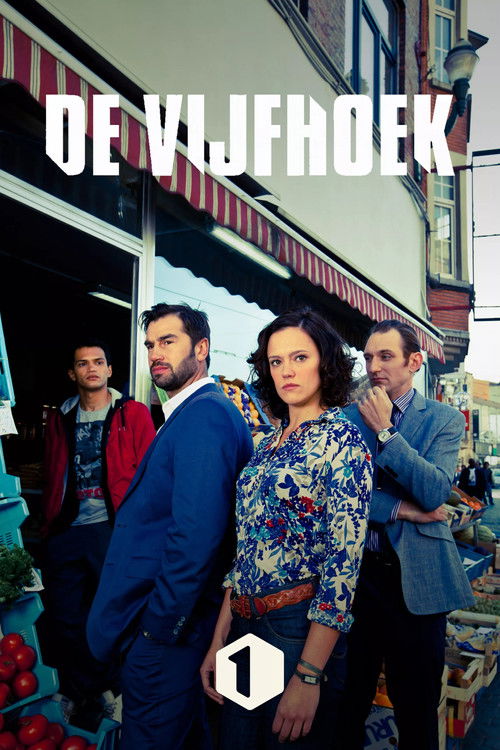
















Popular
How do the friendships among the main characters impact the storyline?
How does the relationship between Joris and his father evolve over the course of the series?
What are the main conflicts faced by the character of Joris throughout the series?
What role does the character of Lotte play in Joris's development?
What is the significance of the neighborhood setting in the story?
Should I watch it?
Ask Your Own Question

What is the plot?
In the opening scene of "De Vijfhoek," we are introduced to a group of five friends: Joris, Lotte, Sam, Timo, and Anouk. They are gathered in a cozy café in their small town, discussing their plans for the summer. The atmosphere is light-hearted, filled with laughter and camaraderie. However, an underlying tension is hinted at when Joris expresses his desire to explore beyond their familiar surroundings, suggesting a road trip that excites the group.
As the friends embark on their road trip, they drive through picturesque landscapes, sharing stories and bonding over their shared experiences. The mood shifts when they arrive at an abandoned building rumored to be haunted. Intrigued, they decide to explore it, despite Anouk's apprehensions. Inside, they find remnants of the past, including old photographs and furniture, which evoke a sense of nostalgia and curiosity. However, as they delve deeper, they hear strange noises that unsettle them, leading to a sense of foreboding.
The group decides to leave the building, but as they exit, they realize that their car has been vandalized, leaving them stranded. Tensions rise as they argue about what to do next. Joris suggests they hike to the nearest town, while Lotte insists they should stay put and wait for help. The disagreement highlights the differing personalities within the group, with Joris being adventurous and Lotte more cautious. Eventually, they decide to split up: Joris, Sam, and Timo will go for help, while Lotte and Anouk will stay behind.
As Joris, Sam, and Timo trek through the woods, they encounter various obstacles, including rough terrain and a sudden rainstorm that soaks them. Their camaraderie is tested as they face physical challenges, and they begin to reveal their insecurities and fears. Joris, determined to prove himself as a leader, pushes the group to keep moving despite their exhaustion. Meanwhile, Sam expresses doubts about Joris's decisions, leading to a heated argument that threatens to fracture their friendship.
Back at the abandoned building, Lotte and Anouk try to keep their spirits up, but they are increasingly anxious about the boys' safety. As night falls, they hear unsettling noises outside, which heightens their fear. They decide to investigate, armed with flashlights. As they step outside, they stumble upon a mysterious figure lurking in the shadows, which sends them running back inside, terrified.
Meanwhile, Joris, Sam, and Timo finally reach a small town, but they find that the local residents are unhelpful and suspicious of outsiders. They manage to contact the police, but the response is slow. Frustrated, Joris decides to take matters into his own hands and leads Sam and Timo back to the abandoned building, convinced that Lotte and Anouk are in danger.
As they make their way back, the tension among the boys escalates. Sam confronts Joris about his reckless behavior, leading to a physical altercation. Timo tries to mediate, but the fight intensifies, showcasing the strain in their friendship. Eventually, they resolve their differences and focus on getting back to Lotte and Anouk.
Back at the building, Lotte and Anouk are on edge, feeling increasingly isolated. They hear more noises and decide to barricade themselves inside. Just as they think they are safe, the mysterious figure from earlier breaks in, revealing himself to be a local who has been watching them. He claims he is trying to protect them from a greater danger in the woods, but his erratic behavior makes them question his intentions.
When Joris, Sam, and Timo finally return, they find the building in disarray and Lotte and Anouk in a state of panic. The local man confronts them, leading to a tense standoff. Joris tries to reason with him, but the situation escalates into a physical confrontation. The boys work together to subdue the man, showcasing their loyalty to one another despite their earlier conflicts.
After the confrontation, the group decides to leave the building and head back to town. They are shaken but relieved to be together again. As they walk, they reflect on their experiences, realizing that their friendship has been tested but ultimately strengthened. The journey back is filled with a mix of relief and lingering fear, as they process the events that transpired.
In the final scenes, the group arrives back in town, where they are met by the police. They recount their harrowing experience, and the officers assure them that the local man has been taken into custody. The friends share a moment of solidarity, acknowledging the bond they have forged through their ordeal. The series ends with them sitting together in the café once more, a sense of maturity and understanding evident in their interactions as they look forward to the future, forever changed by their adventure.
🔥 Trending TV Shows Now
Browse All TV Shows →







What is the ending?
In the ending of "De Vijfhoek," the main characters confront their intertwined fates as the tensions that have built throughout the series come to a head. The story culminates in a dramatic confrontation that forces each character to face their past decisions and the consequences of their actions. The resolution leads to a bittersweet conclusion, with some characters finding closure while others are left with unresolved issues.
As the final episodes unfold, the atmosphere is thick with tension. The scene opens in the dimly lit community center, where the five main characters gather for a final meeting. The air is heavy with unspoken words and unresolved conflicts. Each character's face reflects a mix of anxiety and determination, as they know this meeting could change everything.
The first character to speak is Joris, his voice trembling slightly. He expresses regret over the choices he made that led to the group's disintegration. His vulnerability is palpable, and the others listen intently, their expressions shifting from skepticism to empathy. Joris's admission serves as a catalyst, prompting the others to share their own burdens.
Next, we see Marieke, who has been grappling with feelings of betrayal. She stands up, her hands clenched into fists, and recounts the moment she felt abandoned by the group. Her eyes glisten with unshed tears, revealing the depth of her hurt. The room is silent as she speaks, and the weight of her words hangs in the air.
Then, we shift to Sam, who has been the peacemaker throughout the series. He steps forward, his demeanor calm yet firm. He urges the group to remember the bond they once shared, emphasizing the importance of forgiveness. His plea resonates with the others, and for a moment, there is a flicker of hope that reconciliation is possible.
As the conversation progresses, tensions flare again when Lars, who has been harboring resentment, lashes out. He accuses the others of not understanding his struggles. His anger is raw and unfiltered, and it ignites a heated argument. The scene is chaotic, with voices raised and emotions running high. However, amidst the turmoil, there is a moment of clarity when Lars realizes that his anger is rooted in fear of being alone.
The climax of the episode occurs when the group is forced to confront a shared crisis that threatens their community. They must work together to resolve the issue, and in doing so, they begin to mend their fractured relationships. The scene is filled with urgency as they strategize and collaborate, showcasing their individual strengths and vulnerabilities.
In the final moments, the characters stand together, united by their shared experience. They acknowledge the pain of their past but also the possibility of a new beginning. Each character's fate is revealed: Joris finds a sense of purpose in helping others, Marieke learns to trust again, Sam continues to be a guiding force, and Lars begins to embrace vulnerability.
The series concludes with a poignant scene of the group walking away from the community center, their silhouettes framed against the setting sun. It symbolizes hope and the promise of a brighter future, despite the scars they carry. The emotional weight of their journey lingers, leaving viewers with a sense of closure and reflection on the complexities of human relationships.
Is there a post-credit scene?
In the TV show "De Vijfhoek," produced in 2012, there is indeed a post-credit scene that adds an intriguing layer to the narrative.
As the credits roll, the screen fades to black before transitioning to a dimly lit room. The atmosphere is thick with tension, and the sound of a clock ticking echoes in the background. The camera slowly pans across the room, revealing scattered papers and photographs pinned to a corkboard, all connected by red string, suggesting a web of conspiracy and intrigue.
In the center of the room stands a shadowy figure, their face obscured by the low light. They are intently studying the board, their fingers tracing the connections between various characters and events from the series. The figure mutters to themselves, piecing together the fragmented storylines and hinting at a larger, unseen force at play.
Suddenly, the figure turns, and the camera captures a glimpse of their face, revealing a familiar character who had been thought to be out of the picture. Their expression is one of determination mixed with a hint of malice, suggesting that they have been orchestrating events from behind the scenes. The scene ends with a chilling smile, leaving viewers with a sense of foreboding and anticipation for what might come next.
This post-credit scene effectively ties back to the show's themes of mystery and manipulation, while also setting the stage for potential future developments, ensuring that fans are left pondering the implications long after the episode concludes.
How do the friendships among the main characters impact the storyline?
The friendships among the main characters are central to the plot of De Vijfhoek, providing both support and conflict. As they navigate the challenges of adolescence, their bonds are tested by loyalty, betrayal, and personal growth. A critical moment occurs when a misunderstanding leads to a rift between Joris and his closest friends, forcing them to confront their feelings and ultimately leading to a deeper understanding of each other. This dynamic illustrates the complexities of friendship and its impact on their individual journeys.
How does the relationship between Joris and his father evolve over the course of the series?
Initially, Joris's relationship with his father is strained, marked by misunderstandings and a lack of communication. Joris feels suffocated by his father's traditional views and expectations. However, as the series unfolds, pivotal moments force them to confront their differences. A significant scene occurs when they are forced to work together during a community crisis, leading to a breakthrough in their relationship, where both characters begin to understand each other's perspectives.
What are the main conflicts faced by the character of Joris throughout the series?
Joris, a central character in De Vijfhoek, grapples with his identity and the expectations placed upon him by his family and society. His internal conflict is heightened by his desire to break free from the constraints of his upbringing while also seeking acceptance from his peers. As the series progresses, Joris faces external conflicts with rival groups in the neighborhood, which further complicates his journey of self-discovery.
What role does the character of Lotte play in Joris's development?
Lotte serves as a catalyst for Joris's growth throughout De Vijfhoek. Her free-spirited nature and willingness to challenge societal norms inspire Joris to explore his own desires and ambitions. Their relationship is fraught with tension, as Joris struggles to balance his feelings for her with the expectations of his family. A poignant moment occurs when Lotte encourages Joris to stand up for himself, leading to a turning point in his character arc.
What is the significance of the neighborhood setting in the story?
The neighborhood in De Vijfhoek is not just a backdrop but a character in itself, representing the complexities of urban life. It is a place of both camaraderie and conflict, where friendships are forged and rivalries ignite. The setting influences the characters' decisions and shapes their interactions. Key scenes, such as the community gatherings and confrontations in the streets, highlight the struggles and triumphs of the residents, making the neighborhood a vital element of the narrative.
Is this family friendly?
"De Vijfhoek," produced in 2012, is a drama series that explores complex themes and relationships within a family setting. While it is not explicitly designed as a children's show, it does contain elements that may be suitable for older children or teens, depending on their maturity level.
However, there are several potentially objectionable or upsetting aspects that could affect children or sensitive viewers:
-
Emotional Conflict: The series delves into intense family dynamics, including arguments and emotional confrontations that may be distressing for younger viewers.
-
Themes of Loss: There are moments that touch on grief and loss, which could be heavy for children to process.
-
Depictions of Struggle: Characters face personal and familial struggles, including financial difficulties and relationship breakdowns, which may be unsettling.
-
Mature Relationships: The show includes complex adult relationships that may not be appropriate for younger audiences, including themes of betrayal and infidelity.
-
Tension and Suspense: Certain scenes may create a sense of tension or suspense that could be frightening or anxiety-inducing for sensitive viewers.
Overall, while "De Vijfhoek" offers rich storytelling and character development, its emotional depth and mature themes may not be suitable for all children. Viewer discretion is advised.