












Popular
What are the unique abilities of each member of the Arcana Famiglia?
How does Felicita's relationship with her father, the head of the Arcana Famiglia, evolve throughout the series?
What role does the competition for the next head of the Arcana Famiglia play in the character dynamics?
How does the character of Jolly serve as both an ally and an antagonist in the story?
What is the significance of the tarot cards in shaping the characters' destinies?
Should I watch it?
Ask Your Own Question

What is the plot?
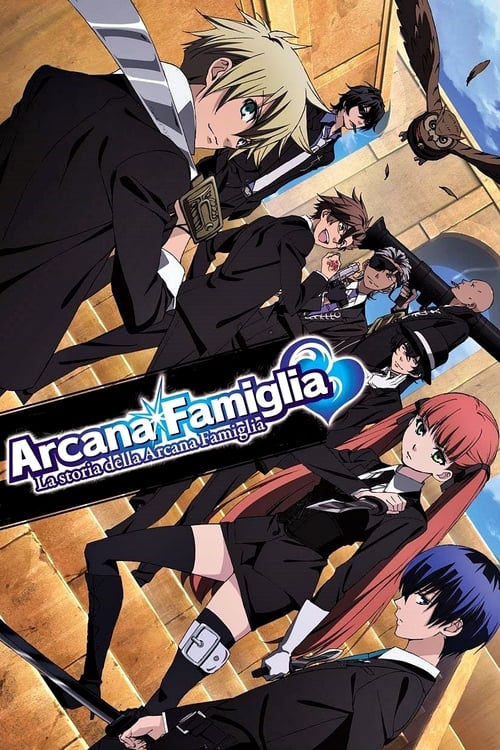
In the picturesque setting of a Mediterranean island, the story begins with the introduction of the Arcana Famiglia, a powerful organization led by the enigmatic and charismatic patriarch, the "Papa" of the family, who possesses the ability to manipulate time. The organization is dedicated to protecting the island and its inhabitants, but it is also steeped in internal politics and power struggles. The main protagonist, Felicita, is the daughter of the Papa and has been raised within this world, trained in combat and magic. She is determined to carve her own path and not simply follow in her father's footsteps.
As the story unfolds, it is revealed that the Papa is planning to retire and will pass on leadership of the Arcana Famiglia to the winner of a competition known as the "Arcana Duello." This competition will test the abilities of the members of the family, and the winner will gain the right to marry Felicita. This announcement creates tension among the members, each vying for power and the chance to win Felicita's hand. Felicita, however, is not interested in being a prize to be won and is determined to participate in the duello herself.
The first round of the duello begins, and the competitors face off in a series of challenges that test their magical abilities and combat skills. The first match features the charming and confident Luca, who possesses the power of the "Fool," against the stoic and serious Jolly, who wields the power of the "Death." The duel is intense, showcasing their unique abilities, but ultimately, Luca emerges victorious, much to the delight of the spectators.
As the duello progresses, Felicita's resolve strengthens. She trains rigorously, honing her skills and preparing for her own match. Her determination is fueled by her desire to protect her friends and the island, as well as her wish to prove herself as an equal among the men of the Arcana Famiglia. During this time, she develops a close bond with Nova, a mysterious and brooding member of the family who possesses the power of the "Star." Their relationship deepens, and Felicita finds herself torn between her feelings for Nova and the expectations placed upon her by her family.
The second round of the duello features a confrontation between Felicita and one of the other competitors, the hot-headed and impulsive Libertà, who wields the power of the "Chariot." The match is fierce, with both fighters showcasing their skills. Felicita's determination shines through as she fights not just for herself but for the future of the Arcana Famiglia. In a surprising turn, she manages to defeat Libertà, earning the respect of her peers and solidifying her place in the competition.
As the duello continues, the stakes rise, and the atmosphere becomes increasingly tense. The competitors begin to form alliances and rivalries, and secrets about the true nature of the Arcana Famiglia start to surface. Felicita learns that her father's power comes with a heavy price, and the organization is not as benevolent as it seems. This revelation shakes her faith in her family's legacy and forces her to confront the darker aspects of their power.
In a pivotal moment, Felicita faces off against Luca in the final round of the duello. The battle is intense, filled with emotional stakes as both fighters push themselves to their limits. Felicita's growth as a fighter is evident, and she channels her determination and the support of her friends into her final attack. In a climactic showdown, she manages to defeat Luca, claiming victory in the duello.
With the competition concluded, Felicita is faced with the choice of accepting her role as the new leader of the Arcana Famiglia or forging her own path. She grapples with the weight of her decision, reflecting on her journey and the relationships she has built along the way. Ultimately, she chooses to reject the traditional expectations of her family, opting instead to create a new future for herself and the Arcana Famiglia, one that embraces both her strength and her compassion.
In the aftermath, Felicita's decision leads to a shift in the dynamics of the Arcana Famiglia. The members begin to reevaluate their roles and the purpose of their powers. Felicita, alongside Nova and her friends, sets out to redefine what it means to be part of the family, focusing on unity and protection rather than power and control. The story concludes with a sense of hope and renewal, as Felicita steps into her new role, ready to face the challenges ahead with her newfound strength and resolve.









What is the ending?
In the ending of "La Storia della Arcana Famiglia," the conflict between the Arcana Famiglia and the mysterious organization known as the "Demon" reaches its climax. Felicita, the protagonist, ultimately chooses her own path, rejecting the traditional expectations placed upon her. The story concludes with her decision to lead the Arcana Famiglia alongside her chosen partner, while the other characters find their resolutions in their respective arcs.
As the final episodes unfold, the tension within the Arcana Famiglia escalates. The setting is the familiar yet charged atmosphere of the Famiglia's headquarters, where the air is thick with anticipation and uncertainty. Felicita stands at the center of the room, her heart racing as she contemplates the weight of her choices. The stakes are high, and the looming threat of the Demon organization casts a shadow over their future.
Scene by scene, the narrative reveals the internal struggles of the characters. Felicita, who has grown from a sheltered girl into a determined young woman, grapples with her feelings for both Jolly and Luca. Each man represents different aspects of her life: Jolly, with his carefree spirit, embodies freedom, while Luca, with his serious demeanor, symbolizes responsibility. As she faces the impending confrontation, her resolve strengthens; she knows she must forge her own destiny.
The climax arrives when the Arcana Famiglia confronts the Demon. The battle is fierce, showcasing the unique abilities of each member. The animation captures the intensity of the fight, with vibrant colors and dynamic movements. Felicita, now fully embracing her powers, fights alongside her comrades, her determination shining through. The stakes are personal, as she fights not just for the Famiglia but for her own right to choose her future.
In a pivotal moment, Felicita faces the leader of the Demon organization. The confrontation is charged with emotion, as Felicita declares her independence and her refusal to be a pawn in anyone's game. This declaration is a turning point, not just for her but for the entire Famiglia. The battle culminates in a dramatic showdown, where Felicita's strength and resolve lead to the defeat of the Demon leader.
As the dust settles, the aftermath reveals the fates of the main characters. Felicita stands tall, having chosen to lead the Arcana Famiglia alongside Luca, who has proven himself as a steadfast ally and partner. Their relationship, once fraught with tension, blossoms into a partnership built on mutual respect and understanding. Jolly, while initially heartbroken, finds solace in his role within the Famiglia, embracing his freedom and continuing to support Felicita as a friend.
The other members of the Arcana Famiglia also find their paths. Nova, who has struggled with his own identity, steps into a leadership role, guiding the younger members with newfound confidence. Libertà, with his playful nature, remains a loyal friend, providing comic relief amidst the serious undertones of their lives. Each character's journey concludes with a sense of purpose, having faced their fears and emerged stronger.
The final scenes depict a serene moment at the Famiglia's headquarters, where Felicita, Luca, and their friends gather to celebrate their victory. The atmosphere is filled with laughter and camaraderie, a stark contrast to the tension that once enveloped them. Felicita looks around at her chosen family, her heart swelling with pride and contentment. She has not only fought for her own future but has also forged a new path for the Arcana Famiglia, one that embraces both tradition and change.
In the closing moments, Felicita stands at the forefront, a symbol of hope and determination. The screen fades to black, leaving the audience with a sense of closure and the promise of new beginnings for the characters they have come to love.
Is there a post-credit scene?
In "La Storia della Arcana Famiglia," there is indeed a post-credit scene that adds a light-hearted touch to the conclusion of the series.
As the credits roll, the scene opens with a serene view of the Arcana Famiglia's estate, the sun setting in the background, casting a warm glow over the surroundings. The atmosphere is calm, but a sense of playful mischief lingers in the air.
The focus shifts to the characters, particularly Felicita, who is seen in the garden, tending to some flowers. She appears content, her expression soft and serene, reflecting her growth throughout the series. Suddenly, the tranquility is interrupted by the arrival of Liberta, who playfully sneaks up behind her.
With a cheeky grin, he surprises Felicita, causing her to jump slightly. The moment is filled with laughter as she turns to scold him, but her eyes sparkle with affection. This playful interaction highlights their budding relationship, showcasing the chemistry that has developed over the course of the series.
As they banter back and forth, the scene transitions to show other members of the Arcana Famiglia, each engaged in their own light-hearted activities. Nova is seen attempting to cook, with a comical disaster unfolding in the kitchen, while Jolly is trying to keep the chaos at bay, his exasperation evident.
The post-credit scene encapsulates the camaraderie and warmth among the characters, leaving viewers with a sense of closure and a smile, as it emphasizes the bonds formed through their adventures and challenges. The final shot lingers on Felicita and Liberta, their laughter echoing, before fading to black, leaving a lasting impression of hope and friendship.
What are the unique abilities of each member of the Arcana Famiglia?
Each member of the Arcana Famiglia possesses a unique ability tied to a tarot card. For instance, Felicita, the protagonist, has the power of the 'Fool' card, which allows her to manipulate fate and luck. Luca, associated with the 'Lovers' card, can influence emotions and relationships. Nova, linked to the 'Death' card, has the ability to manipulate life and death. Each character's ability reflects their personality and internal struggles, adding depth to their motivations.
How does Felicita's relationship with her father, the head of the Arcana Famiglia, evolve throughout the series?
Felicita's relationship with her father, the head of the Arcana Famiglia, is initially strained due to her feelings of being overshadowed by his expectations. As the series progresses, she grapples with her desire for independence and her father's protective nature. Key moments include her confrontation with him about her own identity and her determination to prove herself, leading to a deeper understanding and respect between them.
What role does the competition for the next head of the Arcana Famiglia play in the character dynamics?
The competition for the next head of the Arcana Famiglia creates tension and rivalry among the male characters, particularly between Luca, Nova, and Jolly. Each character's motivations are driven by their desire to win Felicita's affection and the position of power. This rivalry leads to intense confrontations, showcasing their abilities and personal growth, while also complicating their relationships with Felicita, who is caught in the middle.
How does the character of Jolly serve as both an ally and an antagonist in the story?
Jolly is a complex character who oscillates between being an ally and an antagonist. Initially, he appears to be a supportive figure to Felicita, but his ulterior motives and manipulative nature reveal a darker side. His actions often put Felicita and her friends in danger, creating a sense of distrust. However, his backstory and motivations are gradually unveiled, showing his internal conflict and desire for redemption, making him a multifaceted character.
What is the significance of the tarot cards in shaping the characters' destinies?
The tarot cards in 'La Storia della Arcana Famiglia' serve as a symbolic representation of each character's fate and personality. The cards not only grant them unique powers but also reflect their inner struggles and growth. For example, Felicita's connection to the 'Fool' card signifies her journey of self-discovery and the importance of embracing one's destiny. The interplay between the characters' abilities and their corresponding tarot cards drives the narrative forward, influencing their choices and relationships.
Is this family friendly?
"La Storia della Arcana Famiglia" is a fantasy anime that contains several elements that may not be suitable for younger audiences or sensitive viewers. Here are some potentially objectionable or upsetting aspects:
-
Violence and Combat: The series features various scenes of combat and magical duels, which can include physical harm and intense confrontations. Characters may be shown in perilous situations, leading to moments of tension and danger.
-
Romantic Tension: There are romantic subplots that involve suggestive themes and emotional conflicts. Some interactions between characters may be flirtatious or imply deeper romantic feelings, which could be uncomfortable for younger viewers.
-
Dark Themes: The narrative explores themes of power, control, and the consequences of one's choices. Characters face moral dilemmas and personal struggles that can be heavy and complex.
-
Character Backstories: Some characters have tragic or dark pasts that are revealed throughout the series, which may evoke feelings of sadness or discomfort.
-
Supernatural Elements: The presence of magic and supernatural powers can be unsettling for some viewers, especially when it involves darker aspects or the potential for harm.
These elements contribute to a narrative that, while engaging, may not be appropriate for all audiences, particularly children or those sensitive to such themes.