
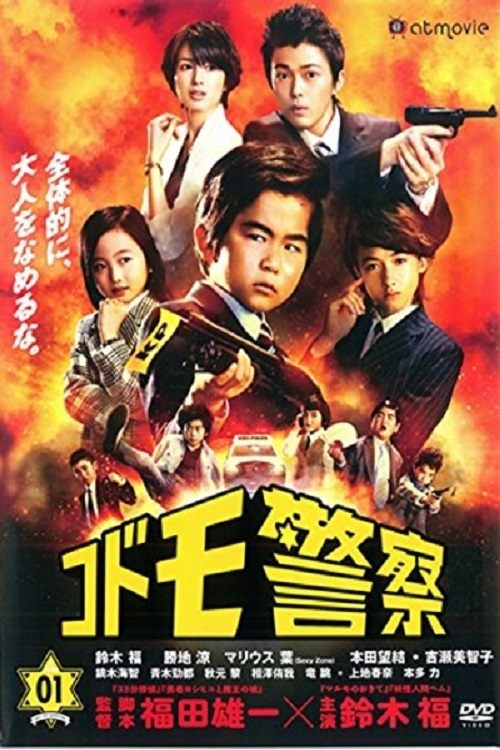












Popular
What is the significance of the character Kid Police in the series?
How does the character of Chief McGuffin influence Kid Police's adventures?
What role do the villains play in the series, particularly the character of The Evil Man?
How does Kid Police's relationship with his friends impact the story?
What comedic elements are prevalent in Kid Police's crime-solving methods?
Should I watch it?
Ask Your Own Question

What is the plot?
The story begins with a young boy named Kid Police, who is an imaginative child with a strong sense of justice. He lives in a town plagued by crime and corruption, where the local police force is ineffective. Kid Police, despite his age, believes he can make a difference and takes it upon himself to fight crime. He dons a makeshift police uniform, complete with a toy badge and a cap, and sets out to patrol the streets.
In his first adventure, Kid Police encounters a group of bullies who are harassing a classmate. He bravely confronts them, using his quick wit and charm to diffuse the situation. The bullies, taken aback by his confidence, back off, and Kid Police feels a rush of triumph. This moment solidifies his belief that he can be a real hero, despite the skepticism of the adults around him.
As Kid Police continues his crusade, he stumbles upon a larger crime operation led by a notorious villain known as the "Criminal Mastermind." This villain has been orchestrating a series of heists around town, and Kid Police decides to investigate further. He gathers clues, using his keen observational skills, and begins to piece together the Criminal Mastermind's plan.
During one of his stakeouts, Kid Police witnesses a robbery in progress. He watches as the Criminal Mastermind and his henchmen execute their plan with precision. Kid Police knows he must act quickly. He devises a plan to thwart the robbery by creating a distraction. He throws a rock at a nearby window, causing a loud crash that draws the attention of the criminals. In the chaos, he manages to alert the real police, who arrive just in time to apprehend the thieves.
However, the Criminal Mastermind escapes, vowing to get revenge on Kid Police. This sets up a tense cat-and-mouse game between the two. Kid Police feels a mix of fear and determination; he knows he has made a powerful enemy, but he is resolute in his mission to protect his town.
As the story progresses, Kid Police faces various challenges that test his resolve. He encounters moments of self-doubt, especially when the adults in his life dismiss his efforts as childish fantasies. Despite this, he remains undeterred, driven by his desire to prove himself and make a difference. He finds support from his friends, who believe in his cause and join him in his adventures.
In a climactic showdown, Kid Police finally confronts the Criminal Mastermind in a hidden lair. The villain has set a trap, and Kid Police must navigate through a series of obstacles, including laser beams and security guards. Using his agility and clever thinking, he manages to evade capture. The tension builds as Kid Police faces off against the Criminal Mastermind, who underestimates the young hero.
The confrontation escalates into a physical fight, with Kid Police using his surroundings to his advantage. He employs improvised weapons, such as a skateboard and a slingshot, to outmaneuver the Criminal Mastermind. The battle is intense, filled with close calls and moments of bravery. Kid Police's determination shines through as he refuses to back down, fueled by the belief that he is fighting for justice.
In the final moments of the showdown, Kid Police outsmarts the Criminal Mastermind, leading to his capture. The real police arrive just in time to take the villain into custody. Kid Police is hailed as a hero by his friends and the townspeople, who finally recognize his bravery and contributions. The story concludes with Kid Police standing proudly, knowing that he has made a real impact in his community, and he looks forward to more adventures ahead.








What is the ending?
In the ending of "Kid Police," the main character, Kid Police, confronts the villainous Dr. D. He ultimately defeats Dr. D and saves the day, restoring peace to the city. The episode concludes with Kid Police being celebrated as a hero, and he reflects on the importance of friendship and teamwork.
As the final episode unfolds, we find ourselves in the bustling city where Kid Police, a young boy with a penchant for solving crimes, is gearing up for his biggest challenge yet. The sun shines brightly, casting a warm glow over the streets, but an ominous tension hangs in the air as the notorious villain, Dr. D, has concocted a nefarious plan to take over the city.
Scene 1: The Confrontation The scene opens in Dr. D's lair, a dark and foreboding place filled with gadgets and sinister inventions. Kid Police, dressed in his signature police uniform, bursts through the door, determination etched on his face. He knows that this is the moment he has been preparing for. Dr. D, with his wild hair and maniacal grin, stands confidently, surrounded by his henchmen. The atmosphere is thick with anticipation as Kid Police declares, "This ends now, Dr. D!"
Scene 2: The Battle A fierce battle ensues. Kid Police uses his agility and quick thinking to dodge the henchmen's attacks. The camera captures the intensity of the fight, with close-ups of Kid Police's focused expression and Dr. D's frustrated scowls. Kid Police employs clever tactics, using the environment to his advantage, swinging from pipes and ducking behind crates. The stakes are high, and the audience can feel the adrenaline coursing through the scene.
Scene 3: The Turning Point Just when it seems that Dr. D has the upper hand, Kid Police remembers the advice of his friends, who have always supported him. This moment of reflection gives him renewed strength. He shouts out to his friends, who are watching from a distance, cheering him on. Their encouragement fuels his resolve, and he launches a final, daring attack against Dr. D.
Scene 4: The Defeat of Dr. D In a climactic moment, Kid Police outsmarts Dr. D, leading him into a trap that he had cleverly set earlier in the fight. The villain is caught, and the henchmen scatter in fear. Kid Police stands victorious, breathing heavily but filled with a sense of accomplishment. The camera pans to show the city outside, where citizens are beginning to gather, sensing that the threat has been neutralized.
Scene 5: The Celebration The scene shifts to a celebratory atmosphere in the city square. Kid Police is hoisted onto the shoulders of his friends and the townspeople, who cheer and applaud him as a hero. The sun sets in the background, casting a golden hue over the scene, symbolizing hope and triumph. Kid Police smiles, feeling the warmth of friendship and community surrounding him.
Scene 6: Reflection As the celebration continues, Kid Police takes a moment to reflect on his journey. He acknowledges the importance of teamwork and the support of his friends, realizing that he could not have done it alone. The camera captures his thoughtful expression, highlighting his growth throughout the series.
In the final moments, Kid Police looks out over the city, a sense of peace settling in. He knows that while challenges may arise again, he is ready to face them with the help of his friends. The screen fades to black, leaving the audience with a sense of closure and the message that courage and friendship can overcome any obstacle.
The fate of each main character is clear: Kid Police emerges as a celebrated hero, Dr. D is defeated and captured, and the friends who supported Kid Police stand by him, united in their victory. The episode concludes, leaving viewers with a heartwarming sense of accomplishment and the enduring power of camaraderie.
Is there a post-credit scene?
In the 2012 animated series "Kid Police," there is indeed a post-credit scene that adds a humorous twist to the episode's conclusion. After the main storyline wraps up, the scene typically features the character Kid Police, who is a young boy with a penchant for solving crimes, engaging in a light-hearted and often absurd interaction with his partner, a talking dog named Dog.
In these post-credit moments, Kid Police often finds himself in a ridiculous situation that highlights his naivety and overconfidence. For instance, he might be seen attempting to solve a minor mystery, like figuring out who stole the last cookie from the cookie jar, only to misinterpret the clues in a comically exaggerated manner. Dog, with his more grounded perspective, tries to guide Kid Police, but the boy's enthusiasm leads to a series of silly misunderstandings.
The scene is filled with vibrant animation, showcasing exaggerated facial expressions and slapstick humor that captures the essence of the show. Kid Police's determination and innocence shine through, while Dog's exasperation adds a layer of comedic contrast. This playful dynamic reinforces the show's themes of friendship and the often chaotic nature of childhood adventures, leaving viewers with a light-hearted chuckle as the credits roll.
What is the significance of the character Kid Police in the series?
Kid Police, portrayed by the young protagonist, is a child who takes on the role of a police officer in a world filled with absurdity and crime. His character embodies innocence and naivety, often leading to humorous situations as he attempts to solve crimes with childlike logic. His determination to uphold justice, despite his age, showcases his bravery and desire to make a difference, even when faced with overwhelming odds.
How does the character of Chief McGuffin influence Kid Police's adventures?
Chief McGuffin serves as a mentor figure to Kid Police, often providing guidance and support, albeit in a comically inept manner. His over-the-top personality and misguided advice frequently lead Kid Police into bizarre scenarios. McGuffin's belief in Kid Police's abilities, despite the latter's youth, fuels Kid Police's confidence and determination to prove himself, creating a dynamic that blends humor with heartfelt moments of growth.
What role do the villains play in the series, particularly the character of The Evil Man?
The Evil Man is a recurring antagonist in Kid Police, representing the chaotic and absurd nature of the show's world. His elaborate schemes and exaggerated villainy serve as a foil to Kid Police's innocence. The Evil Man's interactions with Kid Police often highlight the latter's cleverness and resourcefulness, as he navigates the challenges posed by this larger-than-life villain, ultimately leading to comedic confrontations that emphasize the show's playful tone.
How does Kid Police's relationship with his friends impact the story?
Kid Police's friendships are central to the narrative, providing both comedic relief and emotional depth. His friends, who often join him on his adventures, contribute unique perspectives and skills that help him tackle various challenges. Their loyalty and camaraderie highlight themes of teamwork and friendship, as they support each other through absurd situations, reinforcing the idea that even the most unlikely heroes can rely on their friends to succeed.
What comedic elements are prevalent in Kid Police's crime-solving methods?
Kid Police's crime-solving methods are characterized by a blend of childlike imagination and absurdity. He often employs unconventional tactics, such as using toys or playful distractions, to outsmart villains. These methods not only provide humor but also showcase his creativity and resourcefulness. The comedic timing and visual gags that accompany his attempts to solve crimes create a lighthearted atmosphere, making the series appealing to both children and adults.
Is this family friendly?
"Kid Police," produced in 2012, is a comedic animated series that follows the adventures of a young boy who becomes a police officer in a fictional town. While the show is primarily aimed at a younger audience and features a lighthearted tone, there are some aspects that may be considered objectionable or upsetting for children or sensitive viewers.
-
Violence and Crime: The show includes cartoonish depictions of crime and violence, such as chase scenes and slapstick humor involving characters getting hurt in exaggerated ways. While not graphic, these scenes may be unsettling for some viewers.
-
Mild Language: There are instances of mild language and phrases that might not be suitable for all children, depending on parental discretion.
-
Silly Scenarios: Some plotlines involve absurd situations that could be confusing or distressing for younger viewers, such as characters being put in precarious situations or facing exaggerated threats.
-
Character Behavior: The main character and others often display reckless behavior, which could send mixed messages about safety and responsibility.
-
Emotional Moments: There are scenes that touch on themes of failure or disappointment, which might resonate differently with sensitive viewers, potentially leading to feelings of sadness or frustration.
Overall, while "Kid Police" is designed to be entertaining for children, parents may want to preview episodes to gauge their appropriateness for their specific audience.