
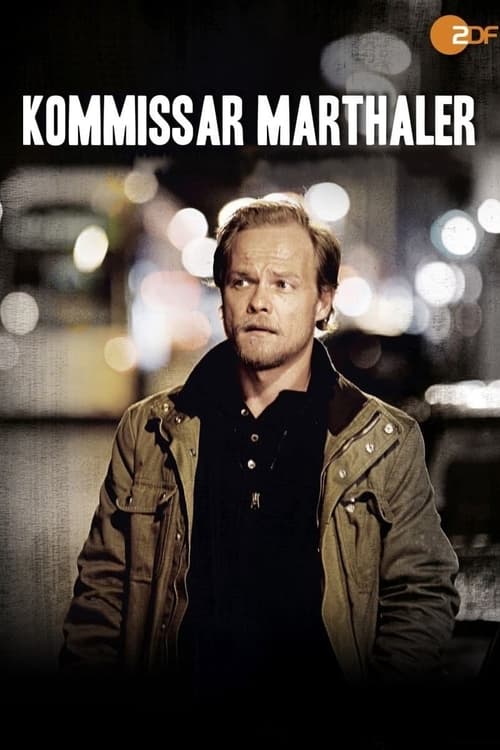










Popular
What motivates Kommissar Marthaler in his investigations throughout the series?
How does the relationship between Kommissar Marthaler and his partner evolve over the series?
What are the key challenges Kommissar Marthaler faces in solving the central murder case?
What role does the setting play in the development of the plot in Kommissar Marthaler?
How does Kommissar Marthaler's past influence his approach to the cases he investigates?
Should I watch it?
Ask Your Own Question

What is the plot?
In the small town of Wetzikon, Switzerland, the story begins with the discovery of a body in a remote area. The victim is identified as a young woman named Anna, who has been brutally murdered. The local police are baffled by the crime, and the case quickly escalates in urgency. The lead investigator, Kommissar Marthaler, is called in to assist with the investigation. He arrives at the crime scene, where he examines the body and the surrounding area, noting the lack of evidence and the chilling atmosphere.
As Marthaler delves deeper into the case, he interviews Anna's friends and family. He learns that Anna was a promising student with a bright future, but she had recently become withdrawn and secretive. Her friends mention a mysterious boyfriend, which piques Marthaler's interest. He begins to piece together Anna's last days, uncovering her struggles with personal issues and her involvement in a local art scene.
Marthaler's investigation leads him to a local art gallery where Anna had worked part-time. He meets the gallery owner, who reveals that Anna had been working on a controversial piece that dealt with themes of violence and identity. The owner expresses concern about the impact of the piece on Anna's mental state. Marthaler senses that the art may hold clues to her murder and decides to investigate further.
As Marthaler continues to dig, he discovers that Anna had been involved in a love triangle with two other artists, both of whom had strong feelings for her. Tensions rise as Marthaler interviews them, revealing jealousy and rivalry that could have led to violence. One of the artists, a man named Lukas, becomes increasingly agitated during questioning, raising Marthaler's suspicions.
The investigation takes a turn when Marthaler receives an anonymous tip about a hidden diary belonging to Anna. He tracks down the diary, which contains her thoughts and feelings about her relationships and her fears. The entries reveal a darker side to Anna's life, including her struggles with mental health and her feelings of being trapped. This new information deepens Marthaler's understanding of her character and the potential motives for her murder.
As Marthaler pieces together the timeline of events leading up to Anna's death, he uncovers a connection to a series of similar unsolved murders in the area. This revelation suggests that Anna's murder may be part of a larger pattern, indicating a serial killer at work. Marthaler intensifies his efforts, collaborating with forensic experts to analyze the evidence and establish links between the cases.
The tension escalates when another body is discovered, this time belonging to one of the artists involved in the love triangle. The murder scene mirrors Anna's, suggesting that the killer is targeting those connected to her. Marthaler races against time to prevent further violence, knowing that the killer is still at large and may strike again.
In a pivotal moment, Marthaler confronts Lukas, who has become increasingly erratic. During the confrontation, Lukas reveals his obsession with Anna and his feelings of betrayal. The situation escalates into a physical struggle, with Marthaler managing to subdue Lukas but not before he learns that Lukas had been in contact with Anna on the night of her murder.
With Lukas in custody, Marthaler continues to investigate the remaining suspects. He uncovers a web of deceit and manipulation among the artists, leading him to a shocking revelation about Anna's true relationships with them. The emotional turmoil of the characters becomes evident as Marthaler navigates their conflicting stories and hidden motives.
As the investigation reaches its climax, Marthaler receives a breakthrough when he discovers a hidden video recording from the night of Anna's murder. The footage reveals a confrontation between Anna and one of the other artists, exposing the truth behind her death. The emotional weight of the scene is palpable as Marthaler watches the events unfold, realizing the depth of betrayal and desperation that led to the tragic outcome.
In the final confrontation, Marthaler gathers all the key players in a tense showdown. He reveals the evidence he has collected, forcing the remaining suspects to confront their roles in Anna's life and death. The emotional stakes are high as secrets are laid bare, and the true killer is finally unmasked, leading to a dramatic arrest.
The story concludes with Marthaler reflecting on the case and the impact it has had on the community. The emotional scars left by Anna's murder linger, and Marthaler is left to ponder the complexities of human relationships and the darkness that can reside within. The final scenes depict the aftermath of the investigation, highlighting the ongoing struggle for healing and closure in the wake of tragedy.
🔥 Trending TV Shows Now
Browse All TV Shows →








What is the ending?
In the ending of "Kommissar Marthaler," the investigation reaches a climax as the truth behind the murders is revealed. Marthaler confronts the killer, leading to a tense standoff. The resolution brings closure to the case, but also leaves lingering questions about the characters' futures.
As the final episode unfolds, the scene opens in a dimly lit warehouse, where Kommissar Marthaler stands face-to-face with the murderer. The atmosphere is thick with tension, the air heavy with the weight of unresolved emotions. Marthaler, driven by a mix of determination and a sense of justice, confronts the killer, who is revealed to be someone deeply connected to the victims. The killer's motivations are laid bare, revealing a complex web of betrayal and revenge that has driven them to commit these heinous acts.
The confrontation escalates, and Marthaler's internal struggle is palpable. He grapples with the moral implications of his duty as a police officer versus his personal feelings about the case. The killer, desperate and cornered, attempts to justify their actions, leading to a heated exchange that underscores the emotional stakes involved. Marthaler's resolve is tested as he navigates the fine line between empathy and the need for justice.
In a climactic moment, Marthaler manages to subdue the killer, but not without a physical struggle that leaves both men battered. The scene is charged with raw emotion, as Marthaler reflects on the toll the case has taken on him personally. The camera captures the weariness in his eyes, a testament to the emotional burden he carries as a detective.
As the dust settles, the aftermath of the confrontation unfolds. Marthaler is seen in the precinct, surrounded by his colleagues, who express their relief at the resolution of the case. However, the victory feels bittersweet. Marthaler's partner, who has been a steadfast presence throughout the investigation, shares a moment of quiet understanding with him. Their bond has deepened through the trials they faced together, yet the shadows of the case linger in their minds.
In the final scenes, Marthaler takes a solitary walk through the city, reflecting on the events that transpired. The streets are quiet, and the weight of his responsibilities hangs heavily on him. He contemplates the fragility of life and the complexities of human nature, leaving viewers with a sense of unresolved tension about the future.
The fate of the main characters is left somewhat open-ended. Marthaler, while having solved the case, is left to grapple with the emotional scars it has left on him. His partner, having supported him throughout, stands by his side, suggesting a continued partnership but also hinting at the challenges they will face moving forward. The killer, now apprehended, faces the consequences of their actions, but the emotional fallout of their choices reverberates through the lives of those affected.
The series concludes with a poignant reminder of the darkness that can exist within individuals and the complexities of justice, leaving the audience to ponder the lasting impact of the events that unfolded.
Is there a post-credit scene?
"Kommissar Marthaler," produced in 2012, does not feature a post-credit scene. The series concludes its episodes without any additional scenes after the credits roll. Each episode wraps up the narrative arcs and character developments within the main storyline, leaving no lingering moments or teasers for future plots in a post-credit format. The focus remains on the resolution of the cases that Kommissar Marthaler investigates, emphasizing the closure of each mystery rather than setting up future storylines.
What motivates Kommissar Marthaler in his investigations throughout the series?
Kommissar Marthaler is driven by a deep sense of justice and a personal commitment to uncovering the truth. His past experiences, including the loss of loved ones and the impact of unresolved cases, fuel his determination to solve crimes. He often grapples with the emotional weight of his work, which adds layers to his character as he seeks closure not only for the victims but also for himself.
How does the relationship between Kommissar Marthaler and his partner evolve over the series?
Throughout the series, the relationship between Kommissar Marthaler and his partner develops from professional camaraderie to a deeper bond built on trust and mutual respect. Initially, there are moments of tension as they navigate their differing approaches to solving cases. However, as they face various challenges together, they learn to rely on each other's strengths, leading to a strong partnership that enhances their investigative work.
What are the key challenges Kommissar Marthaler faces in solving the central murder case?
Kommissar Marthaler encounters numerous challenges in solving the central murder case, including a lack of physical evidence, conflicting witness testimonies, and the involvement of powerful individuals who attempt to obstruct his investigation. These obstacles test his resolve and ingenuity, forcing him to think outside the box and rely on his instincts to piece together the truth.
What role does the setting play in the development of the plot in Kommissar Marthaler?
The setting of Kommissar Marthaler, primarily in the picturesque yet sometimes dark landscapes of Switzerland, plays a crucial role in the narrative. The contrast between the serene beauty of the environment and the grim realities of the crimes creates a haunting backdrop that enhances the tension. The locations often reflect the emotional states of the characters, with isolated areas symbolizing their internal struggles and the complexity of the cases they face.
How does Kommissar Marthaler's past influence his approach to the cases he investigates?
Kommissar Marthaler's past significantly influences his investigative approach, as he often draws from his own experiences of loss and trauma. His history shapes his empathy towards victims and their families, driving him to seek justice with a personal touch. This emotional connection sometimes leads him to take risks that others might avoid, as he is motivated by a desire to prevent others from experiencing the pain he has endured.
Is this family friendly?
"Kommissar Marthaler," produced in 2012, is a crime drama that delves into the darker aspects of human nature and society. While it features a compelling narrative and strong character development, it may not be considered family-friendly due to several potentially objectionable or upsetting elements.
-
Violence and Crime: The show revolves around murder investigations, which often include graphic depictions of crime scenes and the aftermath of violent acts. This can be disturbing for younger viewers.
-
Mature Themes: The series explores themes such as betrayal, revenge, and moral ambiguity, which may be complex and unsettling for children or sensitive individuals.
-
Emotional Turmoil: Characters often experience intense emotional struggles, including grief, anger, and despair, which can be heavy and may resonate deeply with sensitive viewers.
-
Dark Atmosphere: The overall tone of the show is somber and tense, with a focus on the psychological impact of crime, which might be overwhelming for younger audiences.
-
Language: There may be instances of strong language or adult conversations that are not suitable for children.
These elements contribute to a viewing experience that is more appropriate for mature audiences, as it tackles serious and often disturbing subject matter.