

















Popular
What motivates D'Artagnan to leave his home and join the Musketeers?
How does the relationship between Athos and Milady de Winter evolve throughout the series?
What role does Cardinal Richelieu play in the conflict between the Musketeers and the Crown?
How does Porthos's character reflect themes of loyalty and friendship among the Musketeers?
What is the significance of the duel between D'Artagnan and Rochefort?
Should I watch it?
Ask Your Own Question

What is the plot?
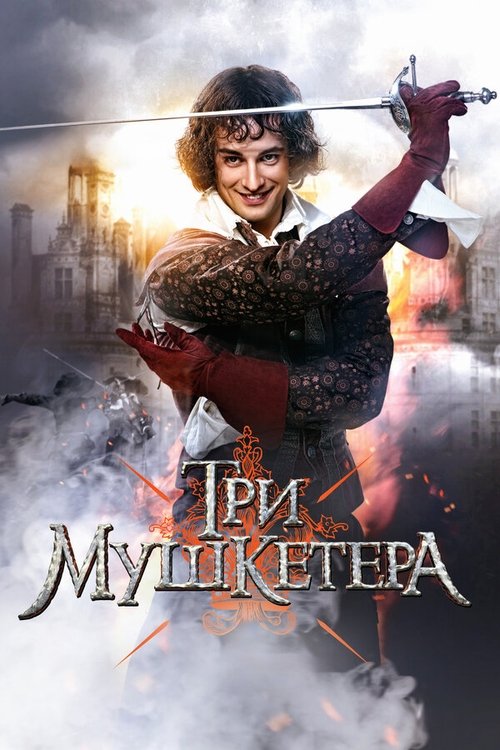
In the year 1625, the story begins in France, where young d'Artagnan, a passionate and headstrong young man, leaves his home in Gascony to pursue his dream of becoming a musketeer. He arrives in Paris, where he quickly finds himself in a series of confrontations with the three renowned musketeers: Athos, Porthos, and Aramis. Each encounter is marked by d'Artagnan's brashness and determination, leading to a duel with each of the musketeers, which is interrupted by the Cardinal's guards. The four men unite against the guards, showcasing their skills and forming an immediate bond.
After their initial skirmish, d'Artagnan is invited to join the musketeers, but he must first prove himself. He learns that the political landscape is tense, with Cardinal Richelieu plotting against King Louis XIII and the musketeers. D'Artagnan's loyalty is tested when he becomes entangled in a plot involving the beautiful and cunning Milady de Winter, who is working for the Cardinal. Milady seduces d'Artagnan, using his feelings for her to manipulate him while simultaneously pursuing her own agenda.
As d'Artagnan grows closer to the musketeers, he learns of a conspiracy involving the Queen, who is being blackmailed by the Cardinal over a secret affair with the Duke of Buckingham. The musketeers, along with d'Artagnan, embark on a mission to retrieve a set of diamond studs that the Queen had given to Buckingham, which could expose her infidelity. They travel to England, where they face numerous challenges, including a fierce confrontation with Buckingham's guards. D'Artagnan's bravery shines as he fights alongside his new friends, ultimately succeeding in retrieving the diamonds.
Upon their return to France, the musketeers present the diamonds to the Queen, saving her from disgrace. However, their victory is short-lived as Milady, seeking revenge for her thwarted plans, frames d'Artagnan for a crime he did not commit. D'Artagnan is arrested, and the musketeers must work together to clear his name. They infiltrate the Cardinal's stronghold, where they confront Milady, leading to a dramatic showdown. Athos reveals Milady's dark past, including her treachery and her connection to him, which adds emotional weight to their confrontation.
In a tense and climactic battle, the musketeers face off against the Cardinal's guards. D'Artagnan, Athos, Porthos, and Aramis fight valiantly, showcasing their skills and camaraderie. The fight is chaotic, with swords clashing and the musketeers working in unison to overcome their enemies. D'Artagnan's determination to protect his friends and uphold justice drives him forward, even as the stakes rise.
After the battle, Milady is captured, and the musketeers must decide her fate. Athos, who has a personal vendetta against her, ultimately takes the lead in her execution, revealing the depth of his betrayal and the pain she has caused him. D'Artagnan is conflicted but understands the necessity of their actions. The emotional weight of the decision hangs heavy as they confront the consequences of their choices.
In the aftermath, d'Artagnan is officially accepted into the ranks of the musketeers, solidifying his place among his friends. The bond between the four men deepens as they reflect on their adventures and the challenges they have faced together. The story concludes with a sense of unity and purpose, as they prepare for whatever challenges lie ahead, embodying the spirit of loyalty and bravery that defines the musketeers.








What is the ending?
In the ending of the 2013 TV show Три мушкетёра, the story culminates in a dramatic confrontation between the Musketeers and their enemies. D'Artagnan, Athos, Porthos, and Aramis face off against Cardinal Richelieu and Milady de Winter. The Musketeers ultimately triumph, but not without significant personal losses and sacrifices. D'Artagnan becomes a true Musketeer, while Milady meets her end, and the bonds of friendship among the Musketeers are solidified.
As the final episodes unfold, the tension escalates. The Musketeers, having uncovered the treachery of Milady de Winter, prepare for a decisive confrontation. The scene shifts to a dimly lit chamber where Milady, cornered and desperate, reveals her cunning nature. She attempts to manipulate D'Artagnan, appealing to his emotions, but he stands firm, driven by loyalty to his friends and the ideals of honor.
In a parallel scene, Athos grapples with his past, haunted by memories of his connection to Milady. His internal struggle is palpable as he confronts her, revealing the depth of his betrayal and the pain she has caused him. The emotional weight of their history hangs heavy in the air, creating a charged atmosphere as they face off.
Meanwhile, Porthos and Aramis prepare for battle, their camaraderie evident as they share a moment of reflection. They discuss the sacrifices they have made for each other and the kingdom, reinforcing their bond as brothers-in-arms. This scene highlights their unwavering loyalty and the stakes of their fight against tyranny.
The climax arrives as the Musketeers confront Richelieu in a grand hall, where power dynamics shift dramatically. The Cardinal, confident in his schemes, underestimates the resolve of the Musketeers. A fierce battle ensues, showcasing the Musketeers' skill and unity. Each character plays a crucial role: D'Artagnan's agility, Athos's strength, Porthos's brute force, and Aramis's strategic mind come together in a display of heroism.
As the dust settles, Milady's fate is sealed. In a moment of poetic justice, she is confronted by Athos, who delivers a poignant line that encapsulates their tragic relationship. Her demise is both a victory and a loss for the Musketeers, as they grapple with the consequences of their actions.
In the aftermath, D'Artagnan stands as a true Musketeer, having proven himself through loyalty and bravery. He reflects on the journey they have taken together, the friendships forged in battle, and the ideals they uphold. Athos, Porthos, and Aramis share a moment of quiet camaraderie, acknowledging the sacrifices made and the bonds that will endure.
The series concludes with a sense of hope and renewal. The Musketeers, now united more than ever, look toward the future, ready to face whatever challenges lie ahead. Their journey has transformed them, solidifying their identities as protectors of justice and honor in a tumultuous world.
Is there a post-credit scene?
In the 2013 adaptation of "Три мушкетёра," there is no post-credit scene. The series concludes its narrative without additional scenes after the credits roll. The final moments of the show focus on the resolution of the main characters' arcs, emphasizing themes of friendship, loyalty, and the enduring spirit of the Musketeers. The absence of a post-credit scene allows the audience to reflect on the journey of d'Artagnan, Athos, Porthos, and Aramis as they navigate their challenges and triumphs throughout the series.
What motivates D'Artagnan to leave his home and join the Musketeers?
D'Artagnan, a young and ambitious man, is driven by a desire for adventure and a longing to prove himself. He seeks to join the ranks of the legendary Musketeers, inspired by tales of their bravery and honor. His determination is fueled by a personal vendetta after a confrontation with a mysterious man who insults him, igniting his passion to become a skilled swordsman and a respected member of the Musketeers.
How does the relationship between Athos and Milady de Winter evolve throughout the series?
Athos's relationship with Milady de Winter is complex and fraught with emotional turmoil. Initially, Athos is deeply in love with her, but as the truth of her treachery and manipulative nature unfolds, he is consumed by betrayal and heartbreak. Milady, who harbors her own feelings for Athos, oscillates between love and vengeance, leading to a tragic and destructive dynamic that ultimately culminates in a confrontation filled with unresolved feelings and pain.
What role does Cardinal Richelieu play in the conflict between the Musketeers and the Crown?
Cardinal Richelieu serves as the primary antagonist, embodying political cunning and ambition. He seeks to consolidate power and eliminate any threats to his authority, including the Musketeers. His machinations often place him at odds with the protagonists, as he orchestrates plots that challenge their loyalty and integrity, forcing them to navigate a treacherous landscape of intrigue and deception.
How does Porthos's character reflect themes of loyalty and friendship among the Musketeers?
Porthos, known for his boisterous personality and love for the finer things in life, embodies the spirit of camaraderie and loyalty that defines the Musketeers. His unwavering support for his friends, especially during moments of crisis, showcases his deep emotional connections. Despite his flamboyant exterior, Porthos's actions reveal a steadfast commitment to his comrades, often putting their needs above his own, which highlights the theme of brotherhood that runs throughout the series.
What is the significance of the duel between D'Artagnan and Rochefort?
The duel between D'Artagnan and Rochefort is a pivotal moment that encapsulates D'Artagnan's growth as a swordsman and his commitment to the Musketeers. It symbolizes his transition from a naive young man to a skilled fighter, as he faces a formidable opponent who represents the corrupt forces aligned against the Musketeers. The duel is charged with tension and emotion, reflecting D'Artagnan's internal struggle to uphold his honor while battling the darker elements of the world around him.
Is this family friendly?
The 2013 adaptation of "Три мушкетёра" (The Three Musketeers) contains several elements that may be considered objectionable or upsetting for children or sensitive viewers.
-
Violence and Duels: The show features numerous sword fights and duels, which, while choreographed, can be intense and may depict injury or death. The physical confrontations are central to the plot and can be quite dramatic.
-
Themes of Betrayal and Deception: The narrative includes themes of betrayal, political intrigue, and manipulation, which may be complex and unsettling for younger audiences to fully grasp.
-
Romantic Tensions: There are romantic subplots that involve jealousy and unrequited love, which may be emotionally charged and could be confusing for younger viewers.
-
Dark Atmosphere: The overall tone of the series can be quite dark at times, with moments of despair and moral ambiguity that may not be suitable for all children.
-
Mature Language and Situations: While the dialogue is not excessively vulgar, there are instances of mature language and situations that may not be appropriate for younger audiences.
These elements contribute to a narrative that, while adventurous and engaging, may require parental discretion for younger viewers.