
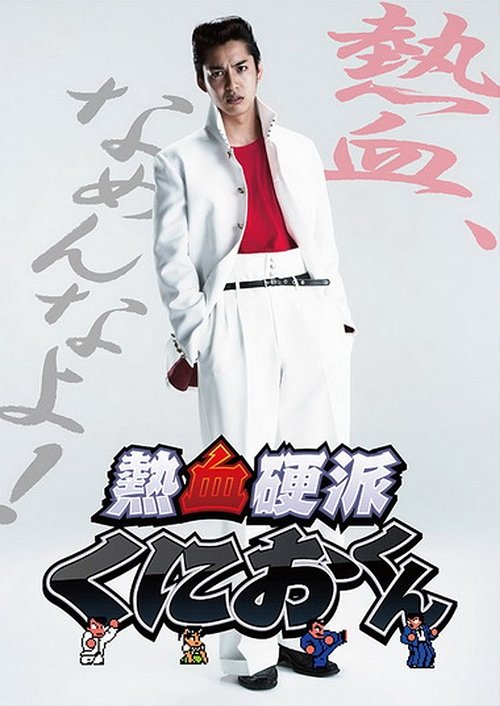








Popular
What motivates Kunio to fight against his rivals throughout the series?
How does the relationship between Kunio and his friends evolve during the series?
What role does the character of Riki play in Kunio's journey?
What are the key rivalries that Kunio faces, and how do they impact his character development?
How does the setting of the town influence the events of the series?
Should I watch it?
Ask Your Own Question

What is the plot?
In the town of Nekketsu, the story begins with Kunio, a high school student known for his tough demeanor and fighting skills. He is seen walking through the streets with his friends, showcasing their camaraderie and the local gang culture. Kunio's reputation as a fighter is established early on, as he is approached by various rival gangs who challenge him. He confidently accepts these challenges, demonstrating his physical prowess and determination to maintain his status.
As the narrative unfolds, Kunio's relationship with his girlfriend, Maki, is introduced. Maki is supportive of Kunio but also concerned about his constant involvement in fights and gang rivalries. Their interactions reveal a deeper emotional connection, but also the strain that Kunio's lifestyle places on their relationship. Maki urges Kunio to consider his future and the consequences of his actions, but he brushes off her concerns, prioritizing his reputation over their relationship.
The plot thickens when a new gang, led by a formidable rival named Kenta, arrives in town. Kenta is ruthless and seeks to establish dominance over Nekketsu. He quickly targets Kunio, challenging him to a series of fights to prove his strength. The tension escalates as Kenta's gang begins to terrorize the local community, leading to a series of confrontations between the two groups. Kunio's friends rally behind him, but the pressure mounts as Kenta's gang proves to be more organized and vicious than anticipated.
In a pivotal scene, Kunio and Kenta finally face off in a highly publicized fight. The atmosphere is charged with excitement and fear as the two gangs gather to witness the showdown. The fight is brutal, with both fighters exchanging powerful blows. Kunio initially gains the upper hand, showcasing his agility and fighting skills. However, Kenta reveals a hidden strength and counters Kunio's attacks, turning the tide of the battle. The fight ends with Kunio being defeated, leaving him humiliated and questioning his abilities.
Following the defeat, Kunio's emotional state deteriorates. He feels the weight of his loss and the disappointment of his friends and Maki. In a moment of vulnerability, he confides in Maki about his fears of not being strong enough to protect those he cares about. Maki encourages him to train harder and not give up, reigniting his determination to reclaim his title as the strongest fighter in Nekketsu.
Kunio embarks on a rigorous training regimen, pushing himself to his physical limits. He seeks guidance from an older mentor, who teaches him new techniques and strategies for fighting. This training montage showcases Kunio's growth, both physically and mentally, as he learns to harness his anger and channel it into focused energy. His friends support him throughout this process, reinforcing their loyalty and belief in his potential.
As Kunio prepares for a rematch with Kenta, the stakes are raised when Kenta's gang escalates their attacks on the community. They begin to target innocent bystanders, causing chaos and fear among the residents of Nekketsu. Kunio realizes that this fight is not just about personal pride; it is about protecting his home and the people he loves. This revelation fuels his resolve to confront Kenta once more.
The rematch is set, and the atmosphere is electric with anticipation. The two gangs gather, and the tension is palpable. Kunio enters the ring with a newfound confidence, ready to face Kenta. The fight begins, and this time, Kunio employs the techniques he learned during his training. He fights strategically, using his agility to dodge Kenta's powerful strikes while delivering precise counterattacks.
As the battle rages on, both fighters push themselves to their limits. Kenta, frustrated by Kunio's resilience, becomes increasingly aggressive. However, Kunio remains focused, drawing strength from the support of his friends and Maki, who watches anxiously from the sidelines. The fight reaches a climax when Kunio executes a powerful finishing move, finally defeating Kenta and reclaiming his title as the strongest fighter.
In the aftermath of the fight, Kunio is celebrated by his friends and the community. He reflects on his journey, recognizing the importance of balance between strength and responsibility. Maki approaches him, and they share a heartfelt moment, reaffirming their bond and commitment to each other. Kunio vows to protect their town and its people, understanding that true strength lies not just in fighting, but in standing up for what is right.
The series concludes with Kunio and his friends walking through the streets of Nekketsu, united and stronger than ever. They face the future with hope and determination, ready to confront any challenges that may come their way. The final scene captures the essence of their friendship and the spirit of the community, leaving a lasting impression of resilience and camaraderie.








What is the ending?
In the ending of Nekketsu Kouha Kunio-kun, Kunio and his friends confront their rivals in a final showdown. After a series of intense battles, they emerge victorious, solidifying their bonds of friendship and their place in the school hierarchy. The story concludes with a sense of camaraderie and the promise of future adventures.
As the final episode unfolds, the scene opens with Kunio and his friends gathering at their school, the atmosphere charged with anticipation. The sun hangs low in the sky, casting long shadows as they prepare for the ultimate confrontation against their rivals. Kunio, filled with determination, rallies his friends, reminding them of the challenges they have faced together. His voice is steady, but there's an undercurrent of anxiety as he knows the stakes are high.
The scene shifts to the rival gang, who are equally prepared and brimming with confidence. Their leader, a formidable opponent, taunts Kunio and his friends, igniting a fierce rivalry that has been building throughout the series. The tension is palpable as both sides exchange heated words, setting the stage for an epic showdown.
As the battle commences, the animation captures the frenetic energy of the fight. Kunio charges forward, his fists clenched, embodying the spirit of a true fighter. His friends follow suit, each showcasing their unique fighting styles and abilities. The choreography of the fight is dynamic, with punches thrown and dodges executed in a flurry of movement. The stakes are high, and the emotional weight of their friendship fuels their resolve.
Throughout the battle, flashbacks intersperse the action, highlighting key moments from their journey together--times of laughter, struggle, and growth. These memories serve to deepen the viewer's understanding of their bond, illustrating how far they have come and what they are fighting for.
As the fight reaches its climax, Kunio faces off against the rival leader in a one-on-one showdown. The intensity of their confrontation is underscored by the dramatic score, heightening the emotional stakes. Kunio, drawing on his experiences and the support of his friends, finds the strength to push through his limits. With a final, powerful blow, he defeats his opponent, signaling their victory.
In the aftermath of the battle, the scene shifts to a quieter moment. Kunio and his friends stand together, bruised but triumphant. They share a moment of reflection, acknowledging the challenges they faced and the importance of their friendship. Laughter breaks out as they tease each other, the tension of the fight dissipating into camaraderie.
The final scenes depict the characters moving forward with their lives. Kunio, now more confident and self-assured, looks ahead to future adventures with his friends. Each character is shown in their element, hinting at their growth and the bonds they have forged. The series concludes with a sense of hope and the promise of new challenges, leaving the audience with a warm feeling of satisfaction.
In summary, Kunio emerges as a stronger leader, his friends stand united, and the rival gang is left to reconsider their approach. The ending encapsulates the themes of friendship, perseverance, and the journey of self-discovery, leaving a lasting impression of growth and unity among the characters.
Is there a post-credit scene?
In the 2013 anime "Nekketsu Kouha Kunio-kun," there is indeed a post-credit scene that adds a humorous touch to the overall narrative. After the main credits roll, viewers are treated to a brief moment featuring Kunio and his friends.
In this scene, Kunio is seen lounging with his friends, seemingly relaxed after their various escapades throughout the series. The atmosphere is light-hearted, filled with laughter and banter. Kunio, with his characteristic bravado, boasts about their recent victories and how they've become the ultimate tough guys in town. His friends, however, are quick to poke fun at him, teasing him about his overconfidence and the misadventures they've faced.
As the scene unfolds, the camera shifts to a comedic moment where one of the friends accidentally spills a drink on Kunio, leading to a playful scuffle. This light-hearted exchange encapsulates the camaraderie and youthful spirit that defines the series, leaving viewers with a sense of warmth and nostalgia for the friendships portrayed.
The post-credit scene serves not only as a comedic relief but also reinforces the themes of friendship and the everyday challenges faced by the characters, making it a fitting conclusion to the series.
What motivates Kunio to fight against his rivals throughout the series?
Kunio is driven by a strong sense of justice and loyalty to his friends. His desire to protect his neighborhood and uphold his reputation as a tough fighter fuels his determination to confront various rivals. Each battle he engages in is not just about physical strength but also about proving himself and standing up for those he cares about.
How does the relationship between Kunio and his friends evolve during the series?
Throughout the series, Kunio's relationships with his friends deepen as they face challenges together. Initially, their camaraderie is based on shared interests in fighting and fun, but as they encounter various conflicts, they learn to rely on each other emotionally. Moments of vulnerability, such as when they support each other during tough battles or personal struggles, highlight their growth and strengthen their bonds.
What role does the character of Riki play in Kunio's journey?
Riki serves as both a rival and a close friend to Kunio. His competitive nature pushes Kunio to improve and face greater challenges. However, Riki also represents the internal conflict within Kunio, as he grapples with the balance between rivalry and friendship. Their dynamic adds depth to Kunio's character, showcasing his growth as he learns to appreciate the value of teamwork and loyalty.
What are the key rivalries that Kunio faces, and how do they impact his character development?
Kunio faces several key rivals throughout the series, each representing different challenges and lessons. For instance, his rivalry with the gang leader of a neighboring town forces him to confront his own limits and the consequences of violence. These encounters not only test his fighting skills but also challenge his moral compass, leading to significant character development as he learns to navigate the complexities of friendship, honor, and conflict.
How does the setting of the town influence the events of the series?
The town serves as a vibrant backdrop that influences the characters' actions and motivations. Its streets, schools, and hangout spots are filled with rival gangs and challenges that Kunio and his friends must navigate. The familiar yet chaotic environment reflects the struggles of adolescence, where friendships are tested, and personal growth occurs amidst the backdrop of urban life. This setting amplifies the stakes of each confrontation and highlights the importance of community in Kunio's journey.
Is this family friendly?
"Nekketsu Kouha Kunio-kun," produced in 2013, is generally aimed at a teenage audience and contains elements that may not be considered family-friendly. Here are some potentially objectionable or upsetting aspects:
-
Violence: The show features frequent brawls and street fights, which may be intense for younger viewers. Characters often engage in physical confrontations that can be graphic in nature.
-
Language: There are instances of strong language and insults exchanged between characters, which may not be suitable for children.
-
Bullying: Themes of bullying and intimidation are prevalent, showcasing characters who engage in aggressive behavior towards others.
-
Mature Themes: The series touches on themes of delinquency, rebellion, and the struggles of youth, which may resonate differently with sensitive viewers.
-
Emotional Turmoil: Characters experience significant emotional challenges, including feelings of anger, frustration, and betrayal, which could be distressing for some.
These elements contribute to a tone that may not be appropriate for all audiences, particularly younger children or those sensitive to violence and mature themes.