








































Popular
What motivates the character of Kwan to pursue his investigation throughout the series?
How does the relationship between Kwan and his partner evolve over the course of the series?
What role does the antagonist play in Kwan's journey, and how does their conflict escalate?
What are the key turning points in Kwan's investigation that significantly impact the plot?
How does the setting influence the characters' actions and decisions throughout the series?
Should I watch it?
Ask Your Own Question

What is the plot?
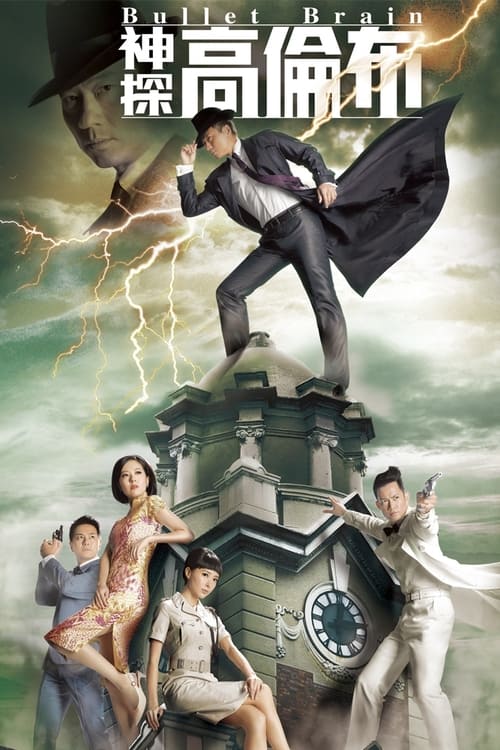
In the opening scene of "Bullet Brain," we are introduced to the protagonist, a brilliant but troubled detective named Kwan. He is seen in a dimly lit office, surrounded by stacks of unsolved case files. Kwan is grappling with his own demons, haunted by the memory of a past case that went wrong, which resulted in the death of an innocent person. This emotional turmoil sets the stage for his character's motivations throughout the series.
Kwan receives a call about a new case involving a series of mysterious murders in the city. The victims are all connected to a high-profile tech company, and the police suspect foul play. Kwan is assigned to the case, and he quickly begins to investigate the backgrounds of the victims. He interviews family members and friends, uncovering a web of secrets and lies that hint at corporate espionage and betrayal.
As Kwan delves deeper, he discovers that the tech company is developing a groundbreaking artificial intelligence system. He meets with the company's CEO, who is charismatic but evasive. During their conversation, Kwan senses that the CEO is hiding something significant. This encounter raises Kwan's suspicions, and he decides to dig further into the company's operations.
In a pivotal scene, Kwan breaks into the tech company's headquarters at night, searching for evidence. He navigates through dark hallways and high-security areas, using his skills to bypass security systems. He stumbles upon a hidden lab where he finds prototypes of the AI system and documents that suggest unethical experiments on the victims. Just as he is about to gather evidence, he is caught by security personnel, leading to a tense chase through the building.
Kwan narrowly escapes the building, but not without sustaining injuries. He realizes that he is now a target, and the stakes have escalated. He confides in his partner, a tough and resourceful officer named Mei, who agrees to help him. Together, they analyze the evidence Kwan managed to collect, piecing together the connections between the victims and the tech company.
As they continue their investigation, Kwan and Mei uncover a conspiracy involving high-ranking officials who are complicit in the crimes. They learn that the AI system is not just a technological advancement but a tool for manipulation and control. This revelation intensifies their urgency to expose the truth before more lives are lost.
In a dramatic twist, Kwan receives a threatening message from an unknown source, warning him to back off. Undeterred, he and Mei decide to go public with their findings. They hold a press conference, revealing the connections between the tech company and the murders. This bold move puts them in even greater danger, as powerful figures begin to retaliate against them.
The tension escalates when Kwan's loved ones are threatened, forcing him to confront the reality of his choices. He grapples with the fear of losing those he cares about, which fuels his determination to bring the perpetrators to justice. Kwan and Mei devise a plan to gather more evidence, leading them to a secret meeting with a whistleblower from within the tech company.
During the meeting, they learn crucial information about the AI system's capabilities and its potential for harm. However, the meeting is ambushed by hired goons sent by the tech company, resulting in a chaotic confrontation. Kwan and Mei fight their way out, showcasing their skills and resourcefulness. They manage to escape, but not without injuries and a sense of urgency to act quickly.
As the series progresses, Kwan's obsession with the case begins to take a toll on his mental health. He experiences flashbacks and hallucinations related to his past failures, which complicate his judgment. Despite this, he remains focused on the goal of dismantling the corrupt system behind the murders.
In the climax of the series, Kwan and Mei orchestrate a final confrontation with the tech company's CEO and his accomplices. They gather evidence and enlist the help of law enforcement to raid the company's headquarters. The raid is intense, with Kwan and Mei leading the charge against armed guards. They navigate through gunfire and chaos, determined to bring the criminals to justice.
In a tense showdown, Kwan confronts the CEO, who reveals his motivations and justifications for the crimes. The confrontation is emotionally charged, as Kwan battles not only the physical threat but also the psychological weight of his past. Ultimately, Kwan manages to subdue the CEO, leading to his arrest.
The series concludes with Kwan reflecting on the journey he has taken. He has faced his demons and emerged stronger, but the scars of his past remain. The final scenes show him returning to his office, where he begins to tackle new cases, hinting at his ongoing commitment to justice despite the challenges he faces.
🔥 Trending TV Shows Now
Browse All TV Shows →








What is the ending?
In the ending of "Bullet Brain," the main character, a detective named K, confronts the antagonist, leading to a climactic showdown. The resolution reveals the consequences of their actions, with K facing a personal reckoning and the impact of his choices on those around him.
As the final episode unfolds, the tension escalates. K, having pieced together the clues throughout the series, finds himself in a dimly lit warehouse, the air thick with anticipation. The camera pans across the room, revealing remnants of past confrontations--broken furniture, scattered papers, and the faint echo of distant sirens. K's heart races, a mix of determination and dread coursing through him as he prepares for the inevitable confrontation.
Suddenly, the door creaks open, and the antagonist steps in, a smirk playing on their lips. The atmosphere crackles with animosity as they exchange sharp words, each taunt laced with the weight of their shared history. K's internal struggle is palpable; he is not just fighting for justice but grappling with his own demons, the choices that have led him to this moment.
The confrontation escalates into a physical struggle, the two men grappling fiercely. K's resolve is tested as he recalls the faces of those he has lost along the way, fueling his determination. The fight is brutal, showcasing K's desperation and the antagonist's cunning. As they tumble through the warehouse, the camera captures the raw emotion on K's face--anger, sorrow, and a flicker of hope.
In a pivotal moment, K gains the upper hand, pinning the antagonist to the ground. The weight of his actions crashes down on him as he contemplates the final blow. The scene slows, the world around them fading as K's internal conflict reaches its peak. He realizes that vengeance will not bring back what he has lost. With a heavy heart, he chooses to arrest the antagonist instead of delivering fatal justice, a decision that signifies his growth and the possibility of redemption.
As the dust settles, K stands over the subdued antagonist, breathing heavily, the adrenaline slowly fading. The police sirens grow louder in the distance, a reminder of the world outside this moment. K's expression shifts from anger to a somber acceptance of his reality. He knows that while he has won this battle, the war within him continues.
The final scenes shift to K's personal life. He visits the graves of those he has lost, laying flowers with trembling hands. The camera lingers on his face, capturing the sorrow and the flicker of hope as he reflects on his journey. The series closes with K walking away from the gravesite, a man forever changed, carrying the weight of his past but also the possibility of a new beginning.
In the end, K's fate is one of survival and introspection. He has chosen the path of justice over revenge, a decision that will shape his future. The antagonist, now in custody, faces the consequences of their actions, a stark reminder of the choices that lead to downfall. The story concludes with a sense of unresolved tension, leaving viewers to ponder the complexities of morality, justice, and the human condition.
Is there a post-credit scene?
In the 2013 TV show "Bullet Brain," there is indeed a post-credit scene that adds an intriguing layer to the narrative.
As the credits roll, the screen fades back in to a dimly lit room filled with the soft hum of machinery. The camera pans slowly across a series of monitors displaying various surveillance feeds, each showing different locations around the city. The atmosphere is tense, underscored by a low, pulsating soundtrack that hints at something significant about to unfold.
In the center of the room sits a figure shrouded in shadows, their face obscured. The only visible feature is a glint of metal--a small device in their hand, which they manipulate with deft fingers. The figure speaks softly into a communicator, their voice calm yet laced with an undercurrent of menace. "Initiate phase two," they say, their tone suggesting a calculated plan is in motion.
As the camera zooms in on the monitors, one feed catches the viewer's attention: it shows a familiar character from the series, seemingly unaware of the looming threat. The scene cuts to black just as the figure in the shadows smirks, leaving viewers with a sense of foreboding and anticipation for what might come next.
This post-credit scene effectively sets the stage for potential future conflicts and deepens the intrigue surrounding the overarching plot, hinting at unseen forces at play and the possibility of new challenges for the protagonists.
What motivates the character of Kwan to pursue his investigation throughout the series?
Kwan is driven by a deep sense of justice and a personal vendetta stemming from a traumatic event in his past. His relentless pursuit of the truth is fueled by a desire to uncover the corruption that led to his family's downfall, which adds layers to his character as he grapples with his own moral compass.
How does the relationship between Kwan and his partner evolve over the course of the series?
Initially, Kwan and his partner have a strained relationship marked by distrust and differing methods. As they face various challenges together, their bond deepens, revealing vulnerabilities and shared goals. This evolution is highlighted through moments of tension and camaraderie, ultimately leading to a strong partnership built on mutual respect.
What role does the antagonist play in Kwan's journey, and how does their conflict escalate?
The antagonist serves as a formidable obstacle for Kwan, representing the systemic corruption he seeks to dismantle. Their conflict escalates through a series of cat-and-mouse encounters, where the antagonist's cunning and ruthlessness challenge Kwan's resolve. This dynamic creates a tense atmosphere, pushing Kwan to his limits both physically and emotionally.
What are the key turning points in Kwan's investigation that significantly impact the plot?
Key turning points include the discovery of crucial evidence that links the antagonist to a larger conspiracy, a betrayal from a close ally that shakes Kwan's trust, and a near-fatal encounter that forces him to confront his own vulnerabilities. Each of these moments propels the narrative forward, heightening the stakes and deepening Kwan's commitment to his cause.
How does the setting influence the characters' actions and decisions throughout the series?
The gritty urban landscape serves as a backdrop that reflects the characters' struggles and motivations. The contrasting environments, from dark alleyways to opulent corporate offices, symbolize the divide between the corrupt elite and the everyday citizens. This setting influences characters' actions, pushing them into morally ambiguous situations and shaping their decisions as they navigate a world rife with danger.
Is this family friendly?
"Bullet Brain," produced in 2013, is a darkly comedic series that delves into themes of crime, violence, and psychological tension. While it features a unique blend of humor and drama, there are several aspects that may not be suitable for children or sensitive viewers.
-
Violence and Crime: The show includes scenes depicting criminal activities, which may involve physical confrontations, gunplay, and other violent acts. These moments are often portrayed in a stylized manner but can still be intense.
-
Mature Themes: The narrative explores complex themes such as betrayal, revenge, and moral ambiguity. Characters often find themselves in morally questionable situations, which may be unsettling for younger audiences.
-
Dark Humor: The humor in "Bullet Brain" can be quite dark and may not resonate well with all viewers. Jokes and situations that arise from violence or distress may be inappropriate for children.
-
Emotional Turmoil: Characters experience significant emotional struggles, including anxiety, depression, and existential crises. These themes may be heavy for younger viewers to process.
-
Language: The dialogue includes strong language and adult conversations that may not be suitable for a younger audience.
Overall, while "Bullet Brain" offers a unique narrative experience, its content may be better suited for mature audiences due to its exploration of darker themes and the presence of violence and adult language.