
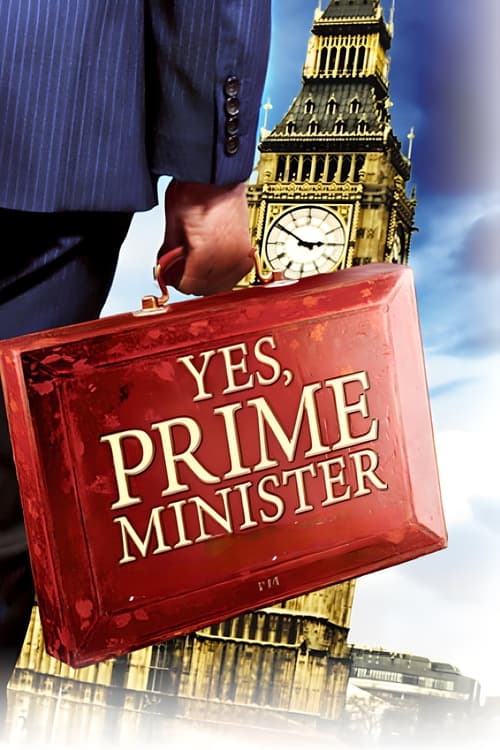






Popular
What role does Jim Hacker play in the political landscape of the show?
How does Sir Humphrey Appleby manipulate situations to maintain control?
What is the significance of the relationship between Jim Hacker and Bernard Woolley?
How does the show portray the conflict between political ideals and bureaucratic realities?
What are some key moments that illustrate Jim Hacker's growth as a character?
Should I watch it?
Ask Your Own Question

What is the plot?
In the 2013 revival of "Yes, Prime Minister," the story begins with Jim Hacker, now the Prime Minister, facing a crisis regarding the British economy. The government is under pressure to make cuts, and Hacker is determined to maintain public services while also appeasing the Treasury. He is anxious about the upcoming budget meeting and seeks advice from his permanent secretary, Sir Humphrey Appleby, who is known for his bureaucratic cunning.
As the plot unfolds, Hacker learns that the Treasury is planning significant cuts to public services, which could lead to public unrest. He is torn between his desire to be a popular Prime Minister and the harsh realities of economic management. Sir Humphrey, ever the pragmatist, suggests that Hacker should focus on the political implications rather than the moral ones, emphasizing the importance of maintaining power.
Hacker decides to hold a press conference to address the public's concerns about the budget cuts. He rehearses his speech with his press secretary, who advises him to strike a balance between honesty and political spin. During the press conference, Hacker attempts to present a positive outlook, but he struggles to convey confidence as he faces tough questions from journalists. The pressure mounts as he realizes that his words may not resonate with the public.
In a pivotal meeting with his cabinet, Hacker proposes a plan to cut wasteful spending while protecting essential services. However, Sir Humphrey and the other ministers push back, arguing that such cuts would be politically damaging. Sir Humphrey suggests a more strategic approach, advocating for a focus on public relations rather than actual policy changes. Hacker feels frustrated but ultimately agrees to consider Sir Humphrey's advice.
As the budget deadline approaches, Hacker becomes increasingly anxious about the potential backlash from the public. He meets with various stakeholders, including union leaders and business representatives, trying to gauge their reactions to the proposed cuts. Each meeting reveals the complexity of the situation, as Hacker realizes that every decision he makes will have far-reaching consequences.
In a surprising twist, Hacker discovers that Sir Humphrey has been manipulating information to steer the budget discussions in a direction that benefits the civil service rather than the public. Hacker confronts Sir Humphrey, who defends his actions by arguing that the stability of the government is paramount. This confrontation highlights the tension between Hacker's ideals and the realities of political governance.
As the budget announcement day arrives, Hacker prepares for the worst. He delivers a speech outlining the cuts, attempting to frame them as necessary for the greater good. However, the public reaction is overwhelmingly negative, leading to protests and calls for his resignation. Hacker feels a deep sense of betrayal and confusion, questioning whether he made the right choices.
In the aftermath of the budget announcement, Hacker meets with his advisors to assess the damage. Sir Humphrey suggests a damage control strategy, proposing that they shift the narrative to focus on future growth and investment. Hacker is hesitant but recognizes that he must act quickly to regain public trust.
The final scenes depict Hacker grappling with the consequences of his decisions. He reflects on the nature of leadership and the compromises that come with it. The episode concludes with Hacker realizing that while he may not have achieved his ideal vision for the country, he must continue to navigate the complexities of politics with the tools at his disposal.








What is the ending?
In the ending of "Yes, Prime Minister" (2013), Prime Minister Jim Hacker faces a critical decision regarding the future of his government and the integrity of his leadership. He grapples with the implications of a scandal involving the Ministry of Defence and the potential fallout from a leaked report. Ultimately, he chooses to confront the situation head-on, demonstrating his commitment to transparency and accountability. Sir Humphrey Appleby, his permanent secretary, navigates the political landscape with his usual cunning, while Bernard Woolley, Hacker's principal private secretary, provides support and insight. The episode concludes with Hacker reaffirming his position, but the complexities of political life remain evident, leaving the audience with a sense of the ongoing challenges he will face.
As the final episode unfolds, we find ourselves in the Prime Minister's office, where Jim Hacker is pacing back and forth, visibly anxious. The atmosphere is tense, filled with the weight of impending decisions. The camera captures the cluttered desk, papers strewn about, reflecting the chaos of the situation at hand. Hacker is grappling with a leaked report that could potentially damage his government's reputation. His brow furrows as he contemplates the ramifications of the scandal, knowing that the public's trust is at stake.
Sir Humphrey Appleby enters the room, his demeanor calm and collected, a stark contrast to Hacker's agitation. He offers his usual blend of bureaucratic wisdom and political maneuvering. As they engage in a dialogue, the audience can sense the underlying tension; Hacker is determined to take a stand, while Humphrey is more concerned with damage control and maintaining the status quo. The dialogue is sharp, filled with witty exchanges that highlight their differing philosophies on leadership and governance.
Bernard Woolley, the ever-loyal principal private secretary, joins the conversation, providing a grounding presence. He listens intently, occasionally interjecting with insights that reflect his understanding of both men's motivations. Bernard's loyalty to Hacker is evident, but he also recognizes the complexities of the political landscape they navigate. His expressions reveal a mix of concern and hope as he witnesses Hacker's struggle.
As the discussion progresses, Hacker makes a pivotal decision: he will address the scandal publicly, opting for transparency rather than obfuscation. This moment is charged with emotion; Hacker's resolve is palpable as he articulates his commitment to honesty and accountability. The camera zooms in on his face, capturing the determination in his eyes, a man ready to face the consequences of his choices.
The scene shifts to a press conference, where Hacker stands before a sea of reporters, the flashing cameras illuminating the room. The tension is thick as he begins to speak, his voice steady but filled with the weight of responsibility. He acknowledges the scandal, outlining the steps his government will take to address the issues raised in the leaked report. The audience can feel the gravity of the moment; this is a defining point in Hacker's career, a test of his leadership.
As the press conference concludes, the reactions from the reporters are mixed, but there is a sense of respect for Hacker's forthrightness. He steps away from the podium, a mixture of relief and apprehension washing over him. The camera captures his expression, a man who has chosen the difficult path of integrity, aware that the road ahead will be fraught with challenges.
In the final moments, we return to the Prime Minister's office, where Hacker, Humphrey, and Bernard regroup. The atmosphere is still charged, but there is a sense of camaraderie among them. Hacker reflects on the day's events, acknowledging the risks he has taken but also the necessity of his choices. Sir Humphrey, ever the strategist, begins to plot the next steps, hinting at the ongoing complexities of political life. Bernard stands by, a silent supporter, embodying the loyalty that has characterized his role throughout the series.
As the episode draws to a close, the camera pulls back, leaving the audience with a lingering sense of uncertainty. The fate of each character is intertwined with the political landscape they inhabit. Hacker has taken a stand, but the challenges of leadership remain ever-present. Sir Humphrey continues to navigate the intricacies of bureaucracy, while Bernard remains a steadfast ally, ready to support Hacker in the trials to come. The screen fades to black, leaving viewers contemplating the intricate dance of politics and the personal sacrifices that come with it.
Is there a post-credit scene?
Yes, in the 2013 revival of "Yes, Prime Minister," there is a post-credit scene that adds a humorous touch to the episode. After the main credits roll, viewers are treated to a brief moment that encapsulates the show's satirical take on politics.
In this scene, Prime Minister Jim Hacker is seen in his office, looking over some documents with a furrowed brow. He is clearly deep in thought, reflecting on the challenges he faces as a leader. Suddenly, Sir Humphrey Appleby enters, holding a stack of papers. With his usual air of confidence and a hint of mischief, he presents a convoluted proposal that is designed to confuse rather than clarify.
As they engage in their typical banter, the tension of the political landscape is momentarily lifted by their witty exchanges. Sir Humphrey's ability to twist words and Jim's frustration with the bureaucratic jargon highlight the absurdity of political communication. The scene ends with Jim shaking his head in disbelief, a smile creeping onto his face as he realizes that despite the challenges, the game of politics continues with its inherent absurdities.
This post-credit moment serves as a light-hearted reminder of the show's core themes: the complexities of governance and the often humorous dynamics between politicians and civil servants.
What role does Jim Hacker play in the political landscape of the show?
Jim Hacker, portrayed as the Prime Minister, navigates the complexities of British politics with a blend of idealism and pragmatism. His character often grapples with the tension between his personal beliefs and the demands of his office, showcasing his internal struggle as he attempts to implement policies while contending with the bureaucratic machinations of Sir Humphrey Appleby.
How does Sir Humphrey Appleby manipulate situations to maintain control?
Sir Humphrey, the permanent secretary, is a master of bureaucratic maneuvering. He often employs obfuscation and clever language to steer Jim Hacker's decisions, revealing his deep understanding of the political system. His motivations are rooted in preserving the status quo and his own power, leading to a series of intricate plots where he subtly undermines Hacker's authority.
What is the significance of the relationship between Jim Hacker and Bernard Woolley?
Bernard Woolley serves as Hacker's private secretary, embodying the bridge between the idealistic Prime Minister and the cynical bureaucracy. Their relationship is marked by a mix of loyalty and frustration, as Bernard often finds himself caught between Hacker's ambitious plans and the realities of government operations. This dynamic highlights the challenges of governance and the personal toll it takes on those involved.
How does the show portray the conflict between political ideals and bureaucratic realities?
Throughout the series, the tension between Hacker's progressive ideals and the entrenched bureaucracy represented by Sir Humphrey is a central theme. Specific plot elements illustrate this conflict, such as Hacker's attempts to introduce reforms that are consistently thwarted by Humphrey's strategic use of language and policy loopholes, showcasing the often frustrating nature of political change.
What are some key moments that illustrate Jim Hacker's growth as a character?
Key moments in the series depict Hacker's evolution from an idealistic leader to a more seasoned politician. For instance, his initial naivety in believing he can easily implement change is challenged by various setbacks, leading to moments of self-reflection where he reassesses his approach to leadership. These scenes are rich with emotional depth, as Hacker grapples with the compromises required in politics.
Is this family friendly?
Yes, Prime Minister, produced in 2013, is generally considered suitable for a family audience, but it does contain some elements that may be objectionable or upsetting for children or sensitive viewers.
-
Political Satire: The show features sharp political satire that may be difficult for younger viewers to fully understand, including complex discussions about government and policy that could be confusing.
-
Mild Language: There are instances of mild language and innuendo that may not be appropriate for younger audiences.
-
Themes of Deception: The plot often revolves around manipulation, deceit, and political maneuvering, which may present a morally ambiguous environment that could be unsettling for some viewers.
-
Adult Situations: There are references to adult situations and relationships that may not be suitable for children, including discussions about personal and professional ethics.
-
Stressful Political Scenarios: The tension and stress of political decision-making can create a sense of anxiety, which might be overwhelming for sensitive viewers.
Overall, while the show is comedic and satirical, parents may want to consider these aspects when deciding if it is appropriate for their children.