



Popular
How do the supporting characters contribute to the main character's journey?
What role does the antagonist play in the protagonist's downfall?
What are the key events that lead to the trial of the main character?
How does the main character's relationship with their mentor influence the story?
What evidence is presented during the trial that shifts the narrative?
Should I watch it?
Ask Your Own Question

What is the plot?
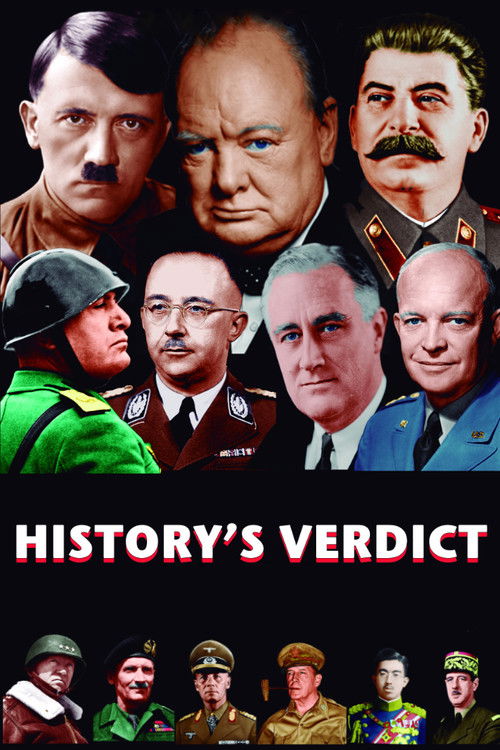
"History's Verdict" is a documentary-style series that explores pivotal moments in history through the lens of legal trials and verdicts. Each episode focuses on a specific historical event, examining the evidence, the key players involved, and the societal implications of the verdicts rendered.
The series begins with an introduction to the historical context of the featured event. For instance, in the episode covering the trial of Socrates, the narrative opens with a depiction of ancient Athens, showcasing its vibrant culture and the philosophical debates that permeate society. The audience is introduced to Socrates, portrayed as a wise and questioning figure, who challenges the status quo and encourages critical thinking among his followers.
As the episode progresses, the tension builds around Socrates' growing unpopularity among the Athenian elite. Key scenes depict his interactions with various citizens, highlighting his method of questioning and the discomfort it causes among those in power. The internal motivations of Socrates are explored, revealing his commitment to truth and virtue, even in the face of potential consequences.
The turning point arrives when Socrates is charged with impiety and corrupting the youth of Athens. The series details the legal proceedings, showcasing the courtroom dynamics and the arguments presented by both the prosecution and defense. The prosecution, represented by Meletus, argues passionately about the dangers Socrates poses to society, while Socrates defends himself with eloquence, questioning the validity of the charges against him.
The emotional stakes rise as Socrates faces the jury, composed of his fellow citizens. The series captures the tension in the courtroom, with close-ups of the jurors' faces reflecting their internal conflicts. Socrates' calm demeanor contrasts sharply with the heated atmosphere, emphasizing his philosophical stance on life and death.
As the trial unfolds, the verdict is delivered: Socrates is found guilty. The series portrays the shock and dismay among his supporters, while Socrates himself remains composed, accepting the verdict with a sense of resignation. The emotional weight of this moment is palpable, as the audience witnesses the impact of the decision on both Socrates and the Athenian society.
In the final scenes, the focus shifts to Socrates' sentencing. He is given the option to propose an alternative punishment, but instead, he suggests a reward for his service to the city, further alienating the jury. The series captures the tension as Socrates faces the death penalty, illustrating his unwavering commitment to his principles.
The episode concludes with Socrates' final moments, where he reflects on his life and teachings. The emotional depth of his farewell to his followers is highlighted, showcasing the profound impact he has had on philosophy and the legacy he leaves behind. The series ends with a somber tone, leaving the audience to ponder the implications of the trial and the nature of justice in society.









What is the ending?
In the ending of "History's Verdict," the series culminates in a dramatic courtroom scene where the characters confront the consequences of their actions throughout the series. The verdict is delivered, leading to significant changes in the lives of the main characters, ultimately reflecting on themes of justice and accountability.
As the final episode unfolds, the courtroom is tense, filled with a mix of anticipation and dread. The camera pans across the faces of the characters, each displaying a range of emotions from anxiety to defiance. The judge, a stern figure, calls for order as the jury enters the room. The atmosphere is thick with the weight of the decisions that have been made, and the stakes are high.
The jury foreman stands, his hands trembling slightly as he reads the verdict. The words hang in the air, and the reactions are immediate. One character, who has been a central figure throughout the series, gasps in disbelief, while another clenches their fists in anger. The verdict is guilty, and the implications are profound. The character who has been portrayed as the antagonist is sentenced to a lengthy prison term, their face a mask of shock and betrayal.
In contrast, a secondary character, who has been a reluctant participant in the unfolding drama, is acquitted. This character's relief is palpable, tears welling in their eyes as they embrace a loved one in the gallery. The emotional weight of the moment is underscored by the reactions of those around them, some celebrating while others mourn the loss of freedom for the convicted.
As the courtroom empties, the main characters are left to grapple with the aftermath of the verdict. The protagonist, who has been on a journey of moral discovery, reflects on the choices made and the lives affected. Their internal struggle is evident as they walk out of the courthouse, the sunlight hitting their face, symbolizing a new beginning but also the burden of the past.
The series concludes with a montage of scenes showing the characters moving forward in their lives. The convicted character is shown in prison, contemplating their actions, while the acquitted character begins to rebuild their life, surrounded by supportive friends and family. The protagonist, meanwhile, takes a moment to visit a significant location from their past, hinting at a desire for redemption and a commitment to making better choices in the future.
In the final moments, the screen fades to black, leaving the audience with a sense of closure but also an understanding that the journey of these characters is far from over. The themes of justice, accountability, and the complexity of human relationships resonate as the credits roll, inviting viewers to reflect on the moral dilemmas presented throughout the series.
Is there a post-credit scene?
The show "History's Verdict," produced in 2013, does not feature any post-credit scenes. Each episode concludes with a summary of the historical events discussed, but there are no additional scenes or content after the credits roll. The focus remains on the exploration and analysis of historical events, providing viewers with a comprehensive understanding of the topics covered without any extra narrative elements following the main content.
How do the supporting characters contribute to the main character's journey?
The supporting characters significantly contribute to the main character's journey by providing contrasting perspectives and emotional support. Each character represents different facets of society, reflecting the complexities of the protagonist's situation. For instance, a loyal friend offers unwavering support, while a skeptical colleague raises doubts about the protagonist's choices. These interactions create a rich tapestry of relationships that influence the protagonist's decisions and emotional state throughout the trial.
What role does the antagonist play in the protagonist's downfall?
The antagonist plays a crucial role in the protagonist's downfall by exploiting their weaknesses and manipulating public perception. This character is portrayed as cunning and ruthless, using strategic moves to undermine the protagonist's credibility. Throughout the story, the antagonist's motivations are revealed, showcasing a deep-seated rivalry that drives them to orchestrate events that lead to the trial, ultimately challenging the protagonist's moral compass.
What are the key events that lead to the trial of the main character?
The key events leading to the trial of the main character involve a series of escalating conflicts that begin with a controversial decision made by the protagonist, which sparks public outrage. This decision is rooted in a personal vendetta against a rival, leading to a chain reaction of events that culminate in a dramatic confrontation. As tensions rise, the protagonist's motivations are revealed, showcasing their internal struggle between personal ambition and moral responsibility.
How does the main character's relationship with their mentor influence the story?
The main character's relationship with their mentor is pivotal to the narrative. Initially, the mentor serves as a guiding figure, instilling values and wisdom that shape the protagonist's decisions. However, as the plot progresses, the mentor's own flaws and past mistakes come to light, creating a rift between them. This conflict forces the protagonist to confront their own beliefs and ultimately leads to a critical moment of betrayal that impacts the trial's outcome.
What evidence is presented during the trial that shifts the narrative?
During the trial, several pieces of evidence are presented that dramatically shift the narrative. Key testimonies from witnesses reveal hidden truths about the protagonist's actions, while physical evidence is introduced that contradicts their claims. The emotional weight of these revelations is palpable, as the protagonist grapples with the implications of their past decisions. This turning point not only affects the trial's outcome but also forces the protagonist to confront their own guilt and the consequences of their choices.
Is this family friendly?
"History's Verdict," produced in 2013, is a documentary-style series that delves into significant historical events and figures, presenting various perspectives and interpretations. While the show aims to educate, there are several aspects that may be considered objectionable or upsetting for children or sensitive viewers:
-
Violence and Conflict: The series often discusses wars, battles, and violent confrontations, which may include graphic descriptions or reenactments of violence.
-
Death and Suffering: Many episodes cover themes of death, suffering, and the impact of historical events on individuals and communities, which can be emotionally heavy.
-
Historical Atrocities: The show addresses events such as genocide, slavery, and oppression, which may be distressing for younger audiences.
-
Mature Themes: Discussions around betrayal, moral dilemmas, and the darker aspects of human nature may be challenging for sensitive viewers.
-
Emotional Impact: The narratives often evoke strong emotions, including grief, anger, and despair, which may be overwhelming for some.
Overall, while "History's Verdict" is educational, its content may not be suitable for all children or sensitive individuals due to the serious and sometimes distressing nature of the historical topics covered.