
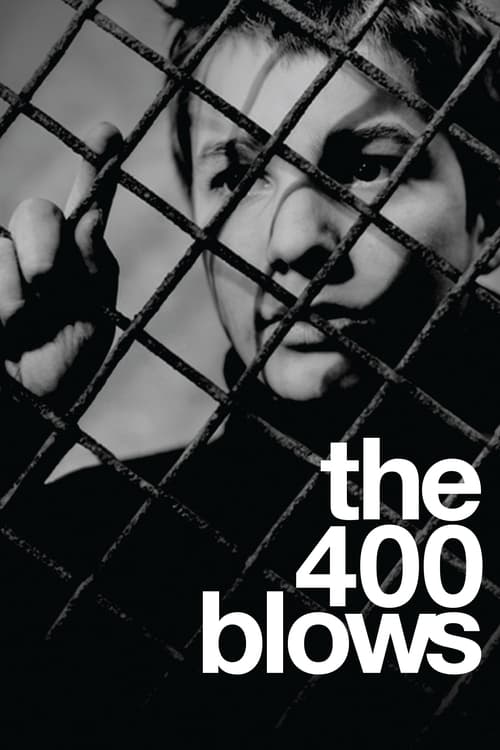


Popular
What is the significance of Antoine's relationship with his parents?
How does Antoine's experience at school reflect his character development?
What role does the police play in Antoine's life throughout the film?
How does Antoine's friendship with René influence his actions?
What is the significance of the final scene where Antoine looks directly at the camera?
Should I watch it?
Ask Your Own Question

What is the plot?
Sorry, we aren't able to watch and write up a full detailed plot yet. Check back in a few days.








What is the ending?
In the ending of "The 400 Blows," Antoine Doinel, the young protagonist, runs away from home after a series of conflicts with his parents and school. He ultimately finds himself in a juvenile detention center. The film concludes with Antoine staring directly into the camera, a haunting expression on his face, as he asks, "What will become of me?"
Now, let's delve into the ending in a more detailed narrative fashion:
As the film approaches its climax, Antoine Doinel, played by Jean-Pierre Léaud, is increasingly overwhelmed by the pressures of his home life and the strictures of school. After being caught stealing a typewriter from his father's workplace, he faces the wrath of his parents, who are emotionally distant and unable to understand his struggles. The tension at home escalates, leading to a confrontation where Antoine's mother, played by Claire Maurier, expresses her frustration and disappointment. This moment is charged with emotion, as Antoine feels utterly isolated and misunderstood.
In a moment of desperation, Antoine decides to run away from home. He wanders the streets of Paris, a city that feels both vast and confining to him. The cinematography captures his loneliness, with wide shots of the bustling city contrasting with his solitary figure. He seeks refuge in the company of friends, but even these interactions feel fleeting and unsatisfactory. Antoine's internal conflict is palpable; he longs for freedom but is also deeply afraid of what lies ahead.
Eventually, Antoine is apprehended by the police after a series of misadventures. He is taken to a juvenile detention center, a stark and oppressive environment that symbolizes the culmination of his struggles. The scenes in the detention center are starkly lit, emphasizing the bleakness of his situation. Here, Antoine is surrounded by other troubled youths, each with their own stories of hardship. The atmosphere is heavy with a sense of lost innocence.
In the final moments of the film, Antoine is shown sitting alone in a small room, reflecting on his life. The camera focuses on his face, capturing a mix of defiance and vulnerability. He looks directly into the lens, breaking the fourth wall, and utters the haunting line, "What will become of me?" This moment is powerful, as it encapsulates his uncertainty about the future and the cyclical nature of his struggles.
The film concludes without providing clear answers about Antoine's fate. His parents remain distant, and the system that is supposed to help him seems to have failed. The ending leaves viewers with a sense of unresolved tension, mirroring Antoine's own feelings of despair and confusion. The final shot lingers on his face, a poignant reminder of the challenges faced by youth in a world that often feels indifferent to their plight.
Is there a post-credit scene?
The 400 Blows, directed by François Truffaut and released in 1959, does not have a post-credit scene. The film concludes with a poignant and memorable final shot that encapsulates the protagonist's emotional state and the themes of the film.
In the closing moments, we see Antoine Doinel, played by Jean-Pierre Léaud, standing on a beach, looking directly into the camera. His expression is a mix of confusion, defiance, and a hint of hope as he faces the audience. The film ends abruptly, leaving viewers with a sense of ambiguity about Antoine's future and the struggles he has faced. This powerful ending serves as a reflection of his turbulent childhood and the societal constraints he has encountered, emphasizing the film's exploration of youth, rebellion, and the search for identity.
What is the significance of Antoine's relationship with his parents?
Antoine Doinel's relationship with his parents is fraught with tension and misunderstanding. His mother, who is often preoccupied with her own life, shows little affection or support for Antoine, while his father is emotionally distant and often scolds him. This lack of parental support drives Antoine to seek attention and validation elsewhere, highlighting his feelings of isolation and neglect.
How does Antoine's experience at school reflect his character development?
At school, Antoine is portrayed as a misfit, struggling to fit in with his peers and often facing ridicule from teachers. His rebellious nature is evident as he plays pranks and skips classes, which ultimately leads to his expulsion. These experiences at school serve to deepen his sense of alienation and frustration, pushing him further into a life of petty crime and rebellion.
What role does the police play in Antoine's life throughout the film?
The police represent authority and societal control in Antoine's life. After being caught stealing a typewriter, Antoine is taken into custody, and his interactions with the police highlight his vulnerability and the harsh realities of the juvenile justice system. The police's treatment of him is cold and impersonal, further emphasizing his feelings of being trapped and misunderstood.
How does Antoine's friendship with René influence his actions?
René serves as a companion and partner in crime for Antoine, providing him with a sense of camaraderie and shared rebellion against the constraints of their lives. Their friendship leads Antoine to engage in more reckless behavior, such as skipping school and stealing, as they seek adventure and escape from their mundane realities. René's influence is pivotal in pushing Antoine further down a path of delinquency.
What is the significance of the final scene where Antoine looks directly at the camera?
In the final scene, Antoine's direct gaze into the camera serves as a powerful moment of confrontation and vulnerability. It symbolizes his awareness of being trapped in a cycle of neglect and societal failure. This moment invites the audience to empathize with his plight, leaving them to ponder his future and the broader implications of his struggles.
Is this family friendly?
"The 400 Blows," directed by François Truffaut, is a poignant exploration of childhood and the struggles of adolescence. While it is a critically acclaimed film, it contains several elements that may be considered objectionable or upsetting for children or sensitive viewers.
-
Parental Neglect: The protagonist, Antoine Doinel, experiences significant emotional neglect from his parents, which may be distressing for younger viewers.
-
Misbehavior and Delinquency: Antoine engages in petty theft and truancy, showcasing rebellious behavior that might be concerning for some audiences.
-
Emotional Turmoil: The film delves into themes of loneliness, alienation, and frustration, which could resonate deeply and evoke sadness.
-
School Environment: Antoine faces harsh treatment from teachers and peers, including bullying and a lack of understanding from authority figures, which may be upsetting.
-
Juvenile Detention: The film includes scenes depicting Antoine's experiences in a juvenile detention center, highlighting the harsh realities of the system.
These elements contribute to the film's exploration of the complexities of growing up, but they may not be suitable for all viewers, particularly younger children or those sensitive to themes of neglect and emotional distress.