
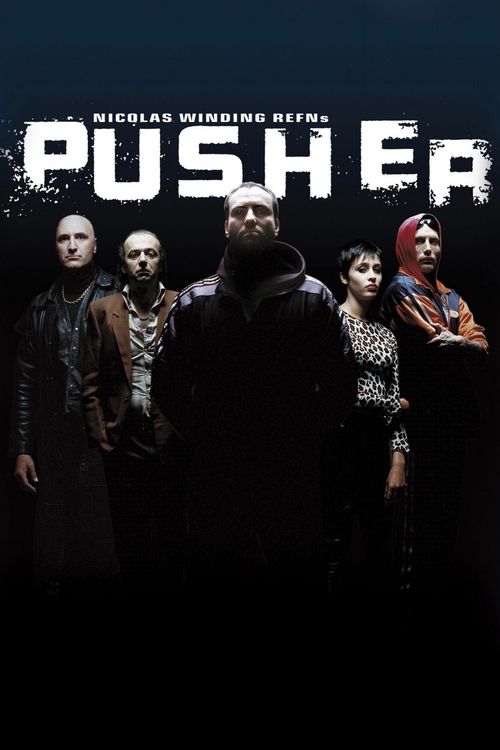



















Popular
What motivates Frank to get involved in drug dealing?
How does Frank's relationship with his friends affect his decisions throughout the film?
What role does Milo play in Frank's downfall?
How does Frank's emotional state evolve throughout the film?
What is the significance of the final confrontation between Frank and Milo?
Should I watch it?
Ask Your Own Question

What is the plot?
Sorry, we aren't able to watch and write up a full detailed plot yet. Check back in a few days.


What is the ending?
In the ending of "Pusher," Frank, the main character, finds himself in a desperate situation after a drug deal goes wrong. He is pursued by both the police and his debtors. In a frantic attempt to escape, he confronts his friend and dealer, who betrays him. Ultimately, Frank is left alone, isolated, and defeated, leading to a bleak conclusion where he is forced to confront the consequences of his choices.
As the film approaches its climax, Frank is in a state of panic. He has been unable to pay back the money he owes to his drug dealer, Milo, after a botched heroin deal. The pressure mounts as Milo's men threaten him, and Frank realizes that time is running out. He desperately seeks help from his friends, but they are either unwilling or unable to assist him.
In a pivotal scene, Frank meets with his friend, Tonny, who is also involved in the drug trade. Tonny, despite his loyalty, is unable to provide the financial support Frank needs. The tension between them is palpable, as Frank's desperation begins to strain their friendship. Frank's emotional state is one of fear and betrayal, as he feels increasingly isolated in his struggle.
As the night progresses, Frank's situation deteriorates. He is cornered by Milo's enforcers, who are relentless in their pursuit. In a moment of sheer desperation, Frank confronts Milo, hoping to negotiate a way out of his predicament. However, Milo's cold demeanor reveals that he has no intention of showing mercy. The confrontation escalates, and Frank realizes that he has no allies left.
In a final act of desperation, Frank attempts to escape the city. He is seen running through the streets, his face a mask of panic and despair. The city, once a place of opportunity, now feels like a prison closing in on him. He is pursued relentlessly, and the weight of his choices bears down on him.
The film culminates in a haunting scene where Frank is left alone, reflecting on his life and the choices that led him to this point. He is abandoned by those he thought were friends, and the reality of his situation sinks in. The emotional weight of his failure is palpable, and the film closes on a somber note, leaving Frank to confront the consequences of his actions in solitude.
In the end, Frank's fate is sealed by his choices. He is left with nothing but the stark realization of his isolation and the emptiness of his life. Tonny, who had been a potential ally, is also left to navigate his own path, but the bond between them is irrevocably damaged. Milo, having asserted his dominance, remains a powerful figure in the drug world, illustrating the harsh realities of the life they chose. The film ends with a sense of bleak inevitability, highlighting the destructive cycle of addiction and betrayal that defines Frank's existence.
Is there a post-credit scene?
The movie "Pusher," directed by Nicolas Winding Refn and released in 1996, does not have a post-credit scene. The film concludes with a tense and dramatic ending that encapsulates the struggles of the main character, Frank, as he navigates the dangerous underworld of Copenhagen. After a harrowing series of events, the film ends on a note of uncertainty and despair, leaving the audience with a lingering sense of Frank's precarious situation. The absence of a post-credit scene aligns with the film's gritty realism and the bleak nature of Frank's journey.
What motivates Frank to get involved in drug dealing?
Frank, a small-time drug dealer in Copenhagen, is primarily motivated by his need for quick cash to pay off a debt to his supplier, a dangerous figure named Milo. His desperation is compounded by his desire to maintain a certain lifestyle and to prove himself within the criminal underworld.
How does Frank's relationship with his friends affect his decisions throughout the film?
Frank's relationships with his friends, particularly with his best friend, are strained as the pressure of his debt mounts. His friends initially support him, but as the situation escalates, their loyalty is tested. Frank's decisions become increasingly reckless, driven by a mix of fear and the need to impress those around him.
What role does Milo play in Frank's downfall?
Milo serves as both a mentor and a looming threat in Frank's life. Initially, he appears to offer guidance, but as Frank's debt spirals out of control, Milo's true nature is revealed. He becomes a menacing figure, representing the consequences of Frank's choices and the unforgiving nature of the drug trade.
How does Frank's emotional state evolve throughout the film?
Frank's emotional state deteriorates as the film progresses. He begins as a confident, albeit reckless, dealer but quickly descends into panic and despair as he realizes the gravity of his situation. His fear of Milo and the consequences of his actions lead to moments of desperation, culminating in a sense of hopelessness.
What is the significance of the final confrontation between Frank and Milo?
The final confrontation between Frank and Milo is pivotal, symbolizing the culmination of Frank's choices and the inescapable consequences of his lifestyle. It is a moment of reckoning where Frank's earlier bravado is stripped away, revealing his vulnerability and the harsh reality of his situation, ultimately leading to a life-altering decision.
Is this family friendly?
"Pusher," produced in 1996, is not a family-friendly film. It contains several potentially objectionable or upsetting scenes and aspects that may be distressing for children or sensitive viewers.
-
Drug Use: The film revolves around the drug trade, featuring scenes of drug dealing, consumption, and the associated lifestyle, which may be disturbing.
-
Violence: There are intense scenes of violence, including physical confrontations and threats, which contribute to a tense atmosphere.
-
Strong Language: The dialogue includes frequent use of profanity and harsh language, reflecting the gritty nature of the characters and their environment.
-
Emotional Distress: The protagonist experiences significant emotional turmoil, including anxiety, desperation, and fear, which may be unsettling to watch.
-
Criminal Activity: The film portrays various illegal activities and the moral dilemmas faced by the characters, which may not be suitable for younger audiences.
-
Dark Themes: The overall tone of the film is bleak, exploring themes of betrayal, desperation, and the consequences of a life of crime, which can be heavy and distressing.
These elements contribute to a mature viewing experience, making "Pusher" inappropriate for children and potentially upsetting for sensitive viewers.







