
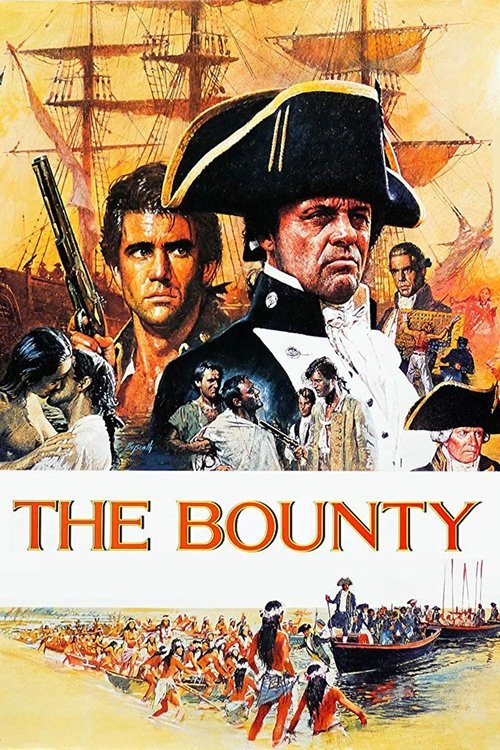






















Popular
What motivates Captain Bligh to pursue such harsh discipline aboard the Bounty?
How does Fletcher Christian's relationship with Captain Bligh evolve throughout the film?
What are the key events that lead to the mutiny on the Bounty?
What role does the Tahitian culture play in the story of The Bounty?
How does the film depict the aftermath of the mutiny for both Bligh and Christian?
Should I watch it?
Ask Your Own Question

What is the plot?
Sorry, we aren't able to watch and write up a full detailed plot yet. Check back in a few days.




What is the ending?
In the ending of "The Bounty," Captain William Bligh and his loyal crew return to England after the mutiny on the HMS Bounty. Bligh faces a court-martial for the loss of the ship, while Fletcher Christian and the mutineers settle on Pitcairn Island, where they attempt to build a new life. The film concludes with a sense of unresolved tension, as the fates of the characters diverge dramatically.
As the film approaches its climax, the tension aboard the HMS Bounty reaches a boiling point. Captain William Bligh, portrayed with a stern demeanor, is increasingly isolated from his crew due to his harsh leadership style. The crew, led by Fletcher Christian, grows discontented with Bligh's authoritarian approach, which culminates in a fateful decision.
In a pivotal scene, the mutiny occurs under the cover of night. Christian, played with a mix of resolve and desperation, leads the crew against Bligh. The confrontation is fraught with emotion, as Christian grapples with his loyalty to Bligh and his desire for freedom. The crew, fueled by a mix of fear and anger, ultimately sides with Christian, overpowering Bligh and his loyalists. Bligh is cast adrift in a small boat with a handful of men, a moment that encapsulates his fall from power and the crew's rebellion against tyranny.
The narrative then shifts to Bligh's harrowing journey across the ocean. He demonstrates remarkable resilience and leadership as he navigates the treacherous waters, ultimately returning to England after a grueling ordeal. His arrival is met with skepticism and scrutiny, leading to a court-martial where he must defend his actions. The tension in the courtroom is palpable as Bligh, determined to clear his name, recounts the events leading to the mutiny. His steadfast demeanor contrasts sharply with the chaos that unfolded aboard the Bounty.
Meanwhile, on Pitcairn Island, Christian and the mutineers attempt to forge a new life. The lush, tropical landscape serves as both a paradise and a prison for the group. Initially, there is a sense of hope and camaraderie among the mutineers as they establish their settlement. However, the emotional weight of their actions begins to take its toll. Christian, haunted by the consequences of the mutiny, struggles with guilt and the burden of leadership. The idyllic setting becomes a backdrop for internal conflict, as the group grapples with their past and the reality of their new existence.
As time passes, the dynamics among the mutineers shift. Tensions rise, leading to conflicts that threaten their fragile community. The once-unified group begins to fracture, revealing the complexities of human nature when faced with freedom and responsibility. Christian's internal struggle deepens, and he becomes increasingly isolated, reflecting on the choices that led them to this remote island.
The film concludes with a poignant sense of ambiguity. Bligh's fate remains uncertain as he faces the consequences of his leadership, while Christian's journey on Pitcairn Island hints at both the promise and peril of rebellion. The final scenes leave the audience with a lingering sense of unresolved conflict, emphasizing the themes of authority, freedom, and the human condition. Each character's fate is intertwined with the choices they made, leaving a lasting impact on their lives and the lives of those around them.
Is there a post-credit scene?
The movie "The Bounty," produced in 1984, does not have a post-credit scene. The film concludes with the resolution of the conflict between Captain William Bligh and the mutineers led by Fletcher Christian. After the dramatic events unfold, the story wraps up without any additional scenes or epilogues during or after the credits. The focus remains on the historical narrative and the characters' fates, leaving the audience with a sense of closure regarding the tumultuous events depicted in the film.
What motivates Captain Bligh to pursue such harsh discipline aboard the Bounty?
Captain Bligh, portrayed by Anthony Hopkins, is driven by a strict adherence to naval discipline and a desire to maintain order among his crew. His experiences and the pressures of command lead him to believe that only through severe discipline can he ensure the ship's success and the safety of the crew during their perilous journey.
How does Fletcher Christian's relationship with Captain Bligh evolve throughout the film?
Fletcher Christian, played by Mel Gibson, begins as a loyal officer under Bligh's command, but as the voyage progresses, he becomes increasingly disillusioned with Bligh's tyrannical leadership style. The turning point comes when Bligh's cruelty escalates, leading Christian to question his own loyalty and ultimately to lead the mutiny against Bligh.
What are the key events that lead to the mutiny on the Bounty?
The mutiny is precipitated by a series of escalating tensions aboard the ship, including Bligh's brutal treatment of the crew, particularly after the flogging of a sailor for minor infractions. The crew's growing resentment culminates in a pivotal moment when Christian, witnessing Bligh's harshness, decides to take action, rallying the crew to seize control of the ship.
What role does the Tahitian culture play in the story of The Bounty?
The Tahitian culture significantly influences the crew's decision to mutiny. After arriving in Tahiti, the crew experiences a stark contrast to Bligh's oppressive rule, finding freedom and a sense of community among the Tahitians. This newfound way of life, along with Christian's romantic involvement with a Tahitian woman, deepens the crew's discontent with Bligh and motivates their rebellion.
How does the film depict the aftermath of the mutiny for both Bligh and Christian?
After the mutiny, Bligh is cast adrift with a loyal group of men, showcasing his resilience as he navigates the treacherous waters back to England. Meanwhile, Christian and the mutineers settle in Tahiti, but they face internal conflicts and the consequences of their rebellion, leading to a sense of unease and regret as they grapple with their choices and the impact on their lives.
Is this family friendly?
The Bounty (1984) is a historical drama that contains several elements that may not be suitable for children or sensitive viewers. Here are some potentially objectionable or upsetting aspects:
-
Violence and Conflict: The film depicts mutiny and rebellion aboard a ship, which includes scenes of physical confrontations, threats, and the harsh realities of naval life in the 18th century.
-
Death and Suffering: There are moments that involve the death of characters, which can be intense and emotionally charged, showcasing the brutality of life at sea and the consequences of the mutiny.
-
Harsh Treatment: The film portrays the strict discipline and harsh treatment of sailors, including punishment and the psychological strain of leadership conflicts, which may be distressing.
-
Mature Themes: The story explores themes of loyalty, betrayal, and moral dilemmas, which may be complex for younger audiences to fully grasp.
-
Emotional Turmoil: Characters experience significant emotional struggles, including feelings of isolation, guilt, and despair, which may resonate deeply and be upsetting for some viewers.
Overall, while The Bounty is a visually stunning film with rich storytelling, its mature themes and intense scenes may not be appropriate for younger audiences or those sensitive to such content.









