
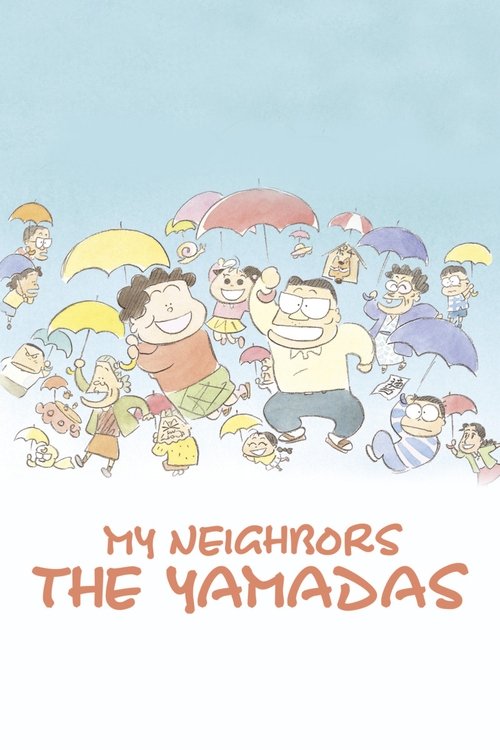






Popular
What are the main characteristics of the Yamada family members?
How does the Yamada family deal with everyday challenges?
What role does the grandmother play in the Yamada family?
What are some specific humorous situations the Yamada family finds themselves in?
How does the film portray the relationship between Takashi and Matsuko?
Should I watch it?
Ask Your Own Question

What is the plot?
Sorry, we aren't able to watch and write up a full detailed plot yet. Check back in a few days.
More Movies Like This
Browse All Movies →




What is the ending?
In the ending of "My Neighbors the Yamadas," the family continues to navigate their everyday life, filled with small joys and challenges. The film concludes with a sense of warmth and acceptance of the mundane aspects of life, emphasizing the importance of family bonds and the beauty found in ordinary moments.
As the film approaches its conclusion, we see the Yamada family engaged in their typical daily routines. The scenes shift between various family members, showcasing their interactions and the small, humorous conflicts that arise. The father, Takashi, is often seen trying to maintain a sense of order amidst the chaos of family life, while the mother, Matsuko, balances her responsibilities with a sense of humor and resilience.
In one poignant scene, the family gathers for a meal, and the atmosphere is filled with laughter and light-hearted banter. This moment encapsulates the essence of their relationships, highlighting the love and support they share despite their differences and occasional disagreements. The children, Noboru and Nonoko, display their unique personalities, with Noboru often being the more serious and studious one, while Nonoko embodies a playful and carefree spirit.
As the film progresses, we witness the family dealing with various life events, such as school challenges, neighborhood interactions, and the ups and downs of daily life. Each character faces their own struggles, but they ultimately find comfort in each other's company. The film emphasizes the idea that life is not always perfect, but the bonds of family can help navigate through the complexities of everyday existence.
In the final scenes, the Yamada family is shown enjoying a day out together, reinforcing the theme of cherishing simple moments. The film closes with a montage of their life, filled with laughter, love, and the occasional mishap, leaving the audience with a sense of warmth and the understanding that family is a source of strength and joy, even in the face of life's challenges. Each character, from Takashi and Matsuko to Noboru and Nonoko, finds their place within the family dynamic, illustrating the importance of togetherness and acceptance in the journey of life.
Is there a post-credit scene?
My Neighbors the Yamadas does not have a post-credit scene. The film concludes with a series of vignettes that encapsulate the everyday life and humorous misadventures of the Yamada family. The final moments of the film focus on the warmth and chaos of family life, leaving viewers with a sense of nostalgia and connection to the characters. The film's style emphasizes the simplicity and beauty of ordinary moments, rather than setting up for any additional scenes after the credits.
What are the main characteristics of the Yamada family members?
The Yamada family consists of several distinct characters, each with their own unique traits. Takashi Yamada, the father, is often portrayed as a laid-back and somewhat lazy individual who enjoys his leisure time. His wife, Matsuko, is more practical and responsible, often managing the household and dealing with the family's day-to-day issues. Their teenage son, Noboru, is depicted as a typical high school student, struggling with his studies and social life, while their daughter, Nonoko, is a playful and imaginative young girl who often gets into mischief. The family also includes the grandmother, who provides wisdom and humor, adding depth to the family dynamic.
How does the Yamada family deal with everyday challenges?
The Yamada family faces various everyday challenges that are depicted in a humorous and relatable manner. For instance, they deal with financial issues, household chores, and the pressures of school life. Each family member contributes to solving these problems in their own way, often leading to comedic situations. For example, Takashi's attempts to avoid work lead to humorous consequences, while Matsuko's efforts to keep the family organized often clash with the more carefree attitudes of her husband and children.
What role does the grandmother play in the Yamada family?
The grandmother in the Yamada family serves as a source of wisdom and comic relief. She often provides insights into family matters and offers advice based on her life experiences. Her character adds a generational perspective to the family's dynamics, and her interactions with the younger members often highlight the differences in values and lifestyles. Her presence is comforting, and she often reflects on the past, providing a sense of continuity and tradition within the family.
What are some specific humorous situations the Yamada family finds themselves in?
The Yamada family encounters numerous humorous situations throughout the film. One notable scene involves Takashi trying to fix a leaky faucet, which leads to a series of mishaps that create a bigger mess. Another comedic moment occurs when Noboru attempts to impress a girl at school, resulting in embarrassing and awkward situations. Nonoko's imaginative play often leads to misunderstandings with her parents, showcasing the lighthearted chaos of family life. These moments are depicted with a blend of humor and warmth, emphasizing the family's bond.
How does the film portray the relationship between Takashi and Matsuko?
The relationship between Takashi and Matsuko is portrayed as a blend of love, frustration, and humor. They often bicker over household responsibilities, with Matsuko taking on the role of the more responsible partner while Takashi tends to be more carefree and laid-back. Despite their differences, their interactions reveal a deep affection for one another, as they navigate the ups and downs of family life together. Their dynamic captures the essence of a long-term marriage, filled with both challenges and tender moments.
Is this family friendly?
"My Neighbors the Yamadas" is generally considered a family-friendly film, showcasing the everyday life of a Japanese family with humor and warmth. However, there are a few scenes and aspects that might be considered potentially objectionable or upsetting for children or sensitive viewers:
-
Family Conflicts: The film depicts various family disagreements and misunderstandings, which may resonate with children who are sensitive to conflict or emotional tension.
-
Parental Stress: The parents, particularly the mother, experience moments of frustration and anxiety related to parenting and household responsibilities, which could be relatable but might also evoke feelings of discomfort in sensitive viewers.
-
Death and Loss: There are subtle references to aging and the passing of time, including scenes that touch on the themes of loss and mortality, which may be difficult for younger audiences to process.
-
Social Commentary: Some segments include light social commentary on societal expectations and pressures, which might be confusing for younger viewers who do not yet grasp these concepts.
-
Visual Humor: The film employs a unique animation style that includes exaggerated expressions and situations, which may be jarring for some viewers, though it is intended to be humorous.
Overall, while the film is light-hearted and comedic, these elements may require parental guidance for younger audiences to help contextualize the themes presented.









