
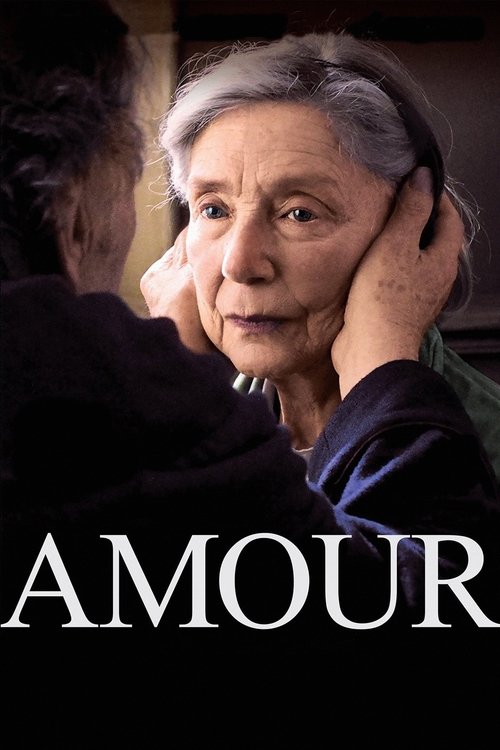

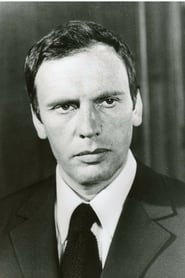














Popular
What health condition does Anne suffer from in the movie Amour?
How does Georges react to Anne's initial stroke in Amour?
What is the significance of the piano in Amour?
How does the relationship between Georges and Anne evolve after her stroke?
What role does the character of the daughter, Eva, play in Amour?
Should I watch it?
Ask Your Own Question

What is the plot?
Amour (2012): Complete Plot Narrative
The film opens with a devastating image that will haunt everything that follows. Firefighters breach the door of a Paris apartment after residents complain of a nauseating smell emanating from within. They search the elegant rooms and discover an elderly woman's corpse lying in the bedroom, her body adorned with cut flowers in a gesture of final tenderness. This opening establishes the film's tragic arc before revealing how this moment came to pass.
The narrative then retreats into the past, introducing us to Georges and Anne, both retired piano teachers in their eighties who have built a life of quiet refinement and deep companionship. They inhabit a spacious, cultured Paris apartment that reflects decades of devotion to music and intellectual pursuits. Their days are structured around the rituals of their shared existence--attending concerts, maintaining their home, and enjoying the companionship that has sustained them through a lifetime together.
One evening, they attend a piano performance by Alexandre, one of Anne's former pupils, demonstrating their continued engagement with the musical world and their pride in their students' accomplishments. After the performance, they return home to discover that someone has attempted to break into their apartment, a minor violation that troubles their sense of security but does not fundamentally alter their peaceful existence.
That night in bed, Georges stirs and finds Anne sitting upright in the darkness, staring into space with a look of profound confusion on her face. It is a warning sign, a moment of inexplicable disconnection that foreshadows the catastrophe about to unfold.
The next morning arrives with deceptive normalcy. Georges and Anne sit together at their breakfast table, engaged in their daily ritual. But as they eat, something shifts. Anne does not respond to Georges's questions. She stares into space, seemingly inhabiting another world entirely, her body rigid and unresponsive. Georges panics as he realizes what is happening--Anne has suffered a stroke.
She sits in a catatonic state, not responding to him as he moves toward the telephone to call for help. But then, as Georges is about to summon emergency services, Anne comes around, regaining some consciousness. However, she has no memory of the stroke occurring, no awareness of the minutes that have passed in terrifying silence. Georges attempts to persuade her to seek medical attention, but Anne resists, unwilling to acknowledge the severity of what has happened. It is only when Anne discovers she cannot pour herself a drink--when her body fails to obey the simplest command--that the reality becomes undeniable.
Anne is admitted to the hospital, where she undergoes treatment for her stroke. The experience is traumatic for her. The institutional environment, the loss of privacy, the indignity of medical procedures--all of it strips away her sense of self and autonomy. When she returns home, she makes a desperate demand of Georges: "Promise me something. Please never take me back to the hospital." Anne's plea is not merely about avoiding medical facilities; it is about preserving her dignity, about maintaining control over her own body and fate in the face of its betrayal.
Georges, devoted to his wife of decades, makes the promise. He commits himself to caring for Anne at home, to honoring her wishes even as her condition deteriorates. This promise becomes the emotional and moral center of everything that follows.
The stroke has left Anne's right side paralyzed. Her condition does not stabilize or improve; instead, it progressively worsens. Several months pass, and Anne suffers a second stroke that leaves her demented and incapable of coherent speech. The woman Georges married--articulate, cultured, vibrant--begins to disappear, replaced by someone trapped in a failing body, unable to communicate her thoughts or control her own functions.
Georges begins employing a nurse three days a week to assist with Anne's care. He lifts her onto the bed, assists her to the bathroom, helps her with the most intimate bodily functions. The physical labor is exhausting, but the emotional toll is far greater. He watches the woman he loves slip further away with each passing day.
Their daughter, Eva, who lives abroad, visits periodically and witnesses her mother's decline. Eva urges her father to place Anne in professional care, to allow trained medical staff to handle her mother's needs. But Georges refuses, insisting that he will not break the promise he made to Anne. Eva does not argue further, but she reveals something profound: as a child, she listened to her parents making love, and in those moments, she understood the depth of their connection. She knew, with absolute certainty, that they were truly in love and would remain together forever.
The strain of caregiving intensifies Georges's emotional state. He employs a second nurse, but when he discovers that she is mistreating Anne--handling her roughly, showing her disrespect--he fires her immediately. His protective fury is absolute; no one will harm Anne while he draws breath.
Yet Georges himself begins to fracture under the weight of his burden. One day, as Anne refuses to eat or drink, as she resists his attempts to sustain her life, something breaks inside him. In a moment of devastating frustration and despair, Georges slaps Anne. The act is born not from cruelty but from the impossible tension of the situation--his frustration that she will not cooperate, his anguish over what her refusal represents about her continuing decline, his helplessness in the face of her suffering. Immediately, he realizes what he has done. He apologizes, his remorse immediate and profound. But the moment has revealed the horrifying truth: old age contorts not only the elderly but also those who love them, transforming them into versions of themselves they do not recognize.
A former pupil visits the apartment, eager to express his gratitude for Anne's teaching and to play piano for his beloved instructors. He performs beautifully, and afterward, he asks Anne what has happened to her, what has caused this change in her. Anne responds with irritation: "Mind your own business." The camera captures a moment of heartbreaking irony--Anne sitting behind the piano, beautiful music playing, but her hands are not visible, cannot move, cannot create the sounds that once defined her existence. Georges reaches out and turns off the tape recorder, and the music stops. Reality reasserts itself: Anne can no longer play.
As weeks and months pass, Anne's condition reaches a nadir of suffering and confusion. She no longer has control over her own mind or body. She cries out repeatedly, over and over, the word "mal"--pain, badness, suffering in French. Her utterances are not coherent speech but expressions of pure anguish, the only communication left to her. She exists in a state of profound dependency, unable to perform any function without Georges's assistance, unable to express her thoughts or desires, trapped in a body that no longer obeys her will.
Both Georges and Anne reach an awareness that they have arrived at an impasse, that they have come to a point where something decisive must occur, where the current state of existence cannot continue. The film does not explicitly state what this realization entails, but it hangs in the air between them like an unspoken agreement.
Then comes the climactic moment. During one of Anne's episodes of confusion and pain, when she is less lucid and crying out in distress, Georges calms her with a story from his childhood. He tells her about attending summer camp as a boy, about an agreement he made with his mother to send her coded postcards that would disclose whether he was enjoying the experience. It is an intimate moment of connection, a final gift of tenderness and presence. He is telling her a story about love, about communication, about the bonds that endure across distance and time.
This long monologue, this final act of intimate connection, presages the imminent twist that will define the film's ending. The climax arrives almost unexpectedly, yet it has been building throughout the entire narrative. It is described as cruel and painful, yet also incredibly full of love. It shocks and devastates, yet it moves those who witness it.
The film circles back to its opening image: the discovery of Anne's corpse in the bedroom, adorned with cut flowers. The flowers are not a sign of violence or desecration but of reverence, of final respect. The narrative structure reveals that Georges has fulfilled his promise to Anne in the most final way possible. Rather than allow her to continue suffering in her deteriorated state, rather than break his vow to keep her from the hospital by allowing her condition to necessitate institutional care, Georges has chosen to end her suffering himself.
The act is presented not as murder but as an expression of the deepest love--a man so devoted to his wife that he cannot bear to watch her suffer, so committed to honoring her wishes that he takes the ultimate step to preserve her dignity. The film does not show the act itself; it only shows the aftermath, the body adorned with flowers, the final tableau of a love that transcended even death.
The narrative structure--opening with the discovery and then revealing how that moment came to pass--transforms what could be a simple tragedy into a meditation on love, commitment, aging, and the impossible choices that confront us when those we love face unbearable suffering. Georges's act is simultaneously horrifying and deeply moving, a testament to decades of devotion and an acknowledgment that sometimes the greatest act of love is to end suffering rather than prolong it.
The film ends as it began, with that image of the corpse adorned with flowers, but now the viewer understands the full weight of what that image represents: not death, but love; not abandonment, but the ultimate keeping of a promise; not cruelty, but compassion in its most extreme and devastating form.







What is the ending?
In the ending of "Amour," Georges, after struggling to care for his ailing wife Anne, ultimately decides to end her suffering. He smothers her with a pillow, and afterward, he is left in a state of profound grief. The film concludes with Georges sitting in their apartment, reflecting on their life together, before he ultimately succumbs to his own despair.
As the film approaches its conclusion, the atmosphere in the apartment grows increasingly heavy with the weight of Anne's deteriorating condition. Georges, played by Jean-Louis Trintignant, has been tirelessly caring for his wife, Anne, portrayed by Emmanuelle Riva, who has suffered a debilitating stroke. The once vibrant couple, who shared a deep love and passion for life, now face the harsh realities of aging and illness.
In a poignant scene, Georges watches Anne as she sits in her wheelchair, her body frail and her spirit dimmed. He tries to engage her, reminiscing about their past, but Anne's responses are limited, and her eyes often reflect a deep sadness. The emotional toll on Georges is palpable; he is both devoted and exhausted, caught in a cycle of love and despair.
As Anne's condition worsens, she becomes increasingly frustrated with her inability to communicate and perform basic tasks. In a particularly heart-wrenching moment, she expresses her desire to die, a sentiment that resonates deeply with Georges. He is torn between his love for her and the unbearable pain of watching her suffer. The couple's bond is tested as they navigate the complexities of love, dignity, and the right to choose one's fate.
In the final act, after a particularly distressing episode where Anne is bedridden and unresponsive, Georges makes a harrowing decision. He gently places a pillow over her face, a moment filled with both tenderness and tragedy. This act is not one of violence but rather a desperate attempt to free her from her suffering. As he does this, the camera captures the depth of his sorrow, the tears streaming down his face, revealing the profound love that drives him to such a heartbreaking choice.
Afterward, Georges is left alone in the apartment, surrounded by memories of their life together. He sits in silence, reflecting on the love they shared, the music they enjoyed, and the life they built. The emptiness of the space echoes the loss he feels. The film closes with Georges sitting in the same chair where he often watched Anne, a haunting reminder of their shared existence now turned solitary.
In the end, Georges is left to grapple with his grief and the weight of his decision. The film leaves viewers with a lingering sense of the complexities of love, loss, and the human condition, encapsulating the profound emotional journey of both characters.
Is there a post-credit scene?
The movie "Amour," directed by Michael Haneke and released in 2012, does not have a post-credit scene. The film concludes with a poignant and emotional ending that encapsulates the themes of love, aging, and loss. After the credits roll, there are no additional scenes or content. The focus remains on the powerful narrative and the deep connection between the characters, Georges and Anne, throughout the film.
What health condition does Anne suffer from in the movie Amour?
Anne suffers from a stroke, which leads to her gradual decline in health and mobility throughout the film.
How does Georges react to Anne's initial stroke in Amour?
Georges is deeply concerned and devoted, showing a mix of fear and determination as he cares for Anne, trying to maintain her dignity and comfort.
What is the significance of the piano in Amour?
The piano symbolizes Anne's past life as a music teacher and her love for music, which becomes a poignant reminder of her former self as her health deteriorates.
How does the relationship between Georges and Anne evolve after her stroke?
After Anne's stroke, their relationship becomes increasingly strained as Georges struggles with the emotional and physical demands of caregiving, while Anne grapples with her loss of independence.
What role does the character of the daughter, Eva, play in Amour?
Eva, their daughter, represents a connection to the outside world and expresses concern for her parents, but her visits also highlight the generational divide and the emotional burden of the situation.
Is this family friendly?
"Amour," directed by Michael Haneke, is not considered family-friendly due to its mature themes and emotional intensity. The film deals with the complexities of aging, illness, and the profound impact of love in the face of suffering.
Potentially objectionable or upsetting aspects include:
-
Depictions of Illness: The film portrays the physical and mental decline of an elderly character, which may be distressing for viewers, especially children or sensitive individuals.
-
Emotional Turmoil: The characters experience deep emotional pain, including sadness, frustration, and despair, which can be heavy and difficult to watch.
-
Confrontation with Death: Themes surrounding mortality and the process of dying are central to the narrative, leading to scenes that may evoke strong feelings of grief.
-
Intimate Caregiving: The film includes scenes of intimate caregiving that highlight the challenges and struggles of caring for a loved one with severe health issues, which may be uncomfortable for some viewers.
-
Isolation and Loneliness: The emotional isolation experienced by the characters can be poignant and may resonate deeply, potentially leading to feelings of sadness.
Overall, the film's exploration of love and loss is profound but may not be suitable for younger audiences or those who are sensitive to such themes.









