
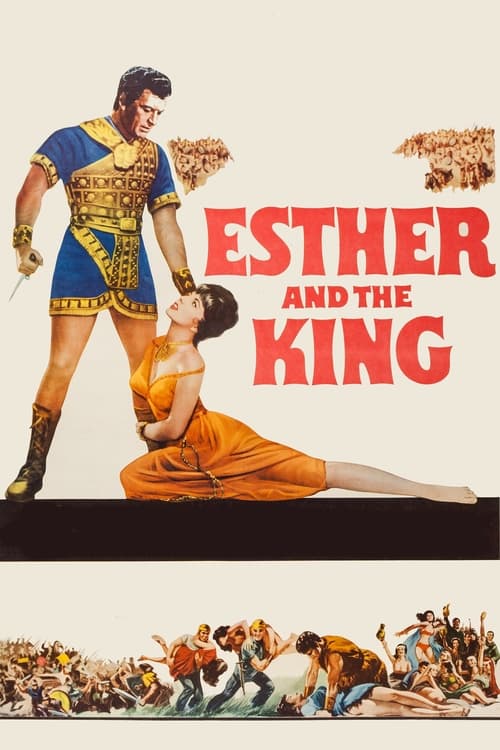


Popular
What motivates Esther to approach King Xerxes despite the risks involved?
How does Haman's character evolve throughout the film?
What role does Mordecai play in Esther's journey and the overall plot?
What are the consequences of Esther revealing her Jewish identity to King Xerxes?
How does the relationship between Esther and King Xerxes develop throughout the film?
Should I watch it?
Ask Your Own Question

What is the plot?
Sorry, we aren't able to watch and write up a full detailed plot yet. Check back in a few days.








What is the ending?
In the ending of "Esther and the King," Esther reveals her Jewish identity to King Xerxes, risking her life to save her people from Haman's plot. The king, enraged by Haman's treachery, orders Haman to be executed. Esther's bravery leads to the salvation of the Jewish people, and she is celebrated for her courage.
As the film approaches its climax, the tension builds in the royal palace. Esther, played by Joan Collins, is torn between her love for King Xerxes and her loyalty to her people. The scene is set in the opulent throne room, where the atmosphere is thick with anticipation. Esther, dressed in her royal finery, stands before the king, her heart racing as she prepares to reveal her true identity. The camera captures her anxious expression, reflecting her internal struggle.
In a moment of courage, she steps forward and addresses Xerxes, her voice steady despite the fear coursing through her. "Your Majesty," she begins, "I am a Jew, and my people are in grave danger." The king's expression shifts from curiosity to shock as he processes her words. The audience can feel the weight of her revelation, knowing that she risks everything for the sake of her people.
The scene transitions to Haman, who is lurking in the shadows, his face contorted with malice. He had plotted against the Jews, and now, with Esther's confession, his treachery is laid bare. The camera cuts back to Xerxes, who is visibly angered by Haman's deceit. The tension in the room escalates as the king demands to know more about Haman's plans. Esther, with a mix of fear and determination, recounts how Haman sought to annihilate her people, painting a vivid picture of the impending doom.
Xerxes, now furious, turns to Haman, his voice booming with authority. "You will pay for your treachery!" he declares. The audience can feel the shift in power as Haman realizes he is no longer in control. The king orders Haman to be executed, and the guards swiftly seize him, dragging him away as he protests his innocence. The camera lingers on Esther's face, a mixture of relief and sorrow, knowing that justice has been served but at a great cost.
In the final scenes, the atmosphere shifts to one of celebration. The Jewish people, once facing annihilation, are now safe. Esther is hailed as a heroine, her bravery celebrated throughout the kingdom. The film closes with a grand feast, where Esther and Xerxes share a moment of connection, their bond strengthened by the trials they have faced. The camera captures their smiles, a symbol of hope and unity.
As the credits roll, the fates of the main characters are clear: Esther emerges as a powerful figure, having saved her people and solidified her place in history. Xerxes, transformed by love and loyalty, stands by her side, while Haman meets his demise, a cautionary tale of betrayal and greed. The film concludes with a message of courage, love, and the importance of standing up for what is right, leaving the audience with a sense of closure and inspiration.
Is there a post-credit scene?
The movie "Esther and the King," produced in 1960, does not contain a post-credit scene. The film concludes with the resolution of its central narrative, focusing on Esther's rise to become queen and her courageous actions to save her people from destruction. The ending emphasizes themes of faith, bravery, and the importance of standing up against tyranny, leaving the audience with a sense of closure regarding Esther's journey and the fate of the Jewish people in Persia.
What motivates Esther to approach King Xerxes despite the risks involved?
Esther is driven by a deep sense of duty and love for her people, the Jews, who are facing annihilation due to Haman's decree. Her internal conflict is palpable as she grapples with the fear of approaching the king uninvited, which could lead to her death. However, her determination to save her people ultimately propels her to take this dangerous step.
How does Haman's character evolve throughout the film?
Haman begins as a powerful and ambitious advisor to King Xerxes, filled with pride and a desire for recognition. His character takes a dark turn as his hatred for Mordecai, who refuses to bow to him, leads him to plot the extermination of the Jews. As his schemes unravel, Haman's arrogance transforms into desperation, culminating in his downfall, which is both tragic and ironic.
What role does Mordecai play in Esther's journey and the overall plot?
Mordecai serves as Esther's guardian and mentor, instilling in her the values of courage and loyalty to her people. His refusal to bow to Haman sets off a chain of events that leads to the edict against the Jews. Mordecai's unwavering faith and guidance empower Esther to confront the king, making him a pivotal figure in her transformation from a passive participant to an active savior.
What are the consequences of Esther revealing her Jewish identity to King Xerxes?
When Esther reveals her Jewish identity to King Xerxes, it is a moment of profound bravery that shifts the power dynamics in the court. This revelation not only puts her own life at risk but also serves as a catalyst for the king to reconsider Haman's plot against the Jews. The emotional weight of this moment underscores Esther's sacrifice and the potential for change, as it ultimately leads to Haman's downfall and the salvation of her people.
How does the relationship between Esther and King Xerxes develop throughout the film?
Initially, Esther is fearful and hesitant around King Xerxes, aware of the dangers of her position. However, as she gains confidence and reveals her true identity, their relationship deepens. Xerxes comes to respect and love Esther for her bravery and intelligence, which contrasts with Haman's manipulative nature. Their evolving relationship highlights themes of trust and loyalty, culminating in Xerxes' decision to protect the Jews at Esther's urging.
Is this family friendly?
"Esther and the King," produced in 1960, is generally considered family-friendly, but it does contain some scenes and themes that may be sensitive for children or those who are particularly sensitive. Here are a few aspects to consider:
-
Violence and Conflict: The film includes scenes of conflict and battle, which may depict violence, including sword fighting and the aftermath of war. These scenes are not graphic but may be intense for younger viewers.
-
Emotional Turmoil: Characters experience significant emotional distress, including fear, betrayal, and the weight of responsibility. Esther, in particular, faces moments of deep anxiety and moral dilemmas that may be heavy for some viewers.
-
Themes of Oppression: The story involves themes of oppression and persecution, particularly regarding the Jewish people. This may lead to discussions about discrimination and injustice that could be upsetting for sensitive viewers.
-
Romantic Tension: There are romantic elements in the film, including Esther's relationship with King Xerxes, which may include moments of longing and emotional complexity.
-
Sacrifice and Courage: The film highlights themes of sacrifice and the courage to stand up against tyranny, which, while ultimately positive, may evoke strong emotions related to loss and bravery.
Overall, while the film is suitable for a family audience, parents may want to consider these elements when deciding if it is appropriate for their children.