






















Popular
What motivates Cain to seek revenge after his release from prison?
How does Cain's relationship with his brother influence the story?
What role does the character of the bartender play in Cain's journey?
How does Cain's past influence his actions during the film?
What is the significance of the fight scenes in relation to Cain's character development?
Should I watch it?
Ask Your Own Question

What is the plot?
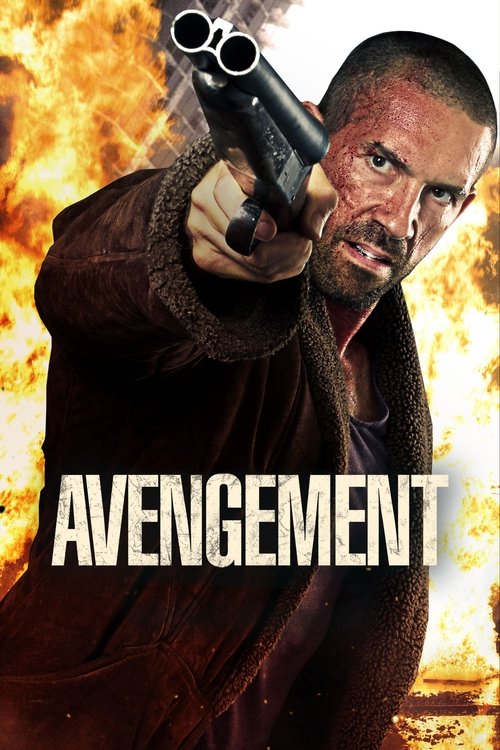
Cain Burgess is being hauled by police to a hospital when the day that will define the rest of his life begins to unravel. He is on a brief furlough from prison to see his dying mother, but he arrives too late; by the time he gets there, she is already dead. The scene is brutally quiet in the way only a hospital deathbed can be, and Cain's grief lands as a cold, dangerous stillness rather than a cry. He looks at her corpse, realizes the last thing he came back for has slipped beyond his reach, and something in him snaps. Instead of accepting the escort back to custody, he turns on the officers, overpowers them, and escapes into the city.
He heads straight for a private bar tied to his brother Lincoln Burgess's criminal business. This place is not just a pub; it is a nest of loan sharks, muscle, and street-level fear, the kind of room where criminal loyalty is measured in silence and violence. Cain enters by attacking the bouncers at the door, forcing his way inside with the blunt certainty of a man who no longer expects mercy. Inside, he is met by barmaid Bez and a handful of patrons, including a loudmouth named Tune, who is bragging about how an unknown attacker killed a gangster named Rook. Cain laughs at the story, cutting through the room's swagger with contempt, and immediately puts himself at odds with everyone there. He claims he is a friend of Lincoln, provokes Tune and the others, and the tension spikes into a brawl.
The fight does not last long before Cain reaches into the violence and produces a double-barrelled sawed-off shotgun. The weapon changes the entire atmosphere of the bar in an instant. The room freezes, the patrons become captives, and Cain takes control not merely by force but by performance. He is not here to escape; he is here to stage a reckoning. Lincoln's lieutenant, Hyde, soon arrives and recognizes Cain as Lincoln's younger brother, confirming to everyone in the room that this is no random madman but someone with intimate ties to the criminal empire behind the pub. The hostage situation becomes something colder and more personal: a family dispute turned public trial.
Cain begins talking, and the bar becomes his courtroom. He explains that he is waiting for Lincoln, and while he waits, he begins telling the story of how he ended up ruined, imprisoned, and changed into the killer now holding them at gunpoint. The narrative shifts into flashback, and the film starts revealing the truth in layers. Cain is not a simple thug who randomly rose through crime. He once wanted something more legitimate, some path away from the street life that surrounded him, but he turns to Lincoln for financial help and gets pulled into Lincoln's world of scams and manipulation. Lincoln does not help him out of generosity. Instead, he uses Cain as a tool in one of his confidence tricks, sending him to rob a "mark" who has collected a package from one of Lincoln's associates.
Cain steals the package from a middle-aged woman and is chased through the streets. The pursuit turns tragic when the woman is struck and killed by an oncoming car during the chase. That death is the first major irreversible consequence of Lincoln's corruption, and it becomes the legal hook that destroys Cain's life. He is arrested and charged with manslaughter. What looks at first like an unfortunate botched job is only the beginning of the betrayal. The flashback makes clear that Cain's conviction is tied to Lincoln's scheme, not to some clean act of criminal intent. The package, the chase, and the woman's death are all part of the machinery that drags Cain into the prison system.
Prison is where Cain is remade. The film emphasizes that he spends years under constant attack, being beaten and brutalized until his body and mind become harder than they were before. The prison is not a background detail; it is the forge that creates the version of Cain now sitting in the bar. Every assault, every humiliation, and every act of survival strips him down and rebuilds him into someone who can endure pain and return it with interest. His face bears the consequences of that transformation, and the sources repeatedly describe him as physically altered by the time he escapes. He has lost teeth, skin, innocence, and any illusion that justice will come from outside the system.
The deeper revelation is that Lincoln never merely exploited Cain; he also set him up. Cain spends seven years in prison dreaming of release and revenge, only to learn that Lincoln put a hit on him because of a rumor that Cain had grassed on the family business. The accusation is enough. Lincoln does not need proof. He cannot tolerate the damage to his image or the shame of even the possibility that his younger brother might have talked. In Lincoln's world, respect is worth more than truth, and reputation is treated as a currency that can justify murder. Cain's fury grows out of that realization. He was not just sacrificed to a scheme; he was condemned because Lincoln cared more about what people thought than whether Cain was guilty.
Back in the bar, Cain continues to expose the truth while his captives listen, trapped between fear and disbelief. He is not simply telling a story; he is using it as a weapon. Every detail is meant to strip Lincoln's men of their certainty and force them to witness the rot at the center of the Burgess family business. The mood inside the pub grows tighter with every sentence. The patrons are no longer just hostages; they are an audience, and Cain is making them watch the collapse of a criminal dynasty from the inside. He reveals that Lincoln's operation is built on scams that bait desperate marks into becoming bagmen, a system designed to trap ordinary people in debt and exploitation. Detective O'Hara later explains the mechanics of that scam, making clear that Lincoln's empire is one of manipulation rather than brute force alone.
As Cain tells his story, the bar fills with the pressure of waiting. Lincoln has still not arrived, but his men are there, and the room is beginning to split into factions of loyalty and survival. Eventually the tension breaks, and Lincoln's people attack Cain. Bez is drawn into the violence, and the hostage scene transforms into a savage melee. Cain fights with the ferocity of a man who has spent years imagining this exact moment. He takes punishment, keeps moving, and kills most of Lincoln's crew in the chaos that follows. The fight is ugly, cramped, and relentless, with bodies crashing into tables and walls as the pub becomes a slaughterhouse. Cain is stabbed during the struggle, but the wound does not stop him. Instead, it only sharpens the sense that he has passed beyond ordinary human endurance.
The story then brings Lincoln Burgess into the room, and the confrontation the entire film has been building toward finally arrives. Cain's brother is no longer an unseen shadow; he is standing in front of him, face to face with the man he helped destroy. What follows is not a sentimental family reunion but a brutal accounting. Lincoln tries to justify himself, but the most devastating revelation is that he never even cared whether the rumor about Cain informing was true. The truth, in his mind, was irrelevant. What mattered was that the rumor hurt his standing. It made him look weak, and that was enough for him to decide Cain had to be punished. That admission is the film's central moral collapse. Cain was not killed because he betrayed the family. He was ruined because Lincoln's ego could not survive the possibility of disrespect.
Lincoln makes one last attempt to assert control. Bez provides him with a knife, and Lincoln attacks Cain with it, trying to finish what prison, betrayal, and criminal brutality began. But Cain has survived too much for a simple knife attack to save his brother. He overpowers Lincoln and fatally stabs him. The death is direct, intimate, and final. Lincoln's authority dies not in some grand shootout, but in the hands of the brother he condemned. The family chain of violence closes on itself. Cain does not spare Lincoln because Lincoln has finally earned mercy; he kills him because the years of suffering, the prison beatings, the false accusation, the dead mother, and the whole rotten structure of the Burgess criminal life all converge in that one act.
There are other deaths embedded in the story's violent history. Cain's mother dies in the hospital before he can say goodbye. The middle-aged woman who is chasing him during the package robbery is killed when an oncoming car runs her down. Rook, the gangster referenced by Tune at the bar, has already been killed by an unknown assailant before the main action begins, a death that Cain's reaction strongly implies he is responsible for. During the bar battle, Cain kills most of Lincoln's men, though the sources do not name each one individually. Each death functions as part of the film's escalating spiral: loss leads to violence, violence leads to imprisonment, imprisonment leads to transformation, and transformation leads back to violence again.
After Lincoln falls, Cain does something that confirms he has moved beyond simple vengeance. He does not take Bez with him, nor does he continue slaughtering everyone in the room. Instead, he spares Bez and stumbles out of the bar. The decision matters because it shows he is not interested in indiscriminate destruction. He has come for the men who built his suffering, not for everyone caught in the machinery. His body is badly damaged by the fight, and he collapses on a nearby bench outside the bar. The image is bleak and exhausted: a man who has spent all his strength dragging his past into the open, now left alone with the ruins of what he has done.
The final twist lands in Detective O'Hara's office, where he discovers the last layer of Cain's plan. Cain has emptied Lincoln's bank account and divided the £2 million among Lincoln's 147 victims. This is the film's final reversal of power. Lincoln's stolen wealth does not remain in criminal hands; it is redistributed to the people his operation preyed upon. Cain's revenge is therefore not only personal but corrective. He does not simply kill the man who ruined him. He turns Lincoln's money against the system Lincoln built, exposing how many people were harmed by it and returning the spoils to them.
The story ends with that act of redistribution hanging in the air: Lincoln dead, Cain collapsed, Bez spared, O'Hara discovering the financial truth, and the victims finally receiving something back from the criminal network that exploited them. The film leaves behind no illusion that Cain is redeemed in any simple sense. He has done monstrous things, survived monstrous things, and answered violence with violence. But he has also forced the truth into daylight, made the guilty confront what they have done, and used Lincoln's own stolen fortune to compensate the damage left behind.


What is the ending?
In the ending of "Avengement," Cain Burgess confronts his brother, who has betrayed him, leading to a brutal showdown. Cain ultimately kills his brother and is fatally wounded in the process. As he succumbs to his injuries, he reflects on his life and the choices that led him to this moment.
As the climax of "Avengement" unfolds, the scene is set in a dimly lit, abandoned warehouse, the air thick with tension. Cain Burgess, played by Scott Adkins, is battered and bloodied, yet his resolve is unyielding. He has fought his way through a series of violent confrontations, each one a step closer to confronting the man who has betrayed him: his own brother, the crime boss, and the architect of his suffering.
The camera captures Cain's weary yet determined expression as he enters the warehouse, the echoes of his past reverberating in his mind. Flashbacks flicker through his consciousness, revealing the moments that led him to this point--his life of crime, the betrayal, and the imprisonment that followed. Each memory fuels his rage and desire for vengeance.
As Cain approaches the center of the warehouse, he is met by his brother, who stands surrounded by a group of thugs. The tension is palpable, and the atmosphere crackles with impending violence. Cain's brother, a figure of authority and menace, taunts him, reveling in the power he holds over Cain. The dialogue is sharp, filled with bitterness and betrayal, as Cain confronts the man who turned his back on him.
The fight that ensues is brutal and visceral. Cain, despite his injuries, fights with a ferocity born from years of pent-up anger and pain. Each punch he throws is a release of his torment, each kick a step toward reclaiming his dignity. The choreography of the fight is intense, showcasing Cain's martial arts prowess as he takes down one thug after another, his movements fluid yet desperate.
As the battle rages on, Cain finally faces his brother in a one-on-one confrontation. The emotional stakes are high; this is not just a fight for survival but a reckoning for all the wrongs that have been inflicted upon him. The brothers exchange blows, their history weighing heavily in the air. Cain's brother, confident and ruthless, underestimates Cain's resolve. In a climactic moment, Cain gains the upper hand, delivering a series of devastating strikes that culminate in a final, fatal blow.
With his brother lying defeated on the ground, Cain stands over him, a mixture of triumph and sorrow etched on his face. The victory is bittersweet; he has avenged the wrongs done to him, but at a great cost. As he turns to leave, he feels the weight of his own injuries. The adrenaline begins to fade, and the reality of his situation sets in. He stumbles, blood seeping from his wounds, and collapses to the ground.
In his final moments, Cain reflects on his life, the choices he made, and the path that led him to this violent end. The camera lingers on his face, capturing the pain and regret that wash over him. He closes his eyes, a sense of peace settling in as he accepts his fate. The screen fades to black, leaving the audience with the haunting image of a man who sought vengeance but ultimately found only despair.
As the credits roll, the fates of the main characters are sealed: Cain Burgess, having avenged his suffering, succumbs to his injuries; his brother, the architect of Cain's pain, lies defeated, a testament to the destructive nature of betrayal and violence. The film closes on a somber note, emphasizing the tragic cycle of vengeance and the toll it takes on those involved.
Is there a post-credit scene?
In the movie "Avengement," there is no post-credit scene. The film concludes with a climactic and intense final confrontation, leaving the audience with a sense of resolution regarding the main character's journey. The story wraps up without any additional scenes or hints at future developments after the credits roll. The focus remains on the protagonist's quest for vengeance and the emotional weight of his choices throughout the film.
What motivates Cain to seek revenge after his release from prison?
Cain Burgess, played by Scott Adkins, is driven by a deep sense of betrayal and a desire for justice after being wrongfully imprisoned. His time in prison has hardened him, and he is fueled by the need to confront those who wronged him, particularly his brother and the gang that betrayed him.
How does Cain's relationship with his brother influence the story?
Cain's relationship with his brother, who is involved with the criminal underworld, is central to the plot. Cain feels a profound sense of betrayal from his brother, who he believes has abandoned him. This familial bond complicates Cain's quest for revenge, as he grapples with feelings of loyalty and anger.
What role does the character of the bartender play in Cain's journey?
The bartender serves as a pivotal character who provides a moment of reflection for Cain. He represents a fleeting connection to humanity and normalcy in Cain's violent world. Their interactions reveal Cain's internal struggle and the remnants of his former self, highlighting the emotional toll of his quest for vengeance.
How does Cain's past influence his actions during the film?
Cain's past, marked by betrayal and violence, heavily influences his actions throughout the film. His experiences in prison and the events leading to his incarceration shape his worldview, making him ruthless and determined. Each confrontation he faces is a manifestation of his unresolved anger and the need to reclaim his identity.
What is the significance of the fight scenes in relation to Cain's character development?
The fight scenes are not just physical confrontations; they symbolize Cain's internal battle and transformation. Each fight represents a step towards reclaiming his power and confronting his past. As he fights, viewers witness his evolution from a wronged man to a vengeful force, showcasing his emotional turmoil and relentless pursuit of justice.
Is this family friendly?
"Avengement," produced in 2019, is not family-friendly and contains several potentially objectionable or upsetting scenes. Here are some aspects that may be concerning for children or sensitive viewers:
-
Graphic Violence: The film features intense and brutal fight scenes, including hand-to-hand combat and the use of weapons, which are depicted in a very realistic and graphic manner.
-
Strong Language: There is frequent use of strong profanity throughout the film, which may be inappropriate for younger audiences.
-
Themes of Revenge and Betrayal: The central theme revolves around revenge, which can be emotionally heavy and may not be suitable for children.
-
Substance Abuse: There are scenes depicting drug use and alcohol consumption, which may be distressing or inappropriate for younger viewers.
-
Mature Themes: The film explores dark themes such as crime, imprisonment, and the consequences of a violent lifestyle, which may be upsetting for sensitive individuals.
-
Emotional Distress: Characters experience significant emotional turmoil, including feelings of betrayal, anger, and despair, which may resonate negatively with some viewers.
Overall, "Avengement" is intended for a mature audience and contains content that could be disturbing or inappropriate for children.







