














Popular
Who are the main boys on Greg Townsend’s cycling team in Hard Miles, and what are their individual personalities or problems?
How does Greg Townsend convince the boys to join the bike ride in Hard Miles?
What role does Haddie play in the cycling trip in Hard Miles?
What happens between Greg Townsend and his abusive father in Hard Miles?
What is the crisis that tests the boys halfway through the bike ride in Hard Miles?
Should I watch it?
Ask Your Own Question

What is the plot?
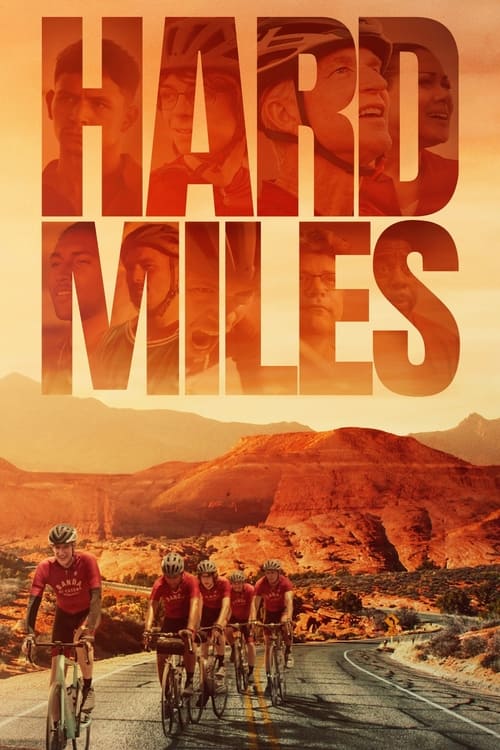
Hard Miles opens inside the hard-edged, temporary world of Rite of Passage's RidgeView Academy in Watkins, Colorado, where Greg Townsend has spent decades trying to reach boys who have every reason to assume the world has already written them off. Greg is a social worker and welding teacher, but his real identity is that of an obsessive cyclist, the kind of man who believes that suffering can be structured into something useful if you have enough grit, enough patience, and enough faith in the people around you. As the film begins, he is looking forward to his own long ride, the Tour De Grand, a punishing 762-mile journey from Colorado to the Grand Canyon that he sees not as a vacation but as a proving ground. The canyon itself is not just a destination; it is the image of a limit line, a place so vast and final that it feels like the physical edge of everything these boys have been told is possible for them.
At the same time, RidgeView is under pressure from the outside world. Skip Bowman, the academy director, is obsessed with funding and public image because the school is in constant danger of losing money and having its charter revoked. That means every program is judged not only by whether it helps the students, but by whether it can be turned into positive publicity. In that climate, Greg's cycling obsession suddenly becomes useful to the administration, though not in the way Greg intended. The school is also planning a backpacking outing for some of the boys, led by Greg's colleague and ally Haddie, the school psychologist played by Cynthia Kaye McWilliams. Haddie understands the boys from the inside out in a way Greg sometimes does not; she brings the therapeutic language, the psychological framing, and the practical calm that balance Greg's relentless physical intensity.
Greg's own life is already frayed at the edges when the film begins. One of the most painful threads running through the story is the fact that his brother keeps calling him from prison to tell him that their father is dying, or at least close enough to death that the end feels imminent. That news hangs over Greg like unfinished weather. It is not played as a melodramatic reveal so much as a slow emotional pressure, a reminder that the man who has dedicated his life to helping other people's broken families still cannot fully deal with his own. He rides, works, and pushes because motion is easier than sitting still with grief. He is the sort of man who can coach everyone else through pain, but not himself.
The crucial turn comes when Haddie is injured, and Skip uses the disruption to force a change in the school's plans. Greg is told he must cancel his bike ride and take the students on the backpacking trip instead, because the academy still wants the public-facing program to happen and it needs an adult to lead it. On paper, it looks like a simple administrative correction. In Greg's mind, though, it is a theft. The ride is his challenge, his ritual, his personal mountain. For a moment, it seems the whole dream will collapse under the weight of institutional compromise. Then Greg has the insight that becomes the engine of the story: he does not have to abandon the ride if he can bring the boys with him. That idea changes everything. What was supposed to be a solo endurance test becomes a shared exercise in survival, discipline, and trust.
The four boys chosen for the ride are Woolbright, Smink, Atencio, and Rice. They are all incarcerated teens, and the film is careful to present them as distinct personalities rather than faceless troublemakers. Each one carries his own history, his own walls, and his own private reasons for not believing in adults, institutions, or long-term hope. The sources do not specify the details of every offense, but they are clear that none of the boys is eager to be there. They are not inspirational athletes at the beginning; they are wary, resistant, sarcastic, and emotionally armored. Greg does not solve that immediately. Instead, he does what he always does: he starts by teaching them a task that forces commitment. He has them build their own bikes, and the act of construction matters as much as the ride itself. The bike is not just equipment. It becomes a physical metaphor for self-authorship: they are not being handed salvation; they are assembling the machine that will carry them toward it.
Before the trip can begin, Greg leans on the support of the outside world. Speedy, the bike shop owner played by Sean Astin, enters as a small but essential force of goodwill. He is first the person who inspires Greg and then the one who helps sponsor the effort with donations and bike support. The film uses Speedy almost like a bridge between worlds: he belongs to the ordinary, practical culture of bikes, parts, and repairs, but his generosity makes this extraordinary trip materially possible. With the bikes built, the support secured, and Haddie prepared to follow in a van with psychological and physical backup, the expedition finally begins.
The early stretch of the ride is not about triumph; it is about friction. The boys are suddenly outside the controlled environment of RidgeView, exposed to weather, traffic, distance, and each other. Greg keeps pushing the same lesson: the goal is not simply to survive the miles, but to learn how to move together. The film repeatedly frames the group as a peloton, a coordinated unit that can only function if each rider stops behaving like an isolated enemy and starts acting like part of a whole. That idea sounds abstract at first, but on the road it becomes brutally concrete. If one rider surges, another cracks; if one rider gives up, the whole group loses rhythm; if one rider decides to sabotage the pace, everybody pays for it. The boys begin to understand that every hill, every turn, and every break in the road is also a social test.
As they head from Colorado toward the southwest, the landscape itself becomes a character in the story. The heat presses down, the roads stretch out without mercy, and the distance to the Grand Canyon feels less like a route than a wager with the universe. The film's major physical crises are not sudden villain attacks or contrived disasters but the ordinary horrors of endurance cycling: heatstroke, speed wobbles, exhaustion, dehydration, pain, and the humiliating knowledge that your body can betray you long before your spirit does. Those moments matter because they strip away every fantasy the boys may have had about the journey. The ride is not a montage of empowerment. It is repetitive labor under the sun, with the added burden of being watched, coached, and emotionally cornered into growth.
The boys fight constantly at first. They mock one another, test Greg's authority, and use sarcasm as armor. Greg responds the only way he knows how: with bluntness, persistence, and the refusal to let them opt out emotionally just because they would like to opt out physically. The confrontation is not one single scene but a long, rolling argument between expectation and resistance. Greg wants them to see that pain can be interpreted differently; the boys want to know why they should trust a man asking them to suffer for a future they can barely imagine. Haddie, following in the van, often functions as the steadier voice in the room, translating what is happening psychologically and keeping the project from becoming just another test of masculine toughness.
One of the film's biggest emotional revelations is that Greg is not simply using the boys as a way to complete his own cycling dream. He genuinely sees the ride as therapy, as a way to interrupt the predictable logic that has shaped their lives. He believes that a long, punishing shared goal can force habits of responsibility into existence. The story also reveals that his philosophy is rooted in personal pain. His brother's prison calls about their dying father keep pulling him backward, showing that Greg's devotion to other people's brokenness is inseparable from his own unfinished family damage. The sources do not provide a full explanation of the family rupture, but the fact of the estrangement is enough to give his behavior a sharper edge. He is not merely a noble mentor; he is a man trying to ride away from unresolved grief while also bringing other wounded people with him.
As the road goes on, the group gradually begins to change. Small acts of cooperation start replacing automatic defiance. A rider waits for another. Someone pushes a bike up a brutal stretch. Someone else finally says the honest thing instead of the defensive thing. The transformation is incremental rather than miraculous, which makes it feel earned. The film's structure depends on that slow conversion of resentment into mutual reliance. Greg repeatedly has to prove that he means what he says, and the boys repeatedly have to discover that his toughness is not a performance. He pushes them because he thinks they can become more than their worst day, not because he wants to break them for entertainment.
The central crisis of the journey is not presented in the available sources as a single named catastrophe, but the review material does point to a particularly difficult crossroad that the group must navigate along the way. That moment functions like a symbolic and practical fork in the road: if they cannot manage this obstacle together, the ride collapses into chaos. The crossroad concentrates everything the film has been building toward--leadership, trust, fear, and the need to stay unified when the route becomes ambiguous. It is the kind of challenge that forces each rider to commit not only to the destination, but to the people beside him.
Greg's relationship with the boys deepens in the process. He does not become sentimental, and the film does not turn him into a saint. Instead, his authority becomes more credible because it is increasingly clear that he is willing to suffer alongside them. He is not in a car ahead of them, waving from safety. He is in the same pain, on the same road, breathing the same heat. That shared physicality is what gives the story its emotional credibility. The boys may not have trusted his words, but they can trust his body. He bleeds, sweats, staggers, and keeps going.
The film also keeps reminding us that RidgeView itself remains in the background of the journey, because the institution's survival hangs over everything. Skip Bowman's insistence on favorable news and social-media visibility is not just bureaucratic fussing; it is the reason the trip exists in this form at all. The boys are not only trying to prove something to themselves. The school is trying to prove something to the state, to the public, and to whoever decides whether it continues operating. That pressure gives the ride a second layer of stakes. If the program succeeds, it might help preserve RidgeView's future. If it fails, the school could lose support and the boys could be swallowed by a system with fewer options and less patience.
The emotional climax arrives as the riders continue toward the Grand Canyon, a destination that by now has taken on the shape of both salvation and judgment. Everything in the story has been moving toward this place: Greg's dream, the school's publicity needs, the boys' forced participation, and the larger symbolic promise that a wide-open natural wonder can make human suffering feel small enough to survive. The canyon is where the road ends, but it is also where the long internal argument of the film reaches its sharpest point. Have the boys changed? Has Greg actually helped them? Has the ordeal meant anything beyond the miles?
The sources confirm that the group does arrive there, and that the ending is framed as transformative rather than tragic. The boys complete the journey, and the ride becomes a shared triumph instead of a lonely endurance stunt. The narrative does not hinge on a twist ending or a hidden betrayal. Its power comes from the accumulation of effort and the emotional truth that these boys, who began the film suspicious and detached, have been forced into a kind of fellowship they could not have manufactured any other way. Greg, likewise, reaches the end not just as a coach who has successfully guided a team, but as a man who has confronted his own private fractures without fully solving them. The ride does not magically fix his father, his brother, or the years of emotional distance in his family. But it does give him a way to live with the unresolved parts of his life without letting them stop him.
There are no confirmed character deaths in the film's plot as described by the available sources. The closest thing to death is Greg's father, who is said to be "knocking on death's door," but the material provided does not confirm an on-screen death scene or identify any character being killed by another. That absence is important. The movie is not built around literal death, but around the possibility of a life that never quite begins because fear, incarceration, disappointment, and self-protection keep getting in the way. The riders' victory is therefore not just physical completion. It is the refusal to let that dead-end logic win.
By the time the group reaches the canyon, the visual scale of the landscape mirrors the emotional scale of what they have endured. The road behind them represents suffering turned into meaning; the canyon ahead represents a future large enough to imagine, even if it remains uncertain. The final scenes are about arrival, not perfection. They do not pretend that one bike trip erases the past. What they do show is that the boys have crossed a threshold. They have ridden farther than they thought they could, stayed together longer than their usual instincts would allow, and been forced to experience themselves as capable of something other than failure.
Greg's own arc closes in the same spirit. He set out to ride his long route alone, but what matters in the end is that he uses the ride to build a communal experience that reshapes everyone involved. His work at RidgeView, his faith in the boys, his strained family grief, and his stubborn cycling ambition all come together in one final act of persistence. The movie ends as an affirmation of endurance and connection: the boys do not simply survive the journey, they complete it as a team, and Greg's belief that hard effort can become hope is validated by what they have accomplished together.









What is the ending?
The ending of Hard Miles is that the boys finish the long bike ride to the Grand Canyon, and Greg finally faces his own broken family situation by trying to make amends with his dying father. In the final stretch, the trip becomes less about proving they can ride and more about each boy deciding what kind of life he wants to have next.
Greg Townsend's cycling team reaches the desert crossroads after days of strain, heat, and conflict. The boys have already fought through physical problems like heatstroke, speed wobbles, and exhaustion, and by this point the ride has forced them to stop acting like isolated individuals and start moving as a peloton. At the same time, Greg's own words are being tested against his private life, because his father is dying and Greg must confront the distance he has kept from him.
In the final scenes, the group is presented with a choice in the desert: continue along the easy path, or take responsibility for their own futures. The boys choose the harder road forward, and that choice is what completes the emotional arc of the ride. Greg's storyline closes with him finally applying the lesson he has been giving the boys, by moving toward reconciliation with his father rather than staying locked in his resentment.
For the main characters at the end: - Greg Townsend: he completes the ride with the boys and faces the possibility of amends with his dying father. - Haddie: she remains the steady supporting presence and voice of reason throughout the trip, helping hold the group together to the end. - Woolbright, Smink, Rice, and Atencio: the four boys finish the journey together and reach the point where each must decide whether to keep repeating the same patterns or accept a different future.
Scene by scene, the ending is built around the desert crossing, the strain of the ride, and the final decision at the crossroads, with the Grand Canyon functioning as the destination that confirms they have made it through the trip. The film ends by tying the boys' physical accomplishment to Greg's personal reckoning, making both parts of the story land at the same emotional destination.
Is there a post-credit scene?
There is no reliable evidence in the available sources that Hard Miles has a post-credit scene, and the film is not documented as having one in the search results provided.
The sources available here focus on the film's premise and release information, not on any end-credits stinger. Because of that, I can't responsibly describe a post-credit scene as if it were confirmed. If you want, I can also help reconstruct the film's ending itself from the available plot information.
Who are the main boys on Greg Townsend’s cycling team in Hard Miles, and what are their individual personalities or problems?
The most frequently discussed specific-character question centers on the four teenage boys Greg Townsend trains at Ridgeview Academy: Woolbright, Smink, and the two other delinquents who form the team with him. Sources highlight Woolbright as "recalcitrant," meaning openly resistant and difficult to manage, while Smink is singled out for a serious dietary issue because he "doesn't eat." The other boys are described more generally as troubled or violent juvenile offenders, but the story's interest comes from how each boy arrives with a different emotional and physical obstacle that the cycling program has to address.
How does Greg Townsend convince the boys to join the bike ride in Hard Miles?
Another common plot-specific question is about Greg Townsend's method for persuading the teens to participate. According to the sources, he does not simply order them onto bikes; he builds the program as a kind of purpose-driven intervention, teaching them to build their own bikes, training them physically, and framing the ride as something they can accomplish on their own terms. The expedition is presented as a 762-mile ride from Colorado to the Grand Canyon, and Greg uses that challenge to give the boys pride, structure, and something concrete to work toward.
What role does Haddie play in the cycling trip in Hard Miles?
Haddie is a frequently asked-about supporting character because she travels behind the boys in a van and provides both physical and mental support. One source says she has a background in psychology, which explains why her role is not just logistical but also therapeutic: she helps the team cope as the ride becomes harder and the emotional strain builds. When Greg is forced to leave the team for a time, Haddie becomes even more important because she is the adult presence keeping the mission moving.
What happens between Greg Townsend and his abusive father in Hard Miles?
A recurring character-focused question asks how Greg's relationship with his dying, abusive father affects the story. The sources describe Greg as estranged from his father and carrying unresolved anger and hurt; this private conflict runs alongside the bike journey and gives Greg his own emotional arc. One interview-related source indicates that Greg eventually does reconcile with his father, which confirms that this relationship is not just background but one of the film's key personal storylines.
What is the crisis that tests the boys halfway through the bike ride in Hard Miles?
The most discussed mid-story plot element is the moment when Greg is forced to leave the team, leaving the boys to continue with Haddie driving behind them. At that point, the group faces a moral split: one boy wants to bypass the Grand Canyon and take a bus back home, effectively escaping confinement and abandoning the expedition, while others stay committed to finishing the ride. This becomes a test of loyalty, discipline, and whether the team can hold together without Greg physically present.
Is this family friendly?
Hard Miles is not especially family friendly for younger children; it is rated PG-13 for strong language, thematic material, suggestive references, and some teen drinking. It may be fine for mature teens, but parents should expect a handful of upsetting or objectionable elements.
Potentially troubling aspects include: - Frequent strong profanity and rude language. - Teen drinking / alcohol use, including underage beer drinking. - Suggestive or lewd comments. - Some violence and physical conflict, including fights, injury, and distressing backstory references. - A brief suicidal or self-harm-related depiction reported by one review. - Brief nudity and crude body-related jokes, according to one content guide.
If you want, I can also give you a very short "OK for ages ___?" recommendation based on the film's content level.