










Popular
Who is Ana, and why does she go to work for the wealthy family in Calladita?
What is Ana’s relationship with Gisela, and why does it create problems for her?
What happens when Ana impersonates the daughter online, and how does that choice affect the story?
How does the son discover Ana’s deception, and what does that mean for her?
What role do the family’s wealth and the villa setting play in Ana’s interactions with them?
Should I watch it?
Ask Your Own Question

What is the plot?
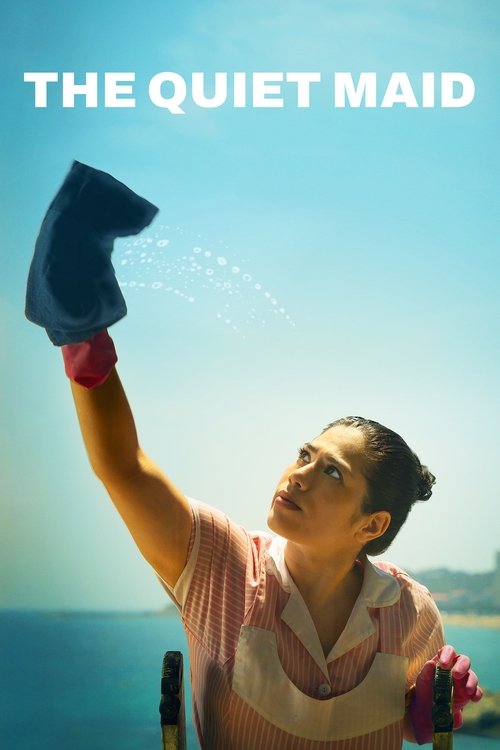
Ana arrives on the Costa Brava in the heat of summer, tucked into the back seat of a car as if she is being delivered rather than welcomed, and the opening image immediately places her in a world where other people's leisure depends on her labor. She is a young Colombian woman named Ana, and she has come to work as a maid in the luxurious vacation home of Pedro, a wealthy art collector, and his wife Andrea, who spend the season in their opulent mansion on Spain's northeast coast. The house is beautiful in the way only rich people's houses can be beautiful: sunlit, polished, full of space, and yet already oppressive because Ana is not there to enjoy it. She is there to clean it, maintain it, and move through it so quietly that she seems almost invisible.
From the start, Ana is disciplined into stillness. She is told to be quiet, discreet, efficient, and grateful, and she takes the instructions seriously because her entire future depends on this job. She sends her wages home to her mother in Colombia so her younger sister can study medicine, which gives every scrubbed surface and every invisible sacrifice a human cost. The promise hanging over her is that if she works hard enough through her probation period, Pedro and Andrea will help sort out her contract and papers, giving her the stability she needs to keep working and, perhaps, build a better life. But even before that promise is broken, the film makes clear that it is fragile. The family's kindness is conditional, their power absolute.
Ana's first days are defined by obedience. She moves through the villa doing what is asked, trying to stay unseen, while Pedro and Andrea treat her less like a person than like a useful object in the household. The reviews repeatedly describe this relationship as one of ownership, and that is exactly how it feels: she is absorbed into their domestic order, expected to anticipate needs, and denied any meaningful autonomy. Pedro is especially representative of this hierarchy. He is the dominant employer, the man of the house, and he behaves as though the property itself, including the people who work in it, belongs to him completely. He complains about the stray cats around the estate and especially about the way they ruin his garden vegetables, turning even animals into enemies if they disrupt his sense of control.
The summer atmosphere around the mansion is deceptive. The wealthy family lounges through the hot August days in a state of relaxed entitlement while Ana labors under the same sun. The contrast is central to the film's emotional design: for some, the coast is pleasure; for others, toil. The story does not begin with a dramatic crisis. Instead, it accumulates tiny humiliations and small accommodations, each one quiet enough to be dismissed but heavy enough to alter Ana's sense of herself. The mood is restrained, almost hushed, but beneath that silence the power dynamic is already hardening into something cruel.
The first major shift comes when Ana meets Gisela, a servant in a neighboring house. Gisela is also Colombian, but she is not quiet in the same way Ana is. She is more openly rebellious, more cynical about the rich people she works for, and more willing to treat the summer as something other than a prison. Their connection is one of the most important relationships in the film because it gives Ana a peer, someone who understands the social humiliation of domestic work from the inside. The reviews suggest that Gisela's influence is decisive: she becomes the one who cracks open Ana's obedient shell and offers her a glimpse of life outside the villa's rules.
At first the relationship is small and secretive. The two women share smoke with each other, a tiny act of intimacy and relief that barely punctures the suffocating atmosphere of service. But Gisela also begins luring Ana out at night, away from the house and into beach parties where the music is loud, the hours are late, and the strict moral code of the employers dissolves into temporary freedom. In those scenes, Ana is no longer just an employee in uniform. She is a young woman testing the edges of her own life. She drinks too much, stays out too late, and for a little while seems to taste the kind of carefree summer the villa's owners take for granted.
That freedom, however, immediately becomes dangerous. The film shows that every act of pleasure for Ana has a price attached to it. When she returns hungover or distracted, her work begins to slip, and Andrea notices. Andrea's suspicion matters because it demonstrates how closely the household watches Ana even when it pretends not to. The house does not merely employ her; it monitors her, judges her, and expects her to preserve the family's comfort without ever expressing her own needs. Ana's brief adventures are not treated as youthful escapism but as a breach of discipline.
The plot deepens when the issue of Ana's legal and professional status comes back into view. The promise that the family will sort out her contract and papers after probation begins to look less like a plan and more like a tool of control. Ana has reason to believe that if she stays obedient, they will help her, but the longer she waits, the clearer it becomes that nothing is guaranteed. She is trapped in the gap between hope and exploitation. The film's satire lies partly in this gap: the employers' casual kindness masks an economy of dependence in which Ana is expected to be grateful for the possibility of dignity while being denied it in practice.
One of the most revealing modern details in the story comes when Ana uses a dating app and decides to present herself as the owner of the mansion she works in. This is not just flirtation or a joke. It is an act of identity theft against the social hierarchy itself. By claiming the status of the house's owner, she briefly inhabits the life that is visually all around her but spiritually closed off to her. The gesture is playful on the surface, yet it exposes how deeply class is tied to performance: who is believed, who is visible, and who gets to occupy luxury without explanation. It is also a quiet revenge, a way of seizing the language of privilege for herself, if only for a moment.
The cats become another focus of the growing conflict. Ana feeds the stray cats that wander around the property, and this small tenderness matters because it is one of the first things she does that has no utility for the family. She cares for something purely because it is vulnerable, and because she can. Pedro hates the cats and complains that they ruin his vegetables. His hostility toward them mirrors his hostility toward anything he cannot fully control. The cats are not merely animals in the story; they are a live symbol of disorder, survival, and unwanted presence, just like Ana herself if Pedro were honest enough to recognize the parallel.
That parallel becomes sharper as the film continues. Ana begins to feel trapped in the job, and the reviews emphasize that she realizes there are no real prospects in the arrangement she has been sold. The house that was supposed to represent opportunity now feels like a gilded enclosure. The employers' promises do not materialize, and the boundaries around her life remain intact. She is responsible for everything, while having no power over anything. That imbalance is the emotional core of the film. Ana carries the labor, the worry, the financial sacrifice, and the risk; Pedro and Andrea carry the authority.
At some point, the film reveals that Gisela has been fired for being caught intoxicated. This is one of the story's most important turning points because it shows how disposable the domestic workers are in the eyes of the rich families. A single lapse in behavior is enough to erase Gisela's employment, and the punishment lands like a warning directed at Ana as well. She is forced to lie in order to protect her own position, which means she must become complicit in the very system that threatens her. The lie is not just interpersonal; it is structural. She learns that honesty will not protect her, only silence might.
From here the film begins to move with a more dangerous pulse. What starts as a tale of quiet class resentment gradually takes on the shape of an interpersonal war story. The conflict between Ana and her employers turns subtle, then strategic, then increasingly tense. The reviews suggest that the second half plays like a heist thriller in spirit, even if the exact mechanics are not fully laid out in the sources. What is clear is that Ana's rebellion stops being merely private. She is no longer only enjoying forbidden parties or pretending to be someone else online; she is beginning to act in ways that challenge the household's power from within.
The tension between Ana and Pedro escalates around the issue of control over the property. Pedro's obsession with his garden and his vegetables becomes a proxy for his need to dominate the environment completely. Ana's feeding of the cats, her late nights, her secret pleasures, and her increasingly independent inner life all represent forms of resistance to that domination. Every small rebellion is quiet, but they pile up. She is no longer the obedient maid in the back seat of the car. She is becoming someone who watches the house as carefully as the house watches her.
Andrea, meanwhile, grows more suspicious and observant. She senses that Ana is no longer fully compliant, but she does not yet grasp the shape of the transformation taking place under her roof. That ignorance is itself a kind of privilege. The employers can see when Ana is failing at the tasks they assign, but they cannot fully see the reasoning behind her defiance. They assume the problem is discipline. In truth, the problem is dignity. Ana is beginning to understand that if the family changes its mind about her, she has very little recourse. The promise of papers, contract, and future security is exposed as a leash.
The film's emotional architecture depends on this slow recognition. Ana is not pushed into rebellion by a single explosive event. She is worn down by hypocrisy, by empty promises, by the realization that she is being held in place through a mixture of dependency and infantilization. The comedy of the film--its satirical edge, its playful tone--does not erase the cruelty; it makes the cruelty easier to notice because it arrives wrapped in polite manners and summer leisure. The rich family can smile while exploiting her, and that is part of what makes the situation so suffocating.
The reviews do not confirm a death in the film, and there is no sourced evidence that any major character dies. The most important "fatal" pressure in the story is instead social and psychological: the death of Ana's illusions about the family, about her future, and about the fairness of the system she has entered. That collapse of trust is what drives the climax. The film moves toward a traumatic ending, one of the few moments that breaks the otherwise languid pace and makes the consequences of Ana's situation impossible to ignore.
By the end, Ana's quiet struggle has become impossible to contain. The story remains rooted in the mansion and its surrounding spaces, but the psychological stakes have widened. What began as a domestic routine has turned into a test of endurance and self-assertion. Ana's small acts of mischief--sneaking out, drinking, feeding cats, lying on the dating app, claiming the mansion as her own--accumulate into a portrait of someone reclaiming pieces of identity that the household has tried to flatten. She is still trapped inside the class structure, but she is no longer passive inside it.
The final section of the film is described as traumatic and sharply disruptive. The exact sequence is not fully verified in the available material, but the reviews make clear that the ending forces a confrontation between Ana's accumulated resistance and the power the family still holds over her. There is no indication of a simple reconciliation or a triumphant escape. Instead, the ending underscores how little protection Ana truly has if the employers decide against her. The tension reaches its peak in the recognition that her life is being negotiated by people who can discard her with almost no consequence.
What the ending does achieve, according to the sources, is a decisive shift in Ana's inner life. She has moved from obedience to a more conscious, if still constrained, form of self-ownership. The film closes not by dissolving the class divide but by making it painfully visible. Ana's rebellion is meaningful precisely because it happens inside a system that remains intact. The rich still have the house, the money, the authority, and the ability to define the terms of her survival. But Ana has learned how to look back, how to lie when necessary, how to imagine herself in the place of the owner, and how to interrupt the silence that was supposed to define her.
So the final emotional note is not resolution in any comforting sense. It is the hard, uneasy realization that Ana has gained a self that the household cannot fully erase, even if it can still control her circumstances. The summer on the Costa Brava has revealed the violence hidden inside luxury, and the villa that once seemed like a dream now stands as the site of a quiet war. Ana remains there through the end, carrying the weight of her labor and the knowledge of exactly how little the family's promises are worth, while the story leaves the sense that her silence has finally become something more dangerous than obedience.







What is the ending?
Ana ends the film by moving into a brief, hard-won moment of control over the life she has been forced to live. After a final stretch of tension in the house, she secures the hidden payment she has been chasing and leaves in a car, while the wealthy family remains behind in their own world.
Ana has spent the story working in silence in the summer villa, taking orders, hiding her anger, and trying to keep her job while the family treats her like part of the furniture. By the ending, that quiet obedience gives way to a small but decisive act of self-assertion: the money she wants is finally in her hands, and she departs on her own terms as the film closes.
In chronological order, the ending unfolds like this:
- Ana is still inside the mansion after everything that has built up between her and the family. The atmosphere is tense and controlled, with the household still marked by the same class divide that has governed the whole film.
- She searches for what she needs and discovers the rest of the password hidden behind a painting, which lets her complete her search for the money.
- She finds the hidden cash and takes it, turning the family's private space into the place where her own escape becomes possible.
- The final image shows Ana getting into a car and leaving, which is the film's closing movement for her character.
- The family does not leave with her; they remain in the background of the story, unchanged in their position of comfort and privilege.
The main characters' fates at the end are these:
- Ana: she leaves with the money and exits the house in a car.
- Pedro and Andrea: they remain in the vacation home, still occupying the privileged world that has framed the story.
- Claudia and Jacobo: they are part of the household's wealthy social circle and are left behind with the family's world intact.
- Gisela: she is not part of the final escape; the story's ending centers on Ana's solitary departure after the earlier fallout that separated them.
The ending is brief in action but heavy in meaning: Ana's quiet compliance has ended, and the last scene gives her a physical departure from the house that has contained her throughout the film.
Is there a post-credit scene?
I couldn't verify any post-credit or mid-credit scene for Calladita from the available search results. The results provided do not include a reliable source about Calladita specifically, so I can't confirm whether it has one or describe it accurately.
If you want, I can help by checking other sources for Calladita's ending/credits details.
Who is Ana, and why does she go to work for the wealthy family in Calladita?
Ana is a young Colombian woman who takes a summer job as a maid for a wealthy family on the Costa Brava. She goes to Spain to earn money for her sister's medicine studies and hopes the job will help secure a better future for her family.
What is Ana’s relationship with Gisela, and why does it create problems for her?
Ana forms a connection with Gisela, and that relationship becomes risky because Gisela's behavior is more reckless and socially visible. Review coverage notes that this friendship can put Ana's livelihood in danger, since Ana depends on keeping her job and staying in the family's good graces.
What happens when Ana impersonates the daughter online, and how does that choice affect the story?
One of the film's key plot turns is that Ana steals the daughter's phone and pretends to be her on Tinder. A man is deceived by the ruse, comes to meet her, and they have sex, which pushes the story into more dangerous territory and escalates the risk of Ana being exposed.
How does the son discover Ana’s deception, and what does that mean for her?
According to plot descriptions, the son catches Ana in the act after she has used the daughter's identity online. That discovery threatens to unravel her carefully hidden life in the villa and sharply raises the consequences of her actions.
What role do the family’s wealth and the villa setting play in Ana’s interactions with them?
The luxury villa and the family's wealth create a power imbalance that shapes nearly every interaction Ana has with them. Critics describe the story as showing how the family's privilege turns Ana into an asset in their eyes, making her position fragile and constantly dependent on their approval.
Is this family friendly?
No--Calladita (2024) is not family-friendly for children, and it is better suited to mature teens/adults. Based on the available coverage, it includes a class-conflict / adult-dramatic tone and at least some sexualized nudity and potentially creepy or tense behavior that could be upsetting for sensitive viewers.
Potentially objectionable or upsetting elements to expect: - Nudity / sexualized nudity: the review notes that a teenage daughter is "no problem being naked" around an adult household worker, which strongly suggests nudity in a domestic context. - Sexual tension / uncomfortable dynamics: the same review describes a son whose attention toward the maid becomes "increasingly sinister," indicating an unsettling, possibly predatory atmosphere. - Mature themes: the film is described as a class conflict drama that shifts into a heist thriller, so it likely deals with exploitation, inequality, and tension rather than light family storytelling. - Psychological discomfort: the review's language suggests manipulation and growing unease, which may be stressful for children or sensitive viewers.
If you want, I can also give you a more detailed content-sensitivity breakdown for Calladita without spoilers.







