












Should I watch it?
Ask Your Own Question

What is the plot?
David Owen opens the film on a city street in New York, already exhausted by a constant onslaught of mechanical alarms. He sits in his car or stands on a sidewalk, flinching each time a car alarm, a burglar alarm, or a truck's backup beeper slices through the air. He lives in a world where sound punctures every moment; he endures it while raising a young daughter and keeping his practice as a lawyer. He tolerates the noise for years, trying to adapt his life around its intrusions, until a single evening pushes him past restraint. A parked vehicle's incessant alarm detonates his patience; he breaks a window to reach inside and silence the beeping. Police arrive and place him in handcuffs for damaging property. The arrest becomes the catalyst for escalation.
After that arrest, Owen's domestic life frays. He and his wife take their daughter away from the city for a weekend, seeking relief in the countryside, but the quiet there proves deceptive: the silence is punctured by other, unexpected sounds that still unsettle him. Back in the city, he files complaints through the legal system and attends hearings, but bureaucratic channels fail to deliver meaningful fixes. Fines and citations follow his attempts to stop alarms; as municipalities and courts penalize his actions, his responses grow more radical. He starts by disabling car alarms and cutting off horns, moves on to vandalizing vehicles, and finally to deliberately damaging alarms on a wider scale. With each incident the legal consequences intensify, and the strain on his marriage reaches a breaking point. His wife asks him to leave their home; he becomes physically separate from his family while his fixation deepens.
Isolated and angrier, Owen adopts a persona as a nocturnal saboteur. He becomes known, in whispers and online chatter, as a figure who tampers with alarms and defies the city's noisy status quo. He paints himself as someone fighting back against an urban assault, and his private campaign takes on an almost ritual character: he roams neighborhoods at odd hours, finds the source of piercing alarms, and disables them. In the process he escalates from stealthy interference to more blatant property damage, smashing signal boxes, punching through windshields, and prying at dashboard systems. The police widen their net; city officials and building managers warn that his acts have crossed into criminality. Penalties increase and the legal jeopardy mounts. His estranged wife watches as his personal vendetta metastasizes into a public disturbance.
During this period of isolation Owen meets Ekaterina, a Russian student who studies or works in the city and who notices him more than most. She recognizes the pattern of his activities and names the vigilante identity he has fallen into--she calls him The Rectifier. Rather than condemn him outright, she engages him in conversation and becomes a confidante. Ekaterina challenges him to transform his bitterness into something other than private reprisal; she persuades him that if he wants to change the soundscape of the city permanently, he should pursue civic remedies. At her urging he considers a structural solution: a ballot initiative aimed at curbing the unregulated proliferation of alarms, horns, and electronic noise that he blames for the erosion of communal peace.
Owen takes the initiative seriously. He begins collecting signatures, drafting language for the measure, and galvanizing a small coalition of supporters who are tired of the urban racket. The ballot effort starts slowly--handfuls of signatures, an afternoon at a park table--but Ekaterina's energy helps the campaign acquire momentum. Media attention follows as the initiative's premise proves indisputably newsworthy: a man who once vandalized alarms now seeks to rewrite municipal law. Coverage amplifies the campaign's message and draws both sympathy and suspicion. City Hall reacts with guarded concern. Mayor Schneer watches the movement warily, worrying that legitimizing such a campaign could encourage further vigilantism. Schneer and his advisers calculate political risk; they make clear they will not support measures that appear to reward illegal behavior.
Obstacles multiply. Opponents point out procedural flaws and exploit technicalities; a legal loophole prevents the initiative from qualifying for the ballot. Rather than accept that setback, Owen stages a dramatic protest to force the city's hand. He outfits an automobile with a cacophony of blaring horns and alarm systems, then parks it directly in front of City Hall. He activates the contraption and insists that officials hear the reality of the acoustic invasion that he refuses to tolerate. The vehicle's shrillness disrupts security routines, alarms trigger, and chaos ensues on the public plaza. A tenant nearby, alarmed and angered by the spectacle, confronts the scene; other bystanders gather. Among those who move closer is Judge Kornreich, a figure of judicial authority and one of the city's gatekeepers. In the confusion of the demonstration, Kornreich becomes entangled in the confrontation, and some witnesses mistakenly identify him as The Rectifier.
After the protest, the misidentification becomes a legal thread. Judge Kornreich sues Owen for pain and suffering, framing the demonstration and its attendant confusion as a personal injury to his reputation and comfort. The lawsuit makes the conflict legal as well as political. In court, Owen defends his actions not as random criminality but as an act of civic provocation designed to illuminate a systemic problem. During cross-examination, he maneuvers carefully; he suggests that the city's permissive policies toward alarms amount to a collective assault that injures residents. At one point he implies that his own earlier acts could be framed as assault and battery--not to excuse vandalism but to force a legal conversation about who bears responsibility for creating the circumstances that led him to act. The exchange reframes the trial from a simple trespass-and-damage dispute into a broader quarrel over the limits of protest and where the law should stand between complaint and coercion.
The court issues a ruling that places Owen on the wrong side of the law: he receives penalties and faces potential further sanctions for his vandalism and public disturbance. Yet the verdict produces a paradoxical outcome for him. The case has brought the noise debate into the open, pressured municipal officials, and given the initiative national media attention. He obtains a moral and rhetorical victory even as the legal system punishes his methods. In the wake of the trial, Owen begins to reconnect with his family. His wife, witnessing the consequences he has endured and the sincerity of his efforts to reform through lawful channels, allows him to rejoin their home life. The narrative shows a moment of reunion in which husband and wife step back into a domestic car, and Owen sits with his family as they leave the courthouse plaza.
As that chapter closes, an activist who had been following Owen's campaign approaches him with a more radical suggestion: to destroy an enormous billboard television that looms over a busy intersection, a glowing, attention-grabbing screen that activists claim contributes to accidents and visual pollution. The activist proposes blowing up the billboard, a plan that would cross a clear criminal line and invite violent confrontation. Owen faces a choice that has become the central moral fork of his journey: he can seize the opportunity to escalate his campaign into direct assault on the city's visual landscape, or he can refuse the call and continue with measured, lawful reform.
The film presents two possible endpoints. In one ending, Owen accepts the activist's radical proposal and flees with the woman, leaving with her to participate in the plot to destroy the billboard. He abandons the courtroom-mediated process and resumes clandestine operations at a larger scale; the film leaves the consequences of that choice open as the pair drive away. In the alternate ending, Owen declines the explosive plan. He steps into a taxicab with his wife, they drive off together from the courthouse, and he begins to rebuild his life within legal and familial boundaries, committing himself to civic process rather than sabotage. No characters die during this story; no murders or killings occur as part of the events depicted.
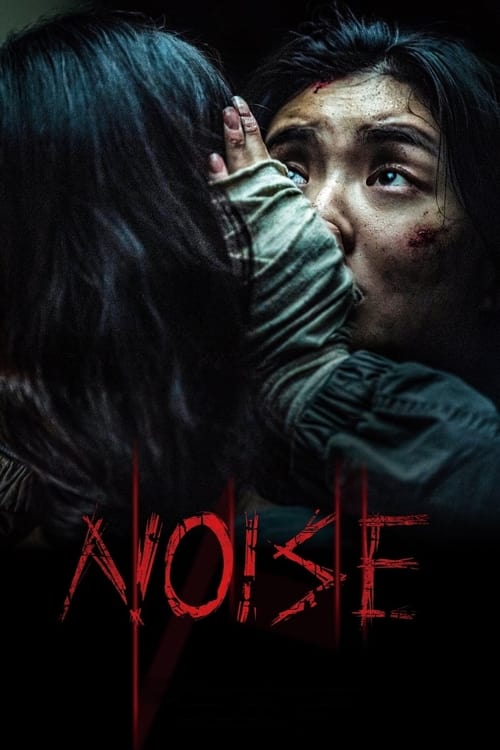
Across the ocean and within a different apartment building, the Korean film Noise begins with sisters Joo-young and Joo-hee achieving a long-sought milestone: they finally buy the home they wanted. They move into a compact urban apartment, eager to enjoy private ownership and the stability it promises. Shortly after moving in, they begin to notice an odd, unnamed noise that intrudes on daily life. The sound has no obvious source; it emerges at irregular intervals and provokes anxiety rather than a clear explanation. The sisters try to track it, listen for it at night, and repair anything within their control, but the noise persists and does not respond to ordinary fixes.
One day Joo-young loses contact with her younger sister, Joo-hee. The absence alarms her. Joo-young has been working at a factory in the countryside; she ends her shift immediately and rushes back to the city to search for Joo-hee. Upon arriving at the apartment, she finds their unit and the neighbours tense and unhelpful. She enlists the aid of Ki-hoon, Joo-hee's boyfriend, and together they begin an urgent search through the building and among friends. They knock on doors, check security footage where available, and interrogate the few neighbours who might have seen something. They listen repeatedly to the strange noise in an effort to triangulate its origin.
In the same building a man on the floor below the sisters becomes convinced the upstairs unit is the source of his torment. He has also been made desperate by the unidentifiable sound; nights of disrupted sleep and mounting frustration erode his composure. He accuses the sisters of causing the disturbance, viewing their ownership of the apartment as proof that they alone are responsible. As his temperament frays, he issues threats against Joo-young and Joo-hee, telling them he will murder them if the noise continues. His threats escalate the tension in the corridor and alarm neighbors into choosing sides or turning away in fear.
Joo-young intensifies her search. She and Ki-hoon trace the noise's pattern, inspect electrical conduits, and confront building staff. She forces open ducts and checks the plumbing, she pounds on ceilings and walls at the hours the sound tends to occur, and she challenges the downstairs neighbour directly, demanding answers. He repeats his conviction that the sound emanates from the sisters' unit and reiterates his violent threats in calmer moments and in fits of hysteria. The police are called at least once as neighbors react to the public confrontation, and officers make reports but find no conclusive evidence to settle the question. The noise continues to elude definitive detection; its intermittent quality and unclear origin frustrate any attempt to pin it to a device or a person.
The building becomes a stage for increasingly fraught interactions: Joo-young rallies friends and supporters to her side, Ki-hoon stays at the apartment to help search and to try to protect Joo-hee's interests, and the downstairs man grows more menacing. The film documents their actions concretely: Joo-young returns late at night, flashlight in hand, to peer into walls and closets; Ki-hoon follows leads to nearby businesses that might own equipment capable of producing such a sound; the neighbour bangs on his own ceiling to demonstrate the noise's force and calls building management to demand remedies. Through these sequences the tension ratchets upward, with conversations transforming into accusations, and every attempt at technical troubleshooting revealing only more uncertainty.
The narrative provides no explicit onscreen resolution to the noise's source within the provided plot summary. It leaves the missing-sister situation and the neighbor's threats as central, unresolved crises: Joo-young is actively searching, Ki-hoon assists her, and the downstairs man continues to issue murder threats. The story dramatizes the sisters' vulnerability and the community's fraying civility in the face of an inexplicable acoustic assault, but within the available plot details the final disposition of Joo-hee's disappearance and the ultimate cessation or continuation of the noise are not specified.
Both films map how sound can transform ordinary lives into crises. In New York, Owen's escalation turns personal intolerance into political theater, and his final choice splits into two possible futures--flight into further militancy or reconnection with family and lawful activism. In the Korean apartment building, Joo-young's frantic search and the downstairs neighbour's violent threats create a tense, often claustrophobic set of confrontations centered on an unknowable noise; no deaths are recorded in that storyline as presented, but fear, accusation, and the collapse of neighborly trust drive the action through repeated searches, confrontations, and threats. The last images of each narrative close on ambiguous, consequential choices: in one film a man either leaves with an activist toward more destructive protest or returns to his wife in a taxi, and in the other a sister continues her search for a missing sibling while living under the shadow of a neighbour's lethal promise.







What is the ending?
In the end of Noise (2025), Joo‑young discovers that the "noise" tormenting her sister wasn't just in Joo‑hee's head but was tied to a real malevolent presence and to the apartment building's buried crimes. She confronts the source in the building, finds out what truly happened to Joo‑hee, and survives, but she is left physically and emotionally scarred, burdened with the knowledge of her sister's fate and the lingering presence that still haunts the place. The greedy residents and corrupt association figures who tried to hide everything are exposed or punished, while the building itself is left as a grim, unsafe place, its ghosts and sounds still not fully silenced.
Now, in an expanded, step‑by‑step telling of the ending:
Joo‑young is deep into the investigation by this point, moving from room to room, floor to floor, in the decaying apartment block. The corridors are dim and narrow. Water stains spread like veins on the ceiling, and the patches of spreading mold she has seen before are now thicker and darker, almost like bruises on the walls. Her hearing aid is in; every drip, every shuffle, every distant television seems too loud. She carries her phone with Joo‑hee's recorded noises on it, using them as a grim guide to what her sister heard before she vanished.
She reaches Joo‑hee's unit again. The ceiling of the apartment is still covered with the ugly foam padding Joo‑hee installed in desperation to block out the constant pounding, dragging, and scratching from above and below. Joo‑young moves through the rooms slowly, looking at the traces of her sister: the half‑finished decorations for Joo‑young's birthday, the small notes about noises and times, the obsessively written complaints. She replays one of the last recordings. It starts with the same intermittent thumping, then escalates into a layered, almost breathing sound, and finally a distorted, inhuman shriek. Standing in the still apartment, she hears that same shriek echo faintly from somewhere in the building.
Downstairs, the disturbed male neighbor who lives below their unit becomes more prominent in the final stretch. He has complained endlessly about noises from above, has banged on the ceiling, has watched Joo‑young with an angry, accusing stare. Near the end, he is fully unraveling. In one scene, Joo‑young goes down to his apartment, demanding to know what he heard, what he saw, on the day Joo‑hee disappeared. His place is cluttered and claustrophobic, with stacks of junk, dirty dishes, and a television blaring some variety show at a volume that seems meant to drown out something else. Even with the TV on, there are occasional, unnatural knocking sounds coming through the walls.
The man flickers between reluctant cooperation and hostility. He insists he only heard "them" making noises. He points upward at the ceiling and toward the shaft of the building, saying there are people moving when there shouldn't be, things scraping inside the walls. At one moment, he admits he heard Joo‑hee screaming that day, but then he shuts down, muttering that saying any more will ruin everything for everyone. When Joo‑young presses him, he lashes out, shouting that the association president and the others will never let the truth out, because they are counting on the building's reconstruction money. His agitation triggers a fresh wave of sounds from somewhere overhead, heavy steps and a dragging weight. Both of them freeze. The neighbor's eyes widen, and he tells Joo‑young to leave it alone--that some things in the building have "learned" the noises of the people who lived here.
Above all this, the apartment association's leadership is trying harder than ever to clamp down. The prickly president and the board have been pushing all residents to stay quiet, to deny anything strange. Toward the climax, there is a tense meeting or confrontation where Joo‑young shows what she has found: the recordings, the pattern of complaints, the evidence of other disappearances or incidents the association buried. Some residents fidget and look away, clearly frightened. The president insists there is no mystery, that Joo‑hee simply left, and that talk of ghosts or crimes will only destroy their chance at a payout when the building is demolished and rebuilt.
In the final act, Joo‑young follows the sounds themselves. The recordings on her phone and the live noises in the building begin to align. A recurring thud and scraping noise leads her away from the typical corridors and toward back areas: maintenance rooms, utility spaces, and finally the vertical shafts hidden behind locked doors. She uses keys she has acquired and tools she has picked up to pry or force entry. In one crucial scene, she enters a narrow service passage. It is quiet at first; then her hearing aid picks up a muffled, rhythmic pounding that seems to be coming from both above and below.
She descends, then climbs again, navigating rusty ladders and cramped landings. The air smells of damp concrete and mold. As she moves, she brushes against the furry, moist patches of fungus that have infiltrated deep into the structure, the same strange mold that has been creeping through apartments. The sounds grow louder: the drag of something heavy, a low chorus of whispering, the same distorted shrieks from the recordings, now full‑bodied and all around. Overwhelmed, she pulls one hearing aid out, then hesitates and puts it back in--she realizes she cannot find the source without hearing it clearly.
At last, she reaches a hidden sub‑basement or sealed room connected to the building's foundations. The door is rusted and reinforced, suggesting it has been deliberately closed off for years. She forces it open. Inside, her flashlight beam sweeps over old construction debris, discarded furniture, and water pooled on the floor. On the far side, she sees signs that people have been here more recently: cigarette butts, an improvised sleeping area, ropes, and tools. The mold is thickest here, climbing the walls and ceiling in heavy swaths. There are strange indentations in the mold where something has pressed hard against it repeatedly, like the outlines of hands or faces.
Here, the film gives her the answer about Joo‑hee's fate. She discovers physical evidence: Joo‑hee's belongings--her phone, an item of clothing, something personal she always carried. Nearby, there are grim signs that Joo‑hee did not simply walk away: marks of a struggle, blood staining the concrete or the discarded materials, and indications that a body was dragged or hidden here. Whether she finds actual remains, or only unmistakable proof that her sister was killed here, the location and the state of things make it clear Joo‑hee is dead and her disappearance was not voluntary.
The malevolent presence that has been associated with the sounds manifests fully in this space. The noises intensify in layers. The pounding becomes like a heartbeat coming from the walls themselves. The whispering rises into distinct words in Joo‑young's ears, then collapses into shrill, overlapping screams. Lights flicker. In the tight beam of her flashlight, shadows seem to move independently of any physical cause. She sees something--perhaps a form shaped out of darkness and mold, perhaps a figure mimicking human posture but wrong in its proportions--lurking in the corners and along the ceiling. It advances not by visible steps but by the sound it produces: each slam, scrape, and break of the concrete corresponding with a sudden, jerking shift in its position.
Joo‑young is almost paralyzed by sensory overload. She clutches her ears. In one desperate moment, she tears out her hearing aids again, and the immediate world falls into thick, cotton‑muffled silence. The image of the entity still looms in front of her, but the absence of sound robs it of some of its power. Its movements become slower and more disconnected, no longer matching any audible impact. She uses this small advantage to move around it, keeping her eyes locked on its vague, shifting shape, and makes for the exit.
The building, however, is not done with her. As she climbs back up through the maintenance shafts and service stairways, the noises return even without her aids: vibrations shudder through the metal rails, doors slam above her, and she feels rather than hears the pounding of the entity--or entities--tracking her. She slips her hearing aids back in just long enough to orient herself by the sounds, then yanks them out again whenever the noise swells to unbearable levels. This alternating pattern becomes a critical part of her escape: listening to know where the danger is, silencing the world to keep it from overwhelming her.
Back near the inhabited floors, the chaos spills into the resident spaces. Doors fly open, residents peer out, frightened by the strange sounds, the flickering lights, and the tremors shaking the building. The disturbed neighbor from below is seen again. In one of his final scenes, he is either fleeing blindly through the hallway or standing stiff in his doorway, staring at something only he can see. The cacophony grows--footsteps thundering on floors, pipes rattling, unseen things knocking in walls. Whether through supernatural force or human panic, he is swallowed by this chaos. His final fate is grim: either he is attacked and killed in a stairwell or service corridor, his body later discovered; or, in his madness, he retreats into his apartment, where he is later found dead, a victim of the same forces that took Joo‑hee. In any case, the film makes it clear he does not escape the building's curse.
The association president and the board's attempt at control collapses. In the midst of banging doors and terrified shouting, Joo‑young confronts them again--now armed with concrete proof from the sub‑basement, possibly including photos or video of the secret space and of what was done there. Some residents turn against the leadership, yelling about how the board knew about earlier incidents, about people disappearing, about hidden areas in the building that should never have been sealed up without explanation. Someone calls the police or emergency services. The president's composure cracks. Their fate, by the time the story closes, is a mixture of exposure and consequence: investigations are initiated, and they face legal and social ruin for participating in or covering up the neglect and wrongdoing that allowed the tragedy to happen. Whether they are arrested on screen or left awaiting interrogation, they are no longer in control of the building or its narrative.
In the last sequence, the frantic action settles. Daylight returns, or at least the harsh gray light through the apartment windows replaces the emergency gloom. Firefighters, police, or paramedics move through the building. The secret sub‑basement or hidden room is opened officially. Personnel document the scene where Joo‑young discovered her sister's fate. As they work, Joo‑young stands aside, exhausted and shaken. Her hearing aids are in, but turned down. The surrounding noise--people calling, radios crackling, doors opening and closing--is present but subdued compared to the supernatural barrage she endured.
Joo‑young's personal fate is survival, but it is not triumph. She has the answer she sought: Joo‑hee is dead, claimed by a combination of the building's human cruelty and its inhuman, malevolent presence. She has forced the truth into the open, exposing the residents' and board's cover‑ups and ensuring that her sister's case is no longer dismissed as a simple disappearance. Yet the cost is apparent in her face and in her posture. She is grieving, exhausted, and wary, as if any ordinary sound might transform at any moment into that awful, layered noise she now associates with the entity.
The film leaves the building itself in an ambiguous, uneasy state. The structural damage is visible. The mold infestations that seemed almost alive are still there, clinging to walls, stubbornly resistant to easy cleaning. The reconstruction plans, once the residents' financial salvation, are now tainted by the revelations of death and haunting. Whether or not the building will be demolished, whether its ghosts will be laid to rest, is uncertain. In the final shots, the camera lingers on empty corridors, on a closed door to Joo‑hee's apartment, on ceilings still padded with foam that did nothing to keep the noise out. There may be a faint echo of one of the film's signature sounds--perhaps a barely audible thud or whisper--suggesting that the entity, or at least the building's accumulated trauma, has not vanished with the night.
By the time the credits approach, the fates of the central figures at the end are clear:
• Joo‑young survives, but carries permanent emotional scars and the memory of what she saw and heard; she has learned how to use both noise and silence to endure, yet she is haunted by her sister's death.
• Joo‑hee is confirmed dead, her disappearance resolved as a murder or violent death tied directly to the haunted, corrupted heart of the apartment building.
• The disturbed downstairs neighbor does not make it out intact; his life ends or his sanity is completely broken, another casualty of the building's noises and the entity behind them.
• The apartment association president and complicit residents lose their grip on the situation; they are exposed to legal investigation and communal blame for prioritizing profit and reconstruction over safety and truth.
• The building remains standing, at least for the moment, its halls quieter but not truly silent, implying that the noise--the manifestation of everything buried there--still lingers, waiting for its next listener.
Is there a post-credit scene?
There is no post-credits or mid‑credits scene in the 2025 Korean horror film "Noise"; the story ends before the credits roll, and nothing additional happens afterward.
Is this family friendly?
Noise (2025) is not family‑friendly; it is a tense supernatural horror/thriller aimed at teens and adults, with especially intense sound-based scares and psychological distress that could be very upsetting for children or sensitive viewers.
Key potentially objectionable or upsetting aspects (kept non‑spoilery):
- Overall intensity: The whole film is built as a nerve‑shredding horror experience, with persistent dread, anxiety, and a strongly unsettling atmosphere in a decaying apartment complex.
- Sound‑based horror: Very loud, sudden, and often disturbing noises are used as weapons, including jump scares, droning sounds, and relentless "unpleasant" audio meant to mimic mental breakdown; this can be overwhelming, especially with headphones or in theaters.
- Psychological terror and mental instability: A main character is gradually driven toward madness by the noises; scenes show extreme distress, paranoia, and desperation, which can be disturbing for viewers sensitive to themes of mental health struggles.
- Supernatural menace: There are ghostly or malevolent presences, eerie apparitions, and creepy events in dark corridors and apartments, with at least one particularly chilling hallway sequence described as causing "goosebumps."
- Frightening and intense scenes: The parents' guide rates frightening/intense scenes as severe; children may find several sequences terrifying even though explicit gore is limited.
- Violence and peril: There is moderate horror‑style violence and danger to characters, including a disappearance and implications of harm, but it is not focused on graphic gore.
- Themes of death and trauma: The story is rooted in a past fatal accident and ongoing grief, guilt, and family trauma, which can be emotionally heavy for sensitive viewers.
- Claustrophobic, grim environment: The run‑down building, hints of neglect and "rot," and hostile neighbors contribute to a bleak, oppressive mood rather than anything comforting or light.
- Profanity and mild substance use: Reviews and the parents' guide indicate mild swearing and mild alcohol use, but these are not the main concerns compared with the horror content.
For children or anyone sensitive to loud, sudden noises, psychological horror, or intense depictions of fear and distress, Noise (2025) would be a poor choice.





