
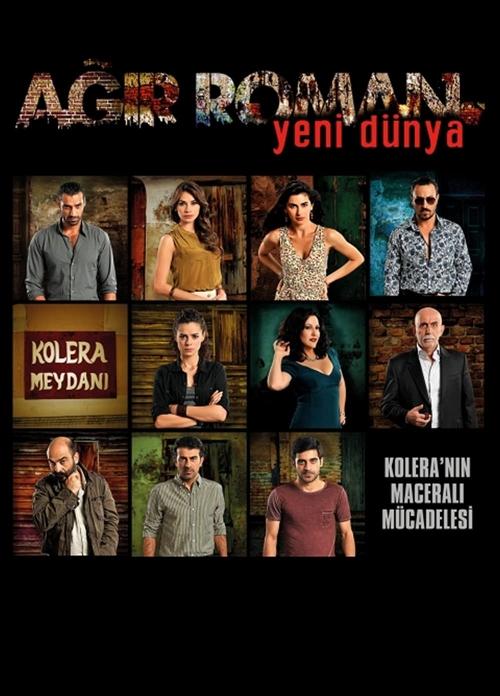


















Popular
What role does the setting play in the development of the story?
How does the character of İsmail evolve throughout the series?
What are the main conflicts between the characters in Ağır Roman: Yeni Dünya?
What is the significance of the relationships between the characters in the series?
How do the themes of power and corruption manifest through specific characters?
Should I watch it?
Ask Your Own Question

What is the plot?
In the opening scenes of "Ağır Roman: Yeni Dünya," we are introduced to the vibrant yet tumultuous world of Istanbul in the 1960s. The story centers around the life of a young man named İsmail, who is deeply entrenched in the criminal underbelly of the city. He is part of a gang led by the charismatic and ruthless leader, Halit. The gang is involved in various illegal activities, including extortion and smuggling, which sets the stage for the conflicts to come.
As the narrative unfolds, we see İsmail's internal struggle with his life choices. He is torn between loyalty to his gang and his desire for a better life. This conflict is exacerbated when he meets a beautiful woman named Zeynep, who represents a chance for redemption and a way out of his current lifestyle. Their initial interactions are filled with tension and attraction, as İsmail is captivated by her spirit and independence.
The plot thickens when Halit orders İsmail to carry out a violent act against a rival gang. İsmail hesitates, feeling the weight of his moral dilemma. However, under pressure from Halit and the gang, he reluctantly agrees. The scene is intense, showcasing İsmail's internal turmoil as he prepares for the confrontation. When the moment arrives, the violence is brutal, and İsmail is left shaken by the experience, further deepening his conflict.
Following the violent encounter, İsmail seeks solace in Zeynep, confiding in her about his struggles. Zeynep, who is unaware of the full extent of İsmail's involvement in crime, encourages him to leave the gang and pursue a legitimate life. This conversation ignites a spark of hope in İsmail, and he begins to contemplate a future outside of the criminal world.
As İsmail attempts to distance himself from the gang, Halit becomes increasingly suspicious of his loyalty. Tensions rise within the gang as rivalries and power struggles emerge. Halit confronts İsmail, demanding to know where his true loyalties lie. This confrontation is charged with emotion, as İsmail grapples with his fear of Halit and his desire for freedom.
In a pivotal moment, İsmail decides to take a stand against Halit. He gathers his courage and confronts him, declaring that he wants out of the gang. This decision leads to a violent showdown between İsmail and Halit, where İsmail fights for his life and his future. The fight is chaotic, filled with raw emotion as İsmail channels his desperation into a fierce determination to break free.
After the confrontation, İsmail manages to escape Halit's grasp, but not without consequences. The gang is now on high alert, and İsmail knows that he must go into hiding to protect himself and Zeynep. He seeks refuge with a friend who has connections to the underground, but the threat of Halit's revenge looms large.
As the story progresses, Zeynep becomes increasingly worried about İsmail's safety. She decides to take matters into her own hands and confronts Halit, demanding that he leave İsmail alone. This bold move puts her in grave danger, as Halit is not one to be trifled with. The tension escalates as Halit sees Zeynep's defiance as a challenge to his authority.
In a climactic sequence, Halit retaliates against Zeynep, leading to a dramatic rescue by İsmail. He returns to confront Halit one last time, fueled by love and desperation. The confrontation is intense, with both men fighting fiercely. İsmail's determination to protect Zeynep gives him the strength he needs to overcome Halit, culminating in a final, brutal showdown.
The aftermath of the confrontation leaves İsmail and Zeynep battered but alive. They realize that their lives will never be the same, and they must leave Istanbul behind to start anew. The final scenes depict their escape from the city, filled with a mix of hope and uncertainty as they drive away, leaving the chaos of their past behind. The story concludes with a sense of bittersweet resolution, as İsmail and Zeynep embark on a journey toward a new life, free from the shadows of their former existence.







What is the ending?
In the ending of "Ağır Roman: Yeni Dünya," the story culminates in a series of intense confrontations and emotional resolutions. The main characters face the consequences of their choices, leading to a tragic yet poignant conclusion that reflects the harsh realities of their lives.
As the narrative unfolds, we see the aftermath of the escalating tensions between the rival factions in the neighborhood. The protagonist, who has been deeply entrenched in the conflicts, finds himself at a crossroads. The weight of his decisions weighs heavily on him, and he grapples with feelings of guilt and responsibility for the violence that has erupted around him.
In a climactic scene, the protagonist confronts his former allies and enemies alike, leading to a showdown that is both physical and emotional. The streets are filled with chaos as loyalties are tested, and the characters are forced to confront their past actions. The protagonist's internal struggle is palpable as he realizes that the cycle of violence may never truly end, and he must make a choice that could alter the course of his life.
As the dust settles, we witness the fates of the main characters. Some find redemption, while others are consumed by their choices. The protagonist, in a moment of clarity, seeks to break free from the cycle of violence, but the consequences of his past loom large. The ending leaves viewers with a sense of unresolved tension, highlighting the complexities of human relationships and the impact of one's choices on the lives of others.
In the final moments, the protagonist walks away from the chaos, symbolizing a desire for change, but the scars of the past remain, suggesting that the journey towards redemption is fraught with challenges.
As the final act of "Ağır Roman: Yeni Dünya" unfolds, the atmosphere is thick with tension. The streets of the neighborhood, once vibrant with life, are now a battleground. The camera pans over the chaos, capturing the frantic movements of characters caught in the throes of conflict.
Scene 1: The protagonist stands at the center of the turmoil, his face a mask of conflict. He watches as friends and foes clash, the sounds of shouting and violence echoing around him. His heart races, torn between loyalty to his friends and the realization that this path leads only to destruction. The weight of his decisions presses down on him, and he feels the burden of responsibility for the chaos that has erupted.
Scene 2: In a dimly lit alley, the protagonist meets with a former ally, now an enemy. Their conversation is fraught with tension, each word laced with the history of their shared past. The protagonist's voice trembles as he tries to reason with his former friend, pleading for a way out of the cycle of violence. The emotional stakes are high, and the audience can feel the desperation in his tone.
Scene 3: The confrontation escalates, and fists fly. The camera captures the raw emotion on the characters' faces--anger, betrayal, and fear. The protagonist fights not just for survival but for a chance at redemption. Each punch thrown is a reflection of his internal struggle, a battle between the man he was and the man he wants to become.
Scene 4: As the fight reaches its peak, the protagonist finds himself alone, surrounded by the aftermath of the violence. Bodies lie on the ground, and the sounds of sirens wail in the distance. He kneels, overwhelmed by the weight of his choices. Tears stream down his face as he realizes that the cycle of violence has claimed too many lives, including those he loved.
Scene 5: In a moment of clarity, the protagonist stands up, determination etched on his face. He walks away from the chaos, symbolizing a desire to break free from the past. The camera follows him as he moves through the streets, the remnants of the battle fading behind him. His heart is heavy, but there is a flicker of hope in his eyes--a hope for a different future.
Scene 6: The final shots reveal the fates of the other main characters. Some lie lifeless, victims of the violence that consumed them. Others, like the protagonist's former ally, are left to grapple with their choices, haunted by the ghosts of their past. The neighborhood, once a vibrant community, is now a shadow of its former self, a stark reminder of the consequences of their actions.
As the screen fades to black, the audience is left with a lingering sense of unresolved tension. The protagonist's journey towards redemption is just beginning, but the scars of the past will always remain, a testament to the complexities of human relationships and the impact of one's choices on the lives of others. The story closes, leaving viewers to ponder the harsh realities of life and the possibility of change amidst the chaos.
Is there a post-credit scene?
In the TV show "Ağır Roman: Yeni Dünya," there is no post-credit scene. The series concludes its narrative without any additional scenes after the credits roll. The final moments of the show focus on the resolution of the main characters' arcs and the overarching themes of love, loyalty, and the struggles of life in a changing world. The absence of a post-credit scene allows the audience to reflect on the journey of the characters and the socio-political context of the story, leaving a lasting impression without any further narrative distractions.
What role does the setting play in the development of the story?
The setting of Ağır Roman: Yeni Dünya, a gritty urban neighborhood, serves as a character in itself, reflecting the struggles and aspirations of its inhabitants. The streets, filled with vibrant yet dangerous energy, highlight the socio-economic challenges faced by the characters. The contrast between the lively markets and the dark alleyways symbolizes the duality of hope and despair, influencing the characters' actions and decisions as they navigate their complex lives.
How does the character of İsmail evolve throughout the series?
İsmail starts as a naive and idealistic young man, deeply influenced by his surroundings and the people he admires. As the series progresses, he faces numerous challenges that force him to confront the harsh realities of his environment. His experiences with betrayal, loss, and the moral dilemmas of loyalty versus justice lead him to become more hardened and pragmatic, ultimately shaping his identity and decisions in the face of adversity.
What are the main conflicts between the characters in Ağır Roman: Yeni Dünya?
The main conflicts in Ağır Roman: Yeni Dünya revolve around the power struggles between various factions in the neighborhood, particularly between the local mafia and the police. Characters like the ambitious and ruthless mafia leader, who seeks to expand his influence, often clash with law enforcement officials who are determined to restore order. Additionally, personal rivalries and betrayals among characters, such as love interests and family ties, create emotional turmoil and drive the narrative forward.
What is the significance of the relationships between the characters in the series?
The relationships in Ağır Roman: Yeni Dünya are pivotal to the plot, showcasing themes of loyalty, betrayal, and love. The bonds between characters often dictate their choices, leading to intense emotional conflicts. For instance, romantic entanglements complicate alliances, while familial ties create a sense of obligation that can lead to tragic outcomes. These relationships drive the narrative, revealing deeper insights into each character's motivations and vulnerabilities.
How do the themes of power and corruption manifest through specific characters?
Power and corruption are central themes in Ağır Roman: Yeni Dünya, particularly embodied by characters like the mafia leader and corrupt officials. The mafia leader's ruthless ambition to control the neighborhood illustrates the lengths individuals will go to gain power, often leading to violent confrontations. Meanwhile, corrupt police officers exploit their positions for personal gain, showcasing how authority can be manipulated. These dynamics create a tense atmosphere, highlighting the moral decay within the community.
Is this family friendly?
"Ağır Roman: Yeni Dünya" is a drama series that delves into themes of crime, family loyalty, and the struggles of life in a challenging environment. While it offers a rich narrative, there are several aspects that may be considered objectionable or upsetting for children or sensitive viewers:
-
Violence: The show contains scenes of physical confrontations and gang-related violence, which may be intense and graphic.
-
Crime and Criminal Activity: The plot revolves around organized crime, showcasing illegal activities that may not be suitable for younger audiences.
-
Emotional Turmoil: Characters experience significant emotional distress, including betrayal, loss, and moral dilemmas, which could be heavy for sensitive viewers.
-
Substance Abuse: There are references to drug use and the impact of addiction on individuals and families.
-
Adult Themes: The series explores complex adult relationships and moral ambiguity, which may not be appropriate for children.
-
Language: The dialogue may include strong language or harsh expressions that could be deemed inappropriate for younger viewers.
These elements contribute to a mature viewing experience, making it less suitable for a family-friendly audience.