











Popular
What motivates Ryu to train in the ways of the Hadou?
How does Ken's relationship with Ryu evolve throughout the series?
What is the significance of the Satsui no Hado in Ryu's journey?
How does Gouken's past influence his teachings to Ryu and Ken?
What role does Akuma play in the development of Ryu's character?
Should I watch it?
Ask Your Own Question

What is the plot?
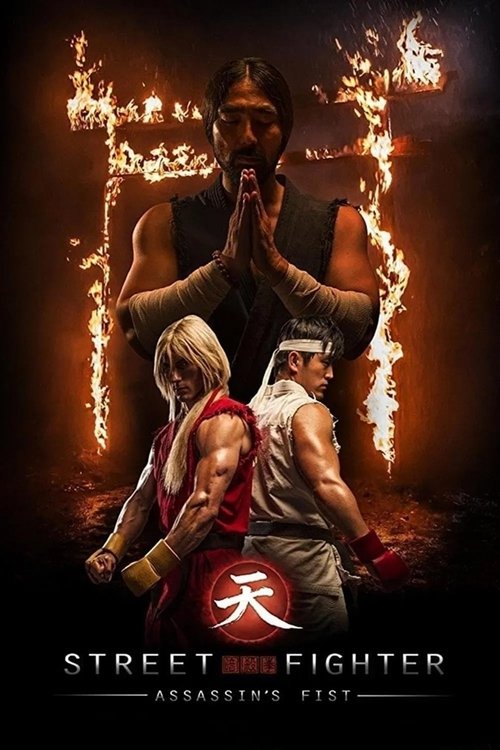
The story begins with a flashback to a young Ryu training under his master, Gouken, in a serene dojo. Ryu is shown practicing his martial arts diligently, demonstrating his dedication and potential. Gouken emphasizes the importance of controlling one's inner self and the dangers of the Satsui no Hado, a dark power that can consume a fighter. This sets the stage for Ryu's internal struggle throughout the series.
The narrative shifts to the present day, where Ryu, now a young adult, is living in a small apartment in Japan. He is haunted by dreams of a dark figure, which symbolizes his fear of succumbing to the Satsui no Hado. Ryu's friend, Ken Masters, arrives to visit him, and they engage in a friendly sparring match. Ken's brash and confident demeanor contrasts with Ryu's more serious and introspective nature. Their bond is evident, but Ryu's internal conflict is palpable as he struggles with his identity as a fighter.
Meanwhile, the story introduces Akuma, a powerful and malevolent martial artist who embodies the Satsui no Hado. He is shown in a dark, ominous setting, practicing his deadly techniques. Akuma's motivations are rooted in his desire to find a worthy opponent, and he is determined to confront Gouken, whom he sees as a rival. This sets up a looming threat that will impact Ryu and Ken's lives.
As the plot progresses, Ryu and Ken learn about the history of their martial arts lineage. They discover that Gouken had a brother, Akuma, who embraced the dark power of the Satsui no Hado and ultimately killed their master. This revelation deepens Ryu's internal struggle, as he fears that he may inherit Akuma's dark legacy. The weight of this knowledge drives Ryu to seek further training and understanding of his abilities.
Ryu and Ken travel to a remote location to train under Gouken's teachings. During their training, they face various challenges that test their skills and resolve. Ryu's focus is on mastering the Hadouken, a powerful energy attack, while Ken works on refining his own techniques. Their training is intense, filled with moments of frustration and breakthroughs, showcasing their growth as fighters.
The tension escalates when Akuma finally confronts Gouken in a dramatic showdown. The fight is fierce, with Gouken demonstrating his mastery of martial arts against Akuma's brutal and relentless attacks. The battle is visually striking, with powerful strikes and energy blasts exchanged between the two. Ultimately, Akuma overpowers Gouken, leading to a tragic moment where Gouken is fatally wounded. Ryu and Ken, witnessing the aftermath, are left devastated and filled with a sense of urgency to avenge their master.
In the wake of Gouken's death, Ryu grapples with his emotions. He feels a deep sense of loss and anger, which begins to awaken the Satsui no Hado within him. Ken, concerned for his friend, tries to keep Ryu grounded, but Ryu's internal battle intensifies. He becomes more withdrawn, haunted by visions of Akuma and the fear of losing control.
The climax of the season builds as Ryu decides to confront Akuma, driven by a mix of vengeance and the desire to prove himself. Ken, despite his reservations, stands by Ryu, pledging to support him in the fight against Akuma. The two friends prepare for the inevitable confrontation, knowing that it will test not only their physical abilities but also their emotional resilience.
The final confrontation takes place in a desolate landscape, where Ryu faces Akuma. The fight is brutal and showcases Ryu's struggle against the Satsui no Hado. As the battle rages on, Ryu taps into his inner darkness, momentarily losing himself to the power. However, he ultimately fights back against the Satsui no Hado, choosing to embrace his true self rather than succumb to the darkness.
In a climactic moment, Ryu unleashes a powerful Hadouken, striking Akuma and forcing him to retreat. The fight ends with Ryu standing victorious but emotionally drained, having faced his greatest fears. Ken rushes to Ryu's side, and they share a moment of relief and camaraderie, solidifying their bond as friends and fighters.
The season concludes with Ryu reflecting on his journey, understanding that the battle against the Satsui no Hado is ongoing. He acknowledges the importance of his training and the support of his friends, setting the stage for future challenges and growth as a martial artist.









What is the ending?
In the ending of "Street Fighter: Assassin's Fist," Ryu confronts his inner demons and the legacy of his master, Goken, while facing off against his friend and rival, Ken. The series culminates in a dramatic showdown that tests their skills and their understanding of the martial arts philosophy they have been taught. Ryu ultimately embraces his path, acknowledging the darkness within him but choosing to fight against it. The fate of the characters is left open-ended, with Ryu continuing his journey of self-discovery and Ken standing by his side.
As the final episodes unfold, the tension builds around Ryu's internal struggle. The scene opens with Ryu standing alone in a dimly lit dojo, the shadows dancing across the walls, reflecting the turmoil within him. He recalls the teachings of his master, Goken, who had instilled in him the importance of controlling the Satsui no Hado, the dark power that can consume a fighter. Ryu's face is a mask of concentration, his brow furrowed as he grapples with the fear of succumbing to this dark force.
In a flashback, we see Goken training Ryu, emphasizing the need for balance and the dangers of letting anger and hatred guide one's actions. The memory is vivid, filled with the sounds of their training sessions--the sharp crack of fists against wood, the rhythmic thud of feet on the dojo floor. Goken's voice echoes in Ryu's mind, urging him to find peace within himself.
The scene shifts to Ken, who is also reflecting on his own journey. He stands outside, the sun setting behind him, casting a warm glow that contrasts with the coldness of Ryu's internal battle. Ken's expression is one of determination; he knows that he must confront Ryu, not just as a rival but as a friend who is in danger of losing himself to the darkness.
The climactic confrontation takes place in an abandoned warehouse, a stark and gritty setting that mirrors the emotional stakes of their battle. Ryu and Ken face each other, the air thick with tension. Ken, with his fiery spirit, urges Ryu to remember who he is, to fight not just for victory but for the bond they share. Ryu, however, is haunted by visions of his darker self, the Satsui no Hado whispering temptations of power and vengeance.
As they engage in combat, the choreography is fluid and intense, showcasing their mastery of martial arts. Each strike and block is filled with emotion, reflecting their friendship and the weight of their respective journeys. Ryu's attacks become increasingly fierce, fueled by his inner turmoil, while Ken counters with a mix of aggression and concern, trying to reach Ryu's heart.
In a pivotal moment, Ryu unleashes a powerful Hadouken, a manifestation of his inner conflict. The energy crackles in the air, illuminating the warehouse with a blinding light. Ken, realizing the danger, calls out to Ryu, reminding him of their shared past and the teachings of Goken. This moment of clarity breaks through Ryu's haze, and he hesitates, the light of the Hadouken flickering as he battles with his own darkness.
Ultimately, Ryu chooses to redirect his energy, transforming the Hadouken into a more controlled and focused attack. This decision symbolizes his acceptance of his inner struggle and his commitment to fighting against the darkness rather than succumbing to it. The blast of energy dissipates, leaving Ryu breathless but resolute.
As the dust settles, Ryu stands panting, the weight of his choices heavy on his shoulders. Ken approaches him, a look of relief mixed with pride on his face. They share a moment of understanding, a silent acknowledgment of the battles they have faced both within and outside themselves. Ryu's journey is far from over, but he has taken a significant step towards mastering his own fate.
The series concludes with Ryu and Ken walking side by side, the sun rising in the distance, symbolizing hope and new beginnings. Ryu's path is now clearer; he understands that the fight against the Satsui no Hado is ongoing, but he is no longer alone. Ken's presence beside him signifies the strength of their friendship and the support they will provide each other as they continue their journeys.
In the final moments, the camera pans out, capturing the vastness of the world before them, hinting at the adventures and challenges that lie ahead. Ryu's fate is one of continued growth and self-discovery, while Ken stands as a steadfast ally, ready to face whatever comes next. The ending leaves viewers with a sense of anticipation, knowing that the story of these two warriors is just beginning.
Is there a post-credit scene?
In "Street Fighter: Assassin's Fist," there is indeed a post-credit scene that adds depth to the narrative. After the main events of the season conclude, the scene opens with a darkened room where a figure is seen training intensely. The camera slowly reveals the character to be Akuma, a powerful and enigmatic martial artist known for his ruthless fighting style and mastery of the Satsui no Hado.
As Akuma practices his moves, the atmosphere is thick with tension, underscored by the sound of his heavy breathing and the sharp strikes of his fists against the training dummy. The scene is visually striking, with shadows playing across his muscular frame, highlighting his fierce determination and the darkness that surrounds him.
In this moment, Akuma reflects on the nature of power and the path of the warrior, hinting at his philosophy that strength comes from embracing one's inner darkness. His internal monologue reveals a deep-seated belief that true power is only achieved through the acceptance of one's darker impulses, setting the stage for future conflicts with characters like Ryu and Ken.
The scene concludes with Akuma's piercing gaze directed at the camera, a silent challenge to the audience and the protagonists, suggesting that his presence will loom large over the events to come. This post-credit moment not only teases the potential for future confrontations but also encapsulates the themes of struggle, power, and the duality of human nature that permeate the series.
What motivates Ryu to train in the ways of the Hadou?
Ryu is driven by a deep desire to understand his own power and the nature of the Hadou. He feels a strong connection to his master, Gouken, and is determined to honor his teachings. Ryu's internal struggle revolves around the fear of losing control over his power, which is a recurring theme throughout the series.
How does Ken's relationship with Ryu evolve throughout the series?
Ken's relationship with Ryu is complex, marked by camaraderie and rivalry. Initially, Ken is portrayed as a more carefree and brash character, contrasting Ryu's serious demeanor. As the series progresses, Ken begins to understand the weight of their training and the responsibilities that come with their powers, leading to a deeper bond and mutual respect between the two.
What is the significance of the Satsui no Hado in Ryu's journey?
The Satsui no Hado represents a dark and dangerous path that Ryu must confront. It embodies the potential for violence and destruction within him, stemming from his immense power. Ryu's struggle against succumbing to this dark force is central to his character arc, as he seeks to balance his strength with compassion and control.
How does Gouken's past influence his teachings to Ryu and Ken?
Gouken's past is marked by tragedy and loss, particularly the death of his brother, Akuma, who embraced the Satsui no Hado. This history shapes Gouken's teachings, emphasizing the importance of restraint, discipline, and the moral implications of their martial arts. He instills in Ryu and Ken the need to harness their power responsibly, fearing the consequences of losing themselves to darkness.
What role does Akuma play in the development of Ryu's character?
Akuma serves as a dark reflection of Ryu's potential future, embodying the Satsui no Hado that Ryu fears. His presence looms over Ryu's journey, representing the ultimate test of Ryu's resolve and control over his power. Akuma's relentless pursuit of strength and his willingness to embrace darkness challenge Ryu to confront his own inner demons and the choices he must make to avoid a similar fate.
Is this family friendly?
"Street Fighter: Assassin's Fist" is a live-action adaptation of the popular video game series, and while it features martial arts and action, it does contain elements that may not be suitable for all audiences, particularly children or sensitive viewers.
-
Violence: The series includes numerous fight scenes that depict martial arts combat, which can be intense and graphic. Characters engage in hand-to-hand combat, showcasing various fighting techniques that may be unsettling for younger viewers.
-
Blood and Injury: Some scenes involve injuries that result in bloodshed, which could be distressing. The physical toll of the fights is portrayed realistically, emphasizing the pain and consequences of violence.
-
Emotional Turmoil: Characters experience significant emotional struggles, including themes of revenge, loss, and betrayal. These deeper emotional conflicts may resonate with older audiences but could be confusing or upsetting for younger viewers.
-
Mature Themes: The narrative explores themes of honor, sacrifice, and the burden of legacy, which may be complex for children to fully grasp. The motivations behind characters' actions often stem from darker personal histories.
-
Mature Language: There are instances of strong language that may not be appropriate for younger audiences, contributing to the overall mature tone of the series.
Overall, while "Street Fighter: Assassin's Fist" offers an engaging story for fans of the franchise, its violent content and mature themes suggest that parental discretion is advised for younger viewers.