





Popular
How does Ramón first meet Mateo during the pandemic lockdown?
Why does Ramón decide to travel to Huancayo or Mito with his father’s ashes?
What is Mateo’s role in Ramón’s journey?
How does Ramón’s relationship with his father shape the story?
What does Ramón discover about himself on the trip with Mateo?
Should I watch it?
Ask Your Own Question

What is the plot?
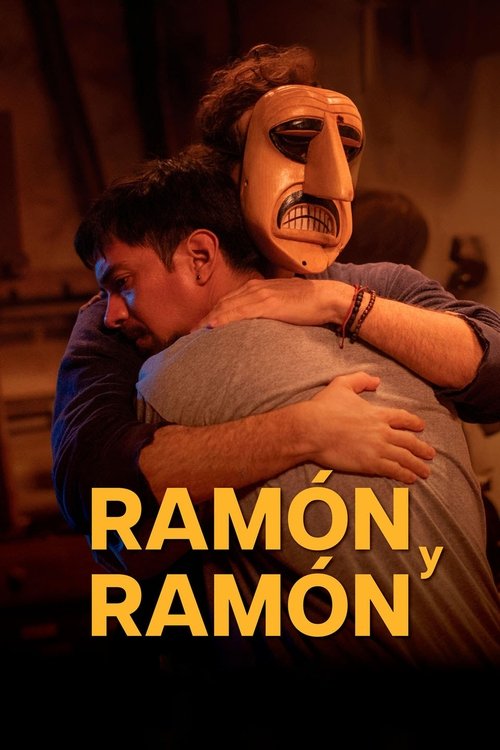
During the COVID-19 lockdown in Lima, Ramón lives in near-total emotional quarantine as well as physical confinement. He is a gay man in his thirties, alone in his apartment, with a respectable corporate job that does little to fill the emptiness in his life, and the isolation is sharpened by the fact that the partner he still loves has left him and his father has just died. The film opens in that hushed, suspended world of masks, curfews, and distance, where ordinary mourning is impossible and every human encounter feels both risky and precious.
The first rupture comes when Ramón receives the ashes of his estranged father, also named Ramón. Because of the pandemic, there is no normal funeral, no family gathering, no final embrace over a coffin; instead, the authorities hand him the remains in the cold, bureaucratic way the crisis has made so many deaths feel even lonelier. The central wound is already clear: this is not a son grieving a father he was close to, but a son holding the ashes of a man from whom he had been distant for years, and whose memory is tangled up with rejection, silence, and unfinished pain.
In that same period of confinement, Mateo enters Ramón's life. Mateo is a young Spaniard stranded in Lima, staying in Ramón's building or nearby, and the two men are brought together by the strange intimacy of lockdown, when proximity is unavoidable but contact is still restricted. Their first interactions are colored by difference: they are not cut from the same background, they do not live the same life, and the film is careful to stress that they begin as strangers who seem almost improbably mismatched. Yet the isolation of the pandemic gives their meetings a strange tenderness. They talk, watch each other, and slowly begin to recognize one another as a kind of lifeline. One of the sources describes them as dancing, laughing, and locking eyes without hesitation, their bodies becoming used to each other's presence even while the world outside demands distance. Another notes that a "deep connection" emerges, one strong enough that they begin to question each other and, by extension, themselves.
Ramón's grief does not sit still. Receiving his father's ashes forces him to confront not only death but inheritance: what it means to carry a name, a history, and a pain that never fully got spoken aloud. The film presents his father as absent not only in death but in life, a man whose relationship with his son has been troubled or distant for years. Ramón is left with the remains and with a question he cannot answer in Lima: where do these ashes belong? He cannot simply keep them, and he cannot properly bury them in the city that has become a tomb-like place of isolation. The story therefore pushes him toward a journey back to the father's native land, toward the place where the dead man's life began and where his final resting place might make emotional sense.
Mateo decides to go with him. That decision changes the film's shape. What begins as a private mourning ritual becomes a shared road story, and the emotional stakes deepen because Mateo is not just offering practical company; he is choosing to stay with Ramón at a moment when the world is organized around separation. Together they leave Lima and head east into the Andes, toward Mito in the mountains of Concepción, Junín, with Huancayo also identified in several descriptions as the destination for scattering the ashes. The geography matters as much as the plot. The city gives way to roads, slopes, altitude, and widening landscapes, and the emotional tone shifts with the terrain. The journey is not presented as an adventure in the conventional sense, but as a movement out of stagnation and into confrontation, where the physical act of traveling mirrors Ramón's inner attempt to cross the distance between who he has been and who he may become.
As the pair travel, the film lets the bond between them unfold in small gestures rather than dramatic declarations. Masks, curfews, and distancing remain part of the texture of the journey, but they do not prevent intimacy; instead, they make every shared glance, every bit of laughter, every pause in conversation feel charged. The sources emphasize that their closeness carries "unspoken possibility," and that their differences do not block connection so much as deepen it. Ramón, who had entered the story trying to manage his grief alone, is now forced into the vulnerability of being seen by someone new. Mateo, for his part, is not a magical cure or an outside savior; he is another lonely human being, and the film's emotional intelligence comes from allowing that mutual fragility to stand at the center of the relationship.
The journey also becomes a return to family origin. Ramón is not simply delivering ashes to a village; he is being pulled back toward a lineage he has been estranged from, and toward questions about belonging, identity, and the wounds that are passed down in families without being named. In Huancayo or Mito, he reconnects with his family of origin and with his roots, and the landscape itself becomes part of that reckoning. The film does not frame this as a neat reconciliation. Rather, it presents the encounter with ancestry as emotionally complicated, because the place that holds his father's memory is also the place that reveals how much Ramón has been carrying in silence. The sources describe him as realizing that he has been asking the wrong questions, which suggests that he has approached the trip as if it might produce a clear explanation or a final verdict on his father's life, when what he actually needs is a different kind of understanding.
A key emotional revelation is that Ramón's true struggle is not to solve his father, but to face himself. The film repeatedly frames his search as one for answers he cannot actually use: Why did his father remain distant? Was the pain caused by his sexuality? What exactly should he do with the ashes? Yet the journey gradually reorients those questions into something more interior and less forensic. By the time he reaches the ancestral destination, he understands that the issue is not only where his father belongs, but where Ramón belongs within his own life. The sources are explicit that he discovers he has been "searching for answers to the wrong questions" and that he "must heal" or "heal from within" in order to move forward. This is the core twist, if it can be called one in such a quiet drama: the destination is not a solution, but a mirror.
There are no documented murders, accidents, or violent deaths in the available plot information. The only death clearly identified is that of Ramón's father, Ramón, whose passing is the catalyst for the entire narrative. His death happens off-screen, before the film's main action begins, and the sources do not specify a cause of death or any homicidal circumstance. The emotional force of the film comes from the aftermath rather than the event itself: the ashes, the distance, the unfinished relationship, and the burden placed on the son who must now decide how to honor a man he barely knew in the ways that mattered most.
By the time Ramón and Mateo arrive in the highlands, the film has become less about external plot than about the quiet release of emotional pressure. The ash-scattering ritual, whether described as taking place in Mito, Huancayo, or the surrounding Junín region, functions as the climax because it is the moment when Ramón finally stops trying to hold his father at a distance and also stops demanding that the dead man provide him with simple answers. The father is returned to the land of his origin, and that act becomes both practical and symbolic: practical because the ashes are placed where they are meant to be, symbolic because Ramón is finally able to acknowledge the truth of his loss without insisting that grief behave in an orderly way.
Mateo's role in the ending is crucial. He does not steal the final emotional revelation; he makes it possible by staying. His decision to accompany Ramón turns the story from solitary mourning into shared witnessing. In the last stretch of the journey, Ramón's relationship with Mateo is no longer just an incidental connection formed during quarantine. It becomes evidence that intimacy can emerge even under circumstances designed to prevent it, and that human contact can be transformative precisely because it is fragile. The film's sources repeatedly note that the two men question each other and develop a profound bond despite their differences, and that bond is what allows Ramón to move from grief into a more honest relationship with himself.
The ending does not rely on a sensational twist or an explosive confrontation. Its power lies in the stillness after the ritual, when the act of scattering or leaving the ashes has been completed and Ramón must live with what remains inside him. What remains is not certainty, but a kind of opening. He has not "solved" his father, and he has not transformed pain into easy peace. Instead, he has learned that the questions he brought with him were too narrow for the life he actually has to live. The final emotional note is one of cautious forward motion: Ramón will carry his history, but no longer as a dead weight that demands impossible answers. He will carry it as something he can live through, because he has begun to heal from within and to understand that moving on does not mean forgetting.
So the film closes not with a dramatic revelation about the father's hidden past, and not with a violent break between the two men, but with the quieter resolution that Ramón has been searching in the wrong direction all along. His father's death remains a wound, not a mystery solved; Mateo remains a presence that changed the course of his grief; and the mountains of Junín, whether viewed as Mito or Huancayo, become the place where the son finally lets go of the demand for perfect closure.


What is the ending?
The ending centers on Ramón completing the journey with Mateo and reaching the point where he can let go of his father's ashes in Huancayo. By the end, Ramón is left with the realization that he has been searching for the wrong answers and needs to heal in order to move forward, while Mateo's role in his life is as the companion who helps carry him to that turning point.
In the film's final movement, Ramón and Mateo are already on the road together, moving away from the confinement of Lima and toward the father's place of origin in the Andes. The trip is not just physical; it is the route Ramón takes while carrying the ash-filled urn of a father he had long been distant from. Mateo stays beside him, having chosen to accompany him after their connection deepened during lockdown.
As they continue the journey, the film brings Ramón to the point where he understands that the question he has been carrying is not how to recover something from his father, but how to deal with his own wound and continue living. The ashes are taken to Huancayo, and Ramón fulfills the purpose of the trip by returning his father's remains to the land tied to his family's roots. This ending is presented as the moment when Ramón stops looking outward for closure and turns inward toward healing.
By the end, Ramón's fate is that he moves forward after this act of farewell, no longer trapped in the same emotional distance that defined the beginning of the story. Mateo's fate is simpler and more immediate: he remains the person who travels with Ramón through the end of the story and helps him reach that final release, but the film's core ending belongs to Ramón's transformation rather than to a separate resolution for Mateo.
Scene by scene, the ending unfolds like this: Ramón and Mateo travel together into the mountains. The urn of ashes is carried toward Huancayo, the father's homeland. Ramón completes the return of his father's remains. After that, the film leaves him with the understanding that healing is necessary before he can move ahead with his life.
The story ends without a separate final event for each major character beyond that shared journey's completion; the decisive change is Ramón's, and Mateo's importance is that he is the one who stays beside him until that change is reached.
Is there a post-credit scene?
There is no reliable evidence in the available sources that Ramón and Ramón (2025) has a post-credits scene, and I can't confirm one from the results provided.
What the sources do show is that the film is a 2025 release that premiered at San Sebastián in 2024 and later screened and released in Spain and Peru in 2025. None of the supplied film listings, trailer references, or other results describe any end-credits or post-credits footage for this movie.
So, based on the available information, the safest answer is: no confirmed post-credits scene is documented in these sources.
How does Ramón first meet Mateo during the pandemic lockdown?
Ramón first crosses paths with Mateo when Mateo is stranded in the same building during the confinement period. Ramón is already isolated in his apartment, grieving the sudden death of his estranged father, and Mateo enters his life at that moment of enforced loneliness, which quickly becomes the starting point for their connection.
Why does Ramón decide to travel to Huancayo or Mito with his father’s ashes?
Ramón chooses to take his father's ashes back to his father's native place as a way to honor a man with whom he had a distant relationship and to complete the burial journey he could not carry out during lockdown. Sources name the destination as Huancayo in some summaries and Mito in others, but both describe the same central action: Ramón returning the ashes to his father's origin.
What is Mateo’s role in Ramón’s journey?
Mateo is not just a companion; he is the person who chooses to accompany Ramón on the trip after their relationship deepens during confinement. He stays with Ramón through the journey to scatter the ashes, turning what begins as an accidental meeting into a shared road trip into the Andes and a emotionally charged bond between the two men.
How does Ramón’s relationship with his father shape the story?
Ramón's father is central to the story because Ramón receives the ashes from a man he had barely been in contact with for years. That distance creates Ramón's grief, uncertainty, and need to find a place for the ashes, and the journey becomes a way for him to confront unresolved feelings about his father and his own family roots.
What does Ramón discover about himself on the trip with Mateo?
During the journey, Ramón realizes that he has been asking the wrong questions and that what he really needs is healing rather than more answers. The trip pushes him to reconnect with his origins, face old wounds, and understand that moving forward requires healing from within.
Is this family friendly?
Ramón y Ramón does not appear to be a family movie for young children, but it also does not show signs of strong graphic content. The available ratings and guides suggest it is mainly a mild-to-moderate drama with some adult material, especially in the area of alcohol, drugs, or smoking.
Potentially objectionable or upsetting elements for children or sensitive viewers:
- Mild alcohol, drugs, or smoking is the only content category specifically flagged in the IMDb parental guide.
- The film is labeled not recommended for children under 12 in one official trailer listing.
- Another listing gives it a +7 / not recommended under 7 advisory, which suggests some material may be unsuitable for very young children.
- It is a drama, so sensitive viewers may still find emotional themes heavier than in a typical family film, even though the available parental guide reports no sex, violence, profanity, or frightening scenes.
Based on the sources available, it is probably fine for older children with supervision, but I would not call it a safe default choice for young kids.








