










Popular
What is the significance of the character David Herdeg in The Philadelphia Experiment?
How does the character of Jim Parker contribute to the plot of The Philadelphia Experiment?
What role does the military play in the events of The Philadelphia Experiment?
How does the character of the scientist, Dr. James Longstreet, influence the story?
What are the emotional struggles faced by David as he tries to return to his time?
Should I watch it?
Ask Your Own Question

What is the plot?
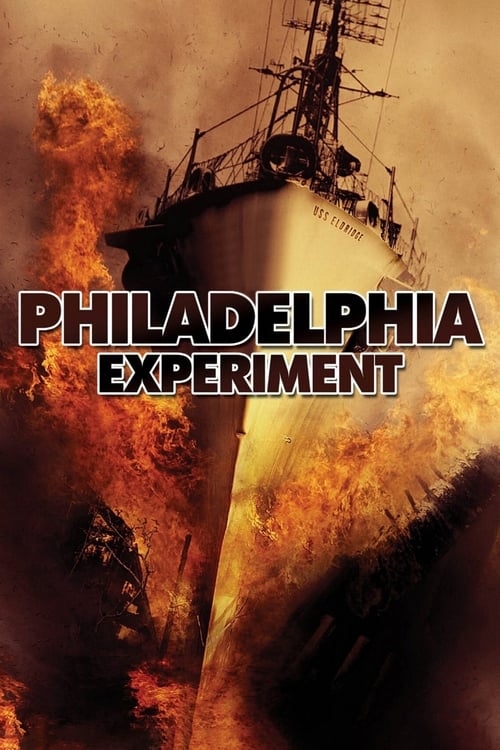
In 1943, deep in the machinery of war, the United States Navy conducts the original Philadelphia Experiment aboard the destroyer escort USS Eldridge in Philadelphia, Pennsylvania, trying to make the ship invisible with a secret cloaking system. The test goes catastrophically wrong: the vessel vanishes completely, the men aboard are lost to the anomaly, and the disaster is sealed into rumor and legend for nearly seventy years.
The film then leaps to 2012, where the experiment has been resurrected by the defense contractor Greywatch and its ambitious scientist Dr. Richard Faulkner. Faulkner stands before his superior, Kathryn Moore, practically glowing with pride as he boasts that he has succeeded in recreating the technology. The tone is one of corporate triumph wrapped around military secrecy, but the moment is already poisoned by the fact that this is not merely a copy of an old invention--it is a second attempt to force open the same door that swallowed the Eldridge in 1943.
Kathryn oversees the operation with the smooth authority of a person who understands exactly how dangerous this project is and does not care enough to stop it. Under her direction, the team uses her own car as a test subject, and for a brief, electrifying moment, the machine works: the car becomes invisible, confirming that the cloaking field is real. That success is immediately undercut by failure, because the generators do not shut down as planned and the car never returns. The film makes this first mistake feel like a warning siren; the technology does not simply hide matter, it destabilizes it.
Then the impossible happens. In a rural Pennsylvania airstrip--described in some summaries as a runway or open field--the USS Eldridge itself suddenly materializes out of nowhere, as if history has folded back on itself and dropped a ghost ship into the present day. The appearance is violent, disorienting, and uncanny. The ship is not restored; it flickers, slips, and threatens to vanish again at any second, as though time cannot decide whether it belongs in 1943 or 2012. This is the movie's first real rupture, the moment when the experiment ceases to be a science project and becomes a crisis capable of tearing the world apart.
Amid the chaos, the ship disgorges its single survivor: Lieutenant William Gardner--also identified in some summaries as Bill Gardner--the lone man who made it through the original catastrophe and has now been dragged back into the present with the ship. He staggers out of the disintegrating nightmare of the Eldridge as if he has been thrown from one century into another by force alone. He is not a tourist in the future; he is a man ripped from his proper place in time and forced to confront the impossible fact that the disaster that trapped him in the first place has just been repeated.
At the same time, the film introduces the other half of its human center: Deputy Carl Reed, a local lawman in Springview, Pennsylvania, who is drawn to the scene by the bizarre reappearance of the ship. The moment he gets too close, the Eldridge pulls him into its destabilized mass. When the ship dematerializes again, Carl's arm fuses grotesquely to its hull, leaving him trapped in a nightmare of metal, gravity, and time. The image is one of the film's most memorable and disturbing effects: a man not merely injured, but partially incorporated into the disaster itself. Carl's helplessness turns the experiment from abstract temporal theory into something personal and physically horrific.
Out in the world beyond the ship, William Gardner collides with a second unexpected connection: Molly Gardner, a hacker and Carl's girlfriend, who is revealed through a shocking family linkage to be William's granddaughter. The coincidence is so extreme that it feels almost fated, but the film treats it less as a coincidence than as a hidden thread finally pulled into view. William, who has spent decades as the only survivor of the original experiment, now has a descendant in the present--a descendant who can move through systems, crack digital barriers, and help him understand the world he has been thrown into. The emotional effect is immediate. William is no longer just a survivor; he is suddenly a grandfather looking at a living legacy he never knew he would have.
Molly and William are forced into an uneasy alliance almost at once. She brings urgency, technological skill, and fierce loyalty to Carl; he brings first-hand knowledge of the 1943 catastrophe and the grim understanding that the Eldridge is not merely appearing, but repeatedly slipping through time like a blade cutting the same wound again and again. The two begin trying to rescue Carl from the ship while also figuring out how to stop the experiment before it tears reality apart.
Behind the scenes, Kathryn Moore responds like a corporate warlord faced with a leak in her secret weapons program. She does not retreat, apologize, or shut the operation down. Instead, she reaches for violence. She sends her enforcer Hagen, a trigger-happy, near-unstoppable henchman with a grim, Terminator-like presence, to kill William and anyone else who has seen too much. Hagen is not sent to contain a problem; he is sent to erase evidence. That choice darkens the movie sharply, because the threat is no longer just the unstable ship. Greywatch itself becomes a second monster, and one that is entirely human.
The ship's instability gets worse. It does not stay in Pennsylvania. It begins vanishing and reappearing elsewhere, first shifting across the globe and later emerging over Chicago, where it crashes into a high-rise building in a spectacular burst of destruction. The movie's scale expands rapidly from a rural military anomaly to a city-level catastrophe. What started as a hidden experiment now threatens civilian life on a massive scale, and the film underlines the growing dread: the Eldridge is not merely lost in time; it is wandering through it, punching holes in the present wherever it goes.
That movement eventually carries the ship to a desert area outside the United States, where authorities attempt to solve the problem by destroying it outright. The strategy fails. Every act of force only deepens the instability, and the attempt to blow the ship apart does not stop the disaster--it worsens it. The film makes a clear point here: the anomaly is no longer something that can be bombed, shot, or buried. It is embedded in the structure of space-time itself. The more the authorities respond with brute force, the more the timeline frays.
As Molly and William chase answers, the film gradually widens its mythology. The original Philadelphia Experiment is revealed not as a myth or isolated accident, but as the root of the entire nightmare. The recreated test is not reviving a dead technology so much as reopening an old rupture in history, and the Eldridge is the physical embodiment of that tear. Some of the supporting explanations come through Morton Salinger, a former project lead who becomes crucial in helping Molly and William understand how the technology is supposed to work and why it is failing now. He functions as the insider who knows where the bones are buried: the scientist whose knowledge can still be useful, but who also carries the burden of having helped create the disaster.
As the situation spirals, the movie folds the personal and the cosmic tighter together. Carl is still trapped, still fused to the ship, still fighting for survival. William is still trying to get back to 1943, not because he wants to escape the present, but because he realizes that the only way to stop the disaster is to return to the point where it began. The ship's reappearances are no longer random events; they are symptoms of a broken timeline seeking closure. The longer it remains loose in the present, the more damage it causes. The Eldridge is not just a haunted object. It is a moving wound.
The violence around the protagonists escalates in parallel. Hagen continues hunting, acting as Kathryn's instrument of cleanup, and the film repeatedly pits the survivors against Greywatch's men. Each confrontation reinforces the same pattern: people who know too much are treated as disposable, and truth is being policed with bullets and intimidation rather than reason. The story's tension comes from this double threat--the temporal collapse and the human cover-up--closing in at once.
The revelations keep landing in quick, destabilizing succession. William is not merely a stranger from the past but the key survivor whose presence in the present is tied to the entire accident. Molly is not just Carl's hacker girlfriend but his granddaughter, the family connection that binds the timeline together. The recreated experiment is not an improvement on the original but the same mistake repeated with more money and better computers. And beneath all of it lies the central truth: the ship's return has opened a rift that can only be closed by understanding the original disaster from the inside.
The climax builds with a sense of something massive finally collapsing under its own weight. A time vortex opens above the lab, a visible tear in the sky that transforms the conflict from corporate espionage into a direct battle over reality itself. The Eldridge is drawn toward it as though the fabric of time is reeling the ship back to where it belongs. This is the moment when the film stops pretending the situation can be managed. The anomaly has reached the point of self-correction, but that correction will only happen through sacrifice.
In the final confrontation, Molly Gardner kills Kathryn Moore. The film gives the corporate antagonist a personal end rather than a sterile defeat. Kathryn's death is the payoff for every decision she has made to prioritize secrecy, control, and profit over human life. Molly's act is not just revenge, but the final rejection of Greywatch's power over the crisis. It is the moment when the living people in the story seize control from the people who created the disaster and kept feeding it.
At the same time, Bill Gardner is pulled back with the Eldridge into the opening vortex and sent to 1943, restoring the broken loop and returning him to the proper point in his life. The ship is wrenched out of the present as the timeline repairs itself, taking the original survivor back to the era where he belongs. The film treats this as both rescue and loss: Bill survives, but only by disappearing from the present he has just learned to inhabit. The repaired timeline implies that he will now live out the rest of his life in the corrected history, aging naturally after his return.
The danger that has been building around Carl finally breaks with the ship's departure. In the version of the ending described in the sourced material, Carl Reed escapes, and he leaves with Molly Gardner as the crisis resolves. Their relationship survives the apocalypse of history, and the film closes on the note that the two of them remain together in the repaired timeline. The emotional effect is one of hard-won continuity: the world has been damaged, but not destroyed, and the people who matter most manage to step out of the wreckage alive.
The ending therefore lands as a full temporal reset with selective memory intact. The Eldridge is returned to 1943, Bill is restored to his rightful time, Kathryn is dead, Greywatch's grip is broken, and the disaster in 2012 is sealed off before it can annihilate the world. Molly and Carl survive into the corrected present, their lives no longer defined by the catastrophic interference that has just been erased. The final impression is not of triumph so much as of survival after impossible damage: the universe snaps back into place, but only after demanding that the ship, the secret, and the man who first lived through it all be taken away again.
If you want, I can also provide a character-by-character spoiler chronology or a scene-by-scene version of the same plot.






What is the ending?
In the ending of The Philadelphia Experiment (2012), the main characters, David and his love interest, are faced with the consequences of their actions as they attempt to stop the time-traveling chaos unleashed by the experiment. David ultimately sacrifices himself to save the timeline, ensuring that the future remains intact, while his love interest is left to grapple with the loss and the impact of their journey.
As the climax of the film unfolds, David, having traveled through time and witnessed the devastating effects of the Philadelphia Experiment, realizes that the only way to restore balance is to confront the source of the chaos. He and his love interest, who has been a steadfast ally throughout their ordeal, find themselves in a tense confrontation with the military personnel who are trying to control the situation. The atmosphere is thick with tension as they navigate through a series of obstacles, both physical and emotional.
In a pivotal scene, David confronts the military leader responsible for the experiment, who is now aware of the catastrophic consequences of their actions. The leader, driven by a mix of ambition and fear, is unwilling to accept responsibility, leading to a heated exchange. David's determination to set things right is palpable; he understands that his sacrifice is necessary to prevent further destruction.
As the confrontation escalates, David makes the heart-wrenching decision to use the technology that brought him to this point, knowing it could cost him his life. He shares a final, emotional moment with his love interest, expressing his feelings and the hope that she will remember him. The weight of their connection hangs in the air, filled with unspoken promises and the pain of impending separation.
In a flash of light, David activates the device, and the energy surges around him. The scene is visually striking, with swirling lights and a cacophony of sound as time and space bend around him. In this moment, he is both terrified and resolute, embodying the essence of sacrifice for the greater good. The screen fades to white, and when the light dissipates, David is gone, leaving behind a world that is now free from the chaos of the experiment.
The aftermath reveals his love interest standing alone, grappling with the loss of David. She is left in a world that has been altered but is now safe from the repercussions of the experiment. The emotional weight of their journey lingers in her heart, and she carries the memory of David with her, a bittersweet reminder of love and sacrifice.
In the final scenes, the military personnel are shown reflecting on the consequences of their actions, hinting at a deeper understanding of the ethical implications of their experiments. The film closes with a sense of unresolved tension, as the characters are left to ponder the cost of their ambitions and the fragility of time itself. David's fate is sealed in sacrifice, while his love interest must navigate a future forever changed by their experiences.
Is there a post-credit scene?
In the 2012 film "The Philadelphia Experiment," there is no post-credit scene. The movie concludes without any additional scenes or content after the credits roll. The story wraps up with the main characters having navigated the complexities of time travel and the consequences of their actions, leaving the audience with a sense of closure regarding their journey. The film focuses on the emotional and psychological impacts of their experiences rather than setting up for a sequel or additional narrative threads.
What is the significance of the character David Herdeg in The Philadelphia Experiment?
David Herdeg is a pivotal character in The Philadelphia Experiment, serving as the protagonist who becomes a victim of the experiment gone wrong. His journey is marked by confusion and desperation as he navigates a world that has drastically changed since he was transported through time. David's emotional state is one of fear and determination as he seeks to understand his situation and find a way back to his own time.
How does the character of Jim Parker contribute to the plot of The Philadelphia Experiment?
Jim Parker is David's best friend and plays a crucial role in the narrative. His loyalty and bravery are tested as he attempts to help David after the experiment. Jim's character embodies the theme of friendship and sacrifice, as he risks his own safety to assist David in navigating the challenges posed by their time displacement.
What role does the military play in the events of The Philadelphia Experiment?
The military is central to the plot of The Philadelphia Experiment, as it is responsible for conducting the experiment that leads to David and Jim's time travel. The military's motivations are shrouded in secrecy and ambition, showcasing a desire for power and control over technology. Their actions drive the conflict, as they pursue David and Jim to cover up the experiment's consequences.
How does the character of the scientist, Dr. James Longstreet, influence the story?
Dr. James Longstreet is a key figure in the film, representing the scientific ambition behind the Philadelphia Experiment. His character is driven by a desire to push the boundaries of science, but he also grapples with the moral implications of his work. Longstreet's internal conflict adds depth to the narrative, as he ultimately must confront the consequences of his actions and the impact on David and Jim.
What are the emotional struggles faced by David as he tries to return to his time?
David experiences profound emotional struggles throughout The Philadelphia Experiment. He grapples with feelings of isolation, confusion, and longing for his past life. As he encounters the challenges of a world that has moved on without him, David's determination to return home is fueled by a deep sense of loss and a desire to reconnect with his loved ones, particularly his girlfriend, which adds a layer of urgency to his quest.
Is this family friendly?
The Philadelphia Experiment (2012) contains several elements that may not be suitable for children or sensitive viewers. Here are some potentially objectionable or upsetting aspects:
-
Violence: The film includes scenes of combat and physical confrontations, which may be intense and graphic. Characters are shown in perilous situations, leading to injuries and distress.
-
Death and Loss: Themes of loss and the impact of death are present, with characters experiencing grief and trauma related to their experiences.
-
Paranoia and Fear: The narrative explores themes of government conspiracy and experimentation, which may evoke feelings of anxiety or fear regarding authority and the unknown.
-
Mature Themes: The film touches on complex themes such as sacrifice, the consequences of scientific experimentation, and the moral dilemmas faced by the characters, which may be difficult for younger audiences to fully grasp.
-
Emotional Turmoil: Characters undergo significant emotional struggles, including feelings of isolation, confusion, and desperation, which may be upsetting for sensitive viewers.
These elements contribute to a darker tone that may not be appropriate for all audiences, particularly children.








