





Popular
How does Edna O’Brien first meet Ernest Gébler, and why does she leave rural Ireland for him?
What role does Ernest Gébler play in Edna O’Brien’s career after the success of *The Country Girls*?
Why was *The Country Girls* so controversial in the film’s story?
What happens in Edna O’Brien’s custody battle with Ernest Gébler?
How does the documentary portray Edna O’Brien’s life in London after leaving Gébler?
Should I watch it?
Ask Your Own Question

What is the plot?
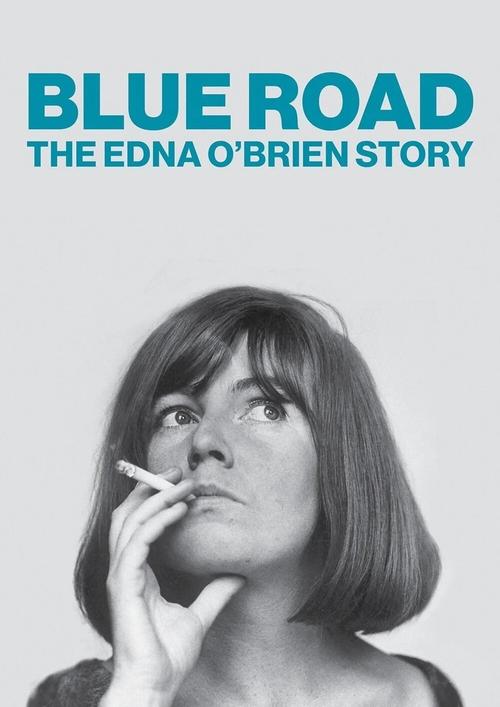
The documentary opens on Edna O'Brien in old age, speaking from the end of her life, her face lined by time but still animated by the same fierce intelligence that made her famous. As Jessie Buckley reads from O'Brien's diaries, the film immediately frames everything as memory, confession, and reckoning, beginning with a May 1967 diary entry that captures O'Brien's lifelong tension with Ireland and the freedom she keeps trying to claim from it. In those first moments, the film makes clear that this is not a conventional rise-and-fall story but a portrait of a woman who survives scandal, humiliation, creative exile, and reinvention, and who now looks back on it all with unsparing candor.
From there, the story moves back into rural County Clare, to Tuamgraney, where Edna O'Brien grows up in an observant Catholic household under the shadow of a domineering mother and an alcoholic father. The place feels narrow, disciplined, and airless, and the young Edna is shown as restless almost from the start, the kind of girl who already seems too alive for the world around her. The documentary lingers on the emotional texture of that early life: prayer, restriction, the pressure of social judgment, and the sense that a future for a woman like her is supposed to remain small. That pressure becomes the engine of the whole film, because every later departure--geographic, emotional, sexual, artistic--begins as an escape from this original confinement.
The film then follows O'Brien to Dublin, where she trains in a chemist shop/pharmacy, a practical job that also becomes a symbolic threshold: she is no longer only the daughter trapped in rural Ireland, but a young woman learning independence in the city. The documentary presents this period as formative rather than glamorous, showing how the ordinary discipline of work sits beside her imaginative hunger. Even before fame arrives, she is already moving toward a life that will not stay still.
That movement becomes decisive when she meets Ernest Gébler, an older writer whose charisma initially reads as sophistication but soon reveals itself as control. O'Brien falls in love with him and leaves her rural home to be with him, even as her mother protests, and the documentary treats this as one of the first great acts of defiance in her adult life. The relationship begins outside marriage, which scandalizes the society around them, and the scandal only deepens when they relocate to England, marry, and have two sons, Carlo Gébler and Sasha Gébler. In the film's emotional logic, this is where romance starts turning into enclosure. Ernest is not just an older husband; he is a gatekeeper, a critic, and eventually an antagonist whose resentment will shape years of O'Brien's life.
The turning point comes in 1960, when O'Brien publishes The Country Girls. The book's success is immediate and explosive. It makes her a literary sensation, but in Ireland it also triggers outrage from the Catholic Church and the Censorship Board, and the novel and its sequels are banned and burned. The documentary stresses how radical the book feels in that moment: it speaks openly about female desire and agency, and in doing so it exposes the hypocrisy of the society attacking it. The public backlash is fierce, but the domestic backlash is worse. Ernest Gébler's jealousy begins to curdle into cruelty, and the film presents his reaction to her success as a brutal emotional counterattack.
What follows is one of the documentary's most harrowing sections. Gébler mocks O'Brien in diary notes, leaving taunting messages that turn even her private writing into a site of domination. He becomes controlling over money as well, and one source notes that O'Brien was forced to sign over her royalty payments to him, receiving only a small housekeeping allowance in return. When she finally refuses to comply with that arrangement, he responds violently, choking her and demanding obedience. The film does not present this as a melodramatic single confrontation but as part of a long pattern of intimidation that drains the marriage of dignity and safety. The result is emotional suffocation: a woman who has just broken through into international recognition is being strangled, literally and symbolically, by the man standing beside her.
The marriage collapses under that pressure, and the divorce becomes another battle rather than a release. O'Brien's sons, Carlo and Sasha, want to live with her after the separation, and that choice provokes another vicious reaction from Ernest Gébler. The film indicates that his anger even turns toward the children, though the available sources do not spell out every exact detail of that confrontation. What is clear is that custody is not a quiet legal matter in this story; it is another extension of the same war over power, possession, and voice. O'Brien is not merely leaving a husband--she is trying to keep hold of her children, her work, and her autonomy at the same time.
As the documentary continues, it widens from domestic conflict to the astonishing scale of O'Brien's public life. She keeps writing at a relentless pace, with one source noting that she publishes a novel each year during a period when commercial literary success is still possible. That productivity matters because it shows she is not crushed by scandal, even when scandal follows her everywhere. Instead, she transforms humiliation into material, turning private pain into prose. The film's structure makes this feel like survival through composition: every setback becomes part of the record she is leaving behind.
The narrative then enters the glittering, unstable world of London, where O'Brien becomes a hostess to writers, actors, and political figures. Her salon life includes guests such as Princess Margaret, Harold Pinter, Sean Connery, and Judy Garland, and the documentary uses these gatherings to show the scale of her celebrity. She is intensely private and deeply public at the same time, a woman who can command a room while carrying wounds that never fully heal. The parties are lively, cultured, and glamorous, but they also underline a painful truth: she is surrounded by famous people and still emotionally alone.
The film also shows how that loneliness extends into her love life. O'Brien has affairs and attachments with men who are often emotionally unavailable, including a relationship with an unnamed British politician and another with a married lover referred to as Lochinvar in one source. The documentary does not romanticize these liaisons. Instead, it presents them as part of a repeated pattern in which O'Brien keeps reaching toward men who cannot or will not meet her fully. This pattern deepens the sense that her personal life is always shadowed by disappointment, even when her professional life is thriving.
At the same time, the film shows the cost of visibility. O'Brien's work is not just criticized; it is mocked in ways male writers are not usually forced to endure. Her honesty about female sexuality makes her a target of ridicule, and the documentary makes a point of showing how sexism shapes the reception of her writing. She is condemned by the Church, vilified by conservatives, and treated by some critics as if candor itself were a moral offense. Yet the film keeps returning to the same fact: she writes anyway. That refusal becomes one of the documentary's most powerful forms of defiance.
A quieter, darker phase follows. The documentary moves into O'Brien's periods of creative stagnation, isolation, and depression, where the glamour recedes and the costs of living so intensely become harder to ignore. She experiments with LSD and undergoes psychoanalysis with R.D. Laing, which the film presents as part of her attempt to understand and survive her own mind. These scenes do not read as sensationalism; they feel like inward struggle, the kind that comes after a life spent outrunning old pain. The film's mood here is bleaker and more suspended, as if her public triumphs have not erased the private loneliness underneath them.
Still, the documentary refuses to leave her stranded there. O'Brien eventually returns to writing, producing work that addresses Northern Ireland and Bosnia, proving that her creative life does not end with youth or scandal. This late-career material is important because it reframes her not as a writer fixed forever in the era of The Country Girls, but as an artist who keeps adapting, observing, and speaking into changing political realities. The film insists on her longevity as a force, not just her notoriety.
At some point in this progression, the documentary folds in a wider sense of place and belonging. County Clare remains the emotional origin, but O'Brien's life now spans Dublin, England, London, and New York. The film also returns to a more specific final resting place: Holy Island, Lough Derg, where O'Brien has already arranged for her grave and where she wishes to be buried. That detail gives the story a striking shape. The woman who spent her life fleeing constraint ends by choosing the exact ground beneath her, turning burial into an act of authorship.
The title Blue Road itself becomes one of the documentary's most resonant symbols. According to one source, it comes from a line O'Brien wrote early in her career, which Ernest Gébler dismissed by insisting that blue roads do not exist. In the film's emotional grammar, that objection becomes a miniature version of everything he tries to do to her: correct her, diminish her, define reality on his terms. Her continued insistence on her own vision--on the possibility of what others say cannot be seen--turns the phrase into a statement of artistic rebellion. The "blue road" is the road he says is impossible, and she spends her life walking it anyway.
The documentary's final movement is not built like a thriller climax, but it does gather force toward an ending that feels earned and elegiac. O'Brien's final interview and late-life testimony, shot when she is in her 90s, become the emotional center of the closing stretch. She speaks with the authority of someone who has outlived most of the people who tried to define her, and the film positions her as both witness and subject, the last surviving narrator of her own myth. The reviews describe her as alert and magnetic even at 93, still able to recount a life of controversy, love affairs, parties, and artistic struggle without softening the edges.
The ending then turns fully reflective. The documentary acknowledges her death in July 2024, at the age of 93, and the final scenes move to her funeral on Holy Island, Lough Derg, where the burial plot she bought becomes the final resting place she chose for herself. There is no murder, no on-screen death caused by a character, and no grand twist in the fictional sense; the deaths that matter are historical and natural, with Edna O'Brien herself as the central loss marking the film's close. What the documentary leaves behind is not tragedy but legacy: the sense that she has finally been recognized for what she was all along, a writer whose candor changed Irish literature and whose life was defined by the stubborn refusal to stay where others put her.
The final image, as described by the available material, is one of completion rather than closure. The route runs from Tuamgraney to Dublin, to England, to London, and finally to Holy Island, Lough Derg, and the arc feels like a circle closing around a woman who made herself into a public figure at enormous personal cost. The scandal, the abuse, the glamour, the exile, the creative collapse, the recovery, and the belated praise all remain intact at the end, but they are no longer chaotic; they have been gathered into a life story that finally belongs to her.
More Movies Like This
Browse All Movies →




What is the ending?
The ending shows Edna O'Brien at the end of her life, speaking calmly and directly about death, while the film closes with her funeral on Holy Island in Lough Derg, where she had bought a grave plot for herself. In simple terms: she survives long enough to see her work recognized, she reflects on her life with acceptance, and the story ends with her burial in the place she chose.
Chronologically, the final stretch begins with the film using late-life footage of O'Brien, filmed shortly before her death at 93. She appears elegantly dressed and speaks to the camera with composure, acknowledging that death is near. In this closing material, she says that the only real estate she owns is the grave site in Ireland that she had purchased for herself. The film presents this as one of her final, most direct statements about her life, her independence, and the practical reality of her end.
The next scene in the ending is the funeral itself. O'Brien's body is brought to Holy Island, Lough Derg, fulfilling her stated wish to be buried there. The documentary ends by making clear that this burial place was chosen in advance by O'Brien and that it was the only property she truly owned. This gives the ending its final shape: the woman who spent her life confronting control, loss, and public scrutiny ends the film in the one place she selected for herself.
As for the main people at the end of the story, Edna O'Brien is the central figure whose fate is shown directly: she dies in 2024 and is buried on Holy Island, Lough Derg. The film's ending material also shows her in late life as mentally clear, reflective, and outwardly at peace with her own mortality. No other major character's death or final fate is described in the available ending coverage with the same clarity; the film's closing emphasis stays on O'Brien herself and the burial she arranged.
The final effect is that the documentary ends not with a dramatic twist, but with a carefully chosen final resting place and O'Brien's own voice returning to the question of what she leaves behind.
Is there a post-credit scene?
There is no evidence in the available review and trailer material that Blue Road: The Edna O'Brien Story has a post-credit scene, and the film is presented as a documentary rather than a franchise-style release that would typically include one.
The trailer describes the film as a final testimony from Edna O'Brien, recorded before her death, and the review coverage focuses on the documentary's retrospective portrait of her life and work rather than any extra scene after the credits.
So, based on the sources available here, the safest answer is: no confirmed post-credit scene is reported.
How does Edna O’Brien first meet Ernest Gébler, and why does she leave rural Ireland for him?
The film presents Gébler as the older, charismatic writer Edna falls in love with after growing up in rural County Clare and moving through her early life in Dublin. Her decision to leave home for him is framed as a romantic escape from her strict family environment, but it also sets up the central conflict of the documentary: a marriage that becomes increasingly controlling and destructive.
What role does Ernest Gébler play in Edna O’Brien’s career after the success of *The Country Girls*?
After The Country Girls becomes a sensation, Gébler's jealousy intensifies as Edna's fame grows, and the film describes his behavior as abusive and domineering. Sources note that he resented her success, bullied her, and in the most humiliating accounts, even forced her to sign over royalty checks or leave mocking notes in her diary.
Why was *The Country Girls* so controversial in the film’s story?
The documentary shows that Edna's debut novel provoked outrage in Ireland because of its frank treatment of female sexuality and agency. It was banned, burned, and made her a pariah in her native country, even as it launched her international reputation.
What happens in Edna O’Brien’s custody battle with Ernest Gébler?
The film recounts that after the marriage collapses, Edna fights to separate from Gébler and keep her two sons. Sources specifically say the divorce turns bitter and that the custody struggle is central to that period of her life, with the children ultimately choosing her.
How does the documentary portray Edna O’Brien’s life in London after leaving Gébler?
London is shown as the place where Edna rebuilds her life: she continues writing, becomes a glamorous host, and surrounds herself with artists, actors, musicians, and other famous guests. The film describes this era as one of freedom and social brilliance, even while her romantic relationships often end badly.
Is this family friendly?
It is not really family-friendly for young children. The film has a 12A / 12-type classification in some releases and includes mature material such as domestic abuse, sex references, drug use, self-harm references, and strong language.
Potentially upsetting or objectionable elements include: - Violence and injury: historical footage of an IRA bomb explosion in a crowded area, with visible aftermath injuries; also fist-fight reenactments. - Domestic abuse: accounts of a woman's abuse by her husband and childhood violence from her father. - Sexual content: journal excerpts and discussion of sexual experiences, including explicit sex references and a brief mention of sexual role play. - Language: occasional strong or crude terms such as "whore" and "dick." - Drugs: references to drug use, including a detailed account of an acid trip and hallucinations. - Self-harm / suicide references: the film contains references to self-harm. - Sexism and discrimination: repeated references to misogyny, homophobic and sexist remarks, and a discriminatory slur. - Photosensitive content: it contains flashing images, which may affect viewers with photosensitive epilepsy.
For older teens or adults, this may be manageable depending on sensitivity, but for children or sensitive viewers it is likely upsetting.









