











Popular
Why does Sabrina stay loyal to Andrew even after his affair and divorce?
What exactly causes Andrew and Sabrina’s marriage to break down?
How does Andrew’s illness change his relationship with Sabrina?
What role do Sabrina’s children play in her emotional journey?
Does Andrew ever fully return to Sabrina as a partner, or is he only present because he is sick?
Should I watch it?
Ask Your Own Question

What is the plot?
The story of True Love, For Once in My Life unfolds as a long, aching domestic tragedy in which Sabrina Tse and Andrew spend their entire adult lives circling the promise they make to each other in childhood, only to be broken apart by distance, betrayal, and time. It begins in the early 2000s, with Sabrina living a modest life in Hong Kong as an anonymous office worker and mother, while Andrew, once the boy who swore he would rescue her, is now her husband and an accountant whose ambition pulls him away from home and into Mainland China.
In the film's earliest memories, Sabrina and Andrew are still children at primary school, innocent and intensely devoted to one another. Andrew is especially shaken by the harshness of Sabrina's home life, where her stepfather's strict parenting makes the house feel cold and confining. He makes a vow that stays with both of them for years: when he grows up, he will rescue her from that repressed family and give her a better life. That promise becomes the emotional seed of the entire film, because Sabrina, even as a little girl, believes him completely and waits for the day he will keep it.
As time passes, the two are separated by adulthood and by geography. Andrew goes to Australia for further studies, and the distance puts their youthful bond under strain. Yet the film makes clear that the separation does not erase what they feel. When they meet again at a class reunion, the old connection returns immediately, almost painfully, as though no time has passed at all. Andrew realizes that his love for Sabrina has not changed, and he reaches back toward her through letters, including one that quotes lyrics from the song "Love in the Snow," a romantic pledge that becomes one of the film's most important symbols. In that letter he promises that when he returns, it will prove his true love for her never ends. Those words hold out a fantasy of permanence, and Sabrina accepts them as a future she has been waiting for her whole life.
Their reunion grows into a romance, and the film moves into a brief period of warmth and hope. Sabrina and Andrew marry, and their household is blessed with a daughter and a son. The marriage initially feels like the fulfillment of the promise made in childhood: the abandoned girl is finally chosen, and the childhood sweetheart who once wanted to save her has truly become her husband. The domestic scenes are tender, but the movie slowly builds dread beneath them, because Andrew's ambition has not disappeared. Wanting to provide better for the family, he gives up his job as an accountant and heads to Mainland China, specifically to Guangzhou, chasing business opportunities in the northbound boom that so many Hong Kong families are pulled into. The move is practical on paper, but emotionally it opens a devastating gap. Husband and wife are once again living separate lives, now as adults with children, responsibilities, and resentments.
That long-distance arrangement becomes the engine of the film's collapse. Andrew spends most of his time across the border, and the constant separation erodes the marriage piece by piece. Sabrina is left in Hong Kong carrying the ordinary weight of home, work, and two children, while Andrew lives amid the pressures and temptations of his new life in Mainland China. The film does not depict the affair as a sudden melodramatic eruption; instead, it presents it as the grim consequence of emotional distance and prolonged absence. Andrew has an affair, and that betrayal is the central rupture of the story. In some descriptions of the film, the affair is framed even more bluntly as his taking up with a mainland mistress. However it is phrased, the result is the same: Sabrina learns that the man she has loved since childhood has built a second emotional life elsewhere, and the marriage becomes irretrievably broken.
This revelation functions as the film's first major heartbreak and also its most decisive confrontation. Sabrina's faith in Andrew is not merely disappointed; it is shattered at the level of identity, because her whole adult self has been built around being the woman Andrew promised to come back for. The divorce follows, formalizing the collapse of the marriage and forcing each of them into separate futures. Andrew remarries, and the film makes clear that he goes on to form another family, including another son with his new wife. That detail lands like a second betrayal for Sabrina, because it shows that Andrew has not only left her but has successfully replaced the home they built together with an entirely new domestic life.
The film then shifts into Sabrina's long season of survival. Left with their children and very little emotional support, she raises the daughter and son largely by herself. Her family does not fully understand or support her devotion, and that lack of understanding becomes its own quiet conflict. She is forced to grit her teeth, endure the sting of gossip and pity, and keep moving through daily life even when the emotional center of that life has been torn away. She works, she cares for the children, she drifts through the years, and yet she never fully releases the hope that Andrew might one day come home. That hope is tragic because it persists even after the legal and emotional facts of the relationship have changed. Sabrina is not presented as naïve; rather, the film frames her as someone whose belief in love is so absolute that she cannot imagine fully abandoning it, even when reason would tell her to do so.
As the years pass, Sabrina eventually learns to live with the shape of her loss. Some later commentary notes that after the divorce she makes an awkward peace with her adult children and eventually retires, suggesting a life that has narrowed but not ended. The visual and emotional texture of this middle stretch is one of accumulated exhaustion: a woman who has been betrayed, isolated, and made to carry the emotional labor of an entire family on her own. Still, the film never lets the audience forget that Andrew remains a shadow over her life. He is absent, but his absence itself is active, a pressure that keeps pulling her back toward the unfinished promise of their youth.
Then comes the final reversal, which is less a plot twist than a grim return of the past. Andrew becomes seriously ill and is diagnosed with cancer or another incurable disease. This is the film's second major revelation, and it alters the emotional structure of everything that came before it. The man who once walked away from Sabrina now returns to Hong Kong for treatment, physically diminished and dependent. The location matters: Hong Kong becomes the site where the marriage's beginning and ending collapse into the same frame, with the city holding both the old promise and the final reckoning. Andrew no longer appears as the ambitious husband leaving for opportunity; he comes back as a dying man who needs care.
Sabrina's response is the film's emotional climax. Even after the affair, the divorce, the second wife, and the destruction of the life they once shared, she returns to his side without hesitation. This decision creates the story's sharpest internal confrontation, because it forces Sabrina to face the contradiction at the center of her own heart: Andrew has been unforgivable, and yet she still chooses compassion over abandonment. The film does not present this as weakness. Instead, it frames her choice as the final expression of a belief she has carried since childhood, that true love is singular and once-in-a-lifetime. In that sense, the act of caring for him is not a surrender to the past but a completion of the vow she made to herself long ago.
The final stretch is quiet and devastating. Sabrina accompanies Andrew through his last journey, staying with him as his illness progresses toward death. There is no violent death, no murder, and no literal bloodshed; the only death is Andrew's, and it comes from the incurable disease that has brought him back into her care. The film's emotional violence lies instead in the accumulated weight of what these two people have done to each other and what they still cannot fully undo. Sabrina's tenderness in the face of betrayal becomes the story's defining image, and Andrew's final dependence makes him seem at once pitiable, guilty, and heartbreakingly human. He has spent the latter part of his life building distance, but in the end he can only die where the love began to matter most: in the presence of the woman he once swore to rescue.
The last scenes bring the movie to its bleak but strangely graceful conclusion. Sabrina remains with Andrew until the end, and the film closes on the idea that she has chosen forgiveness not because the hurt was small, but because the love was enormous and irreversible. Andrew's death ends the marriage absolutely, yet it does not erase the life they made together, the children they raised, or the original promise that first bound them as children. Instead, the ending frames Sabrina's devotion as both tragic and noble: she is left once again alone, but this time with the full knowledge of what she has lost and what she has chosen to keep alive in memory. The final emotional note is not reconciliation in any easy sense, but endurance. Sabrina stays. Andrew dies. And the film leaves the viewer with the devastating conviction that for her, and perhaps for the entire story, true love really does happen only once.
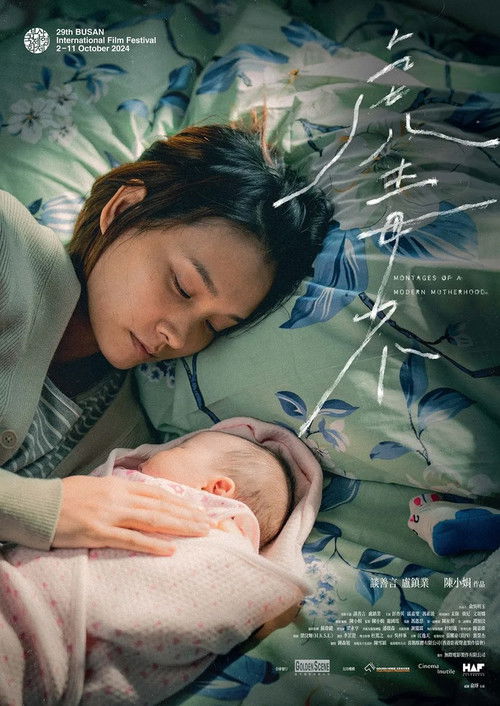








What is the ending?
Short ending: Sabrina goes back to Andrew after learning he is seriously ill, and she stays with him until he dies. Their daughter comes to understand her mother's devotion, while Andrew's life ends after his return for treatment.
Expanded ending, scene by scene:
Years after the marriage has already fallen apart, Andrew's illness brings him back into Sabrina's life. He returns to Hong Kong for treatment after being diagnosed with a terminal cancer, and the sight of him in that weakened state changes the shape of the story from one of abandonment to one of final care.
Sabrina, who had spent years carrying the hurt of his affair and the weight of raising their children alone, does not turn him away. She goes back to his side without hesitation. The film shows her making this decision not as a sudden romantic reunion, but as a steady act of return, the same kind of endurance she had shown while living through the divorce, the loneliness, and the years that followed.
Andrew, now physically diminished and dependent on others, is no longer the man who left. He needs comfort, and Sabrina becomes the person who provides it. She accompanies him through his last stretch of life, staying close as his condition worsens. The ending emphasizes that his final days are not spent in isolation, but with the woman he once wounded and could not fully lose.
Their daughter also reaches the end of her own misunderstanding. In the final stretch, she comes to see her mother differently, understanding the depth of Sabrina's feeling and the meaning of what she has chosen to do. That late recognition gives the ending a family sense of closure, even if the marriage itself never returns to what it was.
Andrew's fate is death after his illness runs its course. Sabrina's fate is survival, but shaped by grief and endurance rather than reunion. She remains the one who stays, and the film closes with that fact: her love is shown through presence, care, and refusal to abandon him at the end.
Is there a post-credit scene?
I could not verify any post-credits scene for True Love, For Once in My Life from the available reliable sources. The film listings and reviews confirm the movie's 2025 release and runtime, but none of the provided sources mention an end-credits or post-credits sequence.
Based on that evidence, the safest answer is that there is no documented post-credits scene, or at minimum no publicly reported one in the sources available here.
Why does Sabrina stay loyal to Andrew even after his affair and divorce?
Sabrina's attachment is rooted in a childhood-sweetheart bond that has shaped her sense of what love means for decades. Even after Andrew leaves Hong Kong for work in Guangzhou, has an affair, divorces her, and remarries, her emotional identity remains tied to the idea that he was her only true love. When he returns ill years later, that long-buried loyalty resurfaces in the form of care and devotion rather than bitterness.
What exactly causes Andrew and Sabrina’s marriage to break down?
Their marriage begins to crack when Andrew spends long stretches in mainland China pursuing business opportunities, leaving Sabrina to manage home life and family alone. The physical separation turns into emotional distance, and Andrew's infidelity becomes the decisive wound that ends the relationship. His affair, divorce, and later remarriage make the breakdown permanent.
How does Andrew’s illness change his relationship with Sabrina?
Andrew's return to Hong Kong for medical treatment forces the two back into intimate contact after years of separation. The dynamic shifts because he is no longer the self-directed husband who once abandoned the family; he is now vulnerable, dependent, and in need of comfort. Sabrina responds by taking on the role of caregiver, showing that unresolved love and responsibility still define their connection.
What role do Sabrina’s children play in her emotional journey?
Sabrina's children reflect the aftermath of the marriage collapse and the difficult compromises she has had to make. After the divorce, she has to find an uneasy peace with them as she rebuilds her life, retires, and learns to live without the family structure she once expected. Their presence underscores how her choices about Andrew affect not just romance but the entire family unit.
Does Andrew ever fully return to Sabrina as a partner, or is he only present because he is sick?
Andrew's return is driven by illness rather than a restored marriage, and the relationship remains defined by the history of his abandonment. He leans on Sabrina for emotional comfort during treatment, but the film frames this as a painful reunion shaped by dependence, memory, and unfinished feelings rather than a clean romantic reconciliation. Sabrina's willingness to care for him reveals her enduring emotional conflict.
Is this family friendly?
No, it does not seem especially family friendly for young children. It is a dramatic adult relationship story centered on marriage breakdown, infidelity, divorce, and terminal illness, which can be emotionally heavy for sensitive viewers.
Potentially objectionable or upsetting elements: - Marital infidelity - Divorce and family separation - Emotional neglect and loneliness - A parent leaving the family for long periods - Serious illness and end-of-life caregiving - Scenes of grief, regret, and emotional distress - Family tension and strained parent-child relationships
There is no sign of graphic violence or explicit sexual content in the available material, but the themes are mature and may be upsetting for children or anyone sensitive to betrayal, illness, or heartbreak.







