










Popular
How does Vlad’s relationship with his daughter Maria change over the course of the film?
What exactly is Vlad’s connection to music, and how does his Balkan band affect his life?
Who is Misko, and what role does he play in Vlad’s story?
What are the specific pressures that push Vlad into trouble?
How does the film portray Vlad’s job as a drug counsellor alongside his own addiction?
Should I watch it?
Ask Your Own Question

What is the plot?
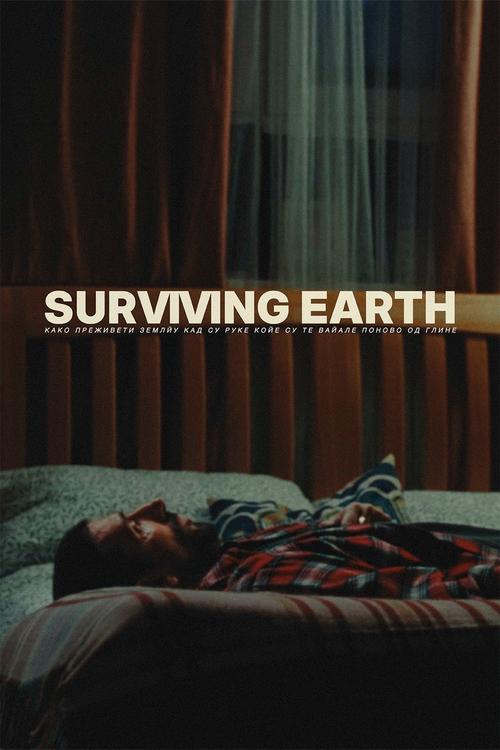
Surviving Earth opens in 1995 Bristol, England, with Vlad already carrying two lives at once: by day he works as a compassionate drug counsellor, speaking to addicts with the authority of someone who has been through it himself, and by night he throws himself into Balkan music, playing harmonica with a fierce, restless energy that makes him feel briefly free. The early scenes establish him as charismatic, physically animated, and emotionally exposed at the same time: he is building a new life in subsidized housing, trying to stay sober, and trying to become more than the damage left behind by his past in Yugoslavia. The film makes it clear that Vlad is not simply "recovering"; he is constantly negotiating with old wounds, with the political violence that drove him out, and with the private shame and longing that still follow him into every room.
The story's first emotional anchor is Maria, Vlad's young daughter, who is drawn as creative and observant, with an artistic temperament that mirrors her father's musical instinct. Their relationship is tender but strained, shaped by years of absence, addiction, and the practical chaos that follows a man trying to rebuild himself from the inside out. Vlad wants to be a present father, but every scene around him suggests how difficult that is: his sobriety is real but fragile, his money is tight, and his sense of identity is split between the sober counselor he performs for other people and the wounded musician he still is when the day ends. The film's dramatic tension comes not from a single catastrophe but from the slow pressure of all the things Vlad cannot fully outrun: the war he fled, the addictions he survived, the family he damaged, and the life he is desperately trying to make in Bristol.
One of the earliest contrasts the film establishes is between the intimacy of Vlad's private world and the larger social world around him. In his tiny, colorful bedroom, he writes songs, testing riffs on a harmonica that looks almost comically small in his large hands, scratching lyrics into a notepad until he finds the right line or the right mood. These moments are wordless but revealing: the camera watches him as emotion crosses his face in quick waves, showing how music is both his refuge and his vulnerability. The harmonica itself becomes a symbol of memory and survival, especially because it is described as a family heirloom, something precious enough to carry emotional weight beyond its use as an instrument. When Vlad plays, he is not merely performing; he is trying to stitch together a life that trauma has repeatedly pulled apart.
As the film settles into its rhythm, it shows Vlad's work at the drug centre and his night performances as two sides of the same struggle. In counseling sessions, he speaks with unusual honesty about addiction because he knows what the other side of the conversation feels like from the inside. That authenticity gives him credibility, but it also keeps his wounds open, because every client and every conversation can function as a trigger. The film's emotional logic is that recovery is not a straight climb upward; it is a daily, precarious negotiation, and Vlad is trying to do that while also surviving financial pressure, family demands from Serbia, and the emotional complexity of co-parenting with Maria's mother.
The first major family tension the sources specifically identify is a tense dinner with Maria and Vlad's ex-wife. The scene reportedly crystallizes the unresolved history between the adults: old resentments remain alive, and the dinner makes clear that whatever progress Vlad has made, he has not yet repaired the damage his past caused. The atmosphere in this section of the film is emotionally cramped, with every pause carrying a backstory, and every attempt at politeness only exposing how much remains unsaid. Maria sits in the middle of that tension, old enough to understand the fractures but too young to be shielded from them, and the scene deepens the film's central question: can Vlad create a future for the people he loves without first fully reckoning with what he has done and what has been done to him?
The pressure on Vlad rises further because his life in Bristol is not sealed off from the country he escaped. The film places him in the shadow of the Yugoslav conflict, which is the reason he fled and the source of the trauma he keeps trying to repress. That history is not presented as background decoration; it is the force that explains why integration in England is so hard, why old habits remain close at hand, and why family obligations from Serbia still reach into his new life. The sources note that his mother and brother continue to pressure him for money, adding another layer of duty and guilt to his already overburdened existence. Vlad is therefore not just trying to stay clean; he is trying to remain coherent while being pulled by competing loyalties, memories, and obligations that never stop demanding something from him.
The film's portrait of sobriety is especially painful because it avoids easy triumph. Vlad is described at the start as being "mostly sober," employed, and outwardly stable, but the fault lines in his recovery gradually become more visible. One crucial turning point comes after a successful concert, when a series of small choices and accidents collapses into relapse: he takes a celebratory shot, then smokes a joint, and then his beloved harmonica is broken in a bar. That sequence matters because it shows how relapse is not treated as random weakness but as a domino effect of emotional stress, temptation, grief, and symbolic loss. The broken harmonica lands as more than an object destroyed; it is the visible fracture of the one thing that had been holding his identity together. From that point, the film's momentum shifts from fragile hope toward deeper instability.
What follows is a tightening spiral in which Vlad's personal life, emotional self-control, and sense of future all become harder to maintain. The sources describe the film as humane and empathetic rather than melodramatic, which means the downward movement is not sensationalized; instead, it is observed with painful patience, as if the film understands that addiction can ruin lives through accumulation rather than a single dramatic collapse. Vlad's drinking, his unresolved trauma, and his financial worries feed each other, while the music that once gave him transcendence becomes another arena in which he risks failure. His relationship with Maria remains central throughout, because she is both the reason he wants to get better and a living reminder of everything he fears losing.
The film's climax, as the sources collectively suggest, is less about an external villain than about the convergence of Vlad's inner collapse and the pain he causes to the people closest to him. The available material does not provide a fully exhaustive scene-by-scene record of every confrontation, but it does establish that the story repeatedly returns to the same basic conflict: Vlad trying to hold onto sobriety, music, and fatherhood while his history keeps destabilizing each of them. Each confrontation in his life--the dinner with his ex-wife, the strain with Maria, the pressure from his family, the tensions around his band and work--pushes him closer to the edge. The emotional force of the film comes from how visibly he tries to remain worthy of the life he is building, even as old pain keeps making that life feel temporary.
The ending, based on the available sources, is tragic in the sense that the film does not offer a neat cure for the wounds it has spent the running time exposing, but it is also compassionate in how it frames survival itself. The film is dedicated to the memory of Vladimir Gajić and his bandmate Mychajlo "Misko" David Czerkas, which reinforces that the story is rooted in lived experience and real loss. That dedication gives the final movement a memorial quality: Vlad's struggle is not just one man's private battle, but a reflection of the grief and endurance that shaped the people the film honors. The available sources do not supply a scene-accurate account of the very last image, nor do they list any explicit deaths on screen, so it is not possible to honestly identify a complete death tally or assign exact causes of death from the material provided.
What is clear is that the movie's emotional resolution lies in the attempt to keep loving, creating, and remaining present even when the past refuses to disappear. Vlad's music, his work as a counsellor, and his desire to be a father all survive as acts of resistance against the forces that have repeatedly broken his life apart. Maria remains the emotional center of that hope, because she represents the possibility that something new can be made from what was nearly lost. In that sense, Surviving Earth ends not with the fantasy that suffering is erased, but with the harder and more human idea that survival is itself a form of victory, however incomplete, and however painfully earned.





What is the ending?
The ending of Surviving Earth is not a triumphant victory, but a quiet, mournful farewell centered on Vlad's life and the people around him. The film ends with the sense that his struggle, his music, and his relationships have been gathered into a final act of remembrance, with the harmonica carrying the emotional weight of that goodbye.
In the final stretch, the story moves toward a memorial-like closure rather than a conventional dramatic resolution. One source notes that the ending was originally conceived as a full celebration of Vlad's life, with everyone gathering for a memorial and show, but that this was not kept in the finished film; instead, the harmonica at the end was used to achieve that feeling more quietly and metaphorically. Another review describes the film's last movement as the unspooling of Vlad's tragedy, with the story remaining tightly controlled until the end.
Scene by scene, the ending plays out as a final reckoning with the life Vlad has been trying to hold together. Vlad's work as a counselor, his identity as a musician, and his hope of building something lasting with his Balkan band all come under the pressure of his addiction and the traumas he has carried from his past. His relationship with Maria, which has been fragile throughout the film, is part of that same closing emotional field: she has spent the story watching him with a mixture of relief, worry, and hard-earned fear because she knows what relapse can mean for him and for their bond.
The final scenes do not present a clean recovery arc. Instead, the ending gathers the film's central people into a space of memory and loss, with Vlad's presence felt most strongly through music and through the way others respond to him. The bandmates, especially Misko, remain tied to the story as part of Vlad's musical life and the community he tried to build. The movie's own credits dedicate the work to the memory of the real Vladimir Gajić and Mychajlo "Misko" David Czerkas, reinforcing that the ending is framed as remembrance.
Vlad's fate at the end is that of a man whose life has been overtaken by the consequences of addiction and unresolved trauma; the film closes on the emotional aftermath of that life rather than on a rescue or reconciliation. Maria's fate is that she remains the living witness to what happened, left with grief and the burden of remembering her father rather than being given a neatly resolved final answer. The bandmates' fate is less individual than collective: they remain the people who carry the music forward in the shadow of Vlad's absence, and the ending turns their gathering into an act of tribute.
Is there a post-credit scene?
I couldn't find any reliable source confirming a post-credit scene in Surviving Earth (2025).
What the available coverage does confirm is that the film's credits include a dedication to the memory of the real-life Vladimir Gajić and Mychajlo "Misko" David Czerkas, which suggests the credits themselves are emotionally significant, but that is not the same as a post-credit scene. Review snippets also describe the ending and credits as emotionally devastating, but none of the results mention an additional scene after the credits.
So, based on the sources available here, the safest answer is: no confirmed post-credit scene is documented.
How does Vlad’s relationship with his daughter Maria change over the course of the film?
Vlad's relationship with Maria is one of the film's central story threads, and it becomes more strained as his financial problems, addiction struggles, and unresolved trauma intensify. The film follows his desire to keep a good relationship with his grown-up daughter while he is pulled deeper into a downward spiral, so the emotional distance between them grows from underlying tension to open fracture.
What exactly is Vlad’s connection to music, and how does his Balkan band affect his life?
Vlad is portrayed as a harmonica player and musician who wants to succeed with his Balkan band alongside his friend Misko. Music is not just background in the story: it is tied to his identity, his hope for a better future, and his attempt to hold his life together, even as those ambitions grow beyond what he can realistically sustain.
Who is Misko, and what role does he play in Vlad’s story?
Misko is Vlad's bandmate and friend, played by Stuart Martin, and he is part of Vlad's musical world in Bristol. The film's coverage identifies him as an important presence in the band, with the story also dedicating the work to the memory of the real-life Mychajlo "Misko" David Czerkas, showing that the character is closely tied to the film's real-life inspiration.
What are the specific pressures that push Vlad into trouble?
The film points to several concrete pressures at once: financial trouble, demands for money from his mother and brother back in Serbia, and the resurfacing of past trauma linked to his history as a refugee from the former Yugoslavia. Those pressures pile up on top of his addiction and mental-health crisis, creating the downward spiral that the story follows.
How does the film portray Vlad’s job as a drug counsellor alongside his own addiction?
Vlad is described as an addict-turned-drug counsellor, which creates a sharp contradiction at the center of his character. The story uses that role to show how he is trying to function as someone who helps others while his own struggles with addiction and mental health remain unresolved and are not fully taken seriously by the people and institutions around him.
Is this family friendly?
Surviving Earth (2025) is not a family-friendly choice for young children. Available descriptions identify it as a serious drama centered on addiction, trauma, and a strained father-daughter relationship, so it is more suited to teens and adults than to kids.
Potentially upsetting or objectionable elements include: - Drug addiction and recovery themes: the film focuses on a recovering heroin addict and his struggles with staying clean. - Emotional intensity: reviews describe it as "gut-punch" and "devastating," suggesting several heavy, emotionally charged scenes. - Trauma and past pain: the story involves "past traumas" and a difficult personal history that may be distressing. - Family conflict: there is a fractious relationship between a father and his young daughter, which may include tension or upsetting interactions. - Adult subject matter: the film is built around addiction counselling, relapse risk, and the pressures of rebuilding life after a troubled past.
If you want, I can also give you a more specific age recommendation based on the tone and likely intensity.









