











Popular
What motivates T'Challa to take on the mantle of Black Panther after his father's death?
How does Erik Killmonger challenge T'Challa's leadership and beliefs?
What role does Shuri play in supporting T'Challa as Black Panther?
How does the relationship between T'Challa and Nakia evolve throughout the series?
What is the significance of the ancestral plane in T'Challa's journey?
Should I watch it?
Ask Your Own Question

What is the plot?
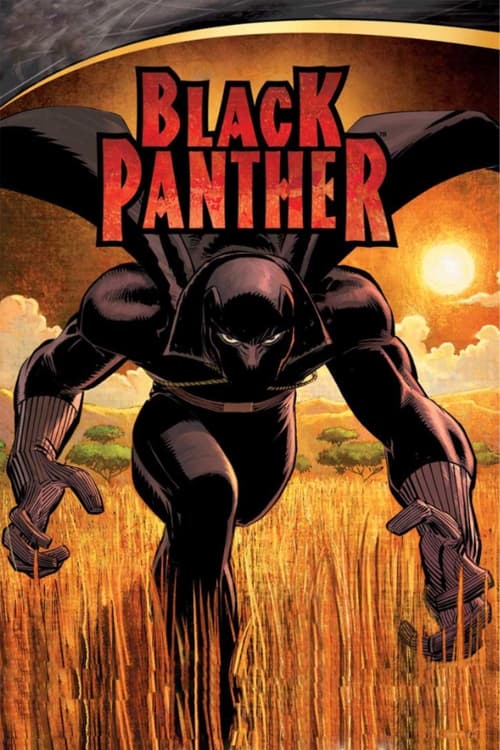
The series begins with a prologue that introduces the hidden African nation of Wakanda, known for its advanced technology and the precious metal vibranium. The narrative quickly shifts to the present day, where T'Challa, the son of the late King T'Chaka, is preparing to take the throne after his father's death. T'Challa is deeply affected by his father's passing and feels the weight of responsibility on his shoulders. He is determined to honor his father's legacy while also grappling with the challenges of leadership.
T'Challa undergoes a ritual to become the Black Panther, the protector of Wakanda. This ceremony involves drinking a special herb that grants him enhanced abilities. He is visited by the spirits of his ancestors, who offer guidance and support. T'Challa emerges from the ceremony with newfound strength and confidence, ready to lead his people. However, he is also haunted by the expectations placed upon him and the fear of failing his father's legacy.
As T'Challa begins his reign, he faces opposition from Erik Killmonger, a long-lost cousin who has a claim to the throne. Killmonger, who was raised in America, has a deep-seated resentment towards Wakanda for abandoning him and his father. He arrives in Wakanda with a plan to take the throne and enact his vision of using Wakanda's resources to empower oppressed people around the world. T'Challa is initially dismissive of Killmonger's claims, but the tension between them escalates.
Killmonger challenges T'Challa for the throne in a traditional combat ritual. The fight takes place at a waterfall, where T'Challa initially gains the upper hand. However, Killmonger uses his cunning and combat skills to ultimately defeat T'Challa, throwing him over the edge of the waterfall. Believing T'Challa to be dead, Killmonger ascends to the throne and begins to implement his radical plans, including the distribution of vibranium weapons to oppressed communities worldwide.
As Killmonger takes control, he reveals his intentions to the Wakandan council, who are divided on his approach. Some support his vision of global empowerment, while others fear the consequences of revealing Wakanda's technology to the world. Killmonger's ruthless methods and disregard for tradition create a rift within Wakanda, leading to a power struggle.
Meanwhile, T'Challa survives the fall and is rescued by the Jabari tribe, led by M'Baku. He is nursed back to health and reflects on his failures as a leader. T'Challa realizes that he must reclaim his identity as the Black Panther and unite his people against Killmonger's dangerous plans. With the help of his allies, including Nakia and Shuri, T'Challa devises a strategy to confront Killmonger and restore peace to Wakanda.
T'Challa returns to Wakanda, where he confronts Killmonger in a climactic battle. The fight takes place in the heart of Wakanda, showcasing advanced technology and combat skills. T'Challa and Killmonger engage in a fierce duel, with both utilizing their enhanced abilities. The battle is intense, filled with emotional stakes as T'Challa fights not only for his throne but for the soul of Wakanda.
As the fight reaches its peak, T'Challa gains the upper hand and ultimately defeats Killmonger. However, instead of killing him, T'Challa offers him a chance at redemption. Killmonger, still filled with anger and pain, chooses to die rather than live in captivity. His final words reflect his belief that he would rather die free than live in a world that oppresses his people.
In the aftermath, T'Challa takes on the mantle of king once more, vowing to change Wakanda's isolationist policies. He decides to share Wakanda's resources and technology with the world, aiming to help those in need. T'Challa's decision marks a new era for Wakanda, one that embraces its heritage while also looking towards a more inclusive future.
The series concludes with T'Challa addressing the United Nations, where he reveals Wakanda's true nature and its commitment to global cooperation. He stands as a symbol of hope and change, embodying the lessons learned from his journey. The final scenes depict T'Challa surrounded by his allies, ready to face the challenges ahead as a united Wakanda.









What is the ending?
In the ending of the 2010 TV show "Black Panther," T'Challa confronts the villainous Killmonger in a climactic battle for the throne of Wakanda. After a fierce fight, T'Challa ultimately defeats Killmonger, who chooses to die rather than be imprisoned. T'Challa then takes on the responsibility of leading Wakanda into a new era, deciding to share its resources and technology with the world, while honoring the legacy of his ancestors.
As the final episodes unfold, the tension escalates in Wakanda. T'Challa, now fully embracing his role as the Black Panther, stands before the council of elders, who are divided over how to handle the threat posed by Killmonger. The air is thick with uncertainty, and T'Challa feels the weight of his ancestors' expectations pressing down on him. He knows that he must not only protect his people but also uphold the values of Wakanda.
In a pivotal scene, T'Challa and Killmonger face off in a ritual combat atop a cliff, surrounded by the vibrant landscape of Wakanda. The sun sets behind them, casting long shadows as they exchange blows. T'Challa fights with a mix of honor and desperation, while Killmonger embodies raw ambition and rage. The choreography of their battle is intense, each strike echoing the deep-seated conflict between their ideologies. T'Challa's internal struggle is palpable; he fights not just for his life but for the future of his nation.
As the fight reaches its climax, T'Challa gains the upper hand, pinning Killmonger to the ground. In this moment, Killmonger reveals his vulnerability, expressing his pain and the injustices he has faced. T'Challa, torn between his duty and compassion, offers Killmonger a chance to heal and live. However, Killmonger, resolute in his beliefs, declines the offer, stating that he would rather die than be imprisoned. With a heavy heart, T'Challa honors his choice, and Killmonger succumbs to his wounds, leaving T'Challa to grapple with the loss of a rival who could have been an ally.
In the aftermath, T'Challa stands before the people of Wakanda, his heart heavy yet resolute. He addresses the council and the citizens, sharing his vision for a new Wakanda--one that opens its doors to the world, sharing its advanced technology and resources to help those in need. The decision is met with mixed reactions, but T'Challa's conviction shines through. He understands that true strength lies not just in isolation but in connection and collaboration.
The series concludes with T'Challa visiting the ancestral plane, where he reflects on the lessons learned from his father and the sacrifices made. He feels the presence of his ancestors, guiding him as he steps into his role as a leader. The final scene shows T'Challa standing on the balcony of the royal palace, overlooking the vibrant city of Wakanda, filled with hope for the future. The camera pans out, revealing the lush landscape and the bustling life of the city, symbolizing the dawn of a new era.
In this ending, T'Challa emerges as a more mature and enlightened leader, while Killmonger's fate serves as a poignant reminder of the consequences of unchecked ambition and the importance of understanding one's history. The series closes on a note of optimism, emphasizing the potential for growth and unity in a world often divided.
Is there a post-credit scene?
The 2010 animated series "Black Panther" does not feature a post-credit scene. The series consists of six episodes that delve into the story of T'Challa, the Black Panther, as he navigates the challenges of being a king and a superhero. Each episode concludes with a resolution to the story arc presented, but there are no additional scenes or teasers after the credits. The focus remains on T'Challa's journey, his relationships with characters like Shuri and M'Baku, and the conflicts he faces both within Wakanda and from external threats. The series emphasizes themes of responsibility, heritage, and the balance between tradition and progress, culminating in a satisfying conclusion without the need for a post-credit scene.
What motivates T'Challa to take on the mantle of Black Panther after his father's death?
T'Challa is driven by a deep sense of duty and responsibility to his family and his country, Wakanda. The death of his father, King T'Chaka, weighs heavily on him, instilling a desire to honor his legacy while also proving himself worthy of the throne. He grapples with the expectations placed upon him and the need to protect Wakanda from external threats.
How does Erik Killmonger challenge T'Challa's leadership and beliefs?
Erik Killmonger, T'Challa's cousin, presents a formidable challenge to T'Challa's claim to the throne by exposing the flaws in Wakanda's isolationist policies. He embodies a radical perspective that advocates for using Wakanda's resources to empower oppressed people globally. Killmonger's personal vendetta against T'Challa and the royal family fuels his ambition, forcing T'Challa to confront his own beliefs about leadership and responsibility.
What role does Shuri play in supporting T'Challa as Black Panther?
Shuri, T'Challa's sister, serves as both a technological genius and a fierce warrior. She provides T'Challa with advanced weaponry and strategic support, showcasing her intelligence and resourcefulness. Her unwavering belief in T'Challa's potential as a leader and her willingness to challenge traditional gender roles in Wakanda highlight her importance in the narrative, as she becomes a key ally in the fight against Killmonger.
How does the relationship between T'Challa and Nakia evolve throughout the series?
T'Challa's relationship with Nakia, a skilled spy and his former love interest, is marked by tension and growth. Initially, Nakia's desire for Wakanda to engage more with the outside world clashes with T'Challa's adherence to tradition. As the story progresses, T'Challa learns to appreciate her perspective, leading to a deeper understanding of his responsibilities as king and a rekindling of their romantic connection.
What is the significance of the ancestral plane in T'Challa's journey?
The ancestral plane serves as a pivotal space for T'Challa's character development. It is where he connects with the spirits of his ancestors, particularly his father, King T'Chaka. These encounters provide T'Challa with guidance and insight into his role as king, reinforcing the importance of legacy and the weight of leadership. The ancestral plane symbolizes T'Challa's internal struggle and his quest for identity and purpose.
Is this family friendly?
The 2010 animated series "Black Panther" is generally considered family-friendly, but it does contain some elements that may be concerning for younger viewers or sensitive individuals. Here are a few aspects to consider:
-
Violence: The show features action sequences that include hand-to-hand combat, weapon use, and battles between characters. While the violence is stylized and not overly graphic, it may still be intense for some children.
-
Themes of Betrayal and Conflict: The narrative includes themes of betrayal, political intrigue, and conflict, which may be complex for younger audiences to fully grasp. Characters face moral dilemmas that could evoke feelings of tension or sadness.
-
Emotional Struggles: Characters experience loss, grief, and the weight of responsibility, particularly T'Challa as he navigates his role as king and protector. These emotional moments may resonate deeply and could be upsetting for sensitive viewers.
-
Villainous Characters: The presence of antagonists who exhibit ruthless behavior and have dark motivations may be frightening for some children. Their actions can create a sense of danger and suspense.
-
Cultural and Historical References: The show incorporates elements of African culture and history, which may be unfamiliar to some viewers. While this can be educational, it may also lead to confusion or discomfort if not contextualized.
Overall, while "Black Panther" is designed to be accessible to a younger audience, parents may want to preview episodes to determine their suitability based on individual sensitivities.