
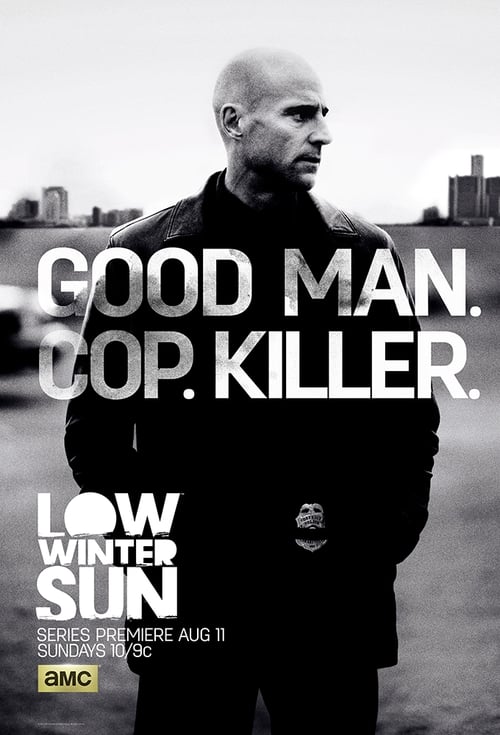


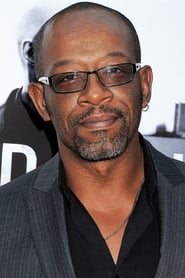
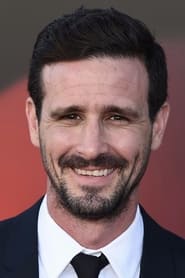



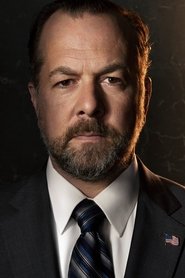



Popular
What motivates Frank Agnew to kill his partner, Detective Joe Geddes?
How does the murder of Joe Geddes impact the investigation led by the Detroit police?
What role does the character of Detective Dani Kahlil play in the story?
How does the relationship between Frank Agnew and his girlfriend, Christine, evolve throughout the series?
What is the significance of the setting in Detroit for the characters and plot of Low Winter Sun?
Should I watch it?
Ask Your Own Question

What is the plot?
Detective Frank Agnew, a member of the Detroit police force, is introduced as he grapples with the moral complexities of his life. He is deeply troubled by the recent death of his partner, Detective Joe Geddes, who has been killed in a drug-related incident. Frank is haunted by guilt and a sense of betrayal, as he feels responsible for Joe's death. The opening scenes establish Frank's internal conflict and his desire for revenge against those he believes are responsible.
As Frank navigates his grief, he meets with Joe's widow, who is unaware of the true circumstances surrounding her husband's death. Frank's emotional turmoil is palpable as he tries to comfort her while hiding his own guilt. This interaction sets the stage for Frank's motivations throughout the series, as he becomes increasingly obsessed with seeking justice for Joe.
In a pivotal moment, Frank decides to confront Joe's killer, a drug dealer named "The Greek." He enlists the help of his fellow officer, Geddes, who is also involved in the corrupt underbelly of the police force. Together, they devise a plan to take down The Greek and his operation. This decision marks a turning point for Frank, as he begins to blur the lines between right and wrong.
The plot thickens when Frank and Geddes execute their plan, leading to a violent confrontation with The Greek's men. The scene is intense, filled with gunfire and chaos as Frank's determination to avenge Joe's death drives him forward. In the heat of the moment, Frank kills one of The Greek's associates, solidifying his descent into a morally ambiguous world.
As the investigation unfolds, Frank's actions draw the attention of his superiors, who begin to suspect that he may be involved in the corruption within the department. Tension rises as Frank tries to maintain his cover while dealing with the fallout from the murder. He becomes increasingly paranoid, fearing that his colleagues will discover the truth about his involvement in Joe's death and the subsequent violence.
Meanwhile, the narrative introduces a subplot involving a local crime boss, who is also connected to The Greek. This character adds another layer of complexity to the story, as Frank's actions inadvertently put him on a collision course with this powerful figure. The stakes are raised as Frank realizes that he is not just fighting against drug dealers but also against a corrupt system that protects them.
As Frank's investigation deepens, he uncovers a web of deceit that implicates several members of the police force. He struggles with the realization that those he once trusted are complicit in the very crimes he is trying to solve. This betrayal fuels his anger and determination to expose the corruption, even as it puts him in greater danger.
In a climactic sequence, Frank confronts Geddes about their shared involvement in the corruption. The confrontation escalates into a physical fight, showcasing the emotional and psychological toll that their choices have taken on both men. Frank's desperation to reclaim his sense of justice leads him to make a fateful decision that will have lasting consequences.
The series reaches its peak as Frank's actions culminate in a final showdown with The Greek and his associates. The tension is palpable as Frank navigates the dangerous landscape of betrayal and revenge. The confrontation is brutal, with Frank fighting not only for his life but also for redemption. The emotional weight of his choices hangs heavy as he faces the reality of what he has become.
In the aftermath of the confrontation, Frank is left to grapple with the consequences of his actions. The fallout from the violence reverberates through his life, affecting his relationships and his standing within the police force. The series concludes with Frank at a crossroads, forced to confront the darkness within himself and the choices that have led him to this point. The emotional and moral complexities of his journey leave a lasting impact, as he must decide what kind of man he wants to be moving forward.







What is the ending?
In the ending of "Low Winter Sun," Detective Frank Agnew confronts the consequences of his actions as he grapples with guilt and betrayal. The series concludes with a violent confrontation that leaves several characters dead, including Agnew's partner, and ultimately leads to Agnew's own demise.
As the final episode unfolds, we see Frank Agnew, played by Mark Strong, in a state of turmoil. He is haunted by the murder of the corrupt cop, and the weight of his choices begins to crush him. The tension escalates as he realizes that his partner, Joe Geddes, portrayed by Lennie James, has been manipulating events to cover his own tracks.
In a pivotal scene, Agnew confronts Geddes in a dimly lit warehouse. The atmosphere is thick with tension, and the air is heavy with the scent of betrayal. Agnew's face is a mask of anguish and determination as he demands answers. Geddes, calm yet menacing, reveals his true nature, showcasing the depths of his moral corruption. The dialogue crackles with intensity, each word a dagger as Agnew struggles with the realization that he has been played.
As the confrontation escalates, it becomes clear that both men are trapped in a cycle of violence and deceit. Agnew's internal conflict is palpable; he is torn between his desire for justice and the dark path he has chosen. The scene crescendos into chaos as a gunfight erupts, bullets flying in a flurry of violence. The warehouse, once a place of confrontation, becomes a graveyard for their shattered ideals.
In the aftermath, the camera lingers on Agnew, bloodied and broken, as he stumbles away from the scene. The weight of his actions crashes down on him, and he is left to grapple with the reality of his choices. The emotional toll is evident in his eyes, reflecting a man who has lost everything he once held dear.
Meanwhile, Geddes meets a grim fate as well. The consequences of his manipulations catch up to him, and he is left to face the repercussions of his actions. The finality of his demise serves as a stark reminder of the destructive nature of their world.
As the episode draws to a close, we see Agnew's fate sealed in a haunting final shot. He is left alone, a solitary figure against the backdrop of a city that has consumed him. The weight of his guilt and the ghosts of his past linger in the air, leaving viewers with a sense of unresolved tension.
In summary, the ending of "Low Winter Sun" encapsulates the tragic downfall of its characters, highlighting the themes of betrayal, guilt, and the inescapable consequences of one's choices. Frank Agnew's journey concludes in a dark and poignant manner, leaving a lasting impression of the moral complexities that define the series.
Is there a post-credit scene?
"Low Winter Sun," the 2013 television series, does not feature a post-credit scene. The show concludes its episodes without any additional scenes after the credits roll. Each episode wraps up its narrative arcs within the main storyline, focusing on the dark and gritty themes of crime, betrayal, and moral ambiguity that permeate the series. The absence of post-credit scenes aligns with the show's tone, emphasizing the weight of the events that transpire rather than leaving room for lighter or more whimsical moments.
What motivates Frank Agnew to kill his partner, Detective Joe Geddes?
Frank Agnew, played by Mark Strong, is driven by a complex mix of betrayal, guilt, and a desire for control. After discovering that Joe Geddes, portrayed by Lennie James, is involved in corrupt activities and has a manipulative hold over him, Frank feels cornered. The emotional weight of their partnership, combined with Joe's threats and the fear of losing everything, pushes Frank to commit the ultimate betrayal.
How does the murder of Joe Geddes impact the investigation led by the Detroit police?
Joe Geddes' murder creates a ripple effect within the Detroit police department, leading to increased scrutiny and tension among the officers. As the investigation unfolds, Frank Agnew finds himself entangled in a web of deceit, trying to cover his tracks while dealing with the fallout of his actions. The pressure mounts as fellow detectives, including Detective Dani Kahlil, begin to suspect foul play, complicating Frank's attempts to maintain his facade.
What role does the character of Detective Dani Kahlil play in the story?
Detective Dani Kahlil, played by Athena Karkanis, serves as a moral compass amidst the corruption surrounding her. She is dedicated to uncovering the truth and is suspicious of Frank's behavior following Joe's murder. Her determination to seek justice and her growing awareness of the dark undercurrents in the department create tension, as she becomes a potential threat to Frank's secret.
How does the relationship between Frank Agnew and his girlfriend, Christine, evolve throughout the series?
Frank's relationship with Christine, portrayed by Jasmine Cephas Jones, is strained as the series progresses. Initially, Christine is unaware of Frank's dark secrets and the turmoil he faces. However, as Frank becomes increasingly consumed by guilt and paranoia following Joe's murder, he struggles to maintain a semblance of normalcy in their relationship. Christine's growing concern for Frank's well-being and her eventual discovery of his lies lead to emotional conflict and distance between them.
What is the significance of the setting in Detroit for the characters and plot of Low Winter Sun?
The gritty, decaying landscape of Detroit serves as a backdrop that mirrors the moral decay of the characters. The city's struggles with crime and corruption reflect the internal battles faced by Frank and his colleagues. The setting amplifies the tension and desperation of the narrative, as the characters navigate a world where trust is scarce and betrayal lurks around every corner, ultimately influencing their decisions and fates.
Is this family friendly?
"Low Winter Sun," produced in 2013, is not considered family-friendly due to its mature themes and content. The show contains several potentially objectionable or upsetting aspects, including:
-
Violence: The series features graphic depictions of violence, including shootings and physical confrontations, which may be disturbing for younger viewers.
-
Crime and Corruption: The narrative revolves around police corruption and organized crime, presenting morally ambiguous characters and situations that may be unsettling.
-
Strong Language: Frequent use of profanity is present throughout the dialogue, which may not be suitable for children.
-
Substance Abuse: Characters are shown engaging in drug and alcohol use, which could be inappropriate for younger audiences.
-
Dark Themes: The show explores themes of betrayal, guilt, and moral ambiguity, which may be heavy and complex for sensitive viewers.
-
Emotional Turmoil: Characters experience intense emotional struggles, including grief and anger, which may be distressing for some.
Overall, the series is intended for an adult audience and contains elements that could be upsetting for children or sensitive individuals.