


Loading additional questions...
Popular
What is the significance of the old landline in the movie Landline (2025)?
How does the time loop affect Kolapo's attempts to save his wife in Landline (2025)?
Who are the main characters involved in the conflict in Landline (2025) and what roles do they play?
Why is Kolapo in hiding and what is the reason behind Shalewa being targeted in Landline (2025)?
What role do the supporting characters and voiceovers play in the storytelling of Landline (2025)?
Should I watch it?
Additional Questions
Ask Your Own Question

What is the plot?
The story opens in 1995 with the Jacobs household functioning as a tight-knit, Italian-Jewish family. Pat Jacobs keeps a cool distance from her husband Alan, who repeatedly reaches out for warmth and intimacy that she withholds. Their elder daughter Dana is engaged to Ben and carries a restless dissatisfaction within a long, stalled relationship; their younger daughter Ali is still in high school, drawn more to raves, drugs, and late nights than to thoughts of college or a settled future.
One night after going out, Ali returns home and, while rifling through a desk, discovers a bundle of intimate letters written by her father. The handwritten missives are addressed not to Pat but to a woman identified only as "C," and their ardent tone alarms Ali. The next evening Dana attends a party where she unexpectedly runs into her ex, Nate. Tension escalates when Dana flirts with both Nate and Ben in the same social circle; restless and craving a break from the obligation of wedding planning, Dana takes a day away from Ben's company. She and Nate meet alone; without pretense they sleep together, an act that places Dana in a compromising, guilty position when she returns to her life with Ben.
Shortly after these events the parents confront their daughters about behavior from the recent nights. Faced with parental questioning, Ali retreats to the family's weekend house in the country, bringing along her boyfriend for company. She expects solitude but finds Dana there as well; Dana has come to the country home to give Ali space and to escape the immediate consequences of her own actions. The two sisters sit up late and trade secrets. Ali lays out the discovery of the letters and voices her suspicion that their father is having an affair with the mysterious "C." Dana admits to sleeping with Nate and expresses guilt over betraying Ben. The sisters decide to investigate the identity of "C" together.
Dana moves back into the family home to help Ali with the search, ostensibly to be supportive while also maintaining closeness to her own life and relationship obligations. Despite this, Dana resumes contact with Nate and continues their fling in a pattern of secrecy and denial. The sisters' attempts to trace "C" grow increasingly earnest but initially lead to dead ends. Alan, meanwhile, has been putting time and energy into a play he has written, and a staged reading of that play becomes a locus for the family's tensions. At the reading the sisters encounter an actress named Carla. They recognize her presence as a possible link to the "C" in their father's letters and conclude she might be the woman to whom Alan has been writing.
Dana reacts with anger and dismay on learning Carla's name and presence in Alan's professional orbit. She confronts the possibility that her father's ardor is directed toward this actress. When Dana tells Nate about Carla, Nate downplays her unease and refuses to treat it with seriousness; his dismissal drives a wedge between him and Dana, and their affair ends as Nate refuses to engage with Dana's emotional turmoil. Dana's liaison therefore collapses when she needs it to be different; she is left confronting both the dissolution of her secret and the fragility of her engagement to Ben.
After the breakup with Nate, Dana seeks out her father for a candid conversation. Sitting with Alan, she confesses her confusion about the direction of her life and acknowledges that she has been making choices without clarity. Alan listens and responds, and in the course of their exchange Dana begins to re-evaluate how she has treated Ben. She realizes that Ben has endured unfairness in their relationship and that her actions--her distance and her infidelity--have placed an impossible burden on him.
On Halloween, Dana arranges to meet Ben with the intention of telling him everything. She meets him and admits to the affair with Nate. Ben, devastated, replies and then ends their relationship; the two of them part, their engagement irreparably broken. Dana leaves the conversation raw and shaken, acutely aware of the consequences of her choices.
Meanwhile Ali, determined to keep Dana from doing something dangerous, persuades her sister to decline participation in a risky drug deal she has been tempted to join. The sisters leave the matter behind and attempt to have a normal evening together, but events take a turn when police arrive. Officers arrest Dana and Ali that night. They are handcuffed and taken into custody, booked and processed at a local jail. Pat and Alan receive a call from the police notifying them that their daughters have been detained; this phone call interrupts a separate confrontation between Pat and Alan.
Earlier, Pat, feeling restless and hurt, goes out to a bar where she flirts with a man in an attempt to find solace. After some brief interaction she returns home. Back at the house Pat confronts Alan about the letters and tells him she knows he has been seeing Carla. Alan responds by recounting occasions when Pat had rejected his attempts at intimacy, insisting that he has long suffered emotional dismissal in their marriage. Their argument escalates sharply; they exchange recriminations and specific memories of past slights. In the middle of this heated exchange the phone rings with the notification from the jail about their daughters, and Alan leaves immediately to pick Dana and Ali up.
Alan arrives at the police station and signs the paperwork to retrieve Dana and Ali. The sisters come home in the back of the family car, subdued but together, and find Pat in a raw state of agitation. In a moment that follows the arrivals, Pat confesses to their daughters that she has had an affair of her own. She speaks directly and plainly about her own transgression, insisting on no justifications but allowing the family to hear that she, too, has strayed. The four of them--Pat, Alan, Dana, and Ali--stand in the living room in a silence that gives way to a tentative embrace. The three women and Alan share an awkward, emotional hug; the physical contact registers both the rupture and the desire for familial connection.
Following Pat's confession, Dana reacts by trying to salvage what remains of her personal life. She pursues Ben, asking him for a second chance and attempting to repair the relationship she damaged. Ben listens to Dana but remains guarded; the film records Dana's efforts and the emotional labor she subjects herself to in hopes of reconciliation. Alan, in the wake of revelations about Carla and the admissions within the household, makes a concrete decision: he will move out of the family home. He packs some of his things and arranges to leave the shared residence, but he insists that his physical departure does not mean he will withdraw from his daughters' lives. He tells Pat and their children that he intends to be present for them despite this separation and makes arrangements to remain involved in daily tasks and events.
As the family adjusts to these new arrangements--Alan living elsewhere for the time being, Pat remaining in the house, Dana attempting to rebuild a relationship with Ben--the household prepares for Ali's upcoming birthday. The party becomes an occasion where the family members gather and confront their new normal together. On the day of Ali's birthday gathering, friends and relatives arrive at the house. The members of the Jacobs family interact in real time: Dana is present, Ben's absence or presence is recorded depending on the reconciliatory progress, Alan participates in ways that respect the separation, and Pat moves through the guests with the knowledge of her recent admissions.
At the party the family behaves in ways that reveal both change and continuity. Guests eat and drink; conversations start and stop. Dana speaks to family and friends, navigating the social dynamic while wearing the consequences of her actions. Ali celebrates with friends and spends time within the group she has cultivated outside the family. Alan and Pat are physically proximate in the same room at moments, exchanging brief interactions that signal lingering affection and unresolved tension. The film closes with the family together for Ali's birthday, gathered in the same house--the same rooms that have borne the confessions and confrontations--while the everyday activity of the party continues around them. There are no deaths in the narrative; no one is killed during the events that unfold. Instead, the final images show the Jacobs family assembled at Ali's celebration, their ties frayed and mended in different places, and each member taking up a new position within the altered structure of their relationships. The last shots remain focused on the group at the birthday, with the family physically together as they negotiate a present tense that follows the series of incidents described above.









What is the ending?
Is there a post-credit scene?
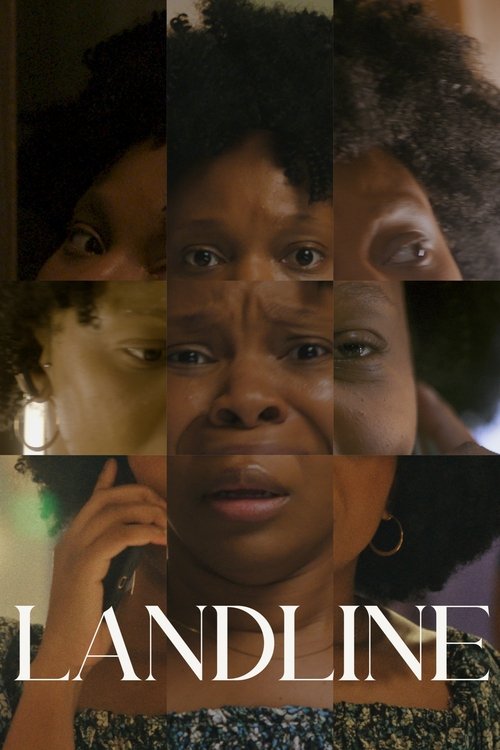
The movie "Landline" (2025), a Nollywood time-loop thriller, does have a post-credit scene. This scene further adds to the film's eerie and suspenseful conclusion, continuing the theme of the time loop and the protagonist's struggle.
In the post-credit scene, the military sergeant continues to receive eerie calls from the old landline phone as the day resets again, reinforcing the relentless and nightmarish loop in which he is trapped. The scene leaves viewers with a sense of unresolved tension and the ongoing battle against the fatal cycle he faces in trying to save his pregnant wife from a killer.
This post-credit moment underlines the film's core motif of helplessness and persistent struggle against a repeating fate, accentuating the psychological horror and suspense that characterizes the movie's narrative.
What is the significance of the old landline in the movie Landline (2025)?
The old landline in Landline (2025) serves as a mysterious communication device through which the stranded military sergeant, Kolapo, receives eerie calls that guide him to save his pregnant wife, Shalewa, from a relentless killer. This landline appears suddenly functional amidst the chaos and is central to the time-loop narrative, repeatedly alerting Kola to imminent danger and driving the plot's tension and suspense.
How does the time loop affect Kolapo's attempts to save his wife in Landline (2025)?
In Landline (2025), Kolapo is trapped in a time loop where he repeatedly witnesses his wife Shalewa's death despite his efforts to save her. Each loop resets the scenario, forcing him to try different ways to protect her, but the gunshot wound and other key events remain consistent across loops. This looping structure intensifies the emotional stakes and highlights Kolapo's frustration and helplessness as a trained soldier unable to prevent the tragedy.
Who are the main characters involved in the conflict in Landline (2025) and what roles do they play?
The main characters in Landline (2025) are Kolapo, a stranded military sergeant trying to protect his pregnant wife; Shalewa, Kolapo's wife who faces life-threatening danger and embodies courage; and a relentless masked killer pursuing Shalewa. Kolapo is held in a safe house by his superiors and communicates with Shalewa via telephone, while the killer's motives are driven by suspicion. Bucci Franklin plays both a policeman and the masked killer, adding complexity to the conflict.
Why is Kolapo in hiding and what is the reason behind Shalewa being targeted in Landline (2025)?
Kolapo is in hiding in a secluded safe house under orders from his military superiors, which forces him to stay away from his family for security reasons. Shalewa is targeted by a relentless killer based on suspicion, though the film suggests the motive is somewhat exaggerated and lacks clear evidence. This suspicion drives the villains to extreme actions, creating the central danger that Kolapo must try to prevent repeatedly in the time loop.
What role do the supporting characters and voiceovers play in the storytelling of Landline (2025)?
In Landline (2025), aside from the three embodied characters--Kolapo, Shalewa, and the masked killer--other characters are revealed through voiceovers, which help build the narrative and provide context. These voiceovers contribute to the psychological thriller atmosphere and deepen the audience's understanding of the characters' backgrounds and the unfolding events, complementing the visual storytelling and the time-loop structure.